. 2018 May 11;14(5):e1007274.
doi: 10.1371/journal.pgen.1007274. eCollection 2018 May.

Population-specific genetic modification of Huntington's disease in Venezuela

Affiliations

Population-specific genetic modification of Huntington's disease in Venezuela

Michael J Chao et al. PLoS Genet. .

Abstract

Modifiers of Mendelian disorders can provide insights into disease mechanisms and guide therapeutic strategies. A recent genome-wide association (GWA) study discovered genetic modifiers of Huntington's disease (HD) onset in Europeans. Here, we performed whole genome sequencing and GWA analysis of a Venezuelan HD cluster whose families were crucial for the original mapping of the HD gene defect. The Venezuelan HD subjects develop motor symptoms earlier than their European counterparts, implying the potential for population-specific modifiers. The main Venezuelan HD family inherits HTT haplotype hap.03, which differs subtly at the sequence level from European HD hap.03, suggesting a different ancestral origin but not explaining the earlier age at onset in these Venezuelans. GWA analysis of the Venezuelan HD cluster suggests both population-specific and population-shared genetic modifiers. Genome-wide significant signals at 7p21.2-21.1 and suggestive association signals at 4p14 and 17q21.2 are evident only in Venezuelan HD, but genome-wide significant association signals at the established European chromosome 15 modifier locus are improved when Venezuelan HD data are included in the meta-analysis. Venezuelan-specific association signals on chromosome 7 center on SOSTDC1, which encodes a bone morphogenetic protein antagonist. The corresponding SNPs are associated with reduced expression of SOSTDC1 in non-Venezuelan tissue samples, suggesting that interaction of reduced SOSTDC1 expression with a population-specific genetic or environmental factor may be responsible for modification of HD onset in Venezuela. Detection of population-specific modification in Venezuelan HD supports the value of distinct disease populations in revealing novel aspects of a disease and population-relevant therapeutic strategies.


Conflict of interest statement

The authors have declared that no competing interests exist.

Figures

Fig 1
Fig 1. Earlier age at onset in HD subjects in Venezuela.
(A) We evaluated the relationship between age at motor onset and the longer CAG repeat using the QC-passed data set. Age at onset and the longer CAG repeat of HD homozygotes are indicated in open red symbols (12 individuals). (B) Age at onset of motor signs was plotted against the size of expanded CAG repeat for HD subjects with European ancestry (blue) and Venezuelan HD subjects (red). Subsequently, log transformed age at onset (natural log) was modeled as a function of CAG repeat length for each population in a linear regression model. Then, fitted values were transformed back into natural scale age at onset for plotting. Blue and red lines represent regression models for European and Venezuelan HD, respectively. In addition, for a given CAG repeat size, the average of age at onset of HD subjects carrying a hap.01 disease haplotype (circle) or a hap.03 disease haplotype (triangle) are marked. (C) Disease duration data were compared between European and Venezuelan HD subjects. Duration values were available for 645 European HD and 85 Venezuelan HD subjects. Means of duration were 15.4 and 15.7 for European and Venezuelan HD subjects, respectively (Wilcoxon test p-value = 0.2783).
Fig 2
Fig 2. Sequence of hap.03 mutant haplotype.
(A) Based on consensus alleles in 7 phased haplotypes in the sequencing family, the hap.03 disease haplotype sequence was reconstructed at the nucleotide level. Alleles on hap.03 that are different from the reference allele are shown with their genomic locations relative to HTT refseq NM_002111. The previously reported sequence of hap.01 is also displayed. D, I and N represent deletion, insertion, and missing, respectively. (B) The region containing the CAG repeat was missing in the sequencing data due to difficulty in aligning repeats. Thus, we performed additional Sanger sequencing to determine the sequence of the HTT CAG repeat region and found that the transmitting HD parent has a typical repeat sequence and downstream elements: uninterrupted 45 CAG repeats, 1 CAA, 1 CAG, 1 CCG, 1 CCA, 7 CCG, and 2 CCT, comparable to the structure seen on the most frequent HD hap.01 chromosome in Europeans.
Fig 3
Fig 3. Genetic modifiers in Venezuelan HD subjects.
Mixed effect linear regression analysis was performed for each SNP to determine the level of significance of the SNP in explaining the variance in residual age at onset in Venezuelans. SNPs that have minor allele frequency greater than 5% are shown, revealing genome-wide significant signals on chromosome 7. The X-axis and Y-axis represent chromosome and -log10(p-value), respectively. A dotted red horizontal line marks the level for genome-wide significance.
Fig 4
Fig 4. Genome-wide significant modification signals on chromosome 7 in Venezuelan HD.
Association analysis results in Venezuelan HD (A) and in European HD (B) are displayed for the chromosome 7 region. Each grey circle represents a SNP. Y-axis and X-axis represent significance (-log10(p-value)) and genomic coordinate (hg19 assembly), respectively. Dotted red lines mark the level for genome-wide significance. Genes on the plus strand and negative strand are displayed in red and blue, respectively. Recombination rate based on HapMap data is shown as a blue trace (secondary Y-axis). (C) For the top SNP in this region in Venezuelan HD analysis, allele frequency, effect size, and p-values are shown for both Venezuelan HD and European HD. (D) In addition, a conditional analysis was performed focusing on the chromosome 7 region in Venezuelan HD subjects to determine whether a cluster of significant SNPs in this region tags a single modification signal. SNPs in this region were conditioned by the top SNP in the association analysis. Y-axis and X-axis represent significance in the conditional analysis and original association analysis.
Fig 5
Fig 5. Improvement of chromosome 15 association signals by addition of Venezuelan HD data.
(A) GWA analysis results for European HD subjects were combined with those of Venezuelans in order to determine whether or not addition of Venezuelan data improved modification association signals. Association signals in Europeans (X-axis) and that in Europeans + Venezuelans (Y-axis) are plotted. Open grey circles, which are above the red diagonal line, represent SNPs whose significance in association analysis was improved when European and Venezuelan data were combined. (B) A regional association plot was generated focusing on chromosome 15, revealing that rs150393409, which specifies an arginine to histidine missense alteration predicted to be deleterious to FAN1, is the most significant SNP in this region. (C) A summary table is shown focusing on the top SNP in European + Venezuelan HD analysis.
Fig 6
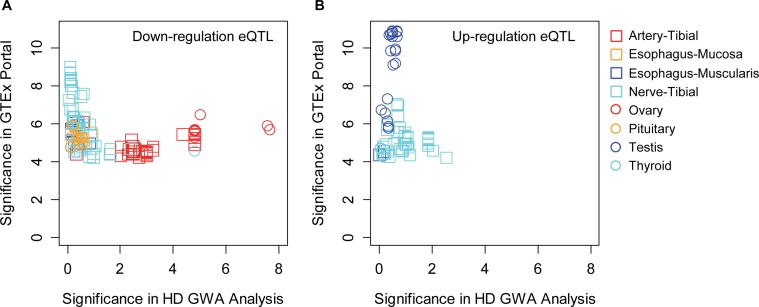
Fig 6. A potential role for reduced SOSTDC1 expression levels in HD onset modification.
Modifier-associated SNPs in the chromosome 7 region were checked for association with expression levels of SOSTDC1. The Y- and X-axes represent significances in GTEx eQTL and modification in our GWA analysis, respectively. Panel A shows SNPs whose minor alleles are associated with decreased expression levels of SOSTDC1. Panel B shows SNPS whose minor alleles are associated with increased expression levels of SOSTDC1.

References

    1. Bates GP, Dorsey R, Gusella JF, Hayden MR, Kay C, et al. (2015) Huntington disease. Nature Reviews Disease Primers: 15005 doi: 10.1038/nrdp.2015.5 - DOI - PubMed
    1. Huntington G (1872) On chorea. Med Surg Rep 26: 320–321.
    1. The Huntington's Disease Collaborative Research Group (1993) A novel gene containing a trinucleotide repeat that is expanded and unstable on Huntington's disease chromosomes. Cell 72: 971–983. - PubMed
    1. Gilliam TC, Bucan M, MacDonald ME, Zimmer M, Haines JL, et al. (1987) A DNA segment encoding two genes very tightly linked to Huntington's disease. Science 238: 950–952. - PubMed
    1. Gilliam TC, Tanzi RE, Haines JL, Bonner TI, Faryniarz AG, et al. (1987) Localization of the Huntington's disease gene to a small segment of chromosome 4 flanked by D4S10 and the telomere. Cell 50: 565–571. - PubMed

Publication types

Substances