


Estimation of Genetic Correlation via Linkage Disequilibrium Score Regression and Genomic Restricted Maximum Likelihood
- PMID: 29754766
- PMCID: PMC5993419
- DOI: 10.1016/j.ajhg.2018.03.021
Estimation of Genetic Correlation via Linkage Disequilibrium Score Regression and Genomic Restricted Maximum Likelihood
Abstract
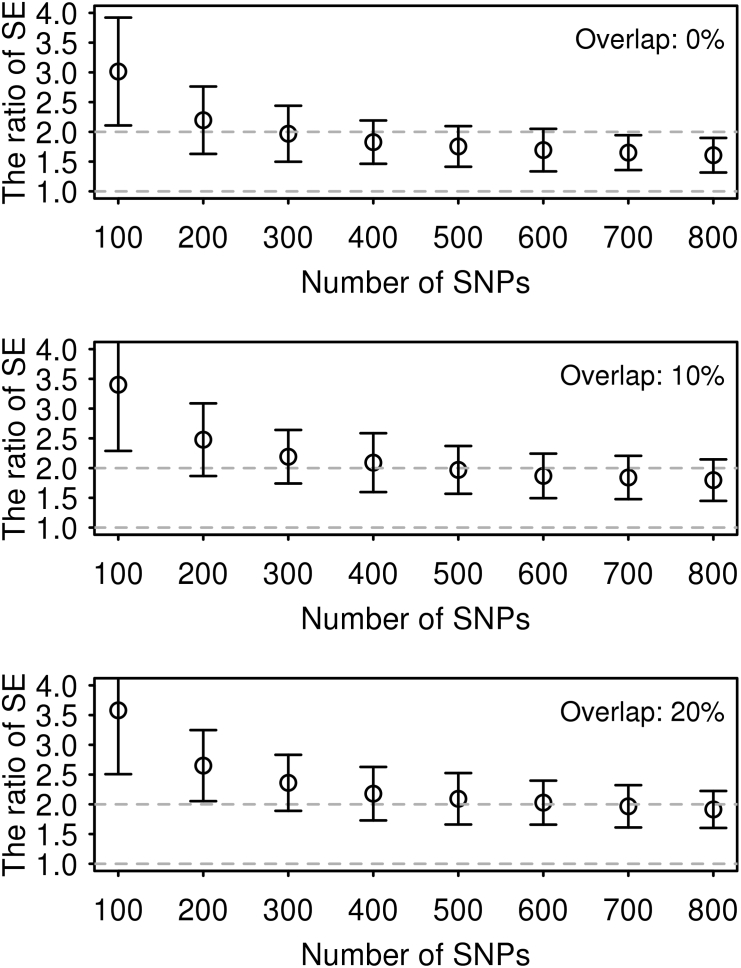
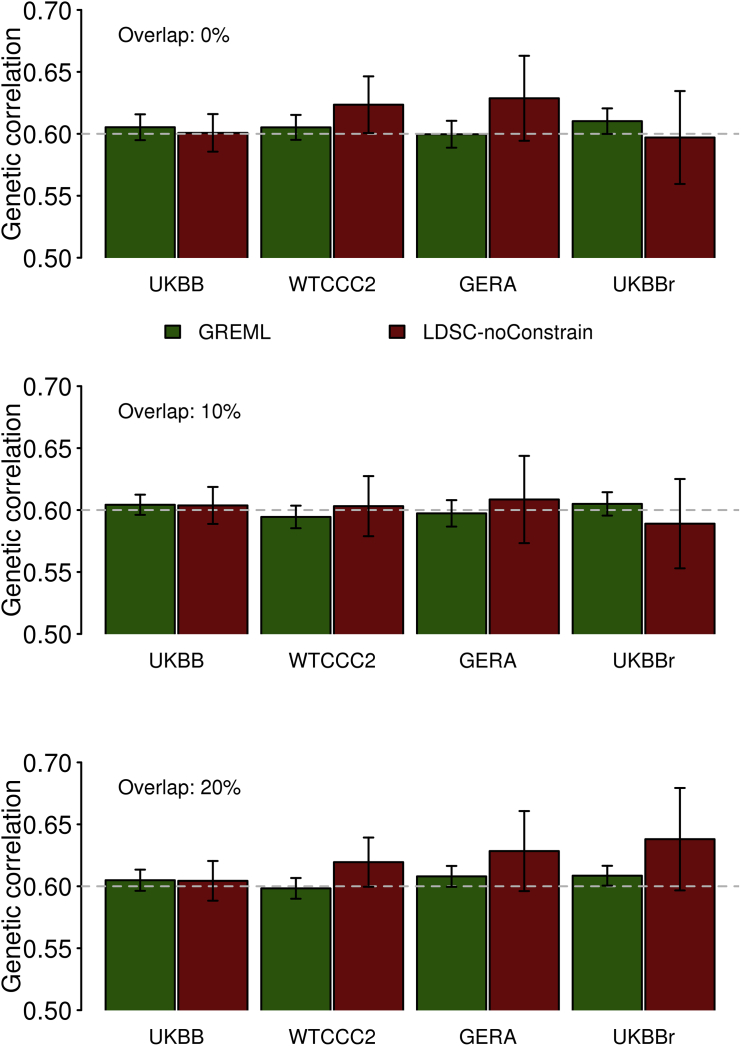
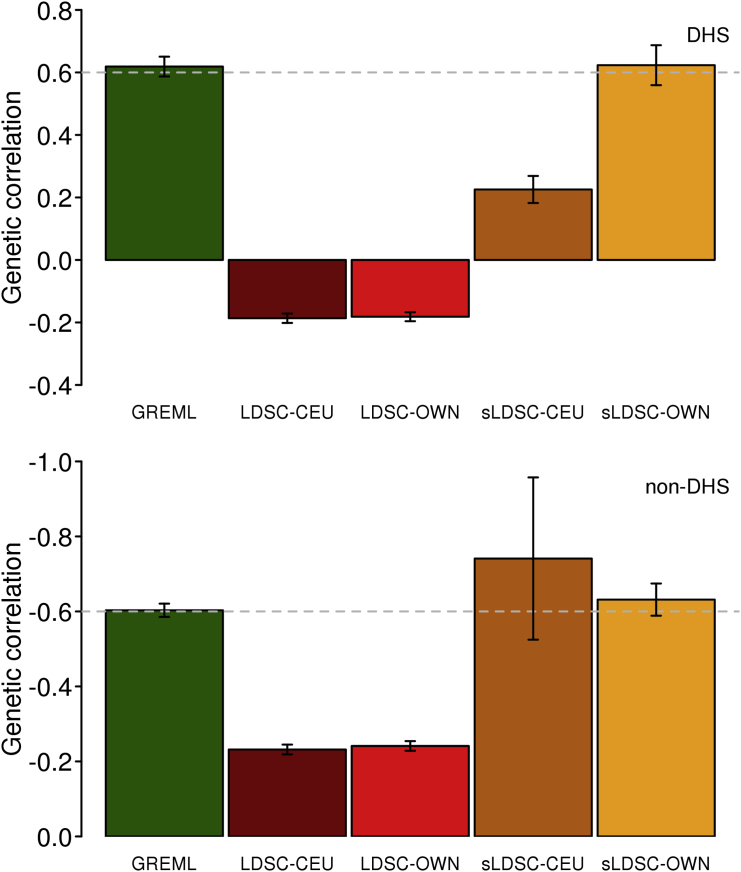
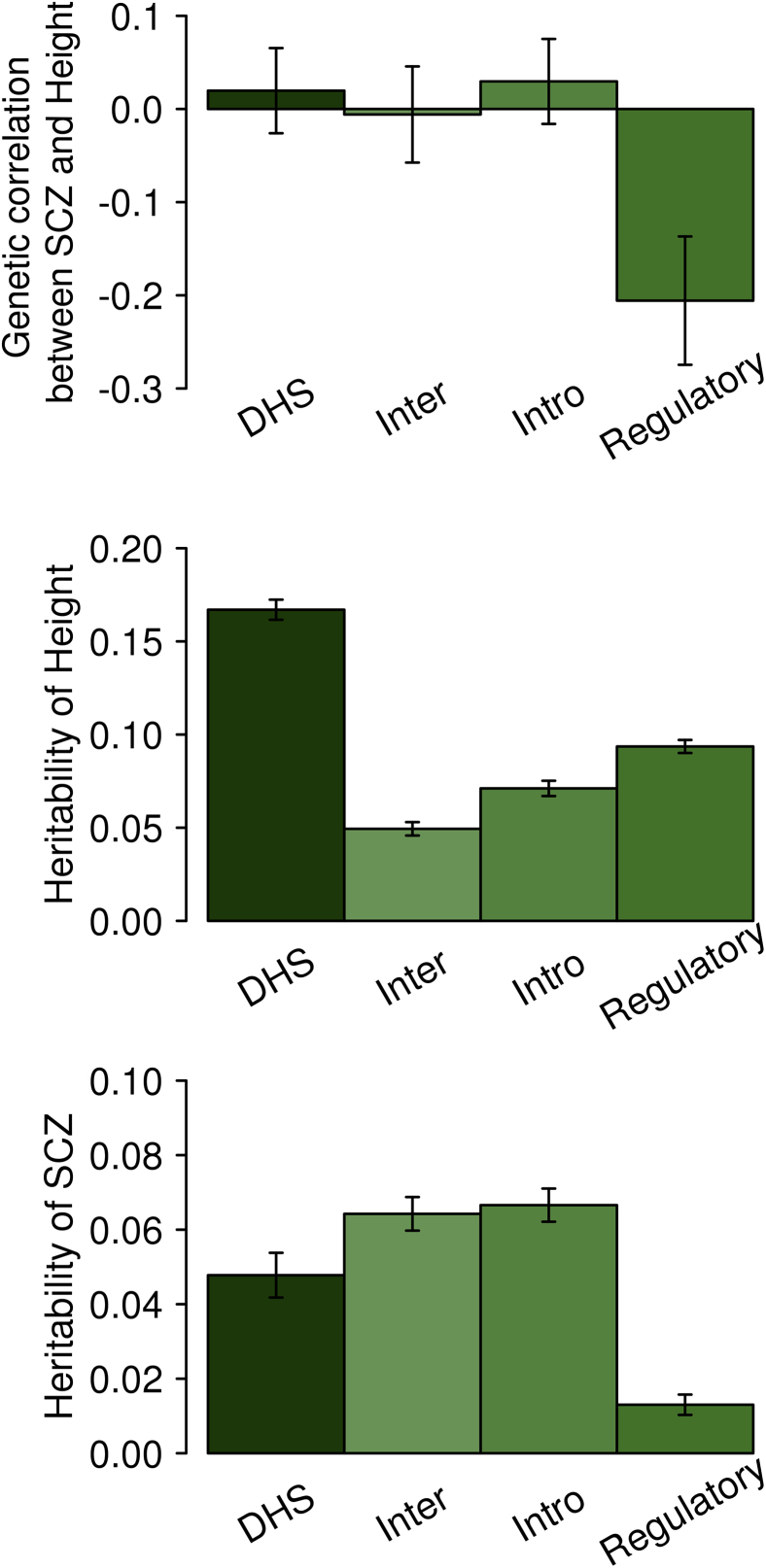
Genetic correlation is a key population parameter that describes the shared genetic architecture of complex traits and diseases. It can be estimated by current state-of-art methods, i.e., linkage disequilibrium score regression (LDSC) and genomic restricted maximum likelihood (GREML). The massively reduced computing burden of LDSC compared to GREML makes it an attractive tool, although the accuracy (i.e., magnitude of standard errors) of LDSC estimates has not been thoroughly studied. In simulation, we show that the accuracy of GREML is generally higher than that of LDSC. When there is genetic heterogeneity between the actual sample and reference data from which LD scores are estimated, the accuracy of LDSC decreases further. In real data analyses estimating the genetic correlation between schizophrenia (SCZ) and body mass index, we show that GREML estimates based on ∼150,000 individuals give a higher accuracy than LDSC estimates based on ∼400,000 individuals (from combined meta-data). A GREML genomic partitioning analysis reveals that the genetic correlation between SCZ and height is significantly negative for regulatory regions, which whole genome or LDSC approach has less power to detect. We conclude that LDSC estimates should be carefully interpreted as there can be uncertainty about homogeneity among combined meta-datasets. We suggest that any interesting findings from massive LDSC analysis for a large number of complex traits should be followed up, where possible, with more detailed analyses with GREML methods, even if sample sizes are lesser.
Keywords: SNP heritability; accuracy; biasedness; body mass index; genetic correlation; genome-wide SNPs; genomic restricted maximum likelihood; height; linkage disequilibrium score regression; schizophrenia.
Copyright © 2018 American Society of Human Genetics. All rights reserved.
Figures
References
-
- Mehta D., Tropf F.C., Gratten J., Bakshi A., Zhu Z., Bacanu S.-A., Hemani G., Magnusson P.K.E., Barban N., Esko T., Schizophrenia Working Group of the Psychiatric Genomics Consortium, LifeLines Cohort Study, and TwinsUK Evidence for genetic overlap between schizophrenia and age at first birth in women. JAMA Psychiatry. 2016;73:497–505. - PMC - PubMed
-
- Lee S.H., Byrne E.M., Hultman C.M., Kähler A., Vinkhuyzen A.A.E., Ripke S., Andreassen O.A., Frisell T., Gusev A., Hu X., Schizophrenia Working Group of the Psychiatric Genomics Consortium and Rheumatoid Arthritis Consortium International. Schizophrenia Working Group of the Psychiatric Genomics Consortium Authors. Schizophrenia Working Group of the Psychiatric Genomics Consortium Collaborators. Rheumatoid Arthritis Consortium International Authors. Rheumatoid Arthritis Consortium International Collaborators New data and an old puzzle: the negative association between schizophrenia and rheumatoid arthritis. Int. J. Epidemiol. 2015;44:1706–1721. - PMC - PubMed
-
- Lee S.H., DeCandia T.R., Ripke S., Yang J., Sullivan P.F., Goddard M.E., Keller M.C., Visscher P.M., Wray N.R., Schizophrenia Psychiatric Genome-Wide Association Study Consortium (PGC-SCZ) International Schizophrenia Consortium (ISC) Molecular Genetics of Schizophrenia Collaboration (MGS) Estimating the proportion of variation in susceptibility to schizophrenia captured by common SNPs. Nat. Genet. 2012;44:247–250. - PMC - PubMed
-
- Harville D.A. Maximum likelihood approaches to variance component estimation and to related problems. J. Am. Stat. Assoc. 1977;72:320–338.
Publication types
MeSH terms
Grants and funding
LinkOut - more resources
Full Text Sources
Other Literature Sources
Research Materials
