. 2018 Apr 17;9(29):20781-20794.
doi: 10.18632/oncotarget.25111.

A subgroup of pleural mesothelioma expresses ALK protein and may be targetable by combined rapamycin and crizotinib therapy

Affiliations

A subgroup of pleural mesothelioma expresses ALK protein and may be targetable by combined rapamycin and crizotinib therapy

Dina Mönch et al. Oncotarget. .

Abstract

Malignant pleural mesothelioma (MPM) is a neoplasm with inferior prognosis and notorious chemotherapeutic resistance. Targeting aberrantly overexpressed kinases to cure MPM is a promising therapeutic strategy. Here, we examined ALK, MET and mTOR as potential therapeutic targets and determined the combinatorial efficacy of ALK and mTOR targeting on tumor cell growth in vivo. First, ALK overexpression, rearrangement and mutation were studied in primary MPM by qRT-PCR, FISH, immunohistochemistry and sequence analysis; mTOR and MET expression by qRT-PCR and immunohistochemistry. Overexpression of full-length ALK transcripts was observed in 25 (19.5%) of 128 primary MPM, of which ten expressed ALK protein. ALK overexpression was not associated with gene rearrangement, amplification or kinase-domain mutation. mTOR protein was detected in 28.7% MPM, co-expressed with ALK or MET in 5% and 15% MPM, respectively. The ALK/MET inhibitor crizotinib enhanced the anti-tumor effect of the mTOR-inhibitor rapamycin in a patient-derived MPM xenograft with co-activated ALK/mTOR: combined therapy achieved tumor shrinkage in 4/5 tumors and growth stagnation in one tumor. Treatment effects on proliferation, apoptosis, autophagy and pathway signaling were assessed using Ki-67 immunohistochemistry, TUNEL assay, LC3B immunofluorescence, and immunoblotting. Co-treatment significantly suppressed cell proliferation and induced autophagy and caspase-independent, necrotic cell death. Rapamycin/crizotinib simultaneously inhibited mTORC1 (evidenced by S6 kinase and RPS6 dephosphorylation) and ALK signaling (ALK, AKT, STAT3 dephosphorylation), and crizotinib suppressed the adverse AKT activation induced by rapamycin. In conclusion, co-treatment with rapamycin and crizotinib is effective in suppressing MPM tumor growth and should be further explored as a therapeutic alternative in mesothelioma.

Keywords: ALK; combination therapy; crizotinib; pleural mesothelioma; rapamycin.


Conflict of interest statement

CONFLICTS OF INTEREST All authors have no conflicts of interest to declare.

Figures
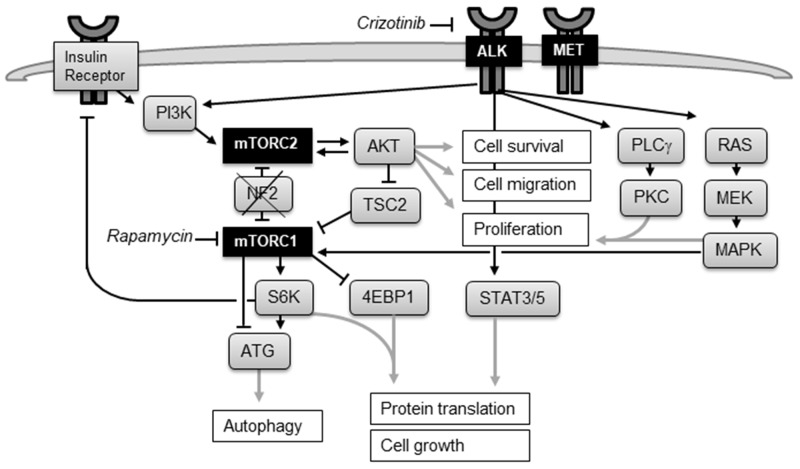
Figure 1
Figure 1. The mTOR and ALK signaling network
Activation of tyrosine kinase ALK through ligand binding stimulates downstream signaling through the PI3K/AKT, STAT3, and RAS/MAPK pathways. Deletion of NF2 leads in 40-50% of MPM to aberrant activation of mTOR. mTORC1 promotes protein synthesis through phosphorylation of S6K and 4EBP1 and inhibits autophagy. mTORC2 functions as an effector of PI3K signaling and controls proliferation and survival primarily by activating AKT. Positive feedback loop: partial activation of AKT promotes activation of mTORC2, which in turn phosphorylates and fully activates AKT. Negative feedback loop: mTORC1 suppresses mTORC2 activation through the inhibition of insulin/PI3K signaling. Inhibiting mTORC1 releases the negative feedback and increases AKT activation.
Figure 2
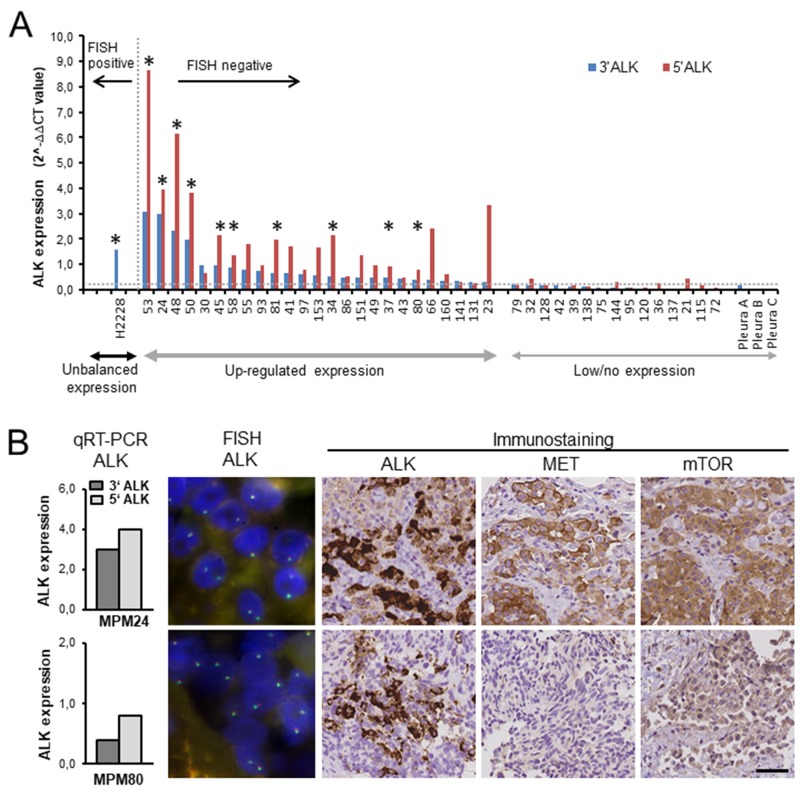
Figure 2. Expression of ALK, MET and mTOR in mesothelioma tumor tissue samples
(A) qRT-PCR analysis of ALK was performed relative to the PGK1 housekeeping gene. The horizontal dashed line indicates the cut-off value for altered ALK expression in ALK positive lung cancer (0.3); [24] blue bars, ALK 3‘ portion; red bars, ALK 5‘ portion. The asterisks point to tumors expressing ALK protein. Lung cancer cell line H2228 served as positive control showing an unbalanced expression of the ALK 3‘ portion due to EML4-ALK translocation. (B) Analysis of ALK, MET and mTOR expression in MPM24 and MPM80. Upregulated, balanced expression of ALK transcripts was independent of translocation, as confirmed by ALK break-apart FISH. Scale bar, 200μm.
Figure 3
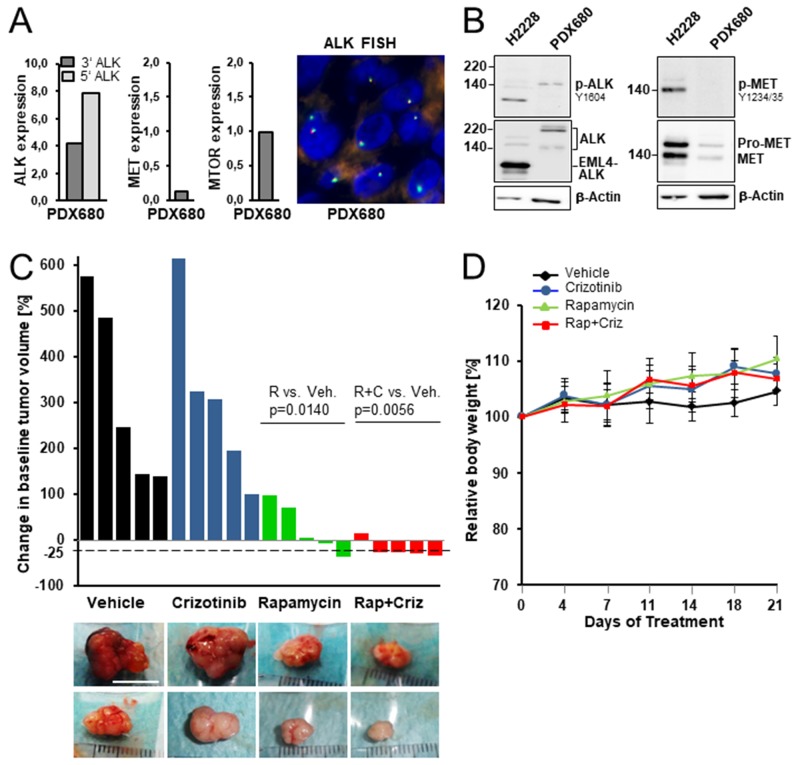
Figure 3. Preclinical efficacy of rapamycin, crizotinib and combined treatment in a mesothelioma xenograft model
(A) ALK, MET and MTOR transcript expression in xenograft PDX680. ALK break-apart FISH confirmed translocation-independent gene expression. (B) ALK was activated in PDX680, MET was expressed at low levels, but not phosphorylated demonstrated by immunoblot analysis using cell line H2228 as positive control for active EML4-ALK and MET. (C) Waterfall plots of tumoral response in mice treated with vehicle, crizotinib, rapamycin, or rapamycin and crizotinib. Each bar indicated percent change in the volume of an individual tumor on day 21 compared with day 0 of treatment. Statistically significant differences: vehicle vs. rapamycin (p=0.0140), vehicle vs. combined treatment (p=0.0056). Representative pictures of excised tumors from each treatment group; each row contains tumors that had almost identical volumes at day 0 of treatment: upper row, 160-200 mm3; lower row, 100-120 mm3. Scale bar, 10 mm. (D) Changes in the mean of body weight over the time course of the experiment.
Figure 4
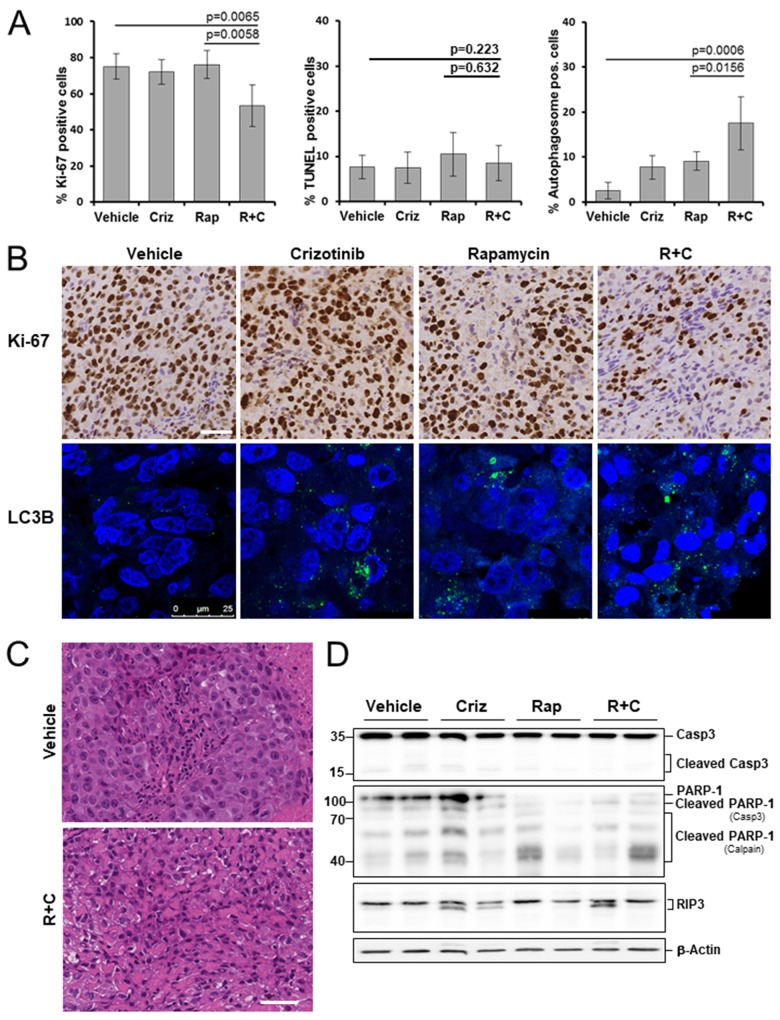
Figure 4. Effects of rapamycin, crizotinib and combined treatment on cell proliferation, apoptosis and autophagy in a mesothelioma xenograft model
Mice bearing PDX680 xenografts were treated with vehicle, crizotinib (Criz), rapamycin (Rap), or rapamycin and crizotinib (Rap+Criz) for 21 days. (A) Proliferative cells were visualized by immunohistochemical staining with anti-Ki-67, apoptotic cells by TUNEL assay, and autophagy by immunofluorescence monitoring of LC3B incorporation into autophagosomal membranes. Quantification of overall percentage of area positive for Ki-67 (left), TUNEL (middle), LC3B (right). Error bars represent s.d. between individual animals (n=5 per group). (B) Representative immunohistochemical images for Ki-67 (top) and immunofluorescence images for LC3B (bottom) of vehicle and treated samples. (C) Representative H&E images of tumors treated with vehicle or rapamycin and crizotinib. Note vacuolization, chromatin condensation and loss of cell membrane integrity as effects of combined treatment. (D) Immunoblots of PDX680 tumor cells isolated on day 21 after treatment of indicated vehicle or drug (two individual tumors per treatment group). Criz, crizotinib; Rap, rapamycin; R+C, rapamycin and crizotinib; scale bar, 200μm.
Figure 5
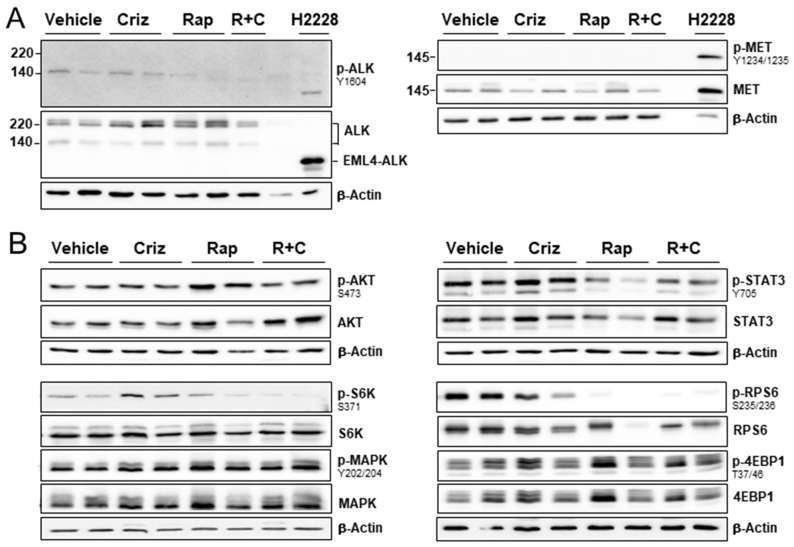
Figure 5. Effect of ALK/MET inhibitor crizotinib and mTOR inhibitor rapamycin on downstream signaling pathways in a mesotheliom xenograft model
Immunoblots of PDX680 tumor cells isolated from mice after treatment with vehicle, crizotinib (Criz), rapamycin (Rap), or rapamycin and crizotinib (R+C) for 21 days. (A) ALK and MET activity were assessed by using lung cancer cell line H2228 as positive control for the expression of EML4-ALK and active MET. Two tumors each treated with vehicle, crizotinib, rapamycin; one tumor treated with rapamycin/crizotinib. (B) Two tumors per treatment group were analyzed for AKT/p-AKT, STAT3/p-STAT3, S6K/p-S6K, and RPS6/p-RPS6 expression.

References

    1. Robinson BW, Musk AW, Lake RA. Malignant mesothelioma. Lancet. 2005;366:397–408. - PubMed
    1. Cao C, Tian D, Manganas C, Matthews P, Yan TD. Systematic review of trimodality therapy for patients with malignant pleural mesothelioma. Ann Cardiothorac Surg. 2012;1:428–437. - PMC - PubMed
    1. Scherpereel A, Astoul P, Baas P, Berghmans T, Clayson H, de Vuyst P, Dienemann H, Galateau-Salle F, Hennequin C, Hillerdal G, Le Péchoux C, Mutti L, Pairon JC, et al. Guidelines of the european respiratory society and the european society of thoracic surgeons for the management of malignant pleural mesothelioma. Eur Respir J. 2010;35:479–495. - PubMed
    1. Roengvoraphoj M, Tsongalis GJ, Dragnev KH, Rigas JR. Epidermal growth factor receptor tyrosine kinase inhibitors as initial therapy for non-small cell lung cancer: focus on epidermal growth factor receptor mutation testing and mutation-positive patients. Cancer Treat Rev. 2013;39:839–850. - PubMed
    1. Shaw AT, Ou SH, Bang YJ, Camidge DR, Solomon BJ, Salgia R, Riely GJ, Varella-Garcia M, Shapiro GI, Costa DB, Doebele RC, Le LP, Zheng Z, et al. Crizotinib in ROS1-rearranged non–small-cell lung cancer. N Engl J Med. 2014;371:1963–1971. - PMC - PubMed

LinkOut - more resources