


Epigenetic control of macrophage polarization: implications for targeting tumor-associated macrophages
- PMID: 29755698
- PMCID: PMC5945509
- DOI: 10.18632/oncotarget.24556
Epigenetic control of macrophage polarization: implications for targeting tumor-associated macrophages
Abstract
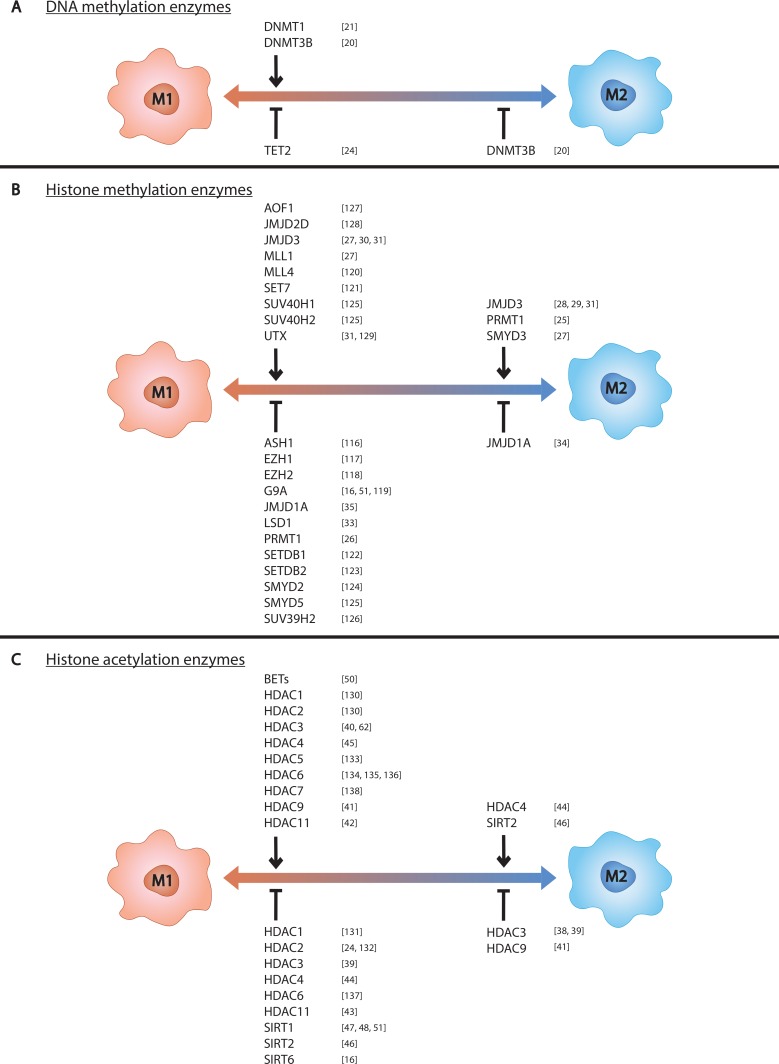
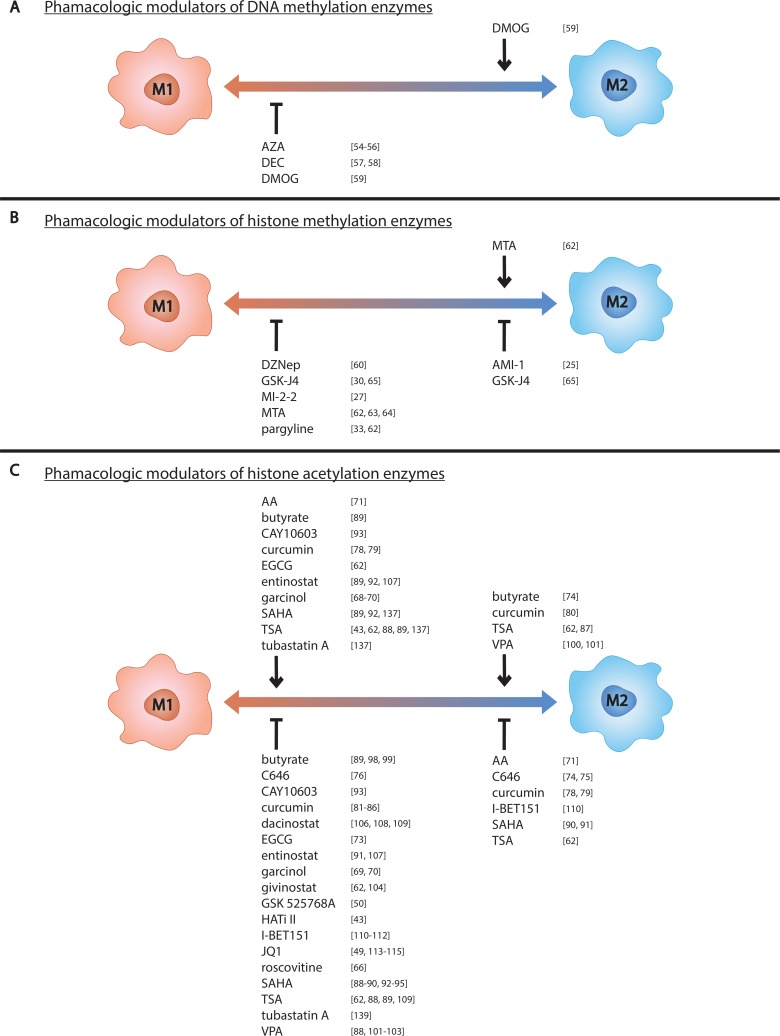
The progression of cancer is a result of not only the growth of the malignant cells but also the behavior of other components of the tumor microenvironment (TME). Tumor-associated macrophages (TAMs) are key components of the TME that influence tumor growth and disease progression. TAMs can either inhibit or support tumor growth depending on their polarization to classically-activated macrophages (M1s) or alternatively-activated macrophages (M2s), respectively. Epigenetic regulation plays a significant role in determining this polarization and manipulating the epigenetic regulation in macrophages would provide a means for selectively targeting M2s thereby eliminating tumor-supporting TAMs while sparing tumor-inhibiting M1 TAMs. Many pharmacologic modulators of epigenetic enzymes are currently used clinically and could be repurposed for treating tumors with high TAM infiltrate. While much research involving epigenetic enzymes and their modulators has been performed in M1s, significantly less is known about the epigenetic regulation of M2s. This review highlights the field's current knowledge of key epigenetic enzymes and their pharmacologic modulators known to influence macrophage polarization.
Keywords: epigenetics; macrophage; macrophage polarization; tumor microenvironment; tumor-associated macrophage.
Conflict of interest statement
CONFLICTS OF INTEREST The authors have no conflicts to declare.
Figures
References
-
- Siegel RL, Miller KD, Jemal A. Cancer Statistics, 2017. CA Cancer J Clin. 2017;67:7–30. https://doi.org/10.3322/caac.21387. - DOI - PubMed
-
- Amend SR, Pienta KJ. Ecology meets cancer biology: the cancer swamp promotes the lethal cancer phenotype. Oncotarget. 2015;6:9669–78. https://doi.org/10.18632/oncotarget.3430. - DOI - PMC - PubMed
-
- Pienta KJ, Robertson BA, Coffey DS, Taichman RS. The cancer diaspora: Metastasis beyond the seed and soil hypothesis. Clin Cancer Res. 2013;19:5849–55. https://doi.org/10.1158/1078-0432.CCR-13-2158. - DOI - PMC - PubMed
-
- Yang KR, Mooney SM, Zarif JC, Coffey DS, Taichman RS, Pienta KJ. Niche inheritance: a cooperative pathway to enhance cancer cell fitness through ecosystem engineering. J Cell Biochem. 2014;115:1478–85. https://doi.org/10.1002/jcb.24813. - DOI - PMC - PubMed
-
- de Groot AE, Roy S, Brown JS, Pienta KJ, Amend SR. Revisiting Seed and Soil: Examining the Primary Tumor and Cancer Cell Foraging in Metastasis. Mol Cancer Res. 2017;15:361–70. https://doi.org/10.1158/1541-7786.MCR-16-0436. - DOI - PMC - PubMed
Publication types
Grants and funding
LinkOut - more resources
Full Text Sources
Other Literature Sources
