


Loss of DMRT1 gene in a Mos 45,XY,-9[8]/46,XY,r(9)[29]/47,XY,+idic r(9)× 2[1]/46,XY,idic r(9)[1]/46,XY[1] female presenting with short stature
- PMID: 29760778
- PMCID: PMC5941566
- DOI: 10.1186/s13039-018-0379-z
Loss of DMRT1 gene in a Mos 45,XY,-9[8]/46,XY,r(9)[29]/47,XY,+idic r(9)× 2[1]/46,XY,idic r(9)[1]/46,XY[1] female presenting with short stature
Abstract
Background: A 46,XY sex reversal syndrome is characterized by discordant genetic and phenotypic sex, leading to normal external female genitalia, undeveloped gonads and presence of Müllerian structures in an otherwise 46,XY individual. Chromosome 9pter aberrations, such as ring chromosome have been reported to cause 46,XY disorders of sex development (DSD), due to involvement of DMRT1 gene located at the 9p24.3 region.
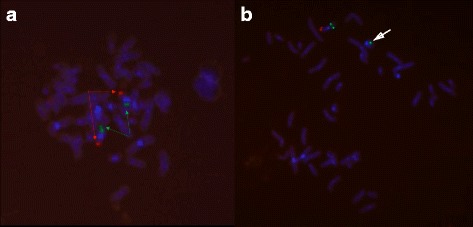
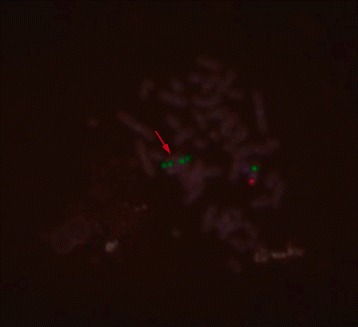
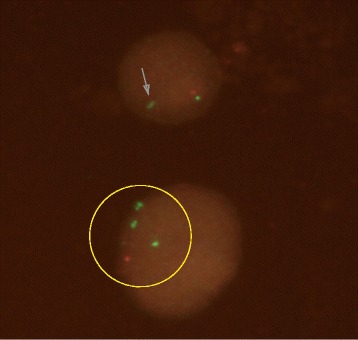
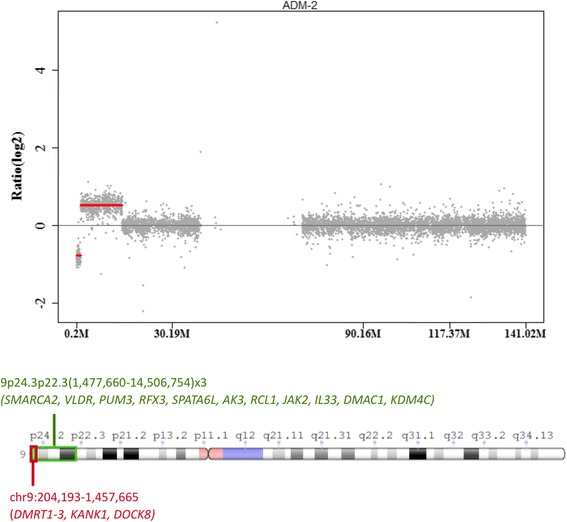
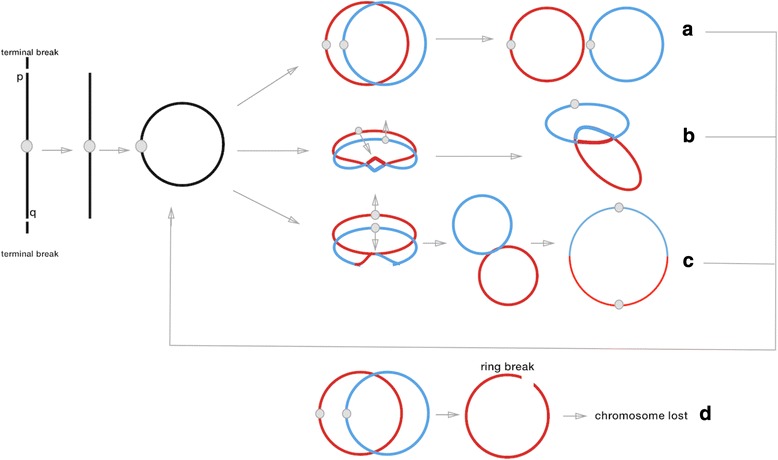
Case presentation: This study presents a unique case of a 12-year-old female with mos 46,XY, (r)9[31]/45,XY,-9[9] karyotype, presenting with intellectual disability and short stature, mimicking Turner syndrome. Re-karyotyping was performed using standard GTL-banding technique. Further cytogenetic study using standard metaphase fluorescent in situ hybridization (FISH) technique was applied to cultured lymphocytes from peripheral blood, hybridized using green control probe specific to 9q21 loci, and red DMRT1 probe specific to 9p24.3 loci. Cytogenetics and FISH analysis revealed mos 45,XY,-9[8]/46,XY,r(9)[29]/47,XY,+idic r(9)× 2[1]/46,XY,idic r(9)[1]/46,XY[1] and haploinsufficiency of DMRT1 gene in most cells. CGH array revealed a deletion around 1.25 Mb at 9p24.3 loci [arr 9p24.3(204,193-1,457,665)× 1] and three duplications around 13 Mb [9p24.3p22.3(1,477,660-14,506,754)× 3] near the breakage point that formed the ring chromosome 9.
Conclusions: The clinical presentation of the subject that mimics Turner syndrome highlights the importance of cytogenetic analysis to detect the possibility of ring chromosome 9. Sex reversal due to haploinsufficiency of DMRT1 gene in ring chromosome 9 structures is exceedingly rare with only a handful of cases ever reported. This finding further highlights the importance of DMRT1 gene in sex determination and differentiation in males. More research is required to pinpoint the exact mechanism that underlies sex reversal caused by DMRT1 haploinsufficiency.
Keywords: 46,XY-DSD; DMRT1; Ring-chromosome-9; Sex-reversal; Short-stature.
Conflict of interest statement
Not applicable.Parental written informed consent was obtained for the publication of this report. Written informed consent was obtained from parents of the patient for publication of this case report and accompanying images. A copy of the written consent is available for review by the Editor-in-Chief of this journal.The authors declare that they have no competing interest.Springer Nature remains neutral with regard to jurisdictional claims in published maps and institutional affiliations.
Figures


References
-
- Achermann JC, Hughes IA. Disorders of sex development. In: Melmed S, Polonsky KS, Larsen PR, Kronenberg HM, editors. Williams textbook of endocrinology. 12. Philadelphia: Elsevier Saunders; 2011. pp. 868–870.
Publication types
LinkOut - more resources
Full Text Sources
Other Literature Sources
Miscellaneous
