


An EAACI task force report: recognising the potential of the primary care physician in the diagnosis and management of drug hypersensitivity
- PMID: 29760877
- PMCID: PMC5944153
- DOI: 10.1186/s13601-018-0202-2
An EAACI task force report: recognising the potential of the primary care physician in the diagnosis and management of drug hypersensitivity
Abstract
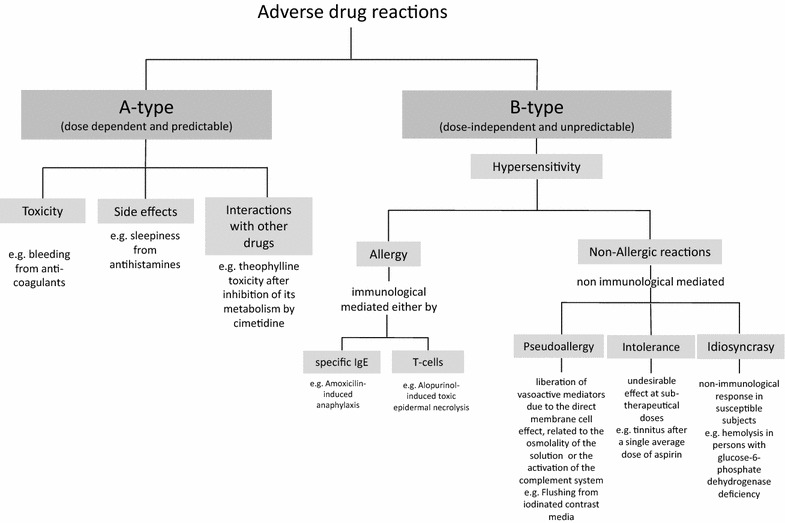
Adverse drug reactions include drug hypersensitivity reactions (DHRs), which can be immunologically mediated (allergy) or non-immunologically mediated. The high number of DHRs that are unconfirmed and often self-reported is a frequent problem in daily clinical practice, with considerable impact on future prescription choices and patient health. It is important to distinguish between hypersensitivity and non-hypersensitivity reactions by adopting a structured diagnostic approach to confirm or discard the suspected drug, not only to avoid life-threatening reactions, but also to reduce the frequent over-diagnosis of DHRs. Primary care physicians are often the first point of contact for the sufferer of a reaction, as such they have a key role in deciding whether to discard the diagnosis or send the patient for further investigation. In this review, we highlight the importance of diagnosing DHRs, analysing in detail the role of primary care physicians. We describe the common patterns of DHRs and signs of its progression, as well as the indications and contraindications for referring the patient to an allergist. The diagnostic process is described and the possible tests are discussed, which often depend on the drug involved and the type of DHR suspected. We also describe recommendations regarding the avoidance of medication suspected to have caused the reaction and the use of alternatives.
Keywords: Anaphylaxis; Betalactam; Drug allergy; Drug provocation test; Exanthem; Hypersensitivity; Non-steroidal anti-inflammatory drugs; Skin test; Urticaria.
Figures


References
-
- Organization WH. International drug monitoring: the role of the hospital. Geneva: The Organization; 1966.
-
- Rawlins MD, Thompson J. Pathogenesis of adverse drug reactions. In: Davies DM, editor. Textbook of adverse drug reactions. Oxford: Oxford University Press; 1977. p. 10.
Publication types
LinkOut - more resources
Full Text Sources
Other Literature Sources
