


Diagnosis and Treatment of Congenital Sensorineural Hearing Loss
- PMID: 29761033
- PMCID: PMC5947965
- DOI: 10.1007/s40136-017-0163-3
Diagnosis and Treatment of Congenital Sensorineural Hearing Loss
Abstract
Purpose of review: The aim of this report is to review current literature regarding the work-up and management of congenital sensorineural hearing loss.
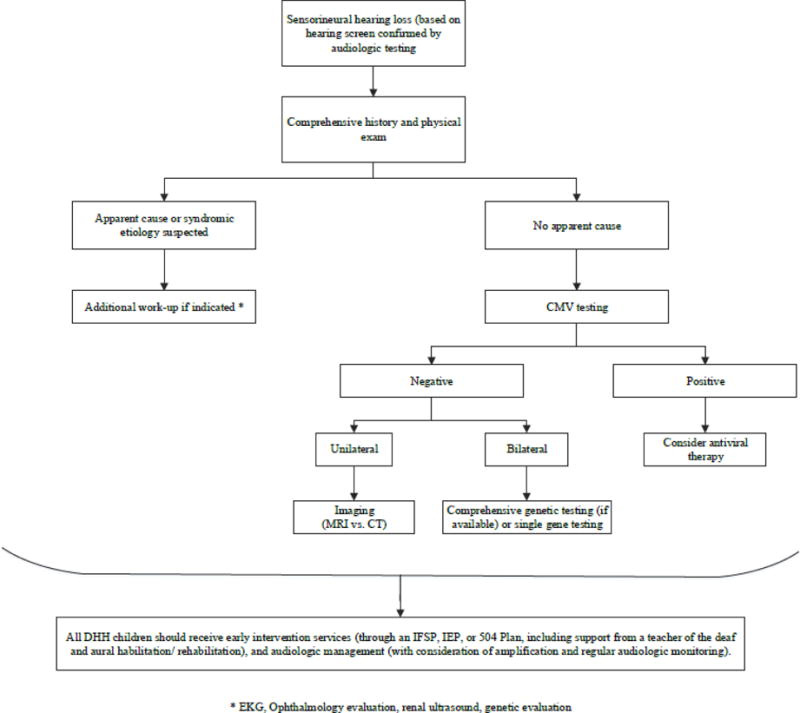
Recent findings: Diagnostic evaluation of a newborn with sensorineural hearing loss begins with a complete audiologic evaluation and comprehensive history and physical exam. This review presents a diagnostic algorithm for the work-up of congenital hearing loss, focusing on the three following modalities: cytomegalovirus testing, genetic evaluation, and imaging.
Summary: Newborn hearing loss is a common problem and may be attributed to genetic and non-genetic factors. Complete diagnostic evaluation and treatment are essential for preventing delays in language development. Treatment consists of early intervention services and consideration of hearing aid amplification and cochlear implantation.
Keywords: Congenital hearing loss; cochlear implantation; cytomegalovirus; diagnosis; newborn hearing screen; prelingual deafness.
Conflict of interest statement
Conflict of Interest: None. Conflict of Interest Dr. Chan and Dr. Chari have nothing to declare.
Figures
References
-
- Mehra S, Eavey RD, Keamy DG. The epidemiology of hearing impairment in the United States: newborns, children, and adolescents. Otolaryngol-Head Neck Surg. 2009;140(4):461–72. - PubMed
-
- Kennedy CR, McCann DC, Campbell MJ. Language ability after early detection of permanent childhood hearing impairment. N Engl J Med. 2006;354(20):2131–2141. - PubMed
-
- Moeller MP. Early intervention and language development in children who are deaf and hard of hearing. Pediatrics. 2000;106(3):1–9. - PubMed
-
- Joint Committee on Infant Hearing. Year 2007 position statement: principles and guidelines for early hearing detection and intervention programs. Pediatrics. 2007;120(4):898–921. - PubMed
-
- Balkany TJ, Berman SA, Simmons MA, Jafek BW. Middle ear effusions in neonates. Laryngoscope. 1978;88(3):398–405. - PubMed
Grants and funding
LinkOut - more resources
Full Text Sources
Other Literature Sources