


Molecular features in young vs elderly breast cancer patients and the impacts on survival disparities by age at diagnosis
- PMID: 29761914
- PMCID: PMC6051220
- DOI: 10.1002/cam4.1544
Molecular features in young vs elderly breast cancer patients and the impacts on survival disparities by age at diagnosis
Abstract
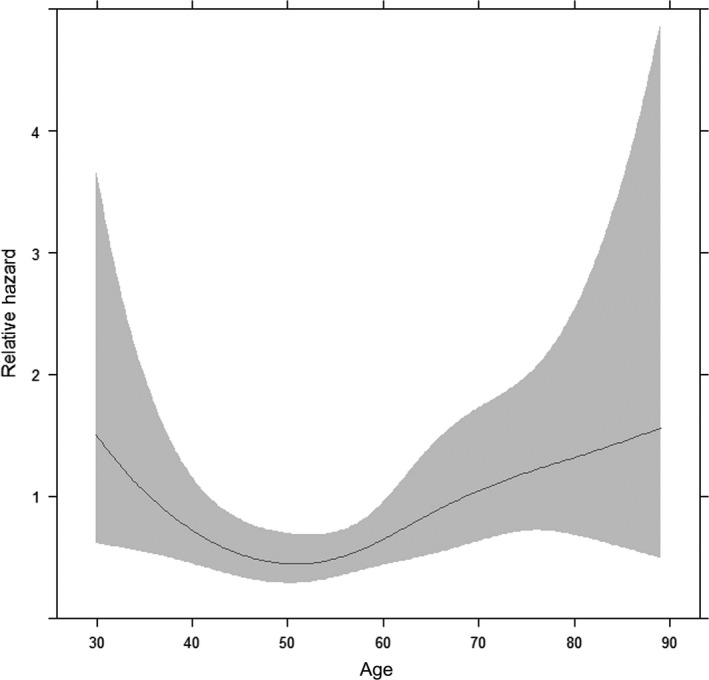
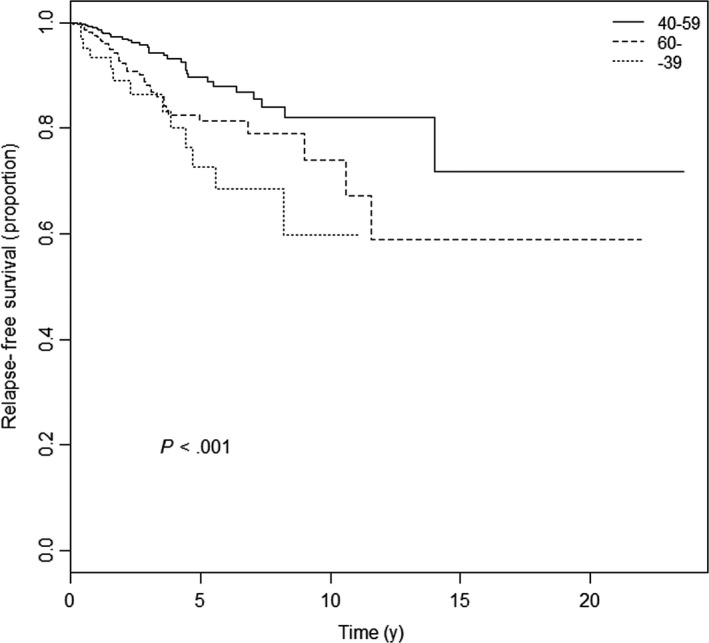
Young and elderly breast cancer patients are more likely to have a poorer outcome than middle-aged patients. The intrinsic molecular features for this disparity are unclear. We obtained data from the Cancer Genome Atlas (TCGA) on May 15, 2017 to test the potential mediation effects of the molecular features on the association between age and prognosis with a four-step approach. The relative contributions of the molecular features (PAM50 subtype, risk stratification, DNAm age, and mutations in TP53, PIK3CA, MLL3, CDH1, GATA3, and MAP3K1) to age disparities in survival were estimated by Cox proportional hazard models with or without the features. Young patients were significantly more likely to have basal-like subtype, GATA3 mutations, and younger DNA methylation (DNAm) age than middle-aged patients (P < .05). Both the young and elderly patients had a significantly increased risk of breast cancer recurrence after adjusted by race, tumor size, and node status (Hazard ratio [HR] (95% confidence interval [CI]): 2.81 [1.44, 5.45], 2.37 [1.45, 3.89], respectively). This increased risk was weakened in the young patients after further adjustments in the molecular features, particularly basal-like subtype, GATA3 mutations, and DNAm age (HR [95%CI]: 1.87 [0.81, 4.32]), resulting in 33.5% decreased risk of recurrence. Meanwhile, the adjustments of the molecular features did not alter the recurrence risk for the elderly patients. Compared with middle-aged patients of breast cancer, poorer prognosis of elderly patients may be caused by aging, while poorer prognosis of young patients was probably mediated through intrinsic characteristics, such as basal-like subtype, GATA3 mutations, and DNAm age of the cancerous tissues.
Keywords: age; breast cancer; mediation; molecular features; prognosis.
© 2018 The Authors. Cancer Medicine published by John Wiley & Sons Ltd.
Figures
References
-
- Torre LA, Bray F, Siegel RL, Ferlay J, Lortet‐tieulent J, Jemal A. Global cancer statistics, 2012. CA Cancer J Clin. 2015;65:87‐108. - PubMed
-
- Berry DA, Cronin KA, Plevritis SK, et al. Effect of screening and adjuvant therapy on mortality from breast cancer. N Engl J Med. 2005;353:1784‐1792. - PubMed
Grants and funding
LinkOut - more resources
Full Text Sources
Other Literature Sources
Research Materials
Miscellaneous
