


Sex differences in the ACTH and cortisol response to pharmacological probes are stressor-specific and occur regardless of alcohol dependence history
- PMID: 29763783
- PMCID: PMC6411284
- DOI: 10.1016/j.psyneuen.2018.05.007
Sex differences in the ACTH and cortisol response to pharmacological probes are stressor-specific and occur regardless of alcohol dependence history
Abstract
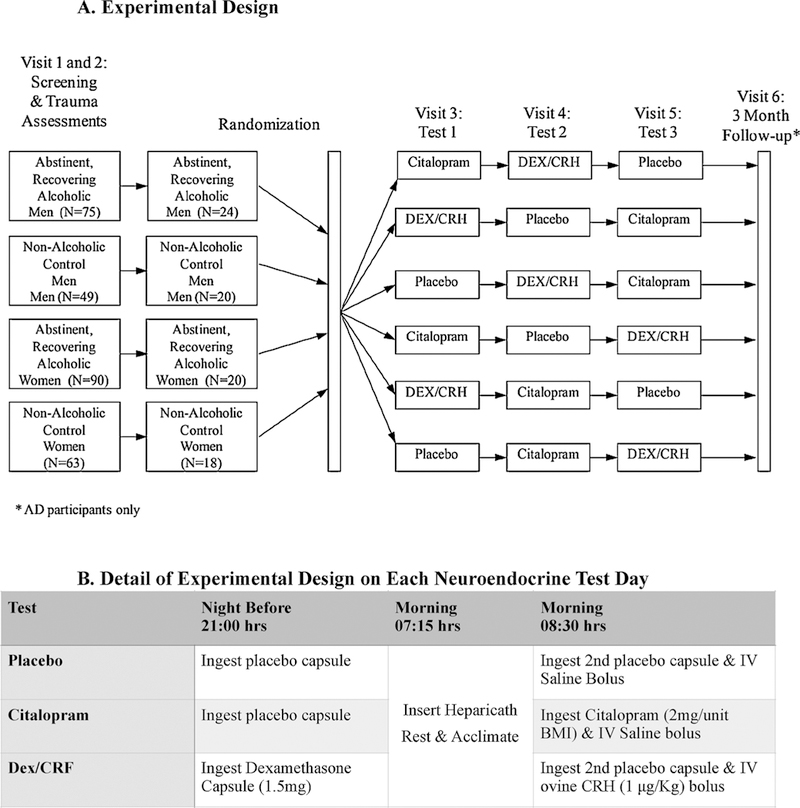
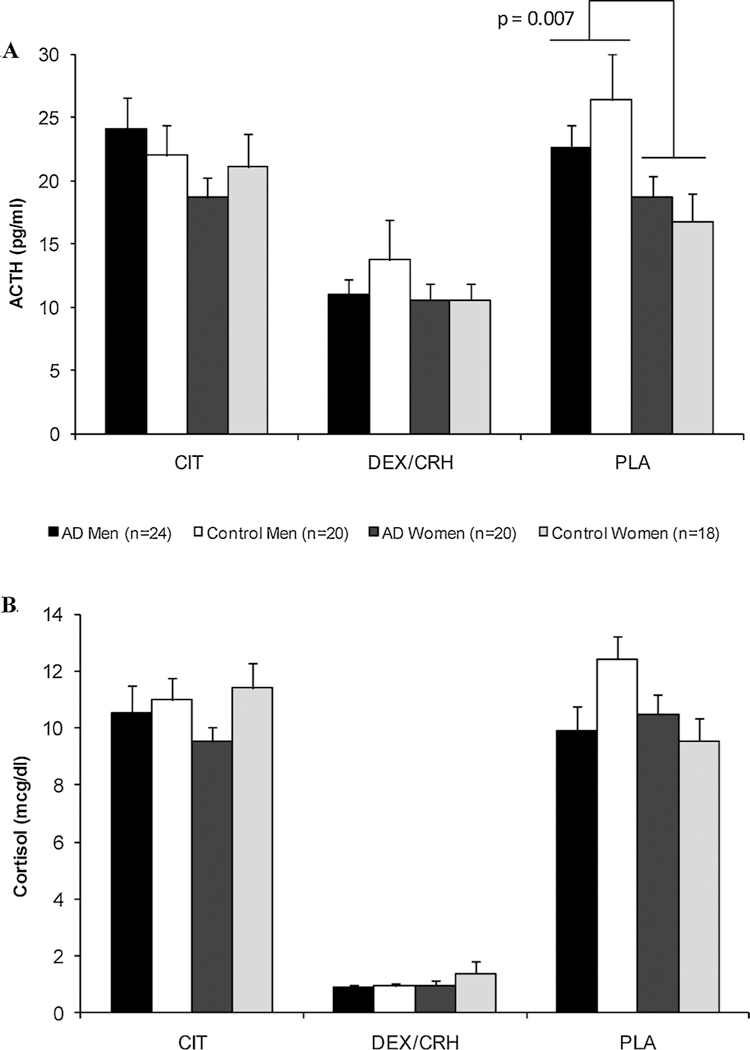
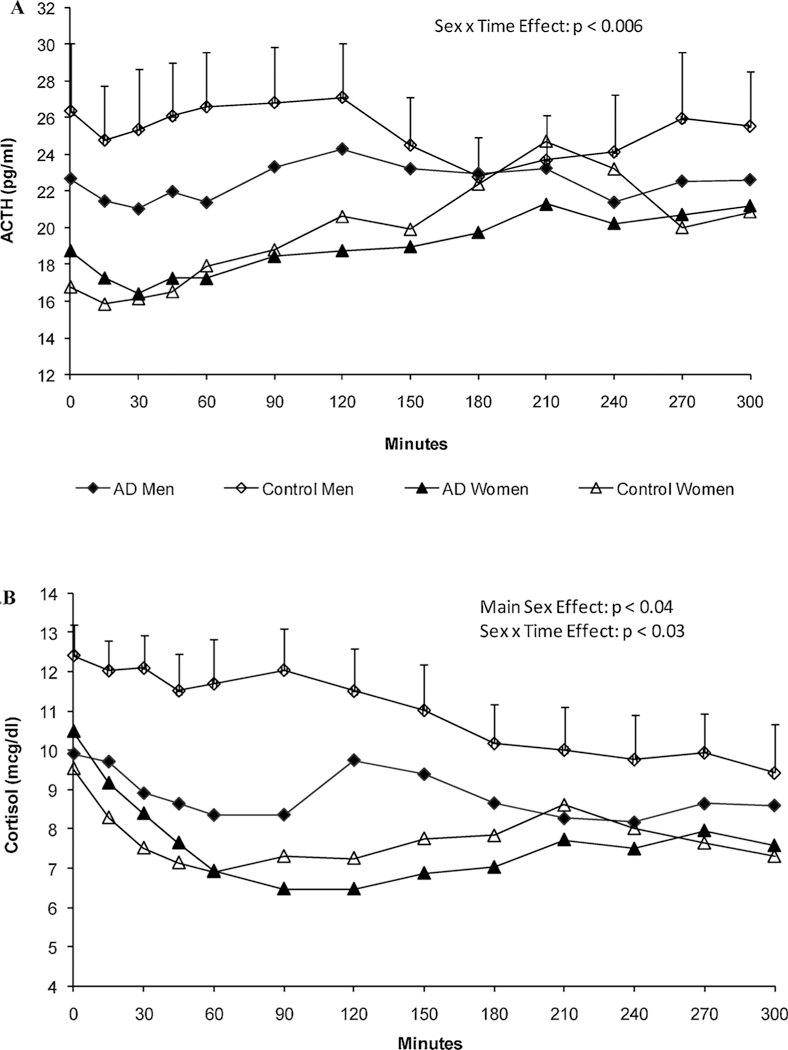
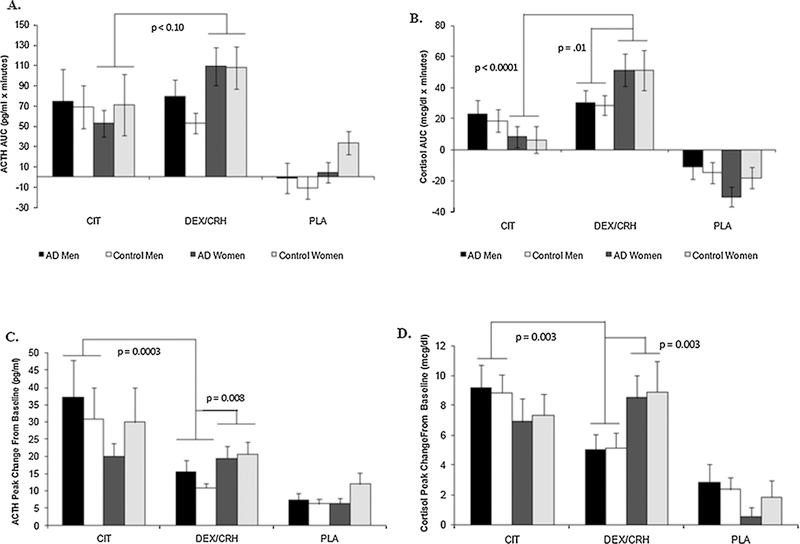
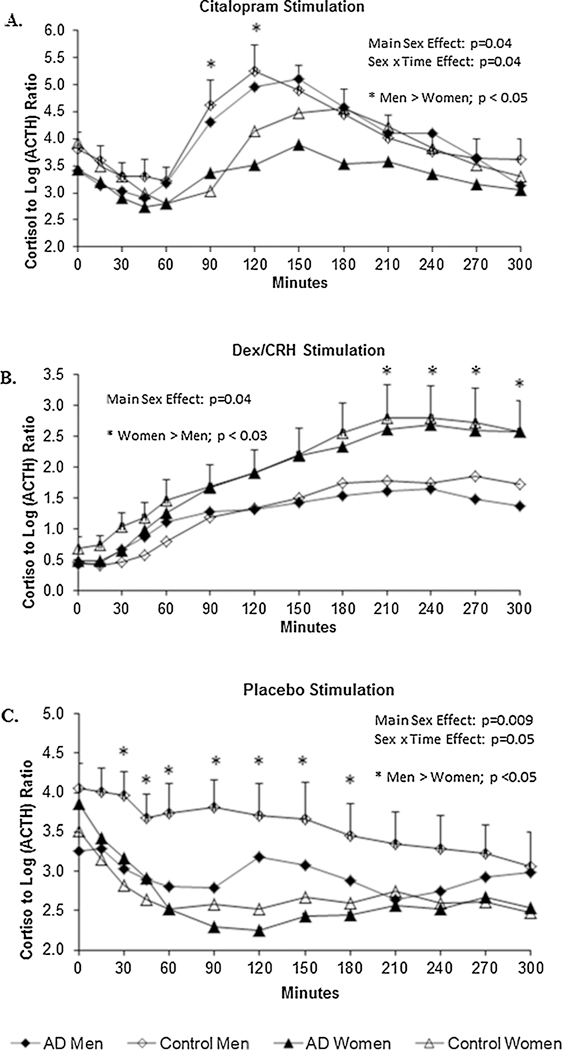
Women and men differ in their risk for developing stress-related conditions such as alcohol use and anxiety disorders and there are gender differences in the typical sequence in which these disorders co-occur. However, the neural systems underlying these gender-biased psychopathologies and clinical course modifiers in humans are poorly understood and may involve both central and peripheral mechanisms regulating the limbic-hypothalamic-pituitary-adrenal axis. In the present randomized, double blind, placebo-controlled, triple-dummy crossover study, we juxtaposed a centrally-acting, citalopram (2 mg/unit BMI) neuroendocrine stimulation test with a peripherally-acting, dexamethasone (Dex) (1.5 mg)/corticotropin-releasing factor (CRF) (1 μg/kg) test in euthymic women (N = 38) and men (N = 44) with (54%) and without histories of alcohol dependence to determine whether sex, alcohol dependence or both influenced the adrenocorticotropic hormone (ACTH) and cortisol responses to the pharmacological challenges and to identify the loci of these effects. We found that central serotonergic mechanisms, along with differences in pituitary and adrenal sensitivity, mediated sexually-diergic ACTH and cortisol responses in a stressor-specific manner regardless of a personal history of alcohol dependence. Specifically, women exhibited a greater response to the Dex/CRF test than they did the citalopram test while men exhibited the opposite pattern of results. Women also had more robust ACTH, cortisol and body temperature responses to Dex/CRF than men, and exhibited a shift in their adrenal glands' sensitivity to ACTH as measured by the cortisol/log (ACTH) ratio during that session in contrast to the other test days. Our findings indicate that central serotonergic and peripheral mechanisms both play roles in mediating sexually dimorphic, stressor-specific endocrine responses in humans regardless of alcohol dependence history.
Keywords: Alcohol use disorder; Citalopram stimulation test; Cortisol; Dex/CRF test; Serotonin (5-HT); Sex differences.
Copyright © 2018 Elsevier Ltd. All rights reserved.
Figures
References
-
- American Psychiatric Association, 2000. Diagnostic and Statistical Manual of Mental Disorders, 4th ed. Text Revision, Washington, DC.
-
- Anthenelli RM, Maxwell RA, 2000. Cigarette smoking decreases the prolactin response to serotonergic stimulation in subgroups of alcoholics and controls. Alcohol. Clin. Exp. Res. 24, 987–995. - PubMed
-
- Anthenelli RM, Maxwell RA, 2002. Independent alcohol and tobacco effects on stress axis function. Alcohol. Clin. Exp. Res. 26, 1932–1933. - PubMed
-
- Anthenelli RM, Maxwell RA, Geracioti TD, Hauger R, 2001. Stress hormone dysregulation at rest and after serotonergic stimulation among alcohol-dependent men with extended abstinence and controls. Alcohol. Clin. Exp. Res. 25, 692–703. - PubMed
-
- Balcioglu A, Wurtman RJ, 1998. Effects of fenfluramine and phentermine (fen-phen) on dopamine and serotonin release in rat striatum: in vivo microdialysis study in conscious animals. Brain Res. 813, 67–72. - PubMed
Publication types
MeSH terms
Substances
Grants and funding
LinkOut - more resources
Full Text Sources
Other Literature Sources
