Curative Ex Vivo Hepatocyte-Directed Gene Editing in a Mouse Model of Hereditary Tyrosinemia Type 1
- PMID: 29764210
- PMCID: PMC6247987
- DOI: 10.1089/hum.2017.252
Curative Ex Vivo Hepatocyte-Directed Gene Editing in a Mouse Model of Hereditary Tyrosinemia Type 1
Abstract
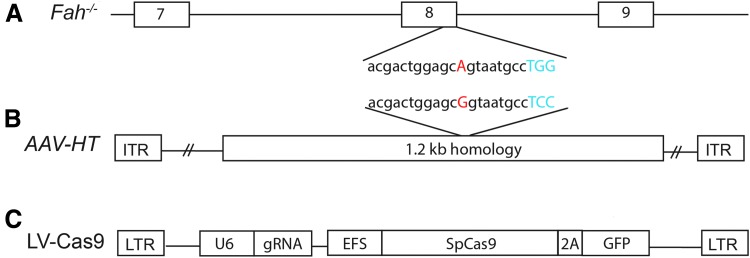
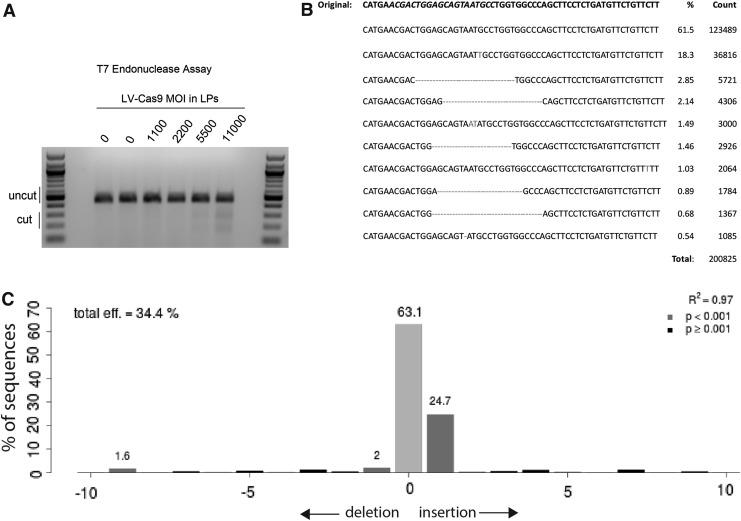
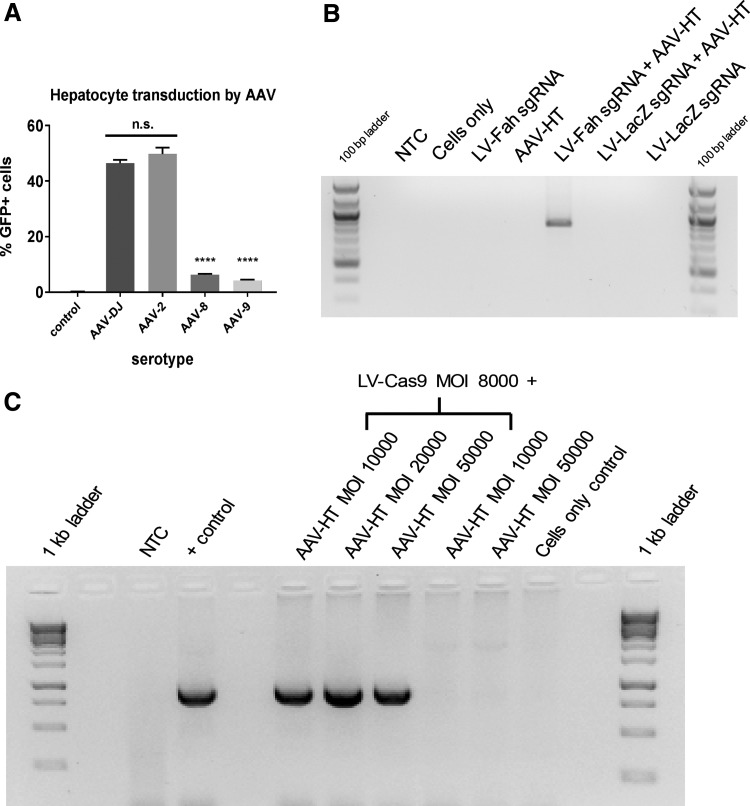
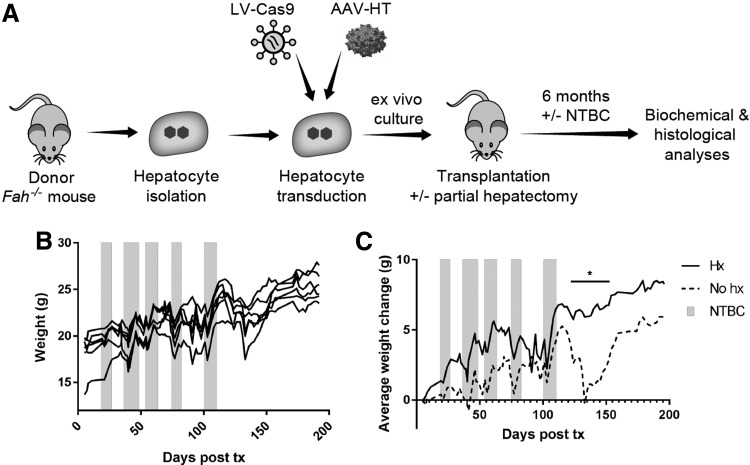
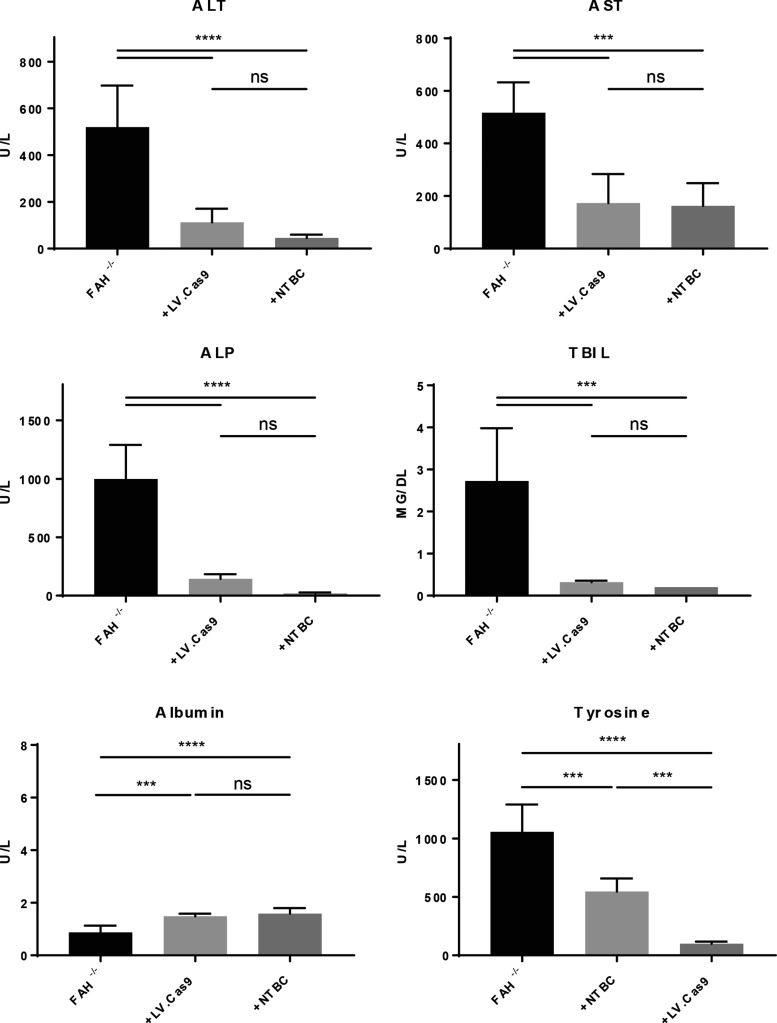
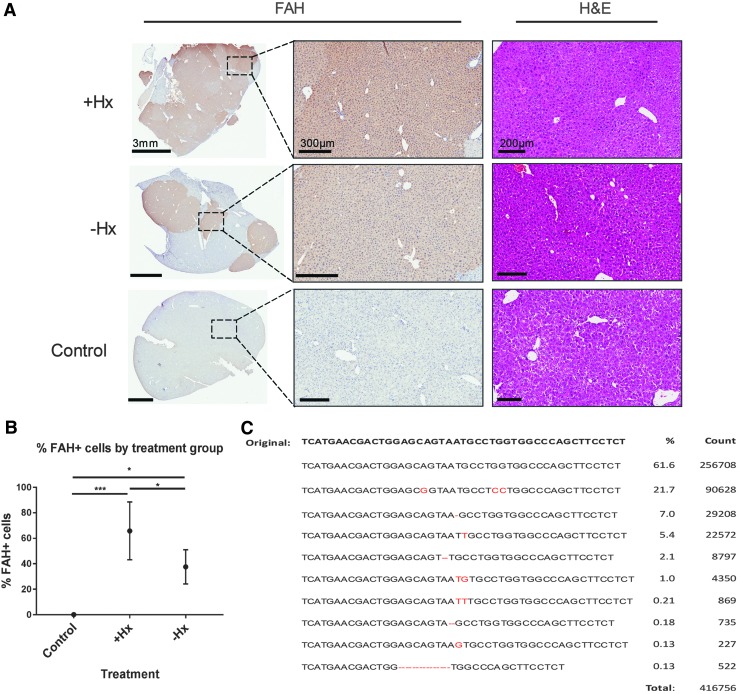
Hereditary tyrosinemia type 1 (HT1) is an autosomal recessive disorder caused by deficiency of fumarylacetoacetate hydrolase (FAH). It has been previously shown that ex vivo hepatocyte-directed gene therapy using an integrating lentiviral vector to replace the defective Fah gene can cure liver disease in small- and large-animal models of HT1. This study hypothesized that ex vivo hepatocyte-directed gene editing using CRISPR/Cas9 could be used to correct a mouse model of HT1, in which a single point mutation results in loss of FAH function. To achieve high transduction efficiencies of primary hepatocytes, this study utilized a lentiviral vector (LV) to deliver both the Streptococcus pyogenes Cas9 nuclease and target guide RNA (LV-Cas9) and an adeno-associated virus (AAV) vector to deliver a 1.2 kb homology template (AAV-HT). Cells were isolated from Fah-/- mice and cultured in the presence of LV and AAV vectors. Transduction of cells with LV-Cas9 induced significant indels at the target locus, and correction of the point mutation in Fah-/- cells ex vivo using AAV-HT was completely dependent on LV-Cas9. Next, hepatocytes transduced ex vivo by LV-Cas9 and AAV-HT were transplanted into syngeneic Fah-/- mice that had undergone a two-thirds partial hepatectomy or sham hepatectomy. Mice were cycled on/off the protective drug 2-(2-nitro-4-trifluoromethylbenzoyl)-1,3-cyclohexanedione (NTBC) to stimulate expansion of corrected cells. All transplanted mice became weight stable off NTBC. However, a significant improvement was observed in weight stability off NTBC in animals that received partial hepatectomy. After 6 months, mice were euthanized, and thorough biochemical and histological examinations were performed. Biochemical markers of liver injury were significantly improved over non-transplanted controls. Histological examination of mice revealed normal tissue architecture, while immunohistochemistry showed robust repopulation of recipient animals with FAH+ cells. In summary, this is the first report of ex vivo hepatocyte-directed gene repair using CRISPR/Cas9 to demonstrate curative therapy in an animal model of liver disease.
Keywords: CRISPR/Cas9; gene therapy; hepatocytes; hereditary tyrosinemia type 1; metabolic liver disease.
Conflict of interest statement
The authors declare no competing financial interests exist.
Figures
References
-
- Grompe M. The pathophysiology and treatment of hereditary tyrosinemia type 1. Semin Liver Dis 2001;21:563–571 - PubMed
-
- Grompe M, Lindstedt S, al-Dhalimy M, et al. . Pharmacological correction of neonatal lethal hepatic dysfunction in a murine model of hereditary tyrosinaemia type I. Nat Genet 1995;10:453–460 - PubMed
-
- Sniderman King L, Trahms C, Scott CR. Tyrosinemia type I. In: Adam MP, Ardinger HH, Pagon RA, et al., eds. GeneReviews®. Seattle, WA: University of Washington, 1993
Publication types
MeSH terms
Substances
Grants and funding
LinkOut - more resources
Full Text Sources
Other Literature Sources
Medical
Research Materials
Miscellaneous