


Synthesis and crystal structures of (2 E)-1,4-bis-(4-chloro-phen-yl)but-2-ene-1,4-dione and (2 E)-1,4-bis-(4-bromo-phen-yl)but-2-ene-1,4-dione
- PMID: 29765722
- PMCID: PMC5947802
- DOI: 10.1107/S205698901800230X
Synthesis and crystal structures of (2 E)-1,4-bis-(4-chloro-phen-yl)but-2-ene-1,4-dione and (2 E)-1,4-bis-(4-bromo-phen-yl)but-2-ene-1,4-dione
Abstract
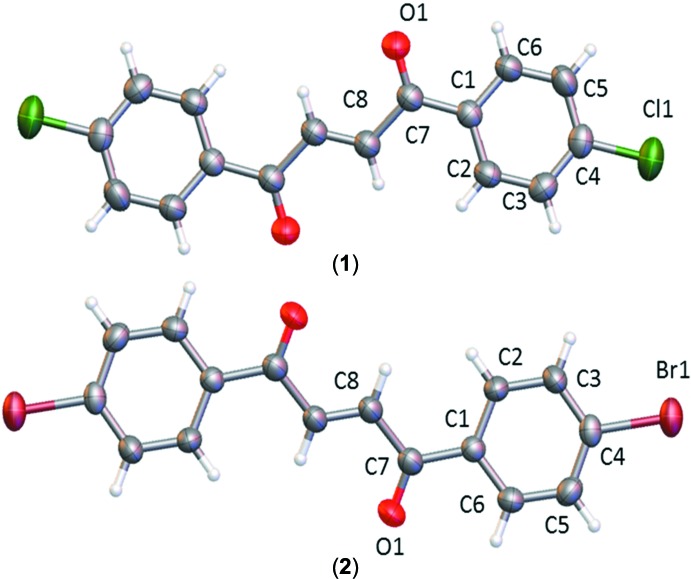
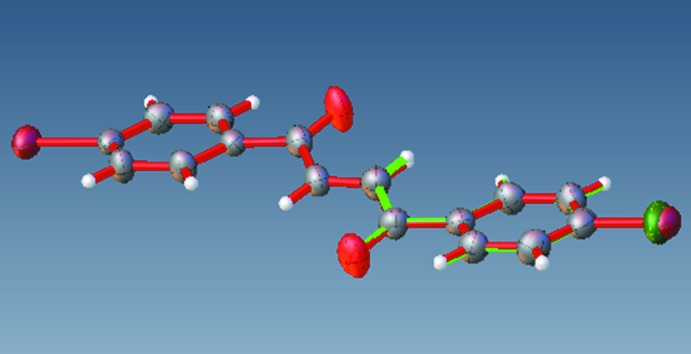
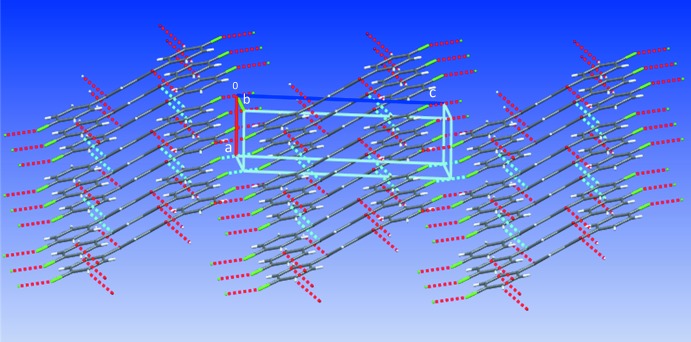
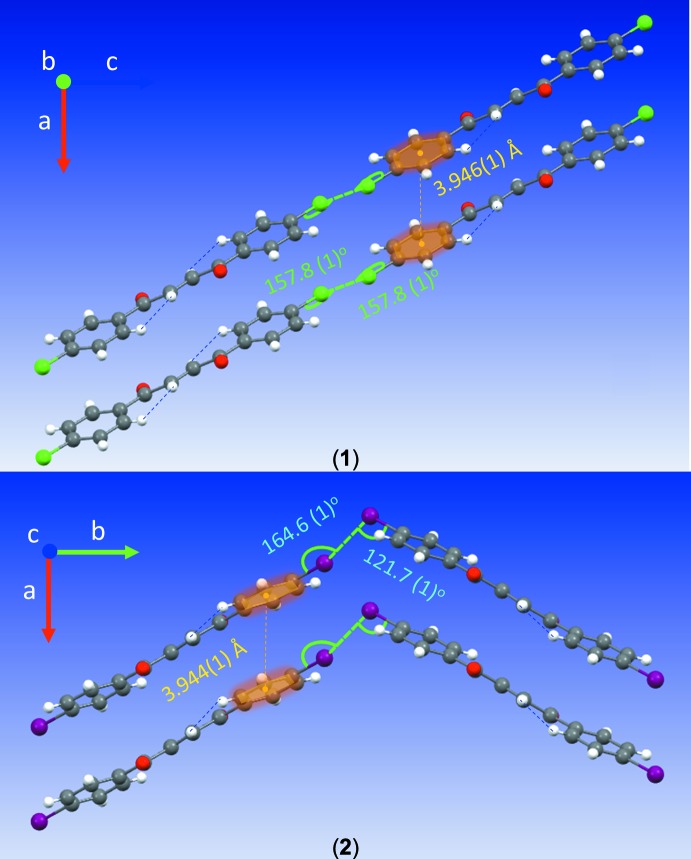
The mol-ecular structure of (2E)-1,4-bis-(4-chloro-phen-yl)but-2-ene-1,4-dione [C16H10Cl2O2, (1)] is composed of two p-chlorophenyl rings, each bonded on opposite ends to a near planar 1,4-trans enedione moiety [-C(=O)-CH=CH-(C=O)-] [r.m.s. deviation = 0.003 (1) Å]. (2E)-1,4-Bis(4-bromo-phen-yl)but-2-ene-1,4-dione [C16H10Br2O2, (2)] has a similar structure to (1), but with two p-bromophenyl rings and a less planar enedione group [r.m.s. deviation = 0.011 (1) Å]. Both mol-ecules sit on a center of inversion, thus Z' = 0.5. The dihedral angles between the ring and the enedione group are 16.61 (8) and 15.58 (11)° for (1) and (2), respectively. In the crystal, mol-ecules of (1) exhibit C-Cl⋯Cl type I inter-actions, whereas mol-ecules of (2) present C-Br⋯Br type II inter-actions. van der Waals-type inter-actions contribute to the packing of both mol-ecules, and the packing reveals face-to-face ring stacking with similar inter-planar distances of approximately 3.53 Å.
Keywords: 1,4-enedione moiety; NMR; bis-halo-enedione; crystal structure; synthesis.
Figures
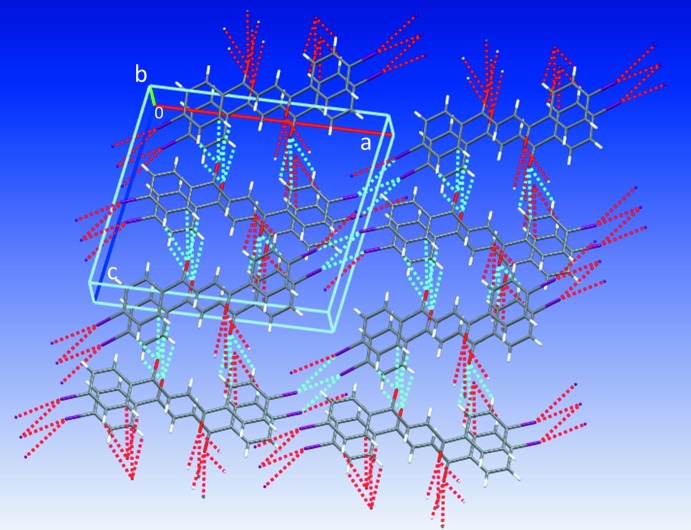
 + y,
+ y,  − z; (v) −x, + y, − z] and trifurcated interactions involving the O1 atoms.
References
-
- Alvarez, S. (2013). Dalton Trans. 42, 8617–8636. - PubMed
-
- Connolly, J. D. & Hill, R. A. (2010). Nat. Prod. Rep. 27, 79–132. - PubMed
-
- Deng, C., Yang, Y., Gao, M., Zhu, Y.-P., Wu, A.-X., Ma, J.-R. & Yin, G.-D. (2012). Tetrahedron, 68, 3828–3834.
-
- Desiraju, G. R. & Parthasarathy, R. (1989). J. Am. Chem. Soc. 111, 8725–8726.
LinkOut - more resources
Full Text Sources
Other Literature Sources
Molecular Biology Databases
Miscellaneous