Beneficial Outcome of Urethane Treatment Following Status Epilepticus in a Rat Organophosphorus Toxicity Model
- PMID: 29766039
- PMCID: PMC5952304
- DOI: 10.1523/ENEURO.0070-18.2018
Beneficial Outcome of Urethane Treatment Following Status Epilepticus in a Rat Organophosphorus Toxicity Model
Abstract
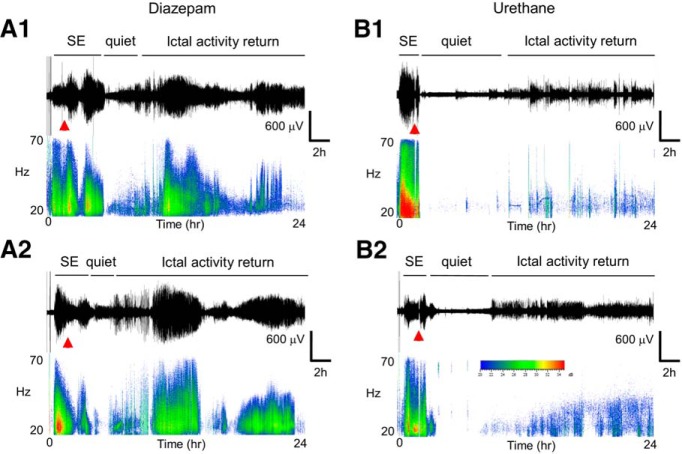
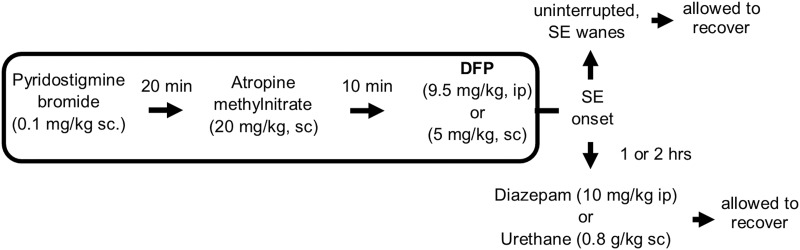
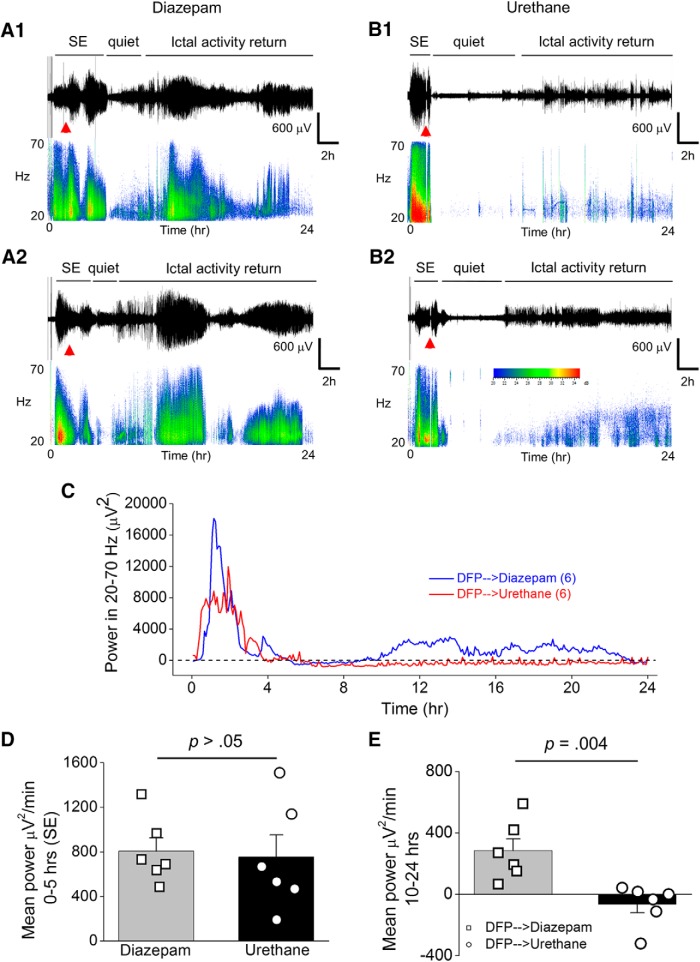
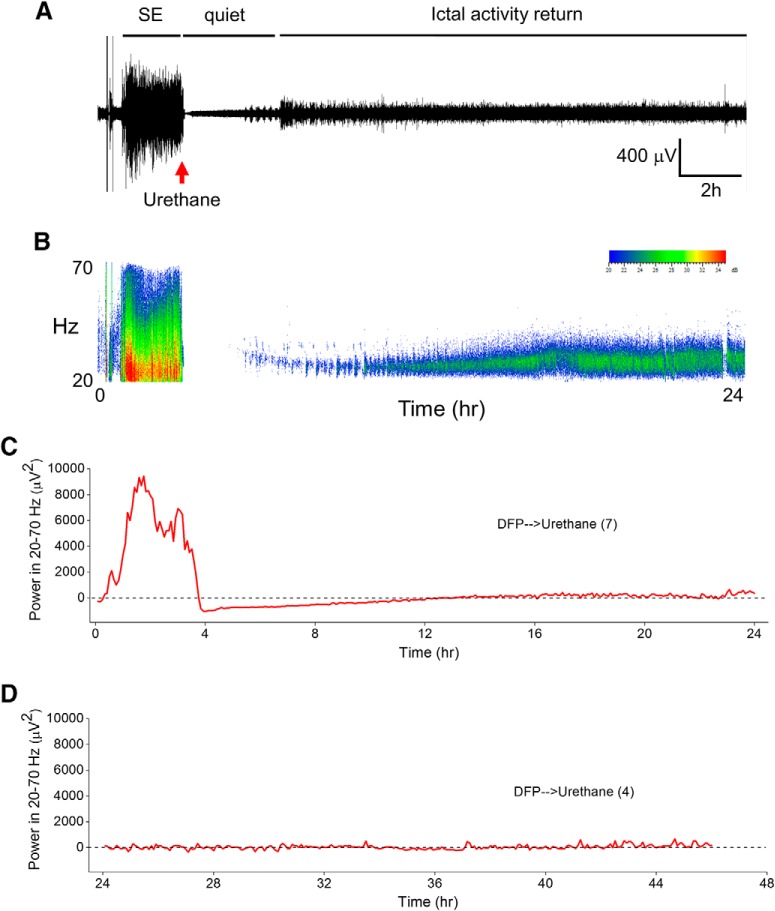
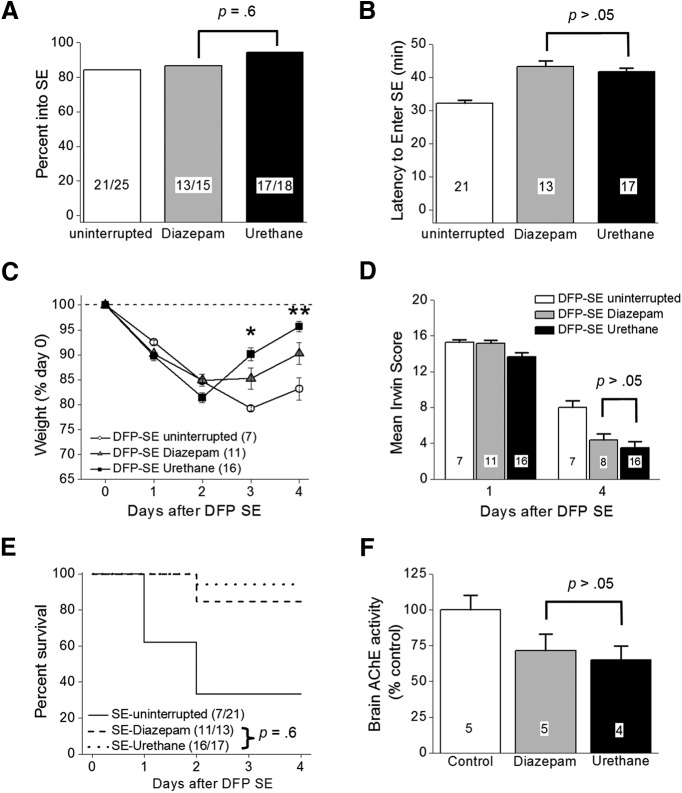
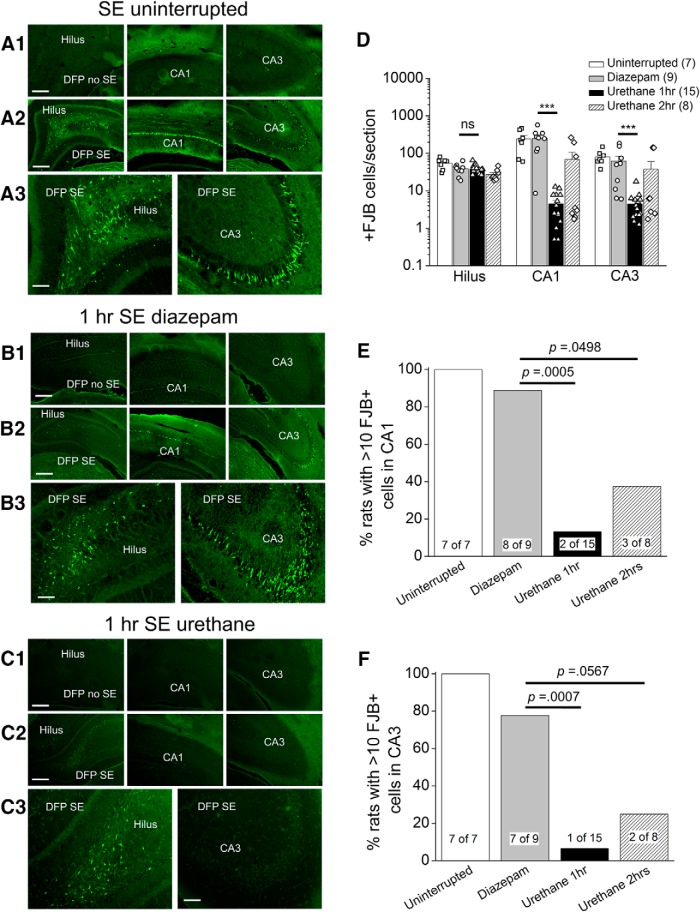
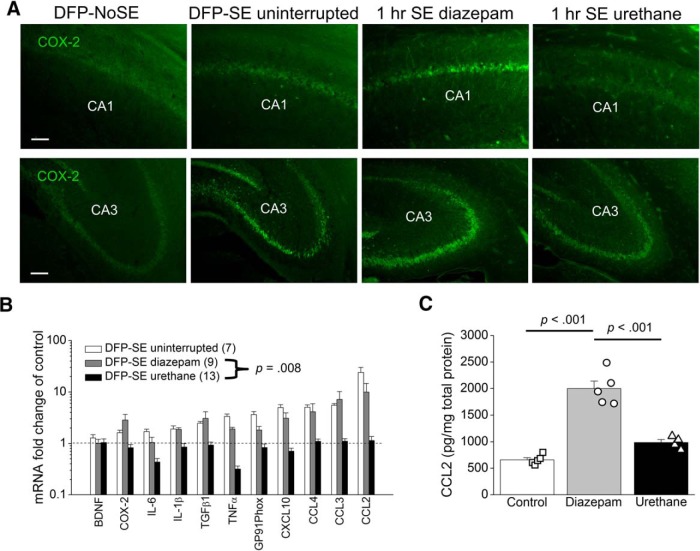
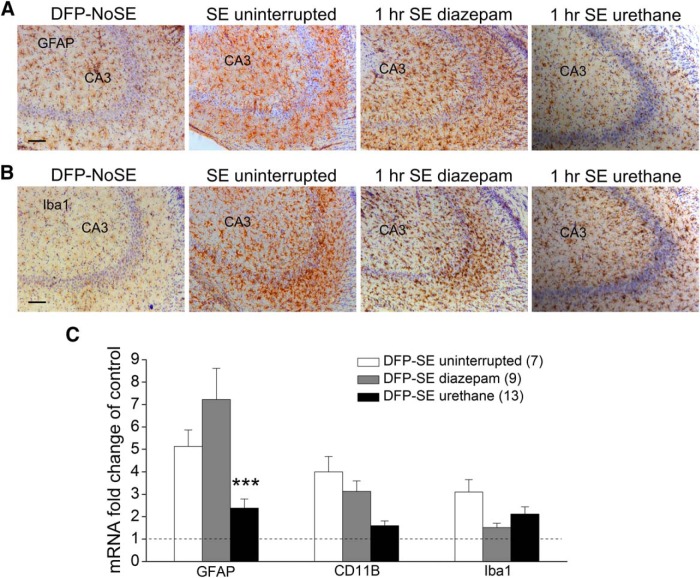
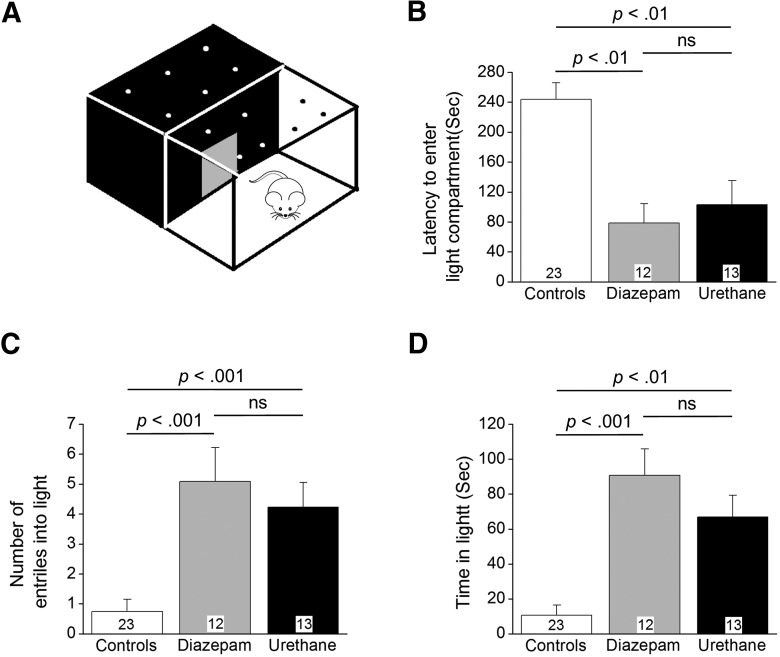
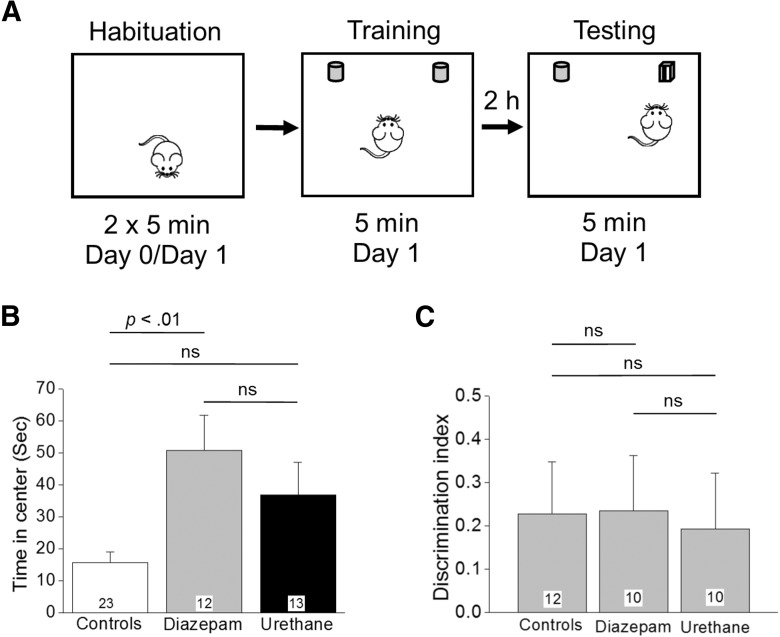
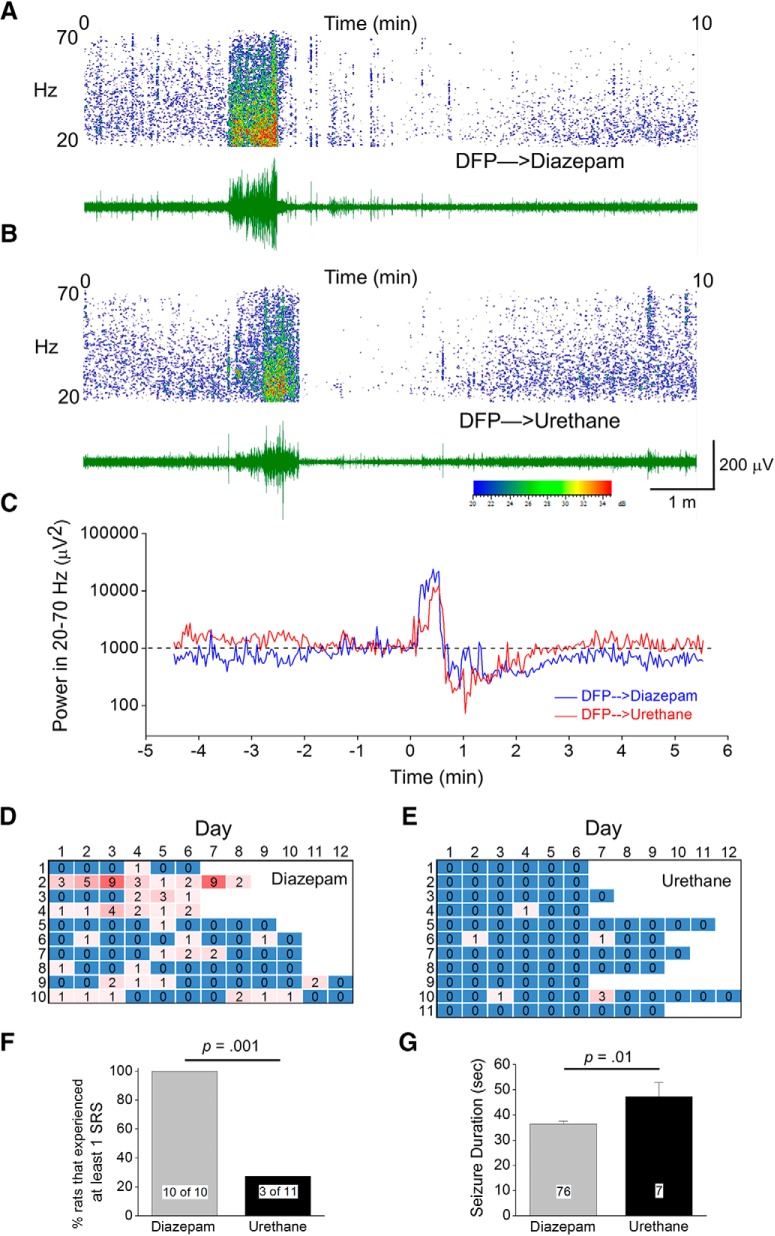
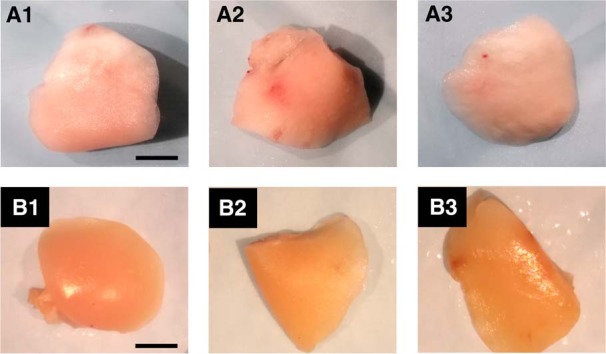
The efficacy of benzodiazepines to terminate electrographic status epilepticus (SE) declines the longer a patient is in SE. Therefore, alternative methods for ensuring complete block of SE and refractory SE are necessary. We compared the ability of diazepam and a subanesthetic dose of urethane to terminate prolonged SE and mitigate subsequent pathologies. Adult Sprague Dawley rats were injected with diisopropylfluorophosphate (DFP) to induce SE. Rats were administered diazepam (10 mg/kg, ip) or urethane (0.8 g/kg, s.c.) 1 h after DFP-induced SE and compared to rats that experienced uninterrupted SE. Large-amplitude and high-frequency spikes induced by DFP administration were quenched for at least 46 h in rats administered urethane 1 h after SE onset as demonstrated by cortical electroencephalography (EEG). By contrast, diazepam interrupted SE but seizures with high power in the 20- to 70-Hz band returned 6-10 h later. Urethane was more effective than diazepam at reducing hippocampal neurodegeneration, brain inflammation, gliosis and weight loss as measured on day 4 after SE. Furthermore, rats administered urethane displayed a 73% reduction in the incidence of spontaneous recurrent seizures after four to eight weeks and a 90% reduction in frequency of seizures in epileptic rats. By contrast, behavioral changes in the light/dark box, open field and a novel object recognition task were not improved by urethane. These findings indicate that in typical rodent SE models, it is the return of SE overnight, and not the initially intense 1-2 h of SE experience, that is largely responsible for neurodegeneration, accompanying inflammation, and the subsequent development of epilepsy.
Keywords: DFP; EEG; diazepam; hippocampus; neurodegeneration; urethane.
Figures
References
-
- Borges K, Gearing M, McDermott DL, Smith AB, Almonte AG, Wainer BH, Dingledine R (2003) Neuronal and glial pathological changes during epileptogenesis in the mouse pilocarpine model. Exp Neurol 182:21–34. - PubMed
-
- Brandt C, Töllner K, Klee R, Bröer S, Löscher W (2015) Effective termination of status epilepticus by rational polypharmacy in the lithium-pilocarpine model in rats: window of opportunity to prevent epilepsy and prediction of epilepsy by biomarkers. Neurobiol Dis 75:78–90. 10.1016/j.nbd.2014.12.015 - DOI - PubMed
Publication types
MeSH terms
Substances
Grants and funding
LinkOut - more resources
Full Text Sources
Other Literature Sources
Medical