


Pattern of non-starch polysaccharide digestion along the gut of the pig: Contribution to available energy
- PMID: 29767167
- PMCID: PMC5945939
- DOI: 10.1016/j.aninu.2015.08.011
Pattern of non-starch polysaccharide digestion along the gut of the pig: Contribution to available energy
Abstract
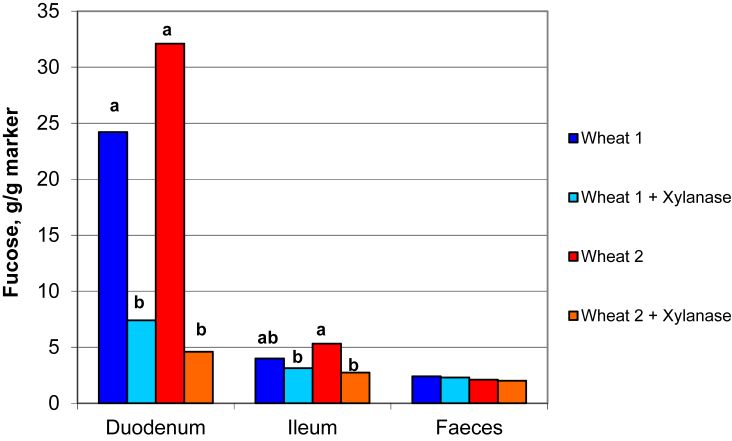
We investigated the pattern of non-starch polysaccharide (NSP) digestion along the gut of pigs fed two different wheats, which were offered with or without xylanase supplementation. The two wheats used were pre-characterised before the experiment on the basis of low and normal feed intake of young pigs. Wheat type significantly influenced feed intake and growth rate in the first 7 days, however, by day 14 the only significant effect of wheat type was on growth rate. Xylanase supplementation increased the growth performance of pigs fed the poor quality wheat to a level similar to those fed the normal wheat. It also increased the daily gain of pigs fed the normal wheat. Wheat type had no significant effect on the digestibility of dry matter (DM), energy, free sugars or the different fractions of NSP in the duodenum, ileum or in the faeces. The duodenal gross energy digestibility values for the low and high performance diets were -27.4 and -47.5%, respectively, and xylanase supplementation significantly increased the digestibility of energy back to positive levels. Dry matter digestibility values followed a similar pattern. In the duodenum, xylanase increased (P < 0.05) the digestibility values of both soluble and insoluble NSP, whereas in the ileum, xylanase had a significant effect only on the digestibility of the soluble NSP fraction. Xylanase did not affect free sugar digestibility. The reduction in soluble NSP level coincided with a marked reduction in the amount of fucose, a prominent component of mucosal polysaccharides. This suggests that soluble NSP substantially increase endogenous losses. The absence of differences in the digestibility of the measured NSP between the two wheat samples suggests that the structures of the NSP, rather than just their amount and solubility, are important for the anti-nutritional properties of NSP in pig diets.
Keywords: Non-starch polysaccharides; Pigs; Wheat; Xylanase.
Figures
References
-
- Angkanaporn K., Choct M., Bryden W.L., Annison E.F., Annison G. Effects of wheat pentosans on endogenous amino acid losses in chickens. J Sci Fd Ag. 1994;66:399–404.
-
- Bach Knudsen K.E., Hansen I. Gastrointestinal implications in pigs of wheat and oat fractions. 1. Digestibility and bulking properties of polysaccharides and other major constituents. Br J Nutr. 1991;65:217–232. - PubMed
-
- Bartelt J., Jadamus A., Wiese F., Swiech E., Buraczewska L., Simon O. Apparent precaecal digestibility of nutrients and level of endogenous nitrogen in digesta of the small intestine of growing pigs as affected by various digesta viscosities. Arch Anim Nutr. 2002;56:93–107. - PubMed
-
- Batterham E.S., Lewis C.E., Low R.F., McMillan C.J. Digestible energy content of cereals and wheat by-products for growing pigs. Anim Prod. 1980;31:259–271.
-
- Cadogan D.J. University of New England; Armidale, NSW, Australia: 1999. Agronomic and physico-chemical factors of wheat affecting nutrient availability and performance of pigs. (MSc thesis)
LinkOut - more resources
Full Text Sources
Other Literature Sources
