Antibiotic recommendations of office-based physicians, 2007-2011
- PMID: 29769902
- PMCID: PMC5868568
- DOI: 10.14745/ccdr.v40is2a03
Antibiotic recommendations of office-based physicians, 2007-2011
Abstract
Objective: To describe patterns of antibiotic recommendations by office-based physicians from five regions in Canada between 2007 and 2011.
Methods: Values were estimated based on quarterly data from a sample of approximately 652 physicians stratified by region and specialty. For four consecutive quarters, each physician maintained a practice diary describing information on every patient visit during a randomly selected 48-hour period. This information was then extrapolated using a projection factor to estimate prescriptions by all physicians across Canada.
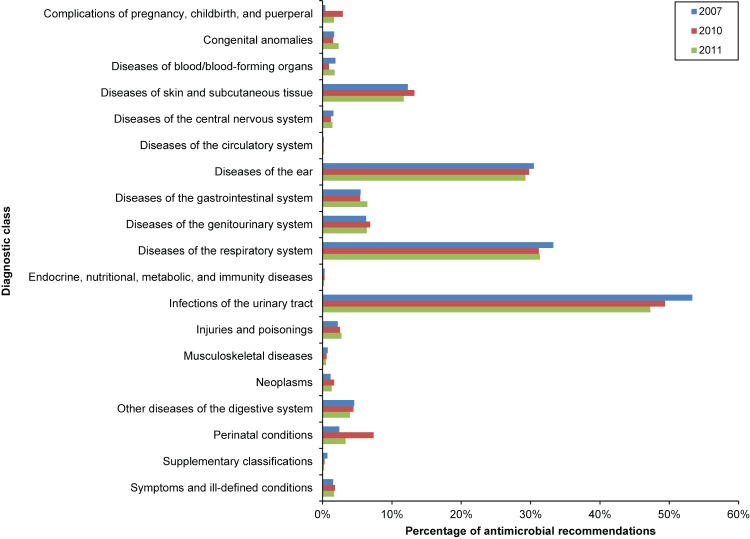
Results: Over the five-year surveillance period, physicians saw patients for almost 1.5 billion diagnoses with approximately 120 million antimicrobial recommendations. In 2011 alone, 289 million clinical diagnoses were made of which 8% resulted in an antimicrobial being recommended. The majority of these (51%) were for the treatment of diseases of the respiratory system, 14% for infections of the urinary tract, and 11% for diseases of skin and subcutaneous tissue. Antimicrobial recommendations were highest for patients in the age groups of 0-2, 3-9, and 65 or older. Antimicrobial recommendation rates generally decreased between 2007 and 2011 except for diseases of the genitourinary system and diseases of the ear that remained stable. Overall, the most commonly recommended antimicrobials included macrolides, penicillins with extended spectrum, and fluoroquinolones. Although not as common, there was a 42% increase in the number of physician recommendations for third generation cephalosporins.
Conclusion: With the exception of third generation cephalosporins, the percentage of antimicrobial recommendations by office-based physicians in Canada remained stable or decreased between 2007 and 2011. Provincial differences were observed in the antimicrobial recommendations and rates, with the Atlantic region and Québec having higher rates of antimicrobial recommendations compared to the overall national level.
Conflict of interest statement
Conflict of interest: None.
Figures
References
-
- Public Health Agency of Canada (PHAC). Canadian Integrated Program for Antimicrobial Resistance Surveillance (CIPARS) 2011—Antimicrobial Resistance Short Report. Guelph, ON: PHAC; 2012. http://publications.gc.ca/collections/collection_2013/aspc-phac/HP2-4-2-...