Antimicrobial resistance to Neisseria gonorrhoeae in Canada: 2009-2013
- PMID: 29769930
- PMCID: PMC5864279
- DOI: 10.14745/ccdr.v41i02a04
Antimicrobial resistance to Neisseria gonorrhoeae in Canada: 2009-2013
Abstract
Background: Gonorrhea is on the rise in Canada. Treatment has been complicated by the fact that Neisseria gonorrhoeae has acquired resistance to many antibiotics, including penicillin, tetracycline, erythromycin and ciprofloxacin. The emergence of isolates with decreased susceptibilities to the third generation cephalosporins and reports of treatment failures in Canada and around the world are cause for concern.
Objective: To assess the resistance levels of common antibiotics to N. gonorrhoeae and to observe trends in resistance and/or decreased susceptibility to ciprofloxacin, third generation cephalosporins and azithromycin.
Methods: Laboratory surveillance data for N. gonorrhoeae isolates submitted by provincial microbiology laboratories to the National Microbiology Laboratory (NML) from 2009-2013 were compared.
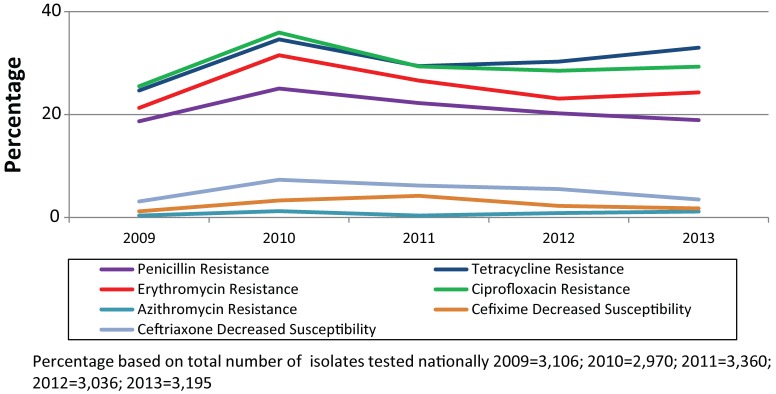
Results: Since 2009, there has been an overall rise in antibiotic-resistant N. gonorrhoeae. In 2013, 24.3% of the isolates were resistant to erythromycin, 18.9% were resistant to penicillin, 33.0% were resistant to tetracycline, and 29.3% were resistant to ciprofloxacin. The percentage of isolates with decreased susceptibility to ceftriaxone (≥0.125 mg/L) and/or cefixime (≥0.25 mg/L) was 3.9% in 2013. This number represents a decrease from 5.9% in 2012 and 7.6% in 2011. The proportion of azithromycin resistant (MIC ≥2 mg/L) N. gonorrhoeae isolates increased from 0.4% in 2009 to 1.2% in 2013.
Conclusion: Resistance to erythromycin, penicillin, tetracycline and ciprofloxacin is common. Decreased susceptibility to ceftriaxone and/or cefixime is now almost 4% and azithromycin resistance is emerging but remains low at 1.2%. These results have informed the gonococcal infection treatment recommendations in the Canadian Guidelines on Sexually Transmitted Infections.
Conflict of interest statement
Conflict of interest: None
Figures
References
-
- Public Health Agency of Canada. Notifiable Diseases On-Line. 2014. http://dsol-smed.phac-aspc.gc.ca/dsol-smed/ndis/charts.php?c=pl
-
- Ison CA, Hussey J, Sankar KN, Evans J, Alexander S. Gonorrhoea treatment failures to cefixime and azithromycin in England, 2010. Euro Surveill 2011. Apr;16(14):19833. - PubMed
LinkOut - more resources
Full Text Sources
Other Literature Sources