AIDS in Canada-Surveillance Report, 2016
- PMID: 29770057
- PMCID: PMC5764731
- DOI: 10.14745/ccdr.v43i12a02
AIDS in Canada-Surveillance Report, 2016
Abstract
Background: Although there continues to be a global epidemic of people living with human immunodeficiency virus (HIV) there has been a decrease in the number of people dying of acquired immunodeficiency syndrome (AIDS), largely due to successful treatment with antiretroviral therapy.
Objective: To provide a descriptive overview of the reported cases of AIDS in Canada by identifying trends by geographic location, sex, age group and mortality. While the descriptive analysis focuses on the year 2016, results are presented for reported cases from the beginning of national AIDS surveillance in 1979.
Methods: The Public Health Agency of Canada (PHAC) monitors AIDS in Canada through the national HIV/AIDS Surveillance System (HASS) and Statistics Canada. HASS is a passive, case-based surveillance system that maintains non-nominal data on cases of HIV and AIDS provided voluntarily by the Canadian provinces and territories. Of note, AIDS is no longer a reportable disease in Newfoundland and Labrador (as of 2009) and in Prince Edward Island (as of 2012). Data were also retrieved on annual deaths attributed to HIV/AIDS from Statistics Canada. Data were collated, tables and figures were prepared, then descriptive statistics were applied by PHAC and validated by each province and territory.
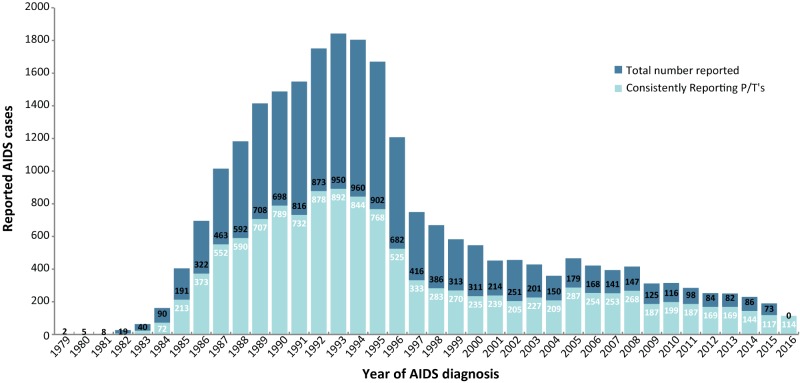
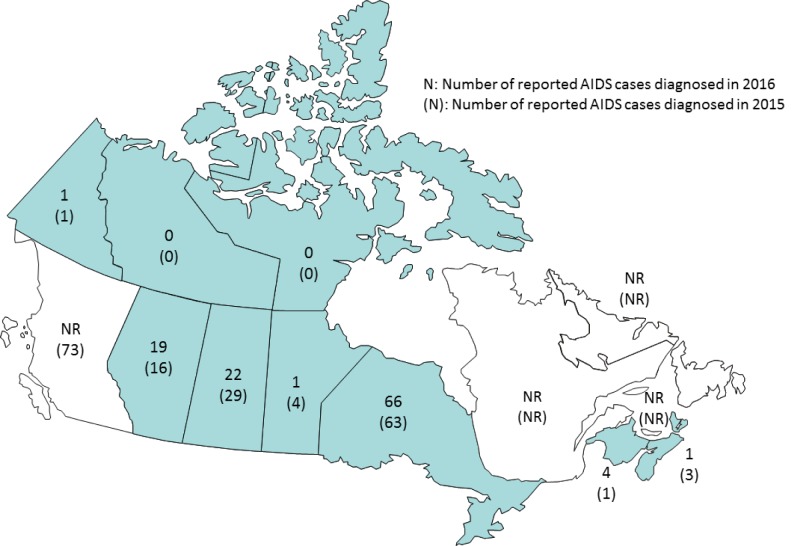
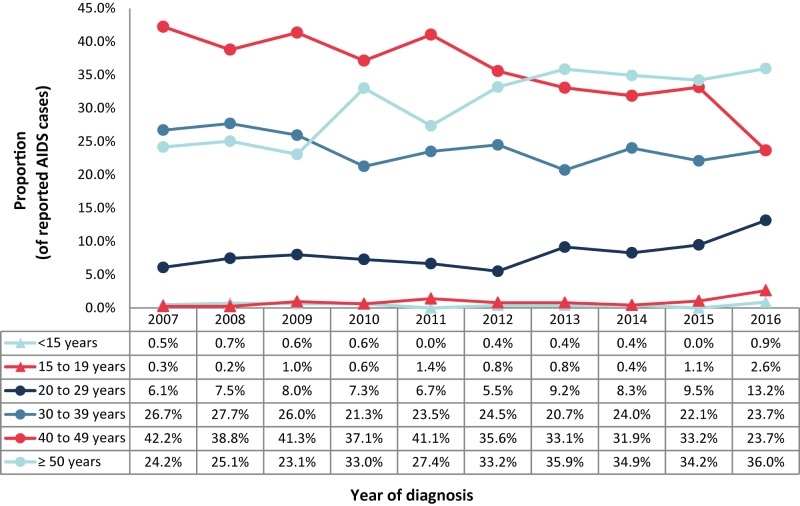
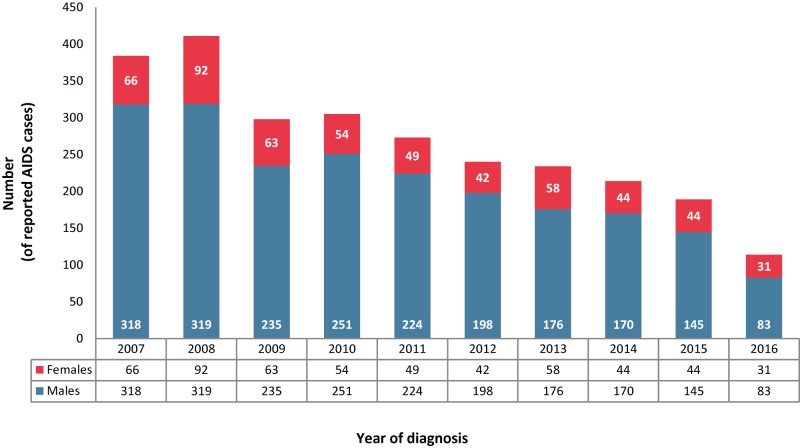
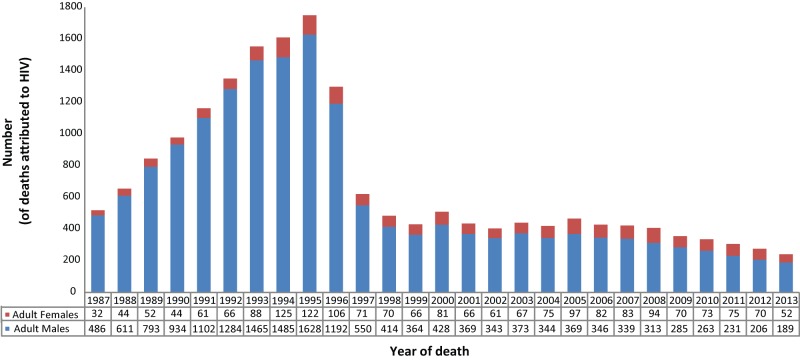
Results: A total of 114 AIDS cases were reported in 2016, with a cumulative total of 24,179 since 1979. These numbers represent a steady decline in the number of reported AIDS cases per year of diagnosis in Canada since 1993. Of reporting provinces, the greatest numbers of cases in 2016 were reported by Ontario, Saskatchewan and Alberta. Males accounted for 72.8% of reported AIDS cases and adults aged 50 years and older accounted for the greatest proportion by age group (36.0%). For all reporting years combined, the age distribution of AIDS cases is similar by sex, though a larger proportion of female cases were under the age of 30 years old. Limited data were reported for ethnicity and risk factors. The numbers of annual deaths attributed to AIDS infection have been declining since 1995. There were a record low of 241 AIDS-related deaths reported in 2013-the most recent year for which data were available. The number of AIDS-related deaths in Canada has declined 86.2% since 1995.
Conclusion: The number of AIDS cases reported by participating provinces and territories and the number of AIDS-related deaths reported by Statistics Canada has declined. While this represents a promising trend, the data should be interpreted with caution given the limitations of the dataset which could lead to an underestimate of the magnitude of the disease.
Conflict of interest statement
Conflict of Interest: None.
Figures
References
-
- UNAIDS. Prevention Gap Report. Joint United Nations Programme on HIV/AIDS, Geneva, 2016. http://www.unaids.org/en/resources/documents/2016/prevention-gap
-
- UNAIDS. Global AIDS Update 2016. Joint United Nations Programme on HIV/AIDS, Geneva, 2016. http://www.unaids.org/en/resources/documents/2016/Global-AIDS-update-2016
-
- UNAIDS. AIDS Data. Joint United Nations Programme on HIV/AIDS, Geneva, 2016.
-
- Kirby Institute. UNSW. AIDS in Australia is uncommon, but not over. 18 July 2016. https://kirby.unsw.edu.au/news/aids-australia-uncommon-not-over. [Accessed September 2017].
-
- Kirby Institute. UNSW. Annual Surveillance Report of HIV, viral hepatitis, STIs 2014. Kirby Institute, Sydney, 2014.