


Immunotherapy in CNS cancers: the role of immune cell trafficking
- PMID: 29771386
- PMCID: PMC6303437
- DOI: 10.1093/neuonc/noy084
Immunotherapy in CNS cancers: the role of immune cell trafficking
Abstract
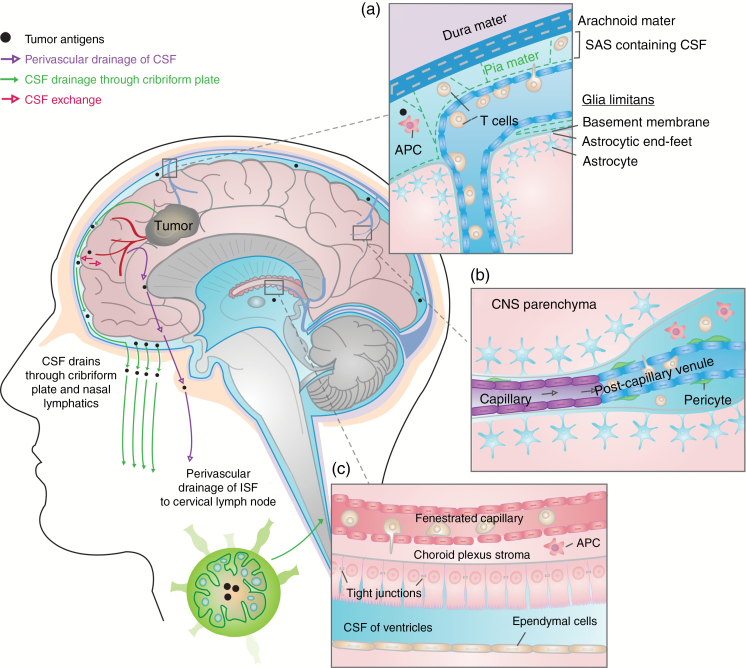
Glioblastoma (GBM) is a highly malignant CNS tumor with very poor survival despite intervention with conventional therapeutic strategies. Although the CNS is separated from the immune system by the blood-brain barrier (BBB) and the blood-cerebrospinal fluid barrier, emerging evidence of immune surveillance and the selective infiltration of GBMs by immune suppressive cells indicates that there is breakdown or compromise of these physical barriers. This in turn offers hope that immunotherapy can be applied to specifically target and reduce tumor burden. One of the major setbacks in translating immunotherapy strategies is the hostile microenvironment of the tumor that inhibits trafficking of effector immune cells such as cytotoxic T lymphocytes into the CNS. Incorporating important findings from autoimmune disorders such as multiple sclerosis to understand and thereby enhance cytotoxic lymphocyte infiltration into GBM could augment immunotherapy strategies to treat this disease. However, although these therapies are designed to evoke a potent immune response, limited space in the brain and cranial vault reduces tolerance for immune therapy-induced inflammation and resultant brain edema. Therefore, successful immunotherapy requires that a delicate balance be maintained between activating and retaining lasting antitumor immunity.
Figures
References
-
- American Brain Tumor Association. Brain Tumor Statistics (2017). http://www.abta.org/about-us/news/brain-tumor-statistics. Accessed December 14, 2017.
-
- Agnihotri S, Burrell KE, Wolf A, et al. Glioblastoma, a brief review of history, molecular genetics, animal models and novel therapeutic strategies. Arch Immunol Ther Exp (Warsz). 2013;61(1):25–41. - PubMed
-
- Gzell C, Back M, Wheeler H, Bailey D, Foote M. Radiotherapy in glioblastoma: the past, the present and the future. Clin Oncol. 2017;29(1):15–25. - PubMed
-
- Weathers SP, Gilbert MR. Current challenges in designing GBM trials for immunotherapy. J Neurooncol. 2015;123(3):331–337. - PubMed
-
- Polivka , Jiri JR, Jiri P, Holubec L, et al. Advances in experimental targeted therapy and immunotherapy for patients with glioblastoma multiforme. Anticancer Res. 2017;37(1):21–33. - PubMed
Publication types
MeSH terms
Substances
LinkOut - more resources
Full Text Sources
Other Literature Sources
