Meta-Analysis
. 2018 May 17;8(1):7761.
doi: 10.1038/s41598-018-26219-5.

Protective Effects of Intraoperative Nerve Monitoring (IONM) for Recurrent Laryngeal Nerve Injury in Thyroidectomy: Meta-analysis

Affiliations
Meta-Analysis

Protective Effects of Intraoperative Nerve Monitoring (IONM) for Recurrent Laryngeal Nerve Injury in Thyroidectomy: Meta-analysis

Binglong Bai et al. Sci Rep. .

Abstract

Recurrent laryngeal nerve (RLN) injury is an intractable complication of thyroidectomy. Intraoperative nerve monitoring (IONM) was designed to prevent RLN injury. However, the results concerning the protective effect of IONM on RLN injury are still controversial. We searched all eligible databases from 1980 to 2017. Meta-analysis was performed to evaluate the effect of IONM on RLN injury. Sensitivity analysis was also conducted to check the stability of our results. There were 34 studies included in the analysis. Overall analysis found a significant decrease in total injury (RR = 0.68, 95%CI: 0.55 to 0.83), transient injury (RR = 0.71, 95%CI: 0.57 to 0.88), and permanent injury (RD = -0.0026, 95%CI: -0.0039 to -0.0012) with IONM. Subgroup analysis found IONM played a preventive role of total, transient and permanent injury in patients undergoing bilateral thyroidectomy. IONM also reduced the incidence of total and transient injury for malignancy cases. Operations with IONM were associated with fewer total and transient RLN injuries in operation volume < 300 NARs per year and fewer total and permanent RLN injuries in operation volume ≥ 300 NARs per year. The application of IONM could reduce the RLN injury of thyroidectomy. Particularly, we recommend routine IONM for use in bilateral operations and malignancy operations.


Conflict of interest statement

The authors declare no competing interests.

Figures
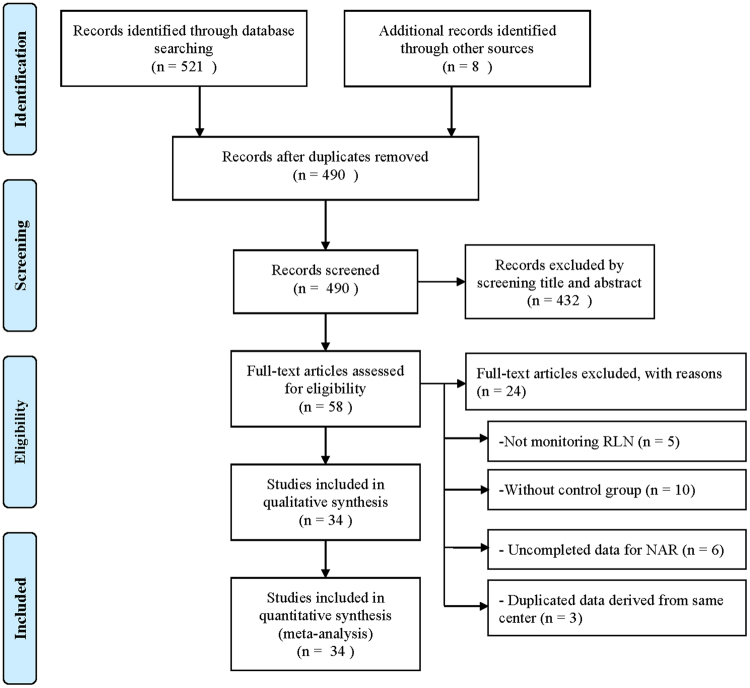
Figure 1
Figure 1
Flow diagram of study selection according to PRISMA statement. Abbreviation: RLN = recurrent laryngeal nerve; NAR = nerves at risk.
Figure 2
Figure 2
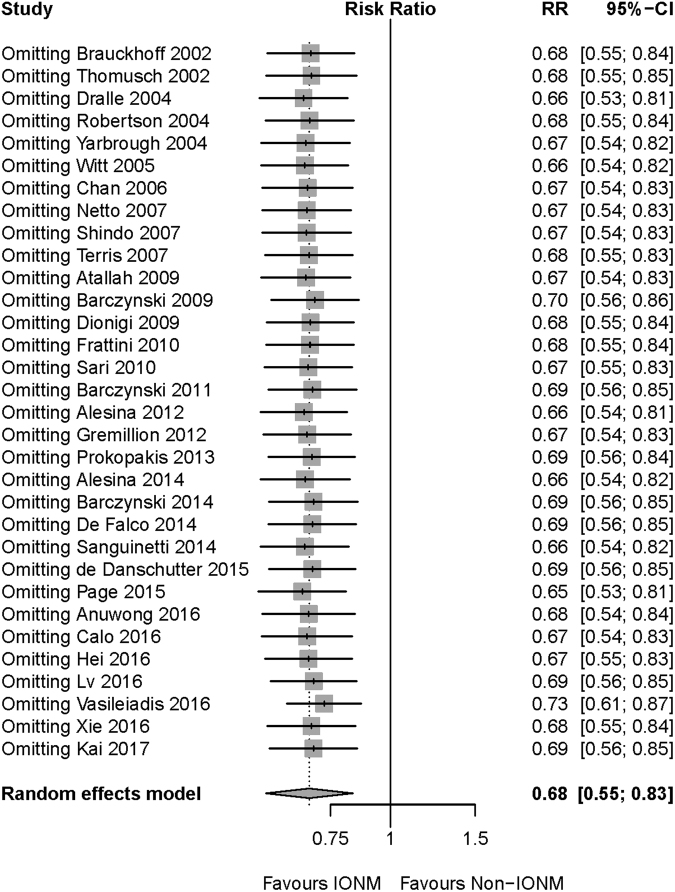
Sensitivity analysis of total RLN injury. After omitting any of the included studies, the meta-analysis result of total RLN injury was still robust. Abbreviation: IONM = intraoperative nerve monitoring; RLN = recurrent laryngeal nerve.
Figure 3
Figure 3
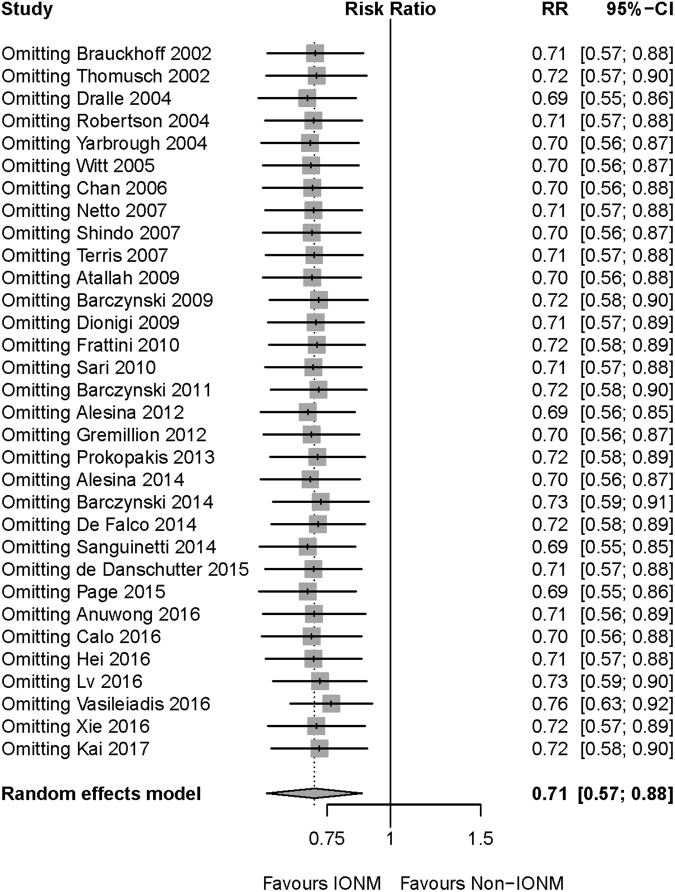
Sensitivity analysis of transient RLN injury. After omitting any of the included studies, the meta-analysis result of transient RLN injury was still robust. Abbreviation: IONM = intraoperative nerve monitoring; RLN = recurrent laryngeal nerve.
Figure 4
Figure 4
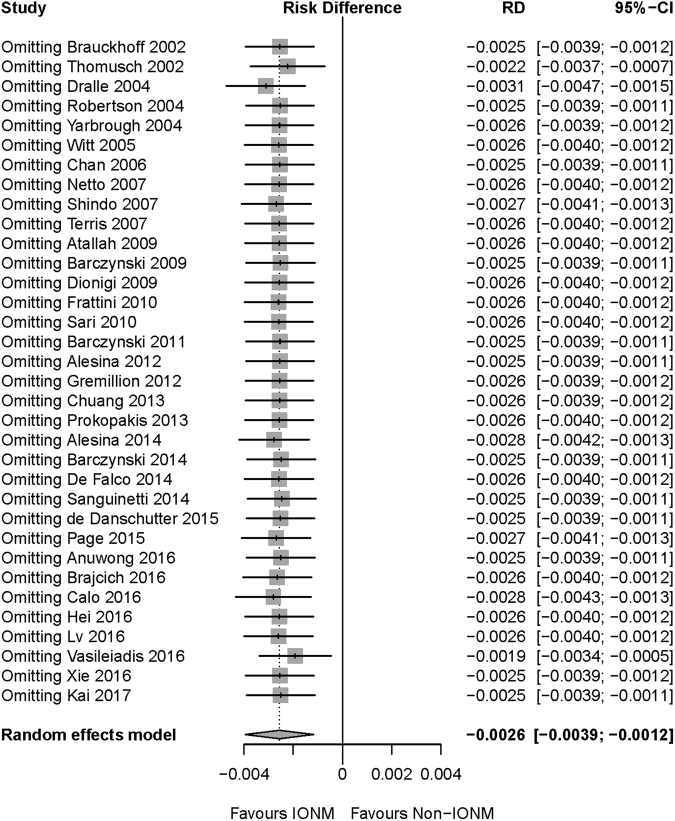
Sensitivity analysis of permanent RLN injury. After omitting any of the included studies, the meta-analysis result of permanent RLN injury was still robust. Abbreviation: IONM = intraoperative nerve monitoring; RLN = recurrent laryngeal nerve.
Figure 5
Figure 5
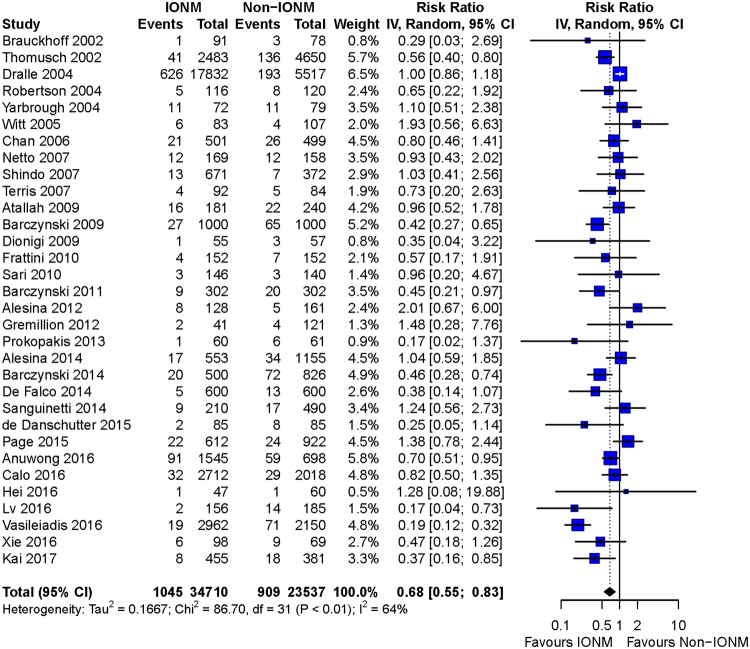
Forest plot of total RLN injury. Less total RLN injuries were found in IONM group than in non-IONM group by pooled analysis (p = 0.0002). Abbreviation: IONM = intraoperative nerve monitoring; RLN = recurrent laryngeal nerve.
Figure 6
Figure 6
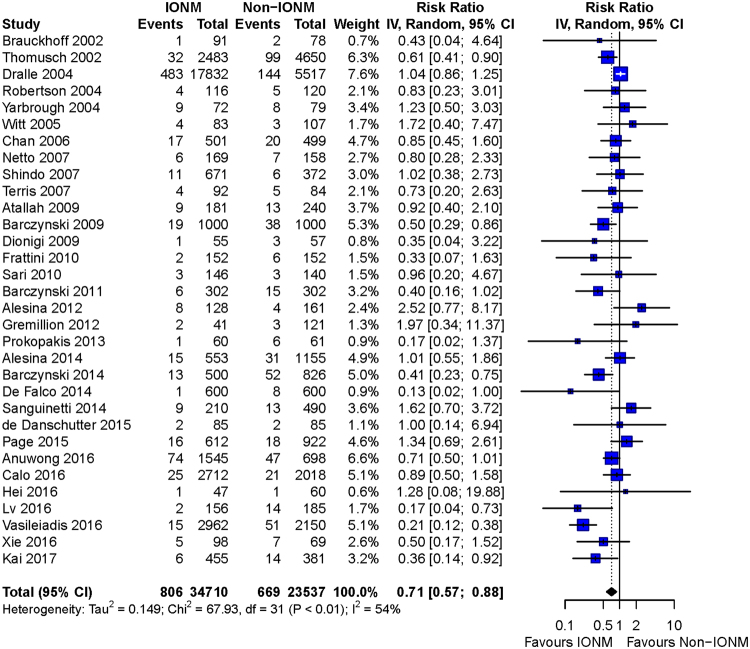
Forest plot of transient RLN injury. Meta-analysis showed a preventive effect of IONM on transient RLN injury (p = 0.0017). Abbreviation: IONM = intraoperative nerve monitoring; RLN = recurrent laryngeal nerve.
Figure 7
Figure 7
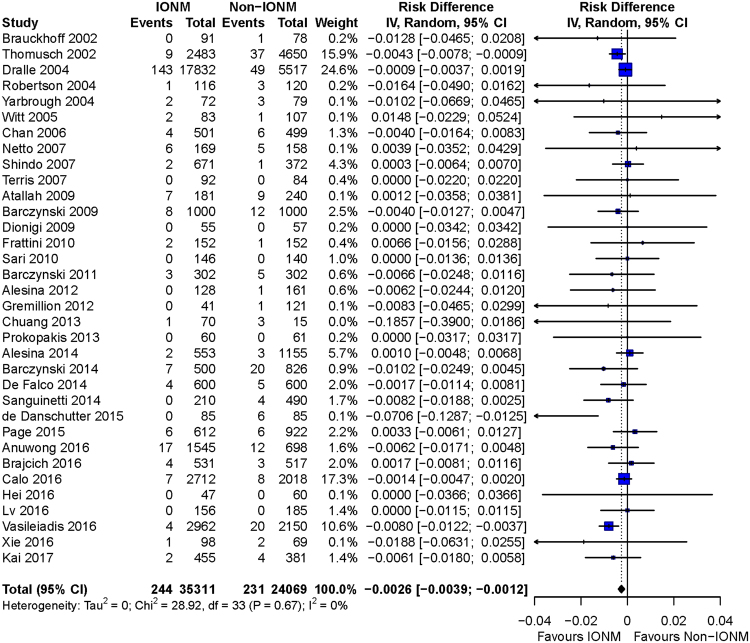
Forest plot of permanent RLN injury. Meta-analysis demonstrated a 0.26% reduction of permanent RLN injury with IONM (p = 0.0003). Abbreviation: IONM = intraoperative nerve monitoring; RLN = recurrent laryngeal nerve.

References

    1. Abadin, S. S., Kaplan, E. L. & Angelos, P. Malpractice litigation after thyroid surgery: the role of recurrent laryngeal nerve injuries, 1989–2009. Surgery148, 718–722; discussion 722–713, 10.1016/j.surg.2010.07.019 (2010). - PubMed
    1. Thomusch O, Sekulla C, Walls G, Machens A, Dralle H. Intraoperative neuromonitoring of surgery for benign goiter. Am J Surg. 2002;183:673–678. doi: 10.1016/S0002-9610(02)00856-5. - DOI - PubMed
    1. Robertson ML, Steward DL, Gluckman JL, Welge J. Continuous laryngeal nerve integrity monitoring during thyroidectomy: does it reduce risk of injury? Otolaryngol Head Neck Surg. 2004;131:596–600. doi: 10.1016/j.otohns.2004.05.030. - DOI - PubMed
    1. Yarbrough DE, Thompson GB, Kasperbauer JL, Harper CM, Grant CS. Intraoperative electromyographic monitoring of the recurrent laryngeal nerve in reoperative thyroid and parathyroid surgery. Surgery. 2004;136:1107–1115. doi: 10.1016/j.surg.2004.06.040. - DOI - PubMed
    1. Dralle H, et al. Risk factors of paralysis and functional outcome after recurrent laryngeal nerve monitoring in thyroid surgery. Surgery. 2004;136:1310–1322. doi: 10.1016/j.surg.2004.07.018. - DOI - PubMed

Publication types

MeSH terms

LinkOut - more resources