


Targeting VEGF/VEGFR to Modulate Antitumor Immunity
- PMID: 29774034
- PMCID: PMC5943566
- DOI: 10.3389/fimmu.2018.00978
Targeting VEGF/VEGFR to Modulate Antitumor Immunity
Abstract
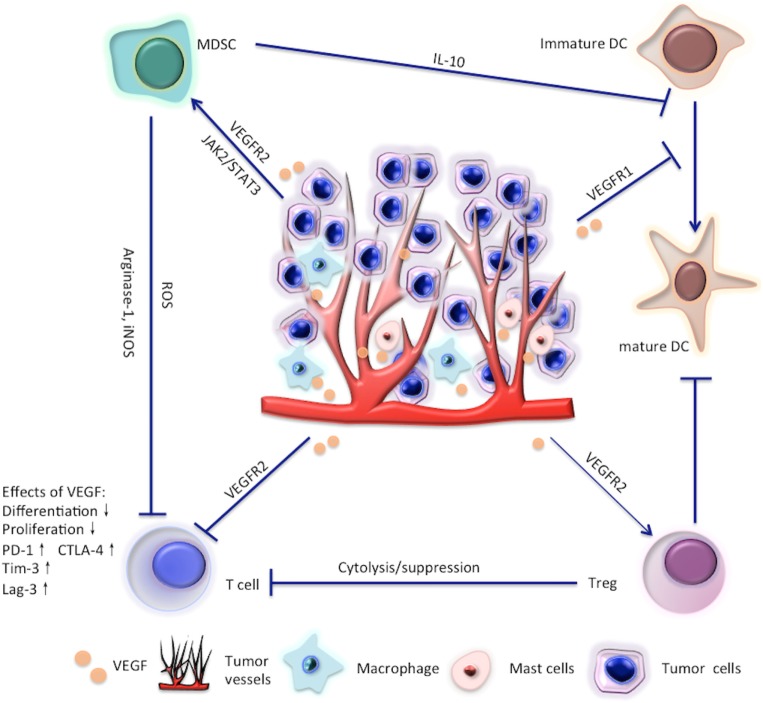
In addition to the crucial role in promoting the growth of tumor vessels, vascular endothelial growth factor (VEGF) is also immunosuppressive. VEGF can inhibit the function of T cells, increase the recruitment of regulatory T cells (Tregs) and myeloid-derived suppressor cells (MDSCs), and hinder the differentiation and activation of dendritic cells (DCs). Recent studies have investigated the role of antiangiogenic agents in antitumor immunity, especially in recent 3 years. Therefore, it is necessary to update the role of targeting VEGF/VEGFR in antitumor immunity. In this review, we focus on the latest clinical and preclinical findings on the modulatory role of antiangiogenic agents targeting VEGF/VEGFR in immune cells, including effector T cells, Tregs, MDSCs, DCs, tumor-associated macrophages, and mast cells. Our review will be potentially helpful for the development of combinations of angiogenesis inhibitors with immunological modulators.
Keywords: T cells; angiogenesis; immune; tumor; vascular endothelial growth factor.
Figures
References
Publication types
MeSH terms
Substances
LinkOut - more resources
Full Text Sources
Other Literature Sources
