


Quality indicators for hip fracture care, a systematic review
- PMID: 29774404
- PMCID: PMC6105160
- DOI: 10.1007/s00198-018-4558-x
Quality indicators for hip fracture care, a systematic review
Abstract
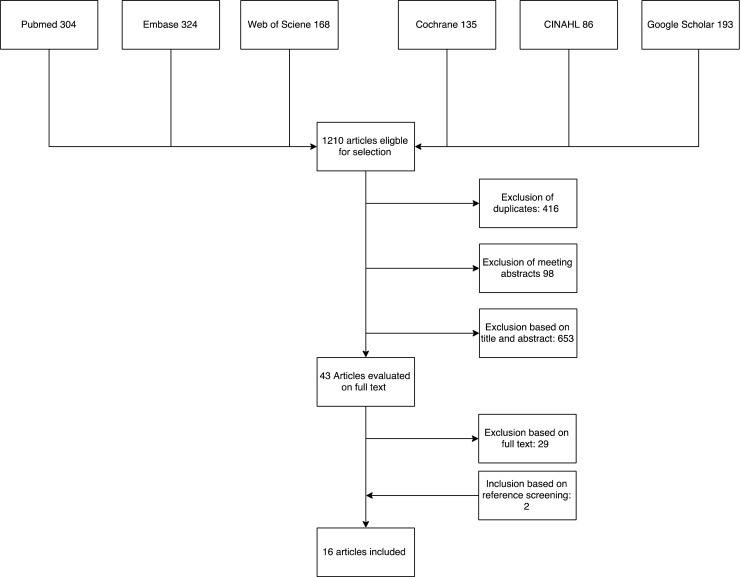
Quality indicators are used to measure quality of care and enable benchmarking. An overview of all existing hip fracture quality indicators is lacking. The primary aim was to identify quality indicators for hip fracture care reported in literature, hip fracture audits, and guidelines. The secondary aim was to compose a set of methodologically sound quality indicators for the evaluation of hip fracture care in clinical practice. A literature search according to the PRISMA guidelines and an internet search were performed to identify hip fracture quality indicators. The indicators were subdivided into process, structure, and outcome indicators. The methodological quality of the indicators was judged using the Appraisal of Indicators through Research and Evaluation (AIRE) instrument. For structure and process indicators, the construct validity was assessed. Sixteen publications, nine audits and five guidelines were included. In total, 97 unique quality indicators were found: 9 structure, 63 process, and 25 outcome indicators. Since detailed methodological information about the indicators was lacking, the AIRE instrument could not be applied. Seven indicators correlated with an outcome measure. A set of nine quality indicators was extracted from the literature, audits, and guidelines. Many quality indicators are described and used. Not all of them correlate with outcomes of care and have been assessed methodologically. As methodological evidence is lacking, we recommend the extracted set of nine indicators to be used as the starting point for further clinical research. Future research should focus on assessing the clinimetric properties of the existing quality indicators.
Keywords: Audit; Benchmark; Hip fracture; Quality indicators.
Conflict of interest statement
All authors have no commercial associations (e.g., consultancies, stock ownership, equity interest, patent/licensing arrangements, etc.) that might pose a conflict of interest in connection with the submitted article.
References
-
- National Institute For Health and Care Excellence (2011) Hip fracture: management. https://www.nice.org.uk/guidance/CG124. Accessed 24 July 2017
Publication types
MeSH terms
LinkOut - more resources
Full Text Sources
Other Literature Sources
Medical
Research Materials
