


Potassium octatitanate fibers induce persistent lung and pleural injury and are possibly carcinogenic in male Fischer 344 rats
- PMID: 29774637
- PMCID: PMC6029824
- DOI: 10.1111/cas.13643
Potassium octatitanate fibers induce persistent lung and pleural injury and are possibly carcinogenic in male Fischer 344 rats
Abstract
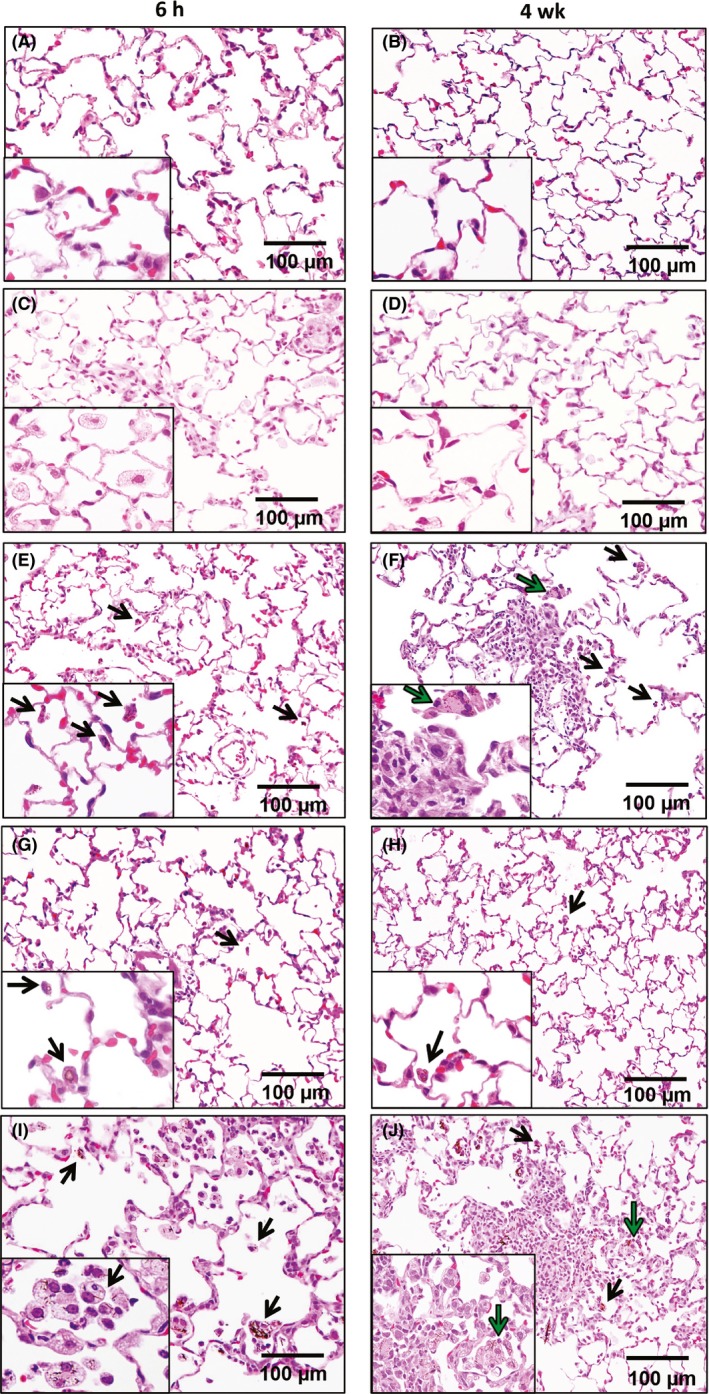
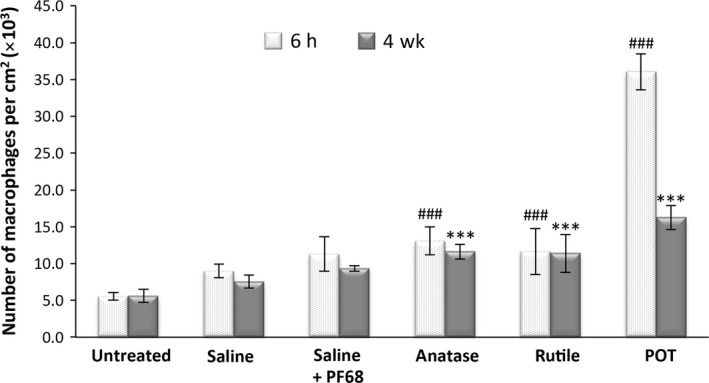
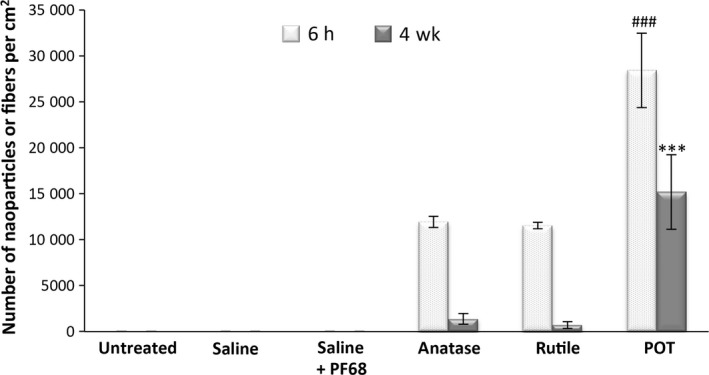
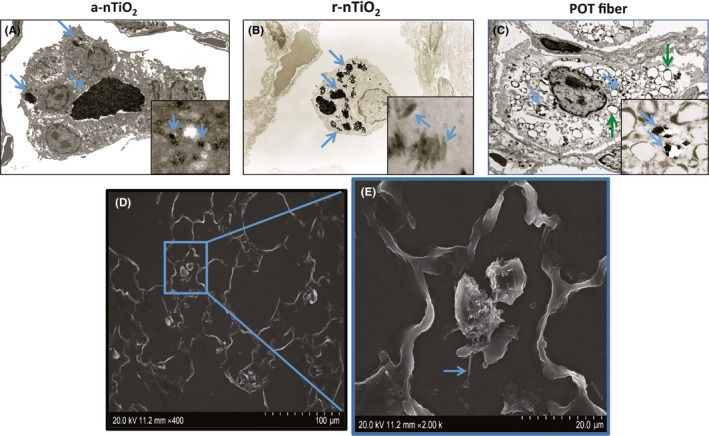
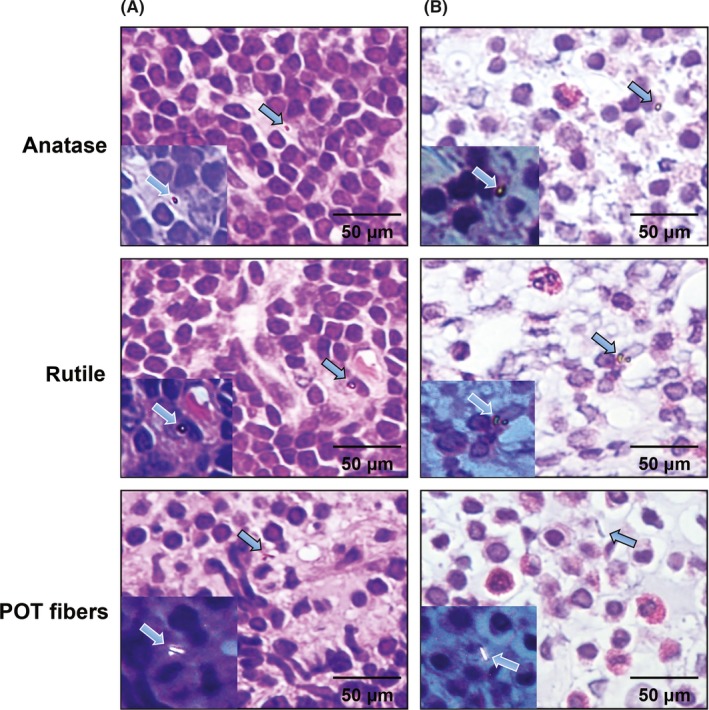
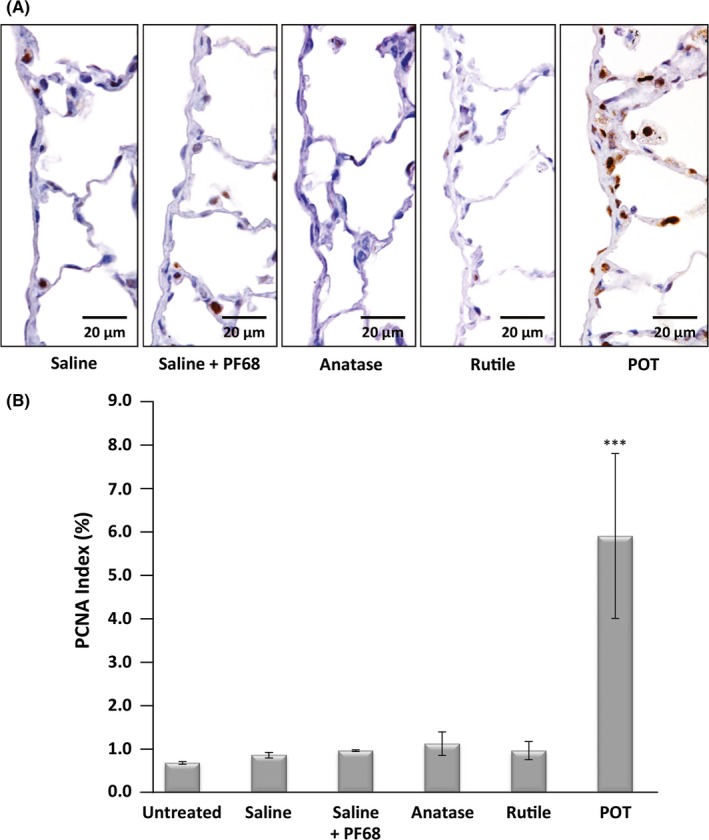
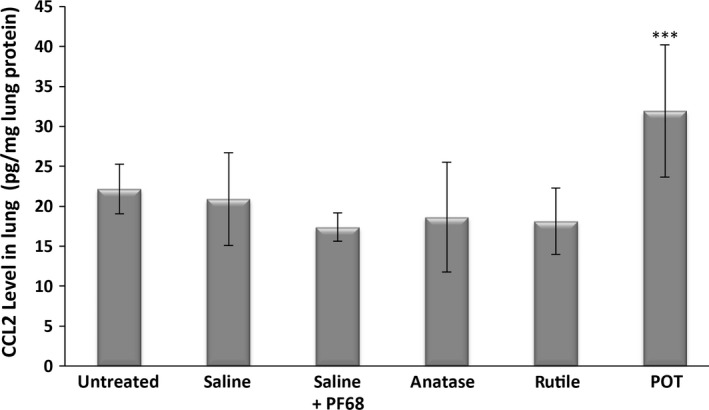
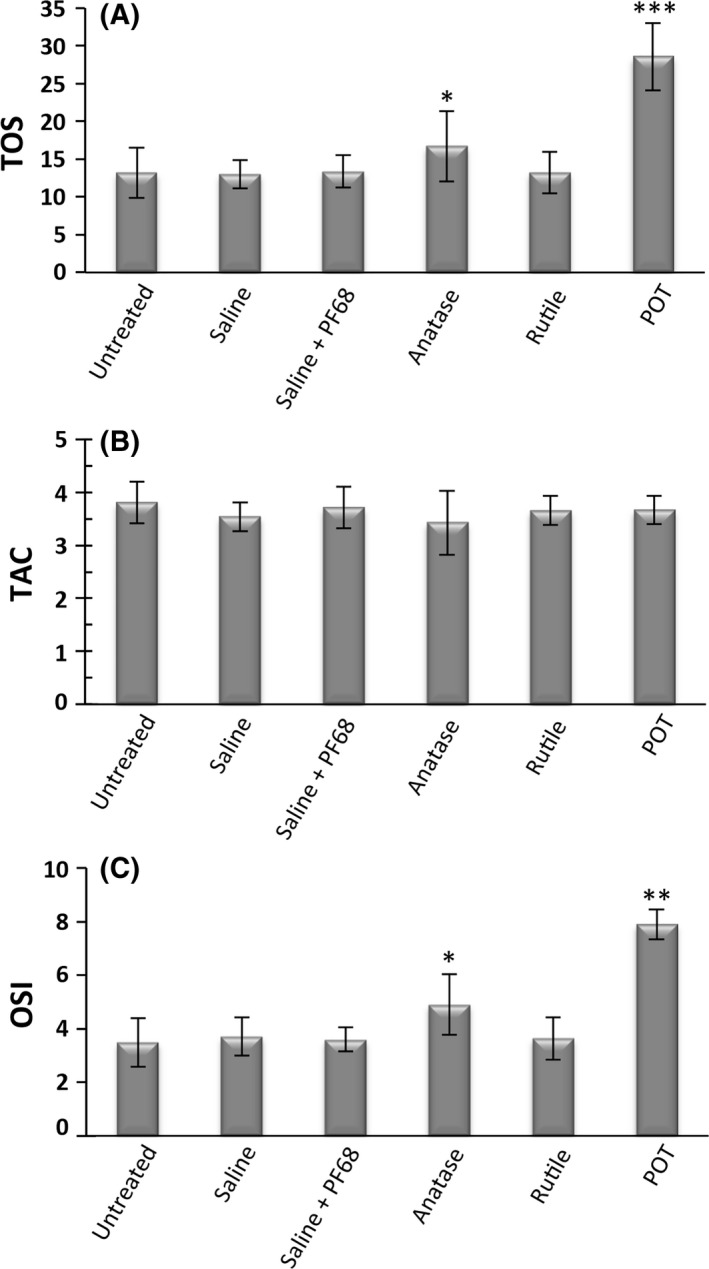
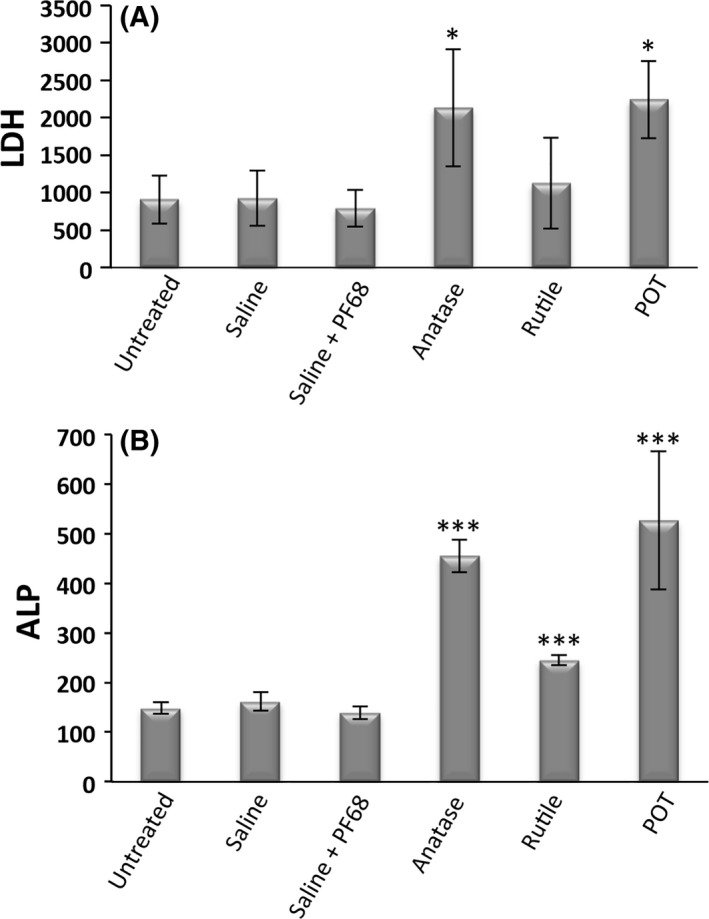
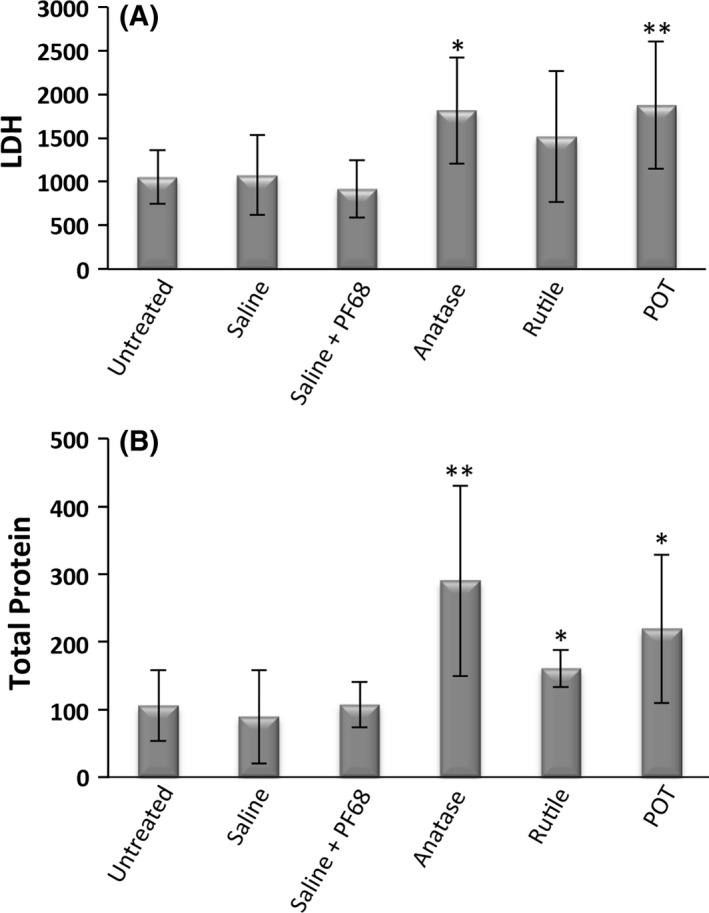
Potassium octatitanate fibers (K2 O·8TiO2 , POT fibers) are widely used as an alternative to asbestos. We investigated the pulmonary and pleural toxicity of POT fibers with reference to 2 non-fibrous titanium dioxide nanoparticles (nTiO2 ), photoreactive anatase (a-nTiO2 ) and inert rutile (r-nTiO2 ). Ten-week-old male F344 rats were given 0.5 mL of 250 μg/mL suspensions of POT fibers, a-nTiO2 , or r-nTiO2 , 8 times (1 mg/rat) over a 15-day period by trans-tracheal intrapulmonary spraying (TIPS). Rats were killed at 6 hours and at 4 weeks after the last TIPS dose. Alveolar macrophages were significantly increased in all treatment groups at 6 hours and at 4 weeks. At week 4, a-nTiO2 and r-nTiO2 were largely cleared from the lung whereas a major fraction of POT fibers were not cleared. In the bronchoalveolar lavage, alkaline phosphatase activity was elevated in all treatment groups, and lactate dehydrogenase (LDH) activity was elevated in the a-nTiO2 and POT groups. In lung tissue, oxidative stress index and proliferating cell nuclear antigen (PCNA) index were elevated in the a-nTiO2 and POT groups, and there was a significant elevation in C-C motif chemokine ligand 2 (CCL2) mRNA and protein in the POT group. In pleural cavity lavage, total protein was elevated in all 3 treatment groups, and LDH activity was elevated in the a-nTiO2 and POT groups. Importantly, the PCNA index of the visceral mesothelium was increased in the POT group. Overall, POT fibers had greater biopersistence, induced higher expression of CCL2, and provoked a stronger tissue response than a-nTiO2 or r-nTiO2 .
Keywords: inhalation toxicity; potassium octatitanate fiber; rat; titanium dioxide nanoparticle; trans-tracheal intrapulmonary spraying.
© 2018 The Authors. Cancer Science published by John Wiley & Sons Australia, Ltd on behalf of Japanese Cancer Association.
Figures



References
-
- Yamato H, Morimoto Y, Tsuda T, et al. Clearance of inhaled potassium Octatitanate Whisker from rat lungs. J Occup Health. 2002;44:34‐39.
-
- Donaldson K, Murphy F, Schinwald A, Duffin R, Poland CA. Identifying the pulmonary hazard of high aspect ratio nanoparticles to enable their safety‐by‐design. Nanomedicine (Lond). 2011;6:143‐156. - PubMed
-
- Adachi S, Kawamura K, Takemoto K. A trial on the quantitative risk assessment of man‐made mineral fibers by the rat intraperitoneal administration assay using the JFM standard fibrous samples. Ind Health. 2001;39:168‐174. - PubMed
-
- Stanton MF, Layard M. The carcinogenicity of fibrous minerals In: Gravatt CC, LaFleur PD, Heinrich KFJ, eds. Workshop on Asbestos: Definitions and Measurement Methods, vol. 506 Washington, DC: National Measurement Laboratory National Bureau of Standards; 1978:143‐151.
-
- Stanton MF, Layard M, Tegeris A, et al. Relation of particle dimension to carcinogenicity in amphibole asbestoses and other fibrous minerals. J Natl Cancer Inst. 1981;67:965‐975. - PubMed
MeSH terms
Substances
LinkOut - more resources
Full Text Sources
Other Literature Sources
Miscellaneous
