


Increased systemic zonula occludens 1 associated with inflammation and independent biomarker in patients with hepatocellular carcinoma
- PMID: 29776350
- PMCID: PMC5960107
- DOI: 10.1186/s12885-018-4484-5
Increased systemic zonula occludens 1 associated with inflammation and independent biomarker in patients with hepatocellular carcinoma
Abstract
Background: Hepatocellular carcinoma (HCC) is a frequent type of primary liver cancer, and its prevalence is increasing worldwide. Indeed, the underlying molecular mechanism is not well understood. Previous studies have shown evidence that tight junction (TJ) components were correlated with carcinogenesis and tumor development. Our aims were to determine the serum levels of tight junction protein Zonula Occludens (ZO)-1 and an inflammatory marker such as high-sensitive C-reactive protein (hs-CRP) in HCC patients compared to healthy volunteers and also to identify the association between ZO-1 and inflammation in HCC.
Methods: Thirty HCC patients and 30 healthy volunteers were recruited in the current study. Clinical data regarding child class, BCLC staging, the number of lesions, tumor size, absence or presence of metastasis, cirrhosis and hepatitis infection were also collected in HCC patients. Plasma ZO-1 and serum hsCRP were analyzed by EIA and ELISA respectively and biochemical parameters by autoanalyser (AU680 Beckman Coulter, USA). Furthermore, hepatic ZO-1 protein expression and tissue localization were examined.
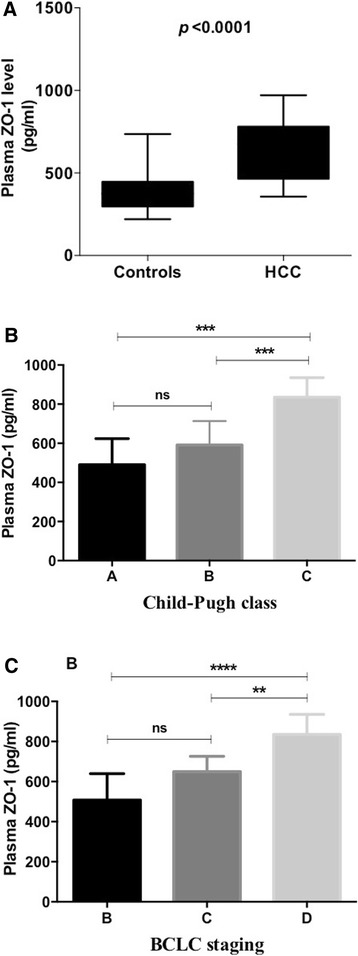
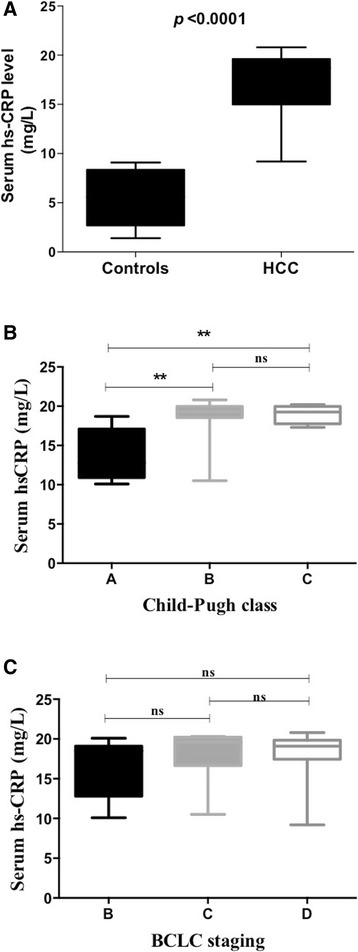
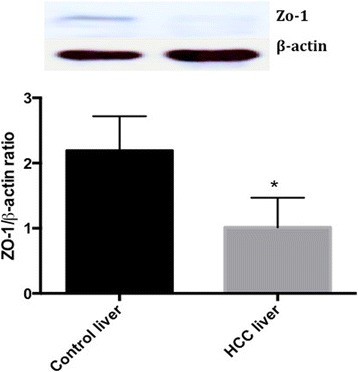
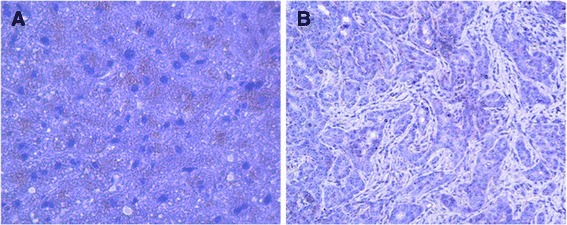
Results: Compared to healthy individuals, the serum levels of bilirubin, alanine aminotransferase (ALT), aspartate aminotransferase (AST), gamma-glutamyltransferase (GGT) and alkaline phosphatase (ALP) were elevated significantly (P < 0.0001) whilst serum albumin level was significantly (P < 0.0001) decreased in HCC patients. Furthermore, tight junction protein ZO-1 concentration was significantly elevated in HCC patients compared to control subjects (648 ± 183.8 vs. 396.4 ± 135.8 pg/ml, respectively; P < 0.0001). Serum hsCRP level was also significantly increased in HCC patients compared to control subjects (17.25 ± 3.57 vs. 5.54 ± 2.62 mg/L, respectively; P < 0.0001). Moreover, decreased protein expression of ZO-1 was found in liver tissue obtained from HCC patients.
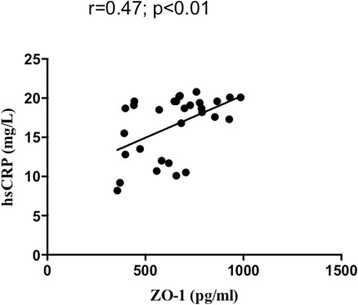
Conclusion: Our findings show for the first time that the systemic concentration of ZO-1 was significantly elevated in HCC patients and is positively correlated with inflammatory markers. Thus, the current study showing evidence that inflammation promotes plasma ZO-1 concentration and raises the possibility that it could be used as a potential diagnostic biomarker for HCC progression.
Keywords: Blood biomarker; Hepatic marker enzymes; Inflammation; Liver cancer; Tight junction.
Conflict of interest statement
Ethics approval and consent to participate
The study was reviewed and approved by the JIPMER scientific advisory committee and institutional human ethics committee (Reg.No: ECRl342/1nst/PY/2013). All patients were provided with informed written consent regarding the data collection and scientific publication.
Competing interests
The authors declare that they have no competing interests.
Publisher’s Note
Springer Nature remains neutral with regard to jurisdictional claims in published maps and institutional affiliations.
Figures
References
-
- Ohnishi K, Iida S, Iwama S, Goto N, Nomura F, Takashi M, Mishima A, Kono K, Kimura K, Musha H, et al. The effect of chronic habitual alcohol intake on the development of liver cirrhosis and hepatocellular carcinoma: relation to hepatitis B surface antigen carriage. Cancer. 1982;49(4):672–677. doi: 10.1002/1097-0142(19820215)49:4<672::AID-CNCR2820490415>3.0.CO;2-#. - DOI - PubMed
MeSH terms
Substances
Grants and funding
LinkOut - more resources
Full Text Sources
Other Literature Sources
Medical
Research Materials
Miscellaneous
