


Mechanisms in bariatric surgery: Gut hormones, diabetes resolution, and weight loss
- PMID: 29776493
- PMCID: PMC5974695
- DOI: 10.1016/j.soard.2018.03.003
Mechanisms in bariatric surgery: Gut hormones, diabetes resolution, and weight loss
Abstract
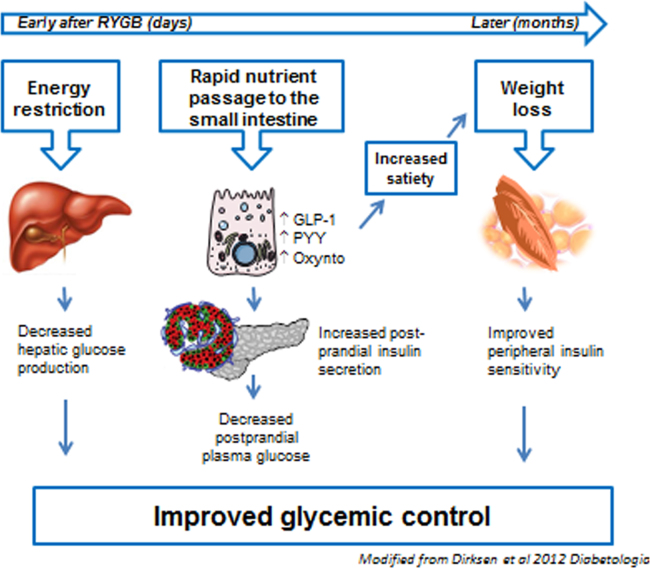
Gastric bypass surgery leads to profound changes in the secretion of gut hormones with effects on metabolism, appetite, and food intake. Here, we discuss their contributions to the improvement in glucose tolerance and the weight loss that results from the operations. We find that the improved glucose tolerance is due the following events: a negative energy balance and resulting weight loss, which improve first hepatic and later peripheral insulin sensitivity, in combination with increased postprandial insulin secretion elicited particularly by exaggerated glucagon-like peptide-1 responses. The weight loss is due to loss of appetite resulting in reduced energy intake, and we find it probable that this process is driven by exaggerated secretion of appetite-regulating gut hormones including, but probably not limited to, glucagon-like peptide-1 and peptide-YY. The increased secretion is due to an accelerated exposure to and absorption of nutrients in the small intestine. This places the weight loss and the gut hormones in key positions with respect to the metabolic improvements after bypass surgery.
Keywords: Carbohydrate absorption; GLP-1; Insulin resistance; PYY; Paracetamol absorption; Protein absorption.
Copyright © 2018 American Society for Bariatric Surgery. Published by Elsevier Inc. All rights reserved.
Figures
References
-
- Buchwald H., Avidor Y., Braunwald E. Bariatric surgery: a systematic review and meta-analysis. JAMA. 2004;292(14):1724–1737. - PubMed
-
- Jorgensen N.B., Jacobsen S.H., Dirksen C. Acute and long-term effects of Roux-en-Y gastric bypass on glucose metabolism in subjects with type 2 diabetes and normal glucose tolerance. Am J Physiol Endocrinol Metab. 2012;303(1):E122–E131. - PubMed
-
- Holst J.J., Sorensen T.I., Andersen A.N. Plasma enteroglucagon after jejunoileal bypass with 3:1 or 1:3 jejunoileal ratio. Scand J Gastroenterol. 1979;14(2):205–207. - PubMed
-
- Orskov C., Holst J.J., Knuhtsen S., Baldissera F.G., Poulsen S.S., Nielsen O.V. Glucagon-like peptides GLP-1 and GLP-2, predicted products of the glucagon gene, are secreted separately from pig small intestine but not pancreas. Endocrinology. 1986;119(4):1467–1475. - PubMed
-
- Holst J.J., Orskov C., Nielsen O.V., Schwartz T.W. Truncated glucagon-like peptide I, an insulin-releasing hormone from the distal gut. FEBS Lett. 1987;211(2):169–174. - PubMed
MeSH terms
Substances
LinkOut - more resources
Full Text Sources
Other Literature Sources
Medical
