Review
. 2018 Sep;28(9):723-737.
doi: 10.1016/j.tcb.2018.04.006. Epub 2018 May 17.

Two-Step Senescence-Focused Cancer Therapies

Affiliations
Review

Two-Step Senescence-Focused Cancer Therapies

Cynthia J Sieben et al. Trends Cell Biol. 2018 Sep.

Abstract

Damaged cells at risk of neoplastic transformation can be neutralized by apoptosis or engagement of the senescence program, which induces permanent cell-cycle arrest and a bioactive secretome that is implicated in tumor immunosurveillance. While from an evolutionary perspective senescence is beneficial in that it protects against malignancies, the accumulation of senescent cells in tissues and organs with aging and at sites of various pathologies is largely detrimental. Because induction of senescence in cancer cells is emerging as a therapeutic concept, it will be important to consider these detrimental effects, including tumor-promoting properties that may drive the formation of secondary tumors or cancer relapse. In this review we discuss the complex relationship between senescence and cancer, and highlight important considerations for therapeutics.

Keywords: SASP; cancer therapy; cellular senescence; senotherapy.


Figures

Figure 1, Key Figure
Figure 1, Key Figure. Cancer-associated senescent cells affect tumors in multiple ways
Acutely senescent cells that arise due to oncogene-activation (A, oncogenic RAS for example) or chemotherapy (B) show tumor suppressing properties, including cell cycle arrest and SASP production that may promote immunosurveillance. Prolonged presence of these cells, however, in addition to tumor-induced or paracrine senescence in the stroma (C, D), or age-related senescence (E) can promote several hallmarks of cancer. Stromal senescent cells may arise from paracrine signals originating from tumor cells (C, gray and white secreted factors) or other senescent cells (D, colored SASP factors). Age-related senescent cells are hypothesized to promote both, neoplastic transformation of adjacent cells and proliferation of tumor cells (E). Immunosenescence (F) is a complex process, but largely renders immune cells (especially T-cells) unresponsive to activating signals and also promotes a SASP with pro-tumorigenic capacities.
Figure 2
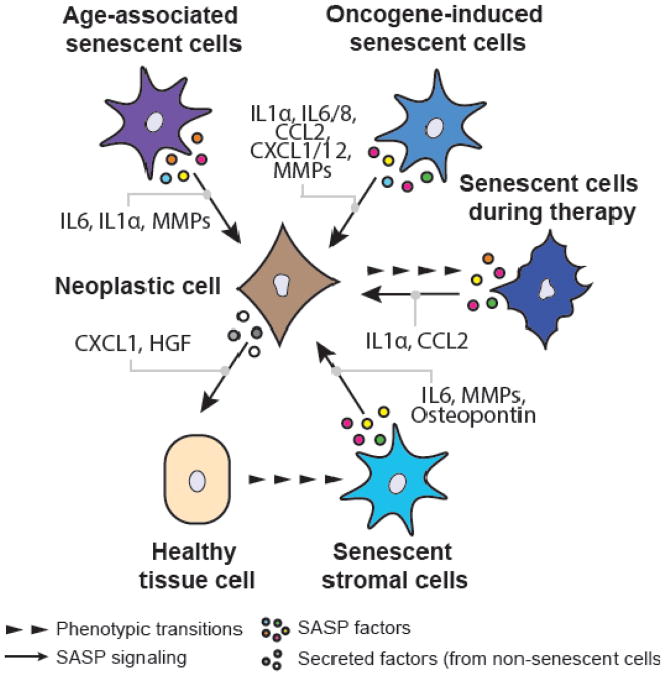
Figure 2. Secretory diversity of cancer-associated senescent cells
Selected SASP components with tumor-modulating activities for each of the discussed senescence types are depicted. While age-associated senescent cells, oncogene-induced senescent cells and therapy-induced senescent cells often seem to secret cytokines and chemokines (including IL6, CCL2, etc.), the pro-tumorigenic activity of stromal senescent cells benefits mostly from secretion of growth factors (such as Osteopontin) and matrix-metalloproteinases (MMPs). Tumor cells themselves are also able to secret bioactive factors that, in some instances, are causally implicated in the development of stromal senescent cells. HGF (Hepatocyte growth factor).

References

    1. Kennedy BK, et al. Geroscience: linking aging to chronic disease. Cell. 2014;159:709–713. - PMC - PubMed
    1. Baker DJ, et al. Naturally occurring p16(Ink4a)-positive cells shorten healthy lifespan. Nature. 2016;530:184–189. - PMC - PubMed
    1. Childs BG, et al. Senescent intimal foam cells are deleterious at all stages of atherosclerosis. Science. 2016;354:472–477. - PMC - PubMed
    1. Jeon OH, et al. Local clearance of senescent cells attenuates the development of post-traumatic osteoarthritis and creates a pro-regenerative environment. Nat Med. 2017;23:775–781. - PMC - PubMed
    1. Sturmlechner I, et al. Cellular senescence in renal ageing and disease. Nat Rev Nephrol. 2017;13:77–89. - PubMed

Publication types

Substances