


Thymol inhibits oral squamous cell carcinoma growth via mitochondria-mediated apoptosis
- PMID: 29777637
- PMCID: PMC6105452
- DOI: 10.1111/jop.12735
Thymol inhibits oral squamous cell carcinoma growth via mitochondria-mediated apoptosis
Abstract
Background: Thymol is a transient receptor potential ankyrin subtype 1 channel, (TRPA1) agonist found in thyme and oregano. Thymol has antioxidant, anti-inflammatory, and antimicrobial properties; thus, thymol is added to many commercially available products including Listerine mouthwash. Thymol is also cytotoxic to HL-60 (acute promyelocytic leukemia) cells in vitro. Therefore, we evaluated the effects of thymol against oral squamous cell carcinoma (OSCC) and its anticancer mechanism-of-action.
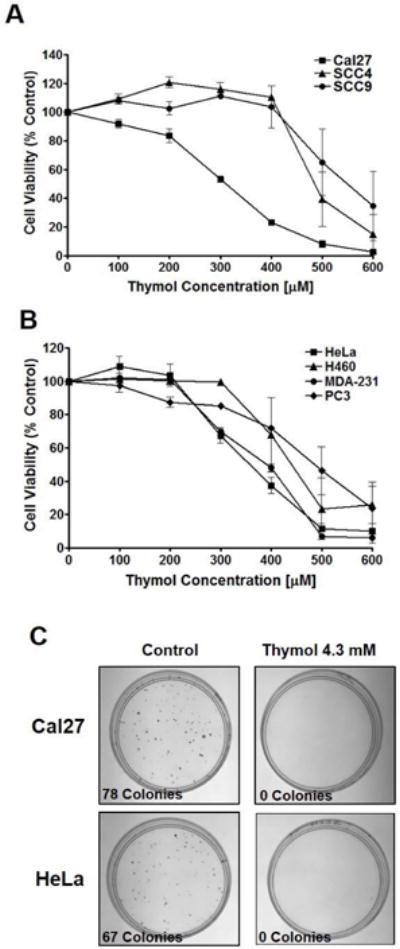
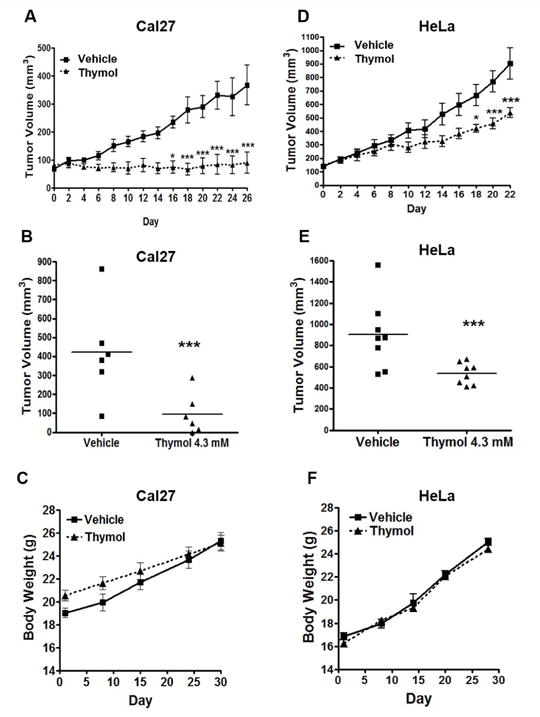
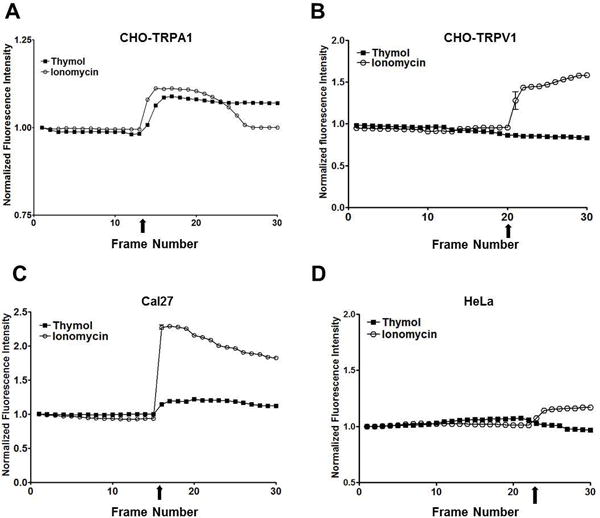
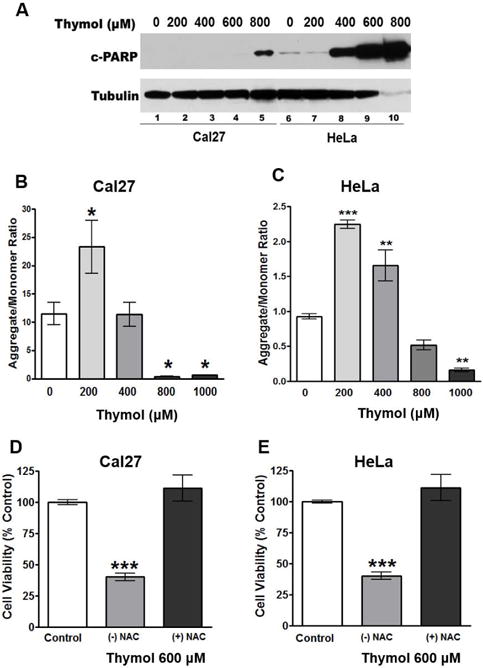
Methods: The antiproliferative effects of thymol in OSCC Cal27 cells were determined by MTS assays. Antitumor effects were evaluated in Cal27- and HeLa-derived mouse xenografts. Calcium imaging, mitochondrial transmembrane potential (ΔΨm) studies, and Western blot analysis of cleaved PARP (c-PARP) evaluated thymol's mechanism-of-action.
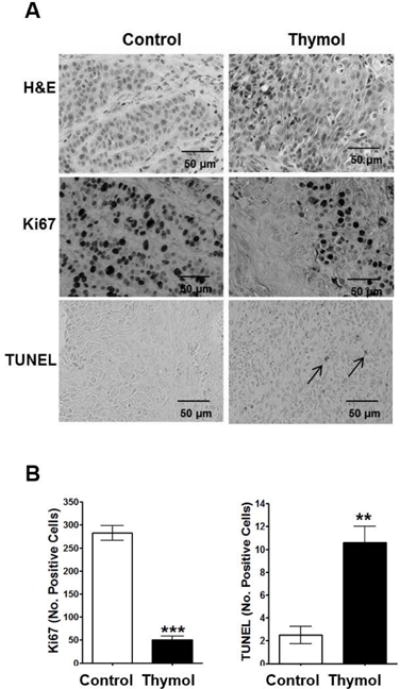
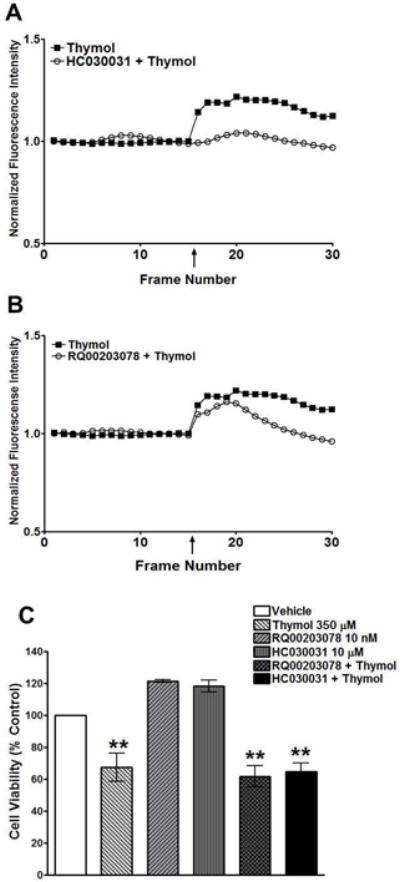
Results: Thymol had significant, long-lasting antiproliferative effects in vitro. In vivo, thymol displayed significant antitumor effects in Cal27-derived tumors. Thymol's anticancer effects were confirmed in HeLa-derived xenografts demonstrating that thymol effects are not tumor-type specific. Calcium imaging verified calcium influx in Cal27 cells that were reversed with the TRPA1 antagonist, HC030031. However, no calcium influx was seen in HeLa cells indicating that TRP channels do not regulate thymol cytotoxicity. This was confirmed using cell viability assays in which pre-treatment with HC030031 had no effect on thymol cytotoxicity. Instead, ΔΨm studies revealed that thymol induces significant ΔΨm depolarization and apoptosis.
Conclusion: Our findings provide the first evidence of thymol's novel antitumor effects against OSCC in vivo, which do not rely on TRPA1 activity. Instead, we show that thymol induces mitochondrial dysfunction and apoptosis and may be efficacious against multiple cancers.
Keywords: TRPA1; apoptosis; mitochondrial dysfunction; oral squamous cell carcinoma; thymol.
© 2018 John Wiley & Sons A/S. Published by John Wiley & Sons Ltd.
Conflict of interest statement
The authors have no conflict of interest.
Figures
References
-
- Cancer Facts and Figures: Vol.: American Cancer Society. 2015 https://www.cancer.org/research/cancer-facts-statistics/all-cancer-facts... Accessed on 11-13-17.
-
- CONFORTI F, STATTI G, UZUNOV D, et al. Comparative chemical composition and antioxidant activities of wild and cultivated Laurus nobilis L. leaves and Foeniculum vulgare subsp piperitum (Ucria) coutinho seeds. Biol Pharm Bull. 2006;29:2056–64. - PubMed
-
- EL BABILI F, BOUAJILA J, SOUCHARD JP, et al. Oregano: chemical analysis and evaluation of its antimalarial, antioxidant, and cytotoxic activities. J Food Sci. 2011;76:C512–8. - PubMed
-
- MIYAZAWA N, FUJITA A, KUBOTA K. Aroma character impact compounds in Kinokuni mandarin orange (Citrus kinokuni) compared with Satsuma mandarin orange (Citrus unshiu) Biosci Biotechnol Biochem. 2010;74:835–42. - PubMed
-
- OZCAN MM, CHALCHAT JC. Chemical composition and antifungal activity of rosemary (Rosmarinus officinalis L.) oil from Turkey. Int J Food Sci Nutr. 2008;59:691–8. - PubMed
MeSH terms
Substances
Grants and funding
LinkOut - more resources
Full Text Sources
Other Literature Sources
