


An innovative medical school curriculum to address human papillomavirus vaccine hesitancy
- PMID: 29778518
- PMCID: PMC6819154
- DOI: 10.1016/j.vaccine.2018.05.014
An innovative medical school curriculum to address human papillomavirus vaccine hesitancy
Abstract
Background: Vaccination rates against Human Papillomavirus (HPV) in the US remain alarmingly low. Physicians can significantly influence a parent's decision to vaccinate their children. However, medical education often lacks training on specific strategies for communicating with vaccine hesitant parents.
Methods: We created an innovative curriculum designed to teach medical students how to address HPV vaccine hesitancy. The curriculum consisted of (1) a presentation on the epidemiology, biology, and disease morbidity associated with HPV, (2) a video that teaches specific communication strategies and (3) role-playing simulations. This curriculum was delivered to medical students at two separate sites. Medical students were surveyed before and after completing the educational curriculum. The surveys assessed student comfort talking to HPV vaccine hesitant parents and their likelihood to recommend the HPV vaccine.
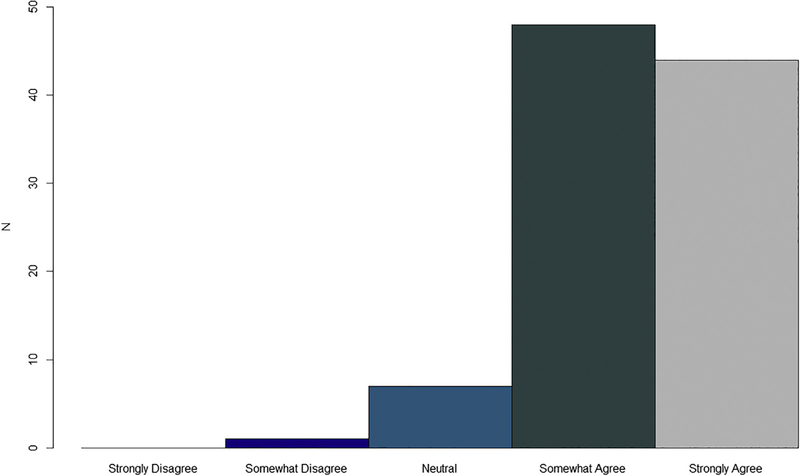
Results: Pre- and post-intervention surveys were completed by 101 of the 132 participants (77% response rate). After the intervention, student awareness of the benefits of the HPV vaccine increased by a mean of 0.82 points (Likert scale 1-5, p < 0.01) and student comfort talking to vaccine hesitant parents increased by a mean of 1.37 points (p < 0.01). Prior to the intervention, students more strongly recommended the HPV vaccine to females compared to males, but this gender disparity was eliminated after the intervention (p < 0.01). Personal vaccination status was independately associated with a higher likelihood of recommending the HPV vaccine both before and after the intervention.
Conclusion: Our innovative curriculum improved medical student comfort level discussing HPV vaccination with hesitant parents and increased the perceived likelihood of recommending HPV vaccination. The intervention is easy to implement, scalable, and requires minimal resources. Educating future providers on this important topic has the potential to improve vaccination rates nationwide and thus should be considered for all medical students.
Keywords: C.A.S.E. method; Curriculum; HPV vaccine; Human Papillomavirus (HPV); Medical education; Vaccine hesitancy.
Copyright © 2018 Elsevier Ltd. All rights reserved.
Conflict of interest statement
Conflicts of interest
The authors do not have any commercial or other associations that might pose a conflict of interest.
Figures
References
-
- Incidence, Prevalence, and Cost of Sexually Transmitted Infections in the United States. Centers for Disease Control and Prevention, National Center for HIV Viral Hepatitis STD and TB Prevention; 2013.
-
- Walker TY, Elam-Evans LD, Singleton JA, Yankey D, Markowitz LE, Fredua B, et al. National, Regional, State, and Selected Local Area Vaccination Coverage Among Adolescents Aged 13–17 Years - United States, 2016. Mmwr-Morbidity and Mortality Weekly Report. 2017;66:874–82. 10.15585/mmwr.mm6633a2. - DOI - PMC - PubMed
Publication types
MeSH terms
Substances
Grants and funding
LinkOut - more resources
Full Text Sources
Other Literature Sources
Medical
