Mental health and retention in HIV care: A systematic review and meta-analysis
- PMID: 29781655
- PMCID: PMC6103311
- DOI: 10.1037/hea0000606
Mental health and retention in HIV care: A systematic review and meta-analysis
Abstract
Objective: Mental health (MH) diagnoses, which are prevalent among persons living with HIV infection, might be linked to failed retention in HIV care. This review synthesized the quantitative evidence regarding associations between MH diagnoses or symptoms and retention in HIV care, as well as determined if MH service utilization (MHSU) is associated with improved retention in HIV care.
Method: A comprehensive search of the Centers for Disease Control and Prevention's HIV/AIDS Prevention Research Synthesis database of electronic (e.g., MEDLINE, EMBASE, PsycINFO) and manual searches was conducted to identify relevant studies published during January 2002-August 2017. Effect estimates from individual studies were pooled by using random-effects meta-analysis, and a moderator analysis was conducted.
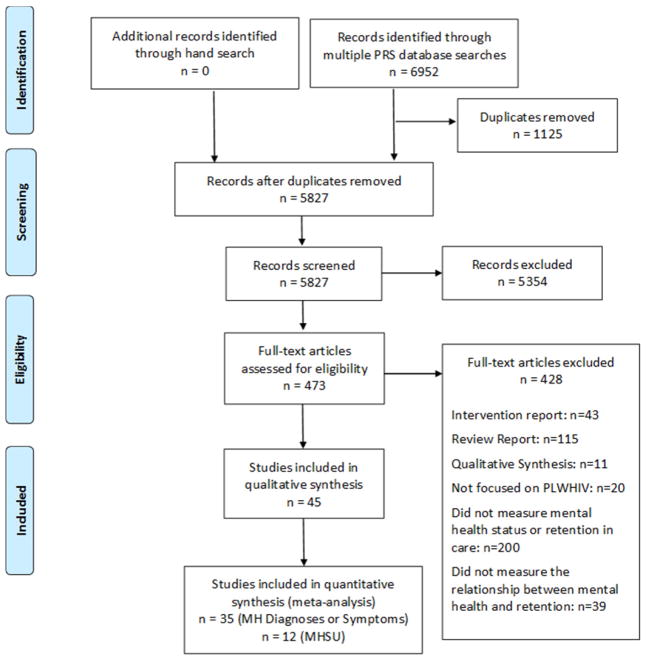
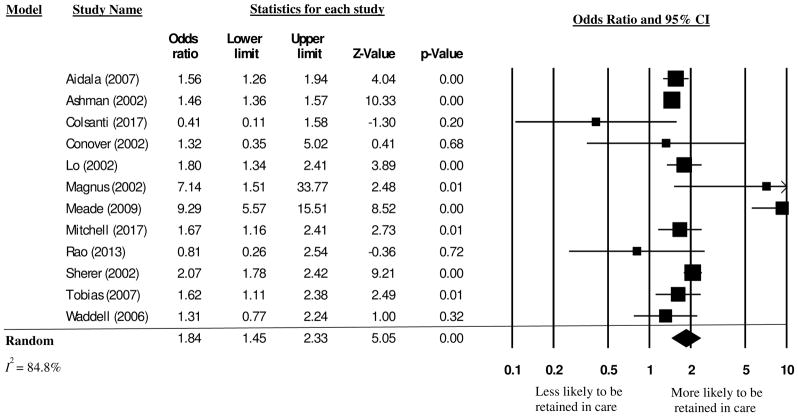
Results: Forty-five studies, involving approximately 57,334 participants in total, met the inclusion criteria: 39 examined MH diagnoses or symptoms, and 14 examined MHSU. Overall, a significant association existed between MH diagnoses or symptoms, and lower odds of being retained in HIV care (odds ratio, OR = 0.94; 95% confidence interval [CI] [0.90, 0.99]). Health insurance status (β = 0.004; Z = 3.47; p = .001) significantly modified the association between MH diagnoses or symptoms and retention in HIV care. In addition, MHSU was associated with an increased odds of being retained in HIV care (OR = 1.84; 95% CI [1.45, 2.33]).
Conclusions: Results indicate that MH diagnoses or symptoms are a barrier to retention in HIV care and emphasize the importance of providing MH treatment to HIV patients in need. (PsycINFO Database Record
(c) 2018 APA, all rights reserved).
Figures

References
-
- Aidala AA, Lee G, Abramson DM, Messeri P, Siegler A. Housing need, housing assistance, and connection to HIV medical care. AIDS and Behavior. 2007;11:S101–S115. - PubMed
-
- American Psychiatric Association. Diagnostic and statistical manual of mental disorders (DSM-5®) American Psychiatric Pub; 2013.
-
- Ashman JJ, Conviser R, Pounds MB. Associations between HIV-positive individuals’ receipt of ancillary services and medical care receipt and retention. AIDS Care. 2002;14:S109–S118. - PubMed
-
- Begg CB, Mazumdar M. Operating characteristics of a rank correlation test for publication bias. Biometrics. 1994;50:1088–1101. - PubMed
Publication types
MeSH terms
Grants and funding
LinkOut - more resources
Full Text Sources
Other Literature Sources
Medical
Miscellaneous