Mouse- and Human-derived Primary Gastric Epithelial Monolayer Culture for the Study of Regeneration
- PMID: 29782013
- PMCID: PMC6101118
- DOI: 10.3791/57435
Mouse- and Human-derived Primary Gastric Epithelial Monolayer Culture for the Study of Regeneration
Abstract
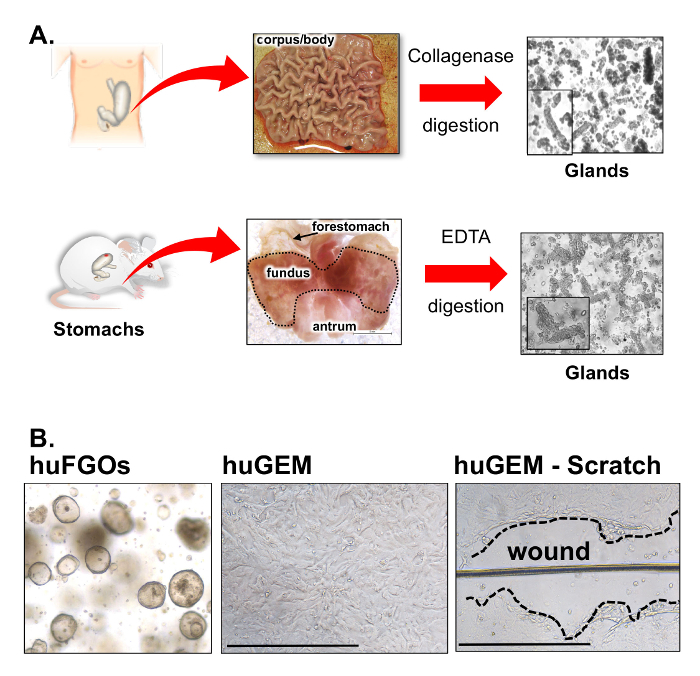
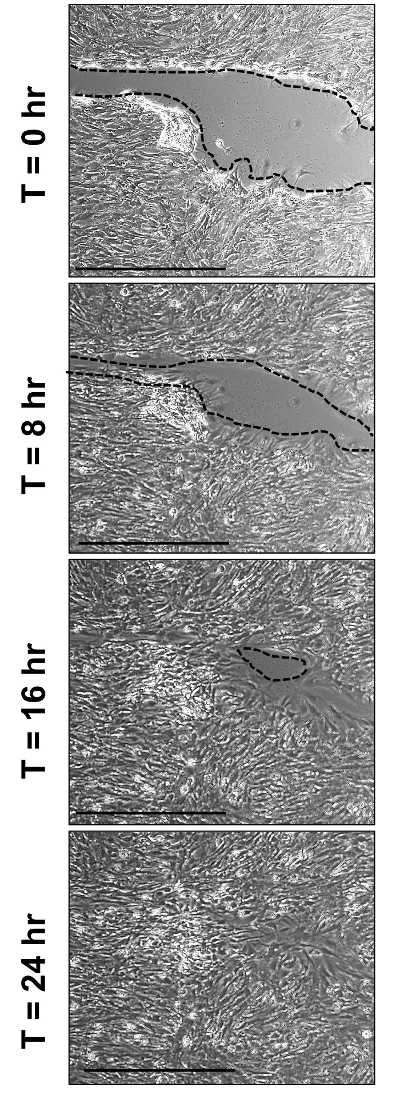
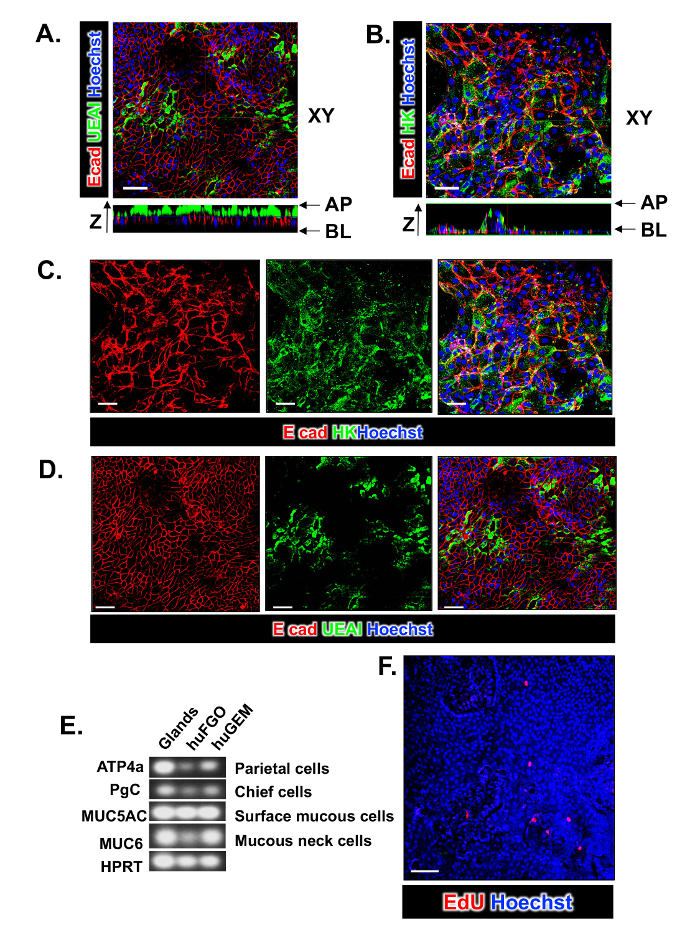
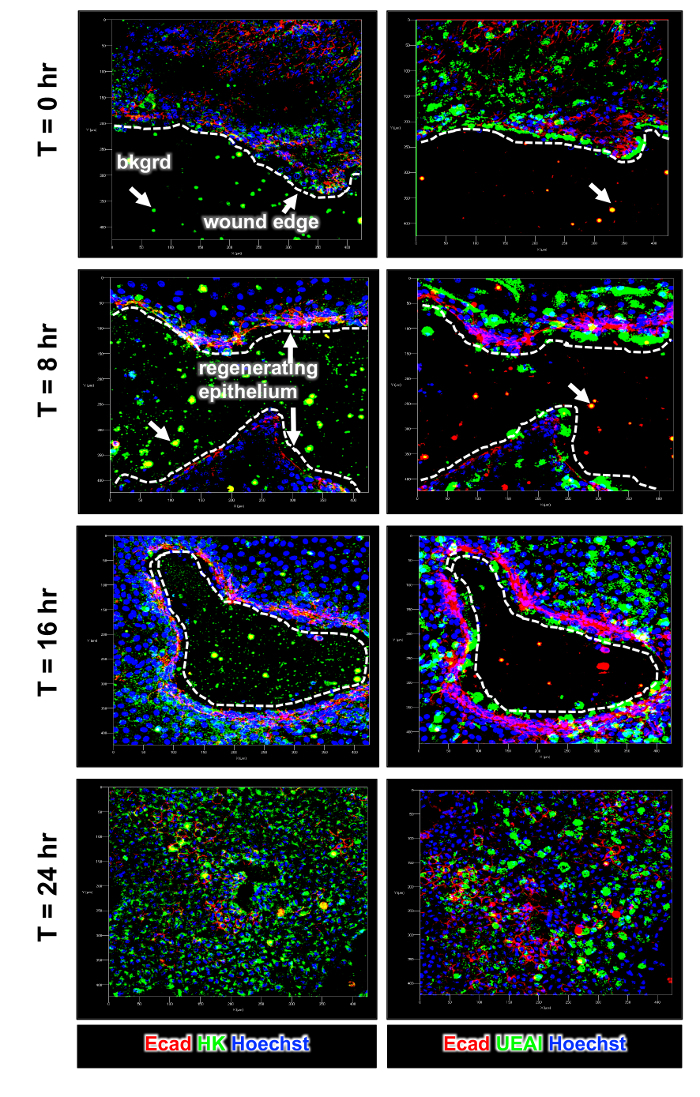
In vitro studies of gastric wound repair typically involves the use of gastric cancer cell lines in a scratch-wound assay of cellular proliferation and migration. One critical limitation of such assays, however, is their homogenous assortment of cellular types. Repair is a complex process which demands the interaction of several cell types. Therefore, to study a culture devoid of cellular subtypes, is a concern that must be overcome if we are to understand the repair process. The gastric organoid model may alleviate this issue whereby the heterogeneous collection of cell types closely reflects that of the gastric epithelium or other native tissues in vivo. Demonstrated here is a novel, in vitro scratch-wound assay derived from human or mouse 3-dimensional organoids which can then be transferred to a gastric epithelial monolayer as either intact organoids or as a single cell suspension of dissociated organoids. The goal of the protocol is to establish organoid-derived gastric epithelial monolayers that can be used in a novel scratch-wound assay system to study gastric regeneration.

References
-
- Zhang Y, et al. Bm-TFF2, a toad trefoil factor, promotes cell migration, survival and wound healing. Biochem Biophys Res Commun. 2010;398(3):559–564. - PubMed
-
- Crabtree J. Role of cytokines in pathogenesis of Helicobacter pylori-induced mucosal damage. Dig Dis Sci. 1998;43(Supplement):46S–53S. - PubMed
-
- Riahi R, Yang Y, Zhang DD, Wong PK. Advances in wound-healing assays for probing collective cell migration. J Lab Autom. 2012;17(1):59–65. - PubMed
Publication types
MeSH terms
Grants and funding
LinkOut - more resources
Full Text Sources
Other Literature Sources