


On the optimization of low-cost FDM 3D printers for accurate replication of patient-specific abdominal aortic aneurysm geometry
- PMID: 29782613
- PMCID: PMC5954792
- DOI: 10.1186/s41205-017-0023-2
On the optimization of low-cost FDM 3D printers for accurate replication of patient-specific abdominal aortic aneurysm geometry
Abstract
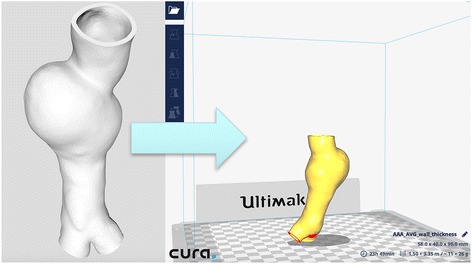
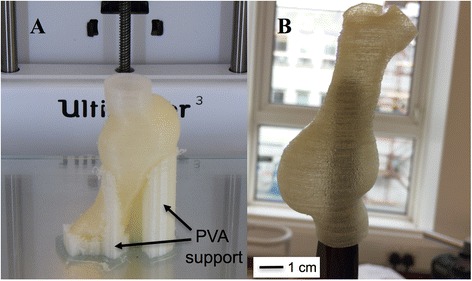
Background: There is a potential for direct model manufacturing of abdominal aortic aneurysm (AAA) using 3D printing technique for generating flexible semi-transparent prototypes. A patient-specific AAA model was manufactured using fused deposition modelling (FDM) 3D printing technology. A flexible, semi-transparent thermoplastic polyurethane (TPU), called Cheetah Water (produced by Ninjatek, USA), was used as the flexible, transparent material for model manufacture with a hydrophilic support structure 3D printed with polyvinyl alcohol (PVA). Printing parameters were investigated to evaluate their effect on 3D-printing precision and transparency of the final model. ISO standard tear resistance tests were carried out on Ninjatek Cheetah specimens for a comparison of tear strength with silicone rubbers.
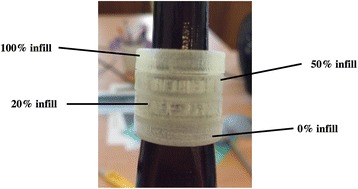
Results: It was found that an increase in printing speed decreased printing accuracy, whilst using an infill percentage of 100% and printing nozzle temperature of 255 °C produced the most transparent results. The model had fair transparency, allowing external inspection of model inserts such as stent grafts, and good flexibility with an overall discrepancy between CAD and physical model average wall thicknesses of 0.05 mm (2.5% thicker than the CAD model). The tear resistance test found Ninjatek Cheetah TPU to have an average tear resistance of 83 kN/m, higher than any of the silicone rubbers used in previous AAA model manufacture. The model had lower cost (4.50 GBP per model), shorter manufacturing time (25 h 3 min) and an acceptable level of accuracy (2.61% error) compared to other methods.
Conclusions: It was concluded that the model would be of use in endovascular aneurysm repair planning and education, particularly for practicing placement of hooked or barbed stents, due to the model's balance of flexibility, transparency, robustness and cost-effectiveness.
Keywords: 3D printing; Abdominal aortic aneurysms; Accurate; Flexible; Rapid prototype; Thermoplastic polyurethane; Transparent.
Conflict of interest statement
The CT scan data used in this study was gathered as part of the MA3RS clinical trial (registration number: IS- RCTN76413758) in accordance with the Declaration of Helsinki. Ethical approval for which was granted by the East of Scotland Research Ethics Committee.The authors declare that they have no competing interests.Springer Nature remains neutral with regard to jurisdictional claims in published maps and institutional affiliations.
Figures





References
-
- Shimizu K, Mitchell RN, Libby P. Inflammation and cellular immune responses in abdominal aortic aneurysms. Arterioscler Thromb Vasc Biol. 2006;26:987–94. - PubMed
-
- Study Investigators TM. Aortic Wall Inflammation Predicts Abdominal Aortic Aneurysm Expansion, Rupture and Need for Surgical Repair. Circulation [Internet]. 2017 [cited 2017 Aug 21]; Available from: http://circ.ahajournals.org/content/early/2017/07/13/CIRCULATIONAHA.117.... - PMC - PubMed
-
- Assar AN, Zarins CK. Ruptured abdominal aortic aneurysm: a surgical emergency with many clinical presentations. Postgrad. Med. J. 2009, 85:268–73. - PubMed
-
- UK Small Aneurysm Trial Participants. Mortality results for randomised controlled trial of early elective surgery or ultrasonographic surveillance for small abdominal aortic aneurysms. Lancet [Internet]. 1998;352:1649–1655. Available from: http://www.ncbi.nlm.nih.gov/pubmed/9853436 - PubMed
LinkOut - more resources
Full Text Sources
Other Literature Sources
Research Materials
Miscellaneous