


Speed breeding for multiple quantitative traits in durum wheat
- PMID: 29785201
- PMCID: PMC5950182
- DOI: 10.1186/s13007-018-0302-y
Speed breeding for multiple quantitative traits in durum wheat
Abstract
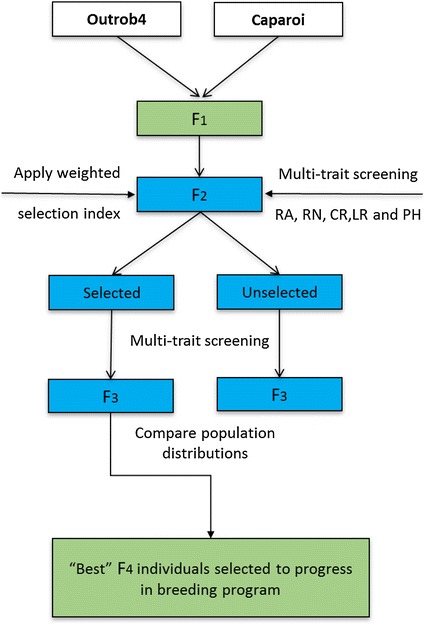
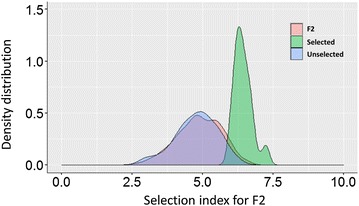
Background: Plant breeding requires numerous generations to be cycled and evaluated before an improved cultivar is released. This lengthy process is required to introduce and test multiple traits of interest. However, a technology for rapid generation advance named 'speed breeding' was successfully deployed in bread wheat (Triticum aestivum L.) to achieve six generations per year while imposing phenotypic selection for foliar disease resistance and grain dormancy. Here, for the first time the deployment of this methodology is presented in durum wheat (Triticum durum Desf.) by integrating selection for key traits, including above and below ground traits on the same set of plants. This involved phenotyping for seminal root angle (RA), seminal root number (RN), tolerance to crown rot (CR), resistance to leaf rust (LR) and plant height (PH). In durum wheat, these traits are desirable in environments where yield is limited by in-season rainfall with the occurrence of CR and epidemics of LR. To evaluate this multi-trait screening approach, we applied selection to a large segregating F2 population (n = 1000) derived from a bi-parental cross (Outrob4/Caparoi). A weighted selection index (SI) was developed and applied. The gain for each trait was determined by evaluating F3 progeny derived from 100 'selected' and 100 'unselected' F2 individuals.
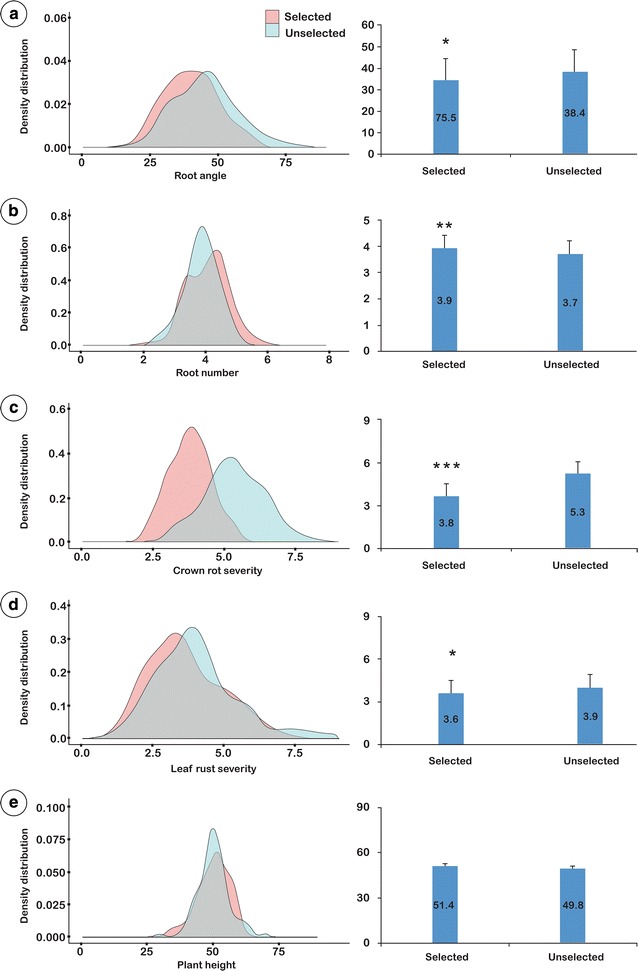
Results: Transgressive segregation was observed for all assayed traits in the Outrob4/Caparoi F2 population. Application of the SI successfully shifted the population mean for four traits, as determined by a significant mean difference between 'selected' and 'unselected' F3 families for CR tolerance, LR resistance, RA and RN. No significant shift for PH was observed.
Conclusions: The novel multi-trait phenotyping method presents a useful tool for rapid selection of early filial generations or for the characterization of fixed lines out-of-season. Further, it offers efficient use of resources by assaying multiple traits on the same set of plants. Results suggest that when performed in parallel with speed breeding in early generations, selection will enrich recombinant inbred lines with desirable alleles and will reduce the length and number of years required to combine these traits in elite breeding populations and therefore cultivars.
Keywords: Crown rot; Drought adaptation; Fusarium; Leaf rust; Root architecture; Segregating populations; Speed breeding; Trait pyramiding.
Figures

References
-
- Able J, Atienza S. Durum wheat for the future: challenges, research and prospects in the 21st century. Crop Pasture Sci. 2014
-
- Kezih R, Bekhouche F, Merazka A. Some traditional Algerian products from durum wheat. Afr J Food Sci. 2014
-
- Stuknyte M, Cattaneo S, Pagani MA, Marti A, Micard V, Hogenboom J, et al. Spaghetti from durum wheat: effect of drying conditions on heat damage, ultrastructure and in vitro digestibility. Food Chem. 2014 - PubMed
-
- Harmankaya M, Ozcan MM, Gezgin S. Variation of heavy metal and micro and macro element concentrations of bread and durum wheats and their relationship in grain of Turkish wheat cultivars. Environ Monit Assess. 2012 - PubMed
LinkOut - more resources
Full Text Sources
Other Literature Sources
Miscellaneous
