


Fluid Extravasation in Shoulder Arthroscopic Surgery: A Systematic Review
- PMID: 29785406
- PMCID: PMC5954585
- DOI: 10.1177/2325967118771616
Fluid Extravasation in Shoulder Arthroscopic Surgery: A Systematic Review
Abstract
Background: Arthroscopic surgery of the shoulder joint has become increasingly more common given its advantages over open surgery; however, one rare but potentially life-threatening complication is fluid extravasation into the surrounding tissues, causing edema, respiratory compromise, abnormal results on laboratory blood tests, and possibly death. Currently, no systematic review exists that summarizes the existing clinical research on this topic.
Purpose: To perform a systematic review on fluid extravasation as a complication of shoulder arthroscopic surgery, specifically assessing clinical presentation, risk factors, management, and outcomes.
Study design: Systematic review; Level of evidence, 4.
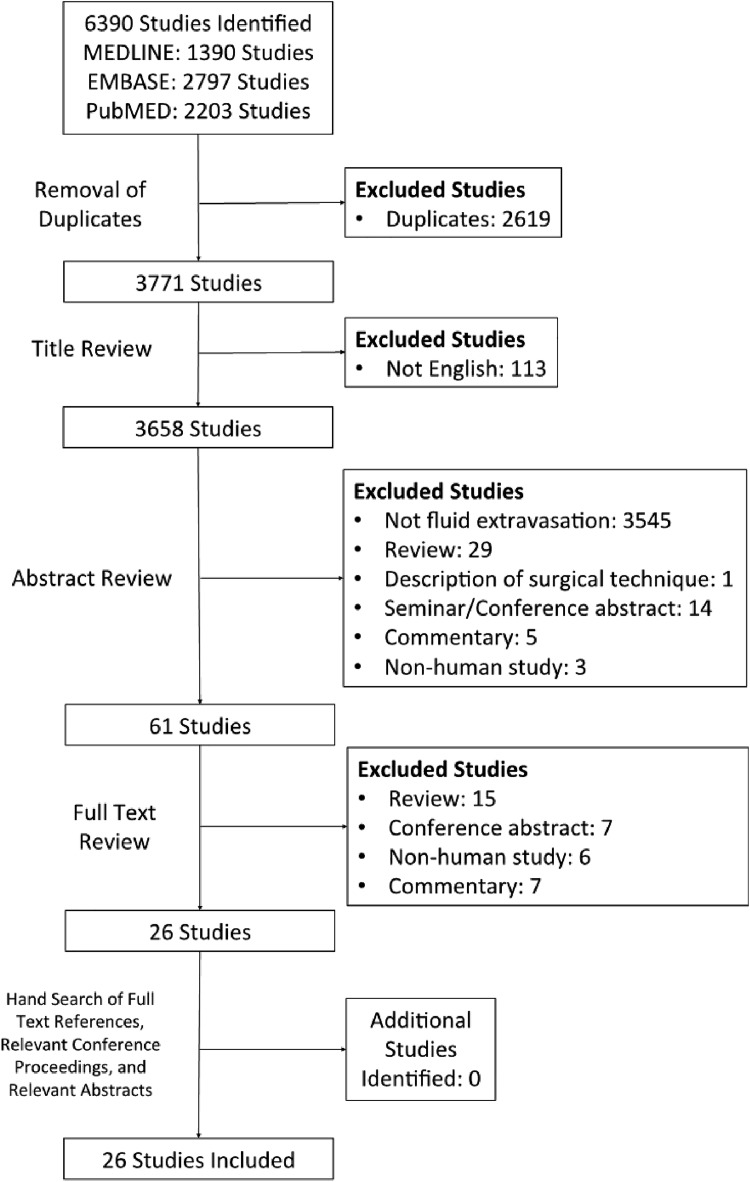
Methods: Two reviewers independently searched 3 databases (PubMed, Ovid [MEDLINE], and Embase) from database inception until July 1, 2017. The PRISMA (Preferred Reporting Items for Systematic Reviews and Meta-Analyses) checklist guided the reporting and data abstraction. The methodological quality of these studies was assessed using the Methodological Index for Non-Randomized Studies (MINORS) checklist. The results are presented in a narrative summary fashion using descriptive statistics including ranges and agreement statistics.
Results: A total of 26 studies (20 case reports, 4 case series, and 2 prospective comparative studies) encompassing 205 patients (mean age, 50.8 years [range, 15-83 years]) were included. The most common signs of fluid extravasation included chest wall swelling (n = 86) and neck swelling (n = 116). In 32 patients, observation alone was sufficient. Other patients required airway intubation (n = 16), diuretics (n = 7), steroids (n = 1), and percutaneous drainage of fluid (n = 1). Clinical edema resolved after 2 to 48 hours, and patients were discharged 1 to 20 days postoperatively. Serious complications included transfer to the intensive care unit (n = 14), anterior interosseous nerve palsy (n = 4), rhabdomyolysis (n = 1), and death (n = 1).
Conclusion: Fluid extravasation has the potential to be a life-threatening complication of shoulder arthroscopic surgery; however, it is most commonly managed nonoperatively, and symptoms typically resolve with no evidence of long-term complications. Intraoperative surgical decisions, such as minimizing the surgical time and volume of irrigation fluid used, may limit fluid extravasation, while careful intraoperative monitoring may facilitate prompt diagnosis and management to optimize patient outcomes.
Keywords: anesthesia/pain management; cardiovascular physiology; epidemiology; injury prevention; muscle injuries; shoulder.
Conflict of interest statement
One or more of the authors has declared the following potential conflict of interest or source of funding: O.R.A. is a consultant for ConMed, Smith & Nephew, and DJO.
Figures
References
-
- Antonucci S, Orlandi P, Mattei PA, Amato F. Airway obstruction during arthroscopic shoulder surgery: anesthesia for the patient or for the surgeon? Minerva Anestesiol. 2006;72(12):995–1000. - PubMed
-
- Berjano P, Gonzalez BG, Olmedo JF, Perez-Espana LA, Munilla MG. Complications in arthroscopic shoulder surgery. Arthroscopy. 1998;14(8):785–788. - PubMed
-
- Blumenthal S, Nadig M, Gerber C, Borgeat A. Severe airway obstruction during arthroscopic shoulder surgery. Anesthesiology. 2003;99(6):1455–1456. - PubMed
-
- Borgeat A, Bird P, Ekatodramis G, Dumont C. Tracheal compression caused by periarticular fluid accumulation: a rare complication of shoulder surgery. J Shoulder Elbow Surg. 2000;9(5):443–445. - PubMed
-
- Brown AR, Weiss R, Greenberg C, Flatow EL, Bigliani LU. Interscalene block for shoulder arthroscopy: comparison with general anesthesia. Arthroscopy. 1993;9(3):295–300. - PubMed
Publication types
LinkOut - more resources
Full Text Sources
Other Literature Sources
Medical
