


A systematic review and meta-analysis of the use of resuscitative endovascular balloon occlusion of the aorta in the management of major exsanguination
- PMID: 29785654
- PMCID: PMC6096615
- DOI: 10.1007/s00068-018-0959-y
A systematic review and meta-analysis of the use of resuscitative endovascular balloon occlusion of the aorta in the management of major exsanguination
Abstract
Background: Circulatory collapse is a leading cause of mortality among traumatic major exsanguination and in ruptured aortic aneurysm patients. Approximately 40% of patients die before hemorrhage control is achieved. Resuscitative endovascular balloon occlusion of the aorta (REBOA) is an adjunct designed to sustain the circulation until definitive surgical or endovascular repair. A systematic review was conducted for the current clinical use of REBOA in patients with hemodynamic instability and to discuss its potential role in improving prehospital and in-hospital outcome.
Methods: Systematic review and meta-analysis (1900-2017) using MEDLINE, Cochrane, EMBASE, Web of Science and Central and Emcare using the keywords "aortic balloon occlusion", "aortic balloon tamponade", "REBOA", and "Resuscitative Endovascular Balloon Occlusion" in combination with hemorrhage control, hemorrhage, resuscitation, shock, ruptured abdominal or thoracic aorta, endovascular repair, and open repair. Original published studies on human subjects were considered.
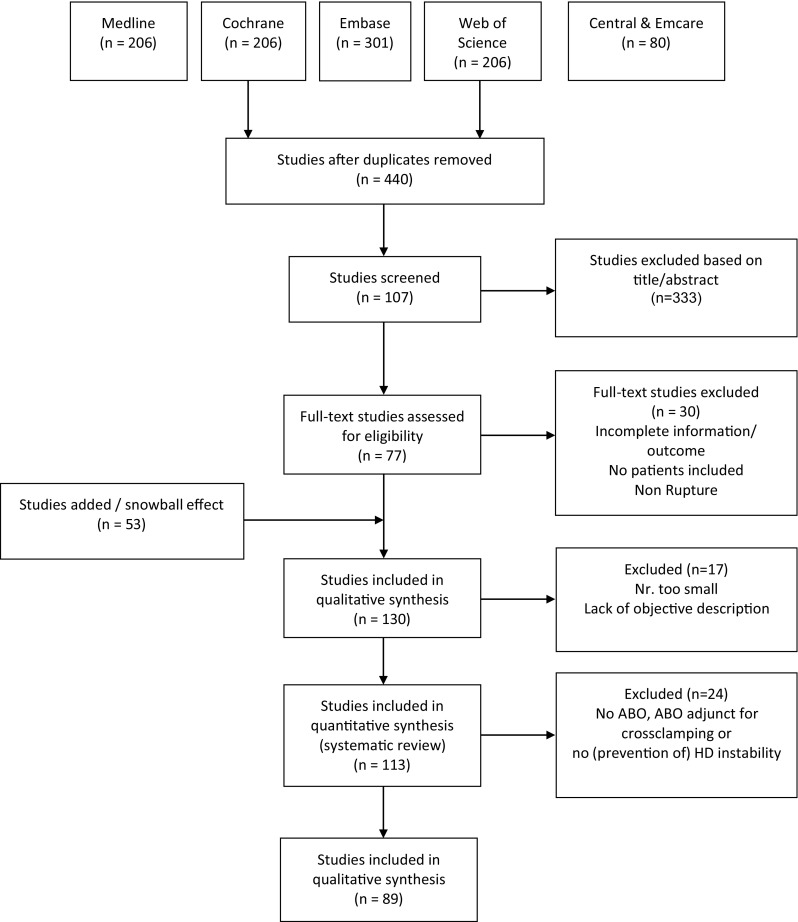
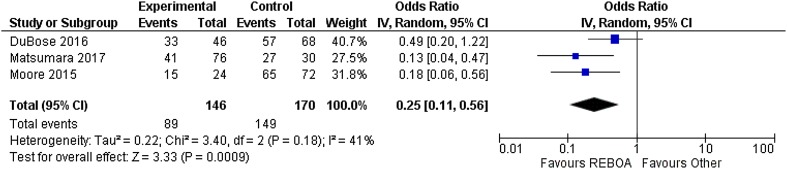
Results: A total of 490 studies were identified; 89 met criteria for inclusion. Of the 1436 patients, overall reported mortality was 49.2% (613/1246) with significant differences (p < 0.001) between clinical indications. Hemodynamic shock was evident in 79.3%, values between clinical indications showed significant difference (p < 0.001). REBOA was favored as treatment in trauma patients in terms of mortality. Pooled analysis demonstrated an increase in mean systolic pressure by almost 50 mmHg following REBOA use.
Conclusion: REBOA has been used in trauma patients and ruptured aortic aneurysm patients with improvement of hemodynamic parameters and outcomes for several decades. Formal, prospective study is warranted to clarify the role of this adjunct in all hemodynamic unstable patients.
Keywords: Aortic balloon occlusion; Endovascular; REBOA; Shock; Trauma.
Conflict of interest statement
All authors declared that they have no conflict of interest.
Figures

References
-
- Blackbourne LH, Baer DG, Eastridge BJ, Kheirabadi B, Bagley S, Kragh JF, Jr, et al. Military medical revolution: prehospital combat casualty care. J Trauma Acute Care Surg. 2012;73(6 Suppl 5):S372-7. - PubMed
-
- Eastridge BJ, Mabry RL, Seguin P, Cantrell J, Tops T, Uribe P, et al. Death on the battlefield (2001–2011): implications for the future of combat casualty care. J Trauma Acute Care Surg. 2012;73(6 Suppl 5):S431–S437. - PubMed
-
- Hoencamp R, Vermetten E, Tan EC, Putter H, Leenen LP, Hamming JF. Systematic review of the prevalence and characteristics of battle casualties from NATO coalition forces in Iraq and Afghanistan. Injury. 2014;45(7):1028–1034. - PubMed
-
- van Dongen TT, Idenburg FJ, Tan EC, Rasmussen TE, Hamming JF, Leenen LP, et al. Combat related vascular injuries: Dutch experiences from a role 2 MTF in Afghanistan. Injury. 2016;47(1):94–98. - PubMed
-
- Antoniou GA, Georgiadis GS, Antoniou SA, Pavlidis P, Maras D, Sfyroeras GS, et al. Endovascular repair for ruptured abdominal aortic aneurysm confers an early survival benefit over open repair. J Vasc Surg. 2013;58(4):1091–1105. - PubMed
Publication types
MeSH terms
LinkOut - more resources
Full Text Sources
Other Literature Sources
Miscellaneous
