


Microbial micropatches within microbial hotspots
- PMID: 29787564
- PMCID: PMC5963804
- DOI: 10.1371/journal.pone.0197224
Microbial micropatches within microbial hotspots
Abstract
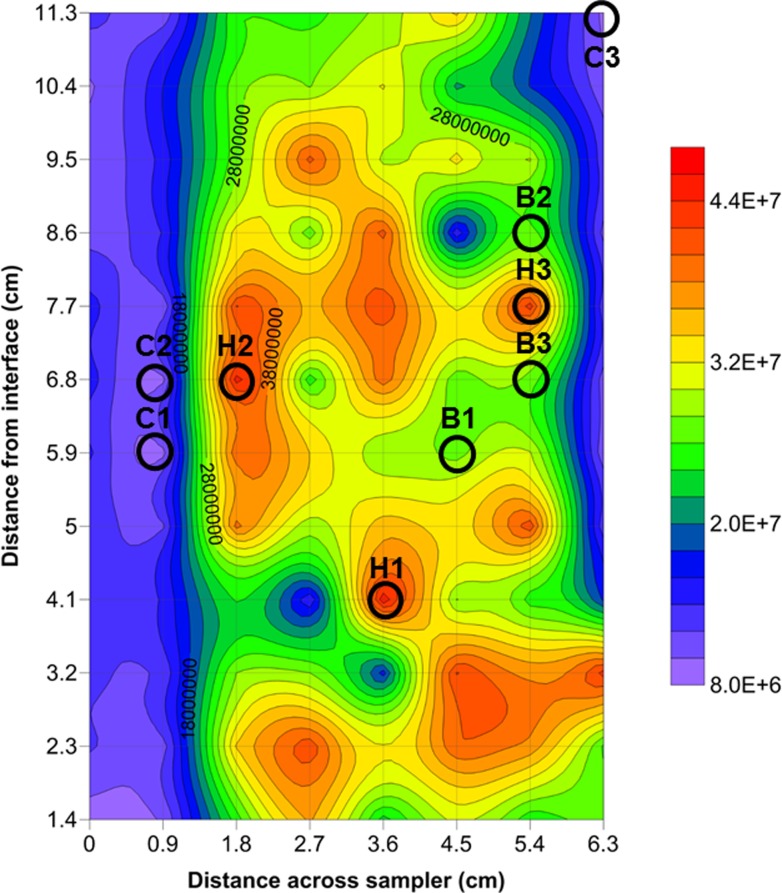
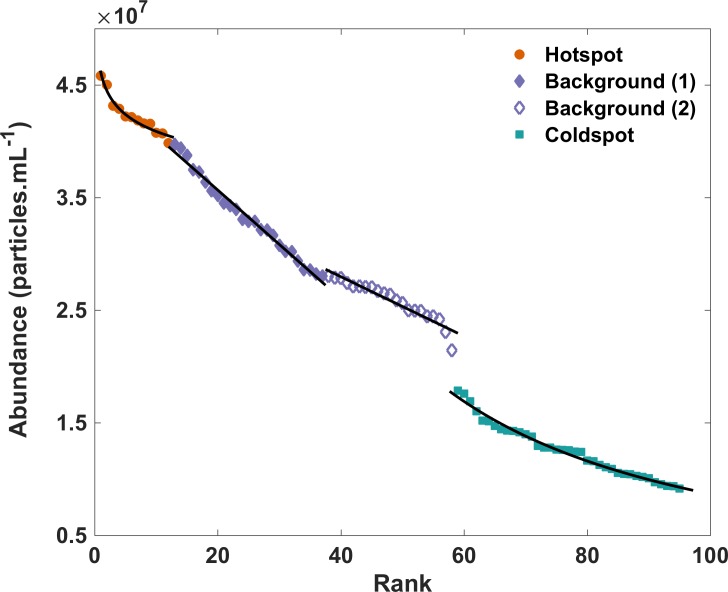
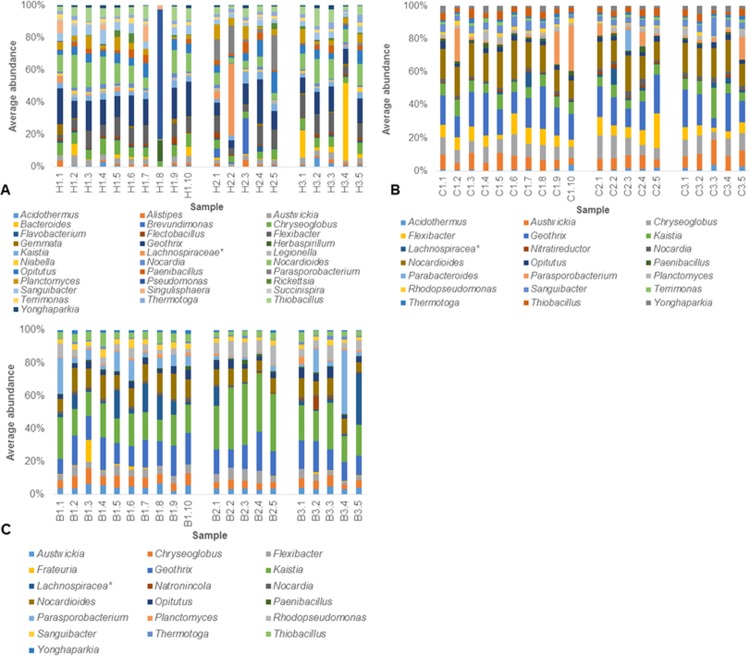
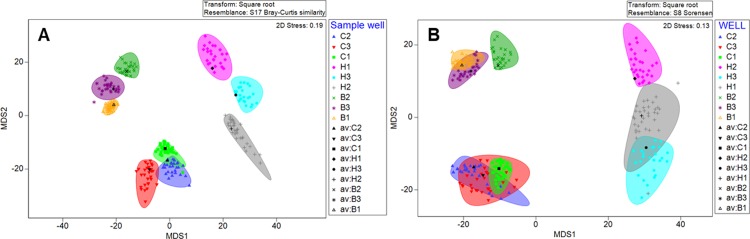
The spatial distributions of organism abundance and diversity are often heterogeneous. This includes the sub-centimetre distributions of microbes, which have 'hotspots' of high abundance, and 'coldspots' of low abundance. Previously we showed that 300 μl abundance hotspots, coldspots and background regions were distinct at all taxonomic levels. Here we build on these results by showing taxonomic micropatches within these 300 μl microscale hotspots, coldspots and background regions at the 1 μl scale. This heterogeneity among 1 μl subsamples was driven by heightened abundance of specific genera. The micropatches were most pronounced within hotspots. Micropatches were dominated by Pseudomonas, Bacteroides, Parasporobacterium and Lachnospiraceae incertae sedis, with Pseudomonas and Bacteroides being responsible for a shift in the most dominant genera in individual hotspot subsamples, representing up to 80.6% and 47.3% average abundance, respectively. The presence of these micropatches implies the ability these groups have to create, establish themselves in, or exploit heterogeneous microenvironments. These genera are often particle-associated, from which we infer that these micropatches are evidence for sub-millimetre aggregates and the aquatic polymer matrix. These findings support the emerging paradigm that the microscale distributions of planktonic microbes are numerically and taxonomically heterogeneous at scales of millimetres and less. We show that microscale microbial hotspots have internal structure within which specific local nutrient exchanges and cellular interactions might occur.
Conflict of interest statement
The authors have declared that no competing interests exist.
Figures
References
-
- Azam F. Microbial control of oceanic carbon flux: the plot thickens. Science. 1998; 280 (5364): 694–696
-
- Azam F, Malfatti F. Microbial structuring of marine ecosystems. Nature Reviews Microbiology. 2007; 5: 782–791 doi: 10.1038/nrmicro1747 - DOI - PubMed
-
- Stocker R, Seymour JR, Samadani A, Hunt DE, Polz MF. Rapid chemotactic response enables marine bacteria to exploit ephemeral microscale nutrient patches. Proceedings of the National Academy of Sciences of the United States of America 2008; 105 (11): 4209–4214 doi: 10.1073/pnas.0709765105 - DOI - PMC - PubMed
-
- Hillmer I, Reenen PV, Imberger J, Zohary T. Phytoplankton patchiness and their role in the modelled productivity of a large, seasonally stratified lake. Ecological Modelling 2008; 218: 49–59. doi: 10.1016/j.ecolmodel.2008.06.017 - DOI
Publication types
MeSH terms
Substances
LinkOut - more resources
Full Text Sources
Other Literature Sources
