


Symptom prevalence of patients with fibrotic interstitial lung disease: a systematic literature review
- PMID: 29788938
- PMCID: PMC5964639
- DOI: 10.1186/s12890-018-0651-3
Symptom prevalence of patients with fibrotic interstitial lung disease: a systematic literature review
Abstract
Background: Those affected by advanced fibrotic interstitial lung diseases have limited treatment options and in the terminal stages, the focus of care is on symptom management. However, quantitatively, little is known about symptom prevalence. We aimed to determine the prevalence of symptoms in Progressive Idiopathic Fibrotic Interstitial Lung Disease (PIF-ILD).
Methods: Searches on eight electronic databases including MEDLINE for clinical studies between 1966 and 2015 where the target population was adults with PIF-ILD and for whom the prevalence of symptoms had been calculated.
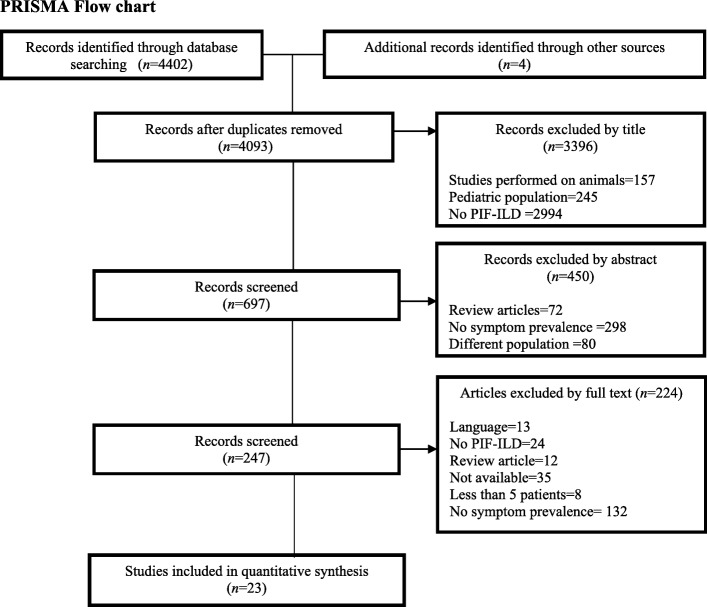
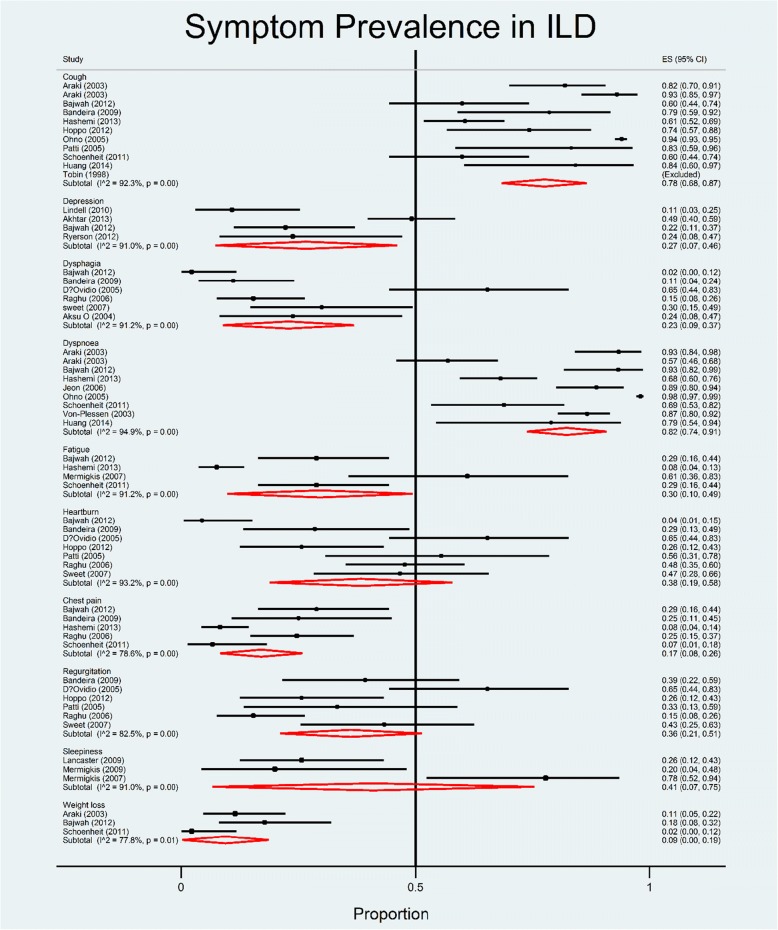
Results: A total of 4086 titles were screened for eligibility criteria; 23 studies were included for analysis. The highest prevalence was that for breathlessness (54-98%) and cough (59-100%) followed by heartburn (25-65%) and depression (10-49%). The heterogeneity of studies limited their comparability, but many of the symptoms present in patients with other end-stage disease were also seen in PIF-ILD.
Conclusions: This is the first quantitative review of symptoms in people with Progressive Idiopathic Fibrotic Interstitial Lung Diseases. Symptoms are common, often multiple and have a comparable prevalence to those experienced in other advanced diseases. Quantification of these data provides valuable information to inform the allocation of resources.
Keywords: Pulmonary fibrosis; Symptom prevalence and interstitial lung disease.
Conflict of interest statement
Ethics approval and consent to participate
Ethics approval was not required for this study as it was a systematic review.
Consent to participate was not required.
Competing interests
The authors declares that they have no competing interests.
Publisher’s Note
Springer Nature remains neutral with regard to jurisdictional claims in published maps and institutional affiliations.
Figures
References
-
- Richards M. The End of Life Care Strategy: Promoting high quality care for all adults at the end of life. End of Life Care Strategy; 2008.
-
- Bradley B, Branley HM, Egan JJ, Greaves MS, Hansell DM, Harrison NK, et al. Interstitial lung disease guideline: the British Thoracic Society in collaboration with the Thoracic Society of Australia and New Zealand and the Irish Thoracic Society. Thorax. 2008;63(Suppl 5):v1–58. - PubMed
-
- Excellence NIfHaC . Idiopathic pulmonary fibrosis: the diagnosis and management of suspected idiopathic pulmonary fibrosis. 2013.
Publication types
MeSH terms
Grants and funding
LinkOut - more resources
Full Text Sources
Other Literature Sources
Medical
