


Wild and domesticated Moringa oleifera differ in taste, glucosinolate composition, and antioxidant potential, but not myrosinase activity or protein content
- PMID: 29789671
- PMCID: PMC5964143
- DOI: 10.1038/s41598-018-26059-3
Wild and domesticated Moringa oleifera differ in taste, glucosinolate composition, and antioxidant potential, but not myrosinase activity or protein content
Abstract
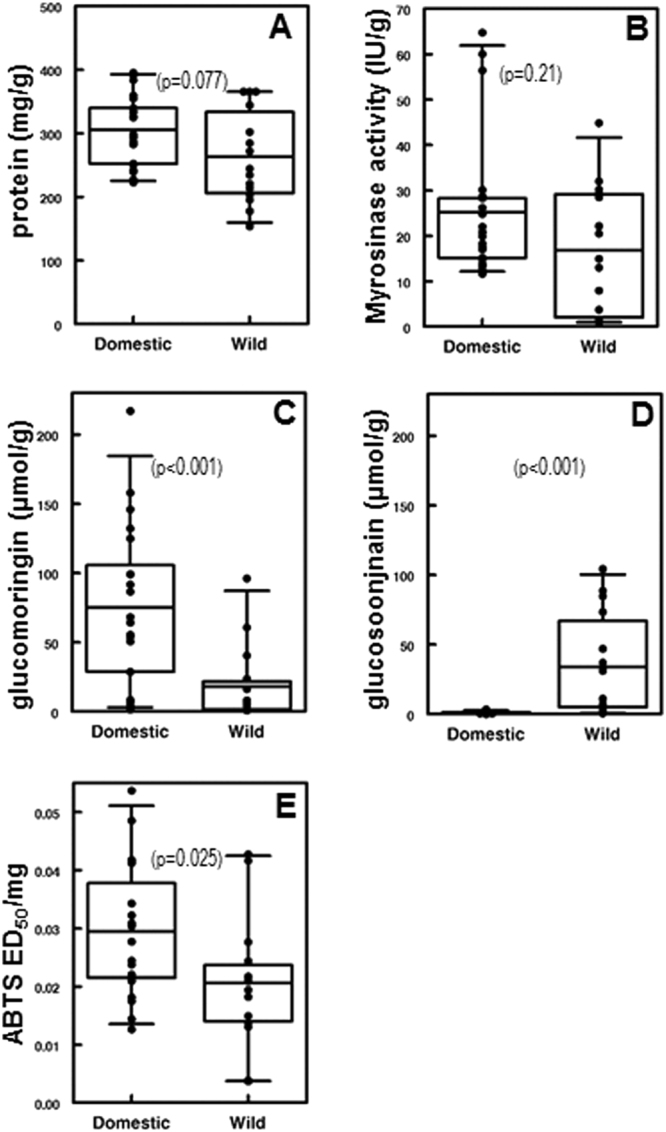
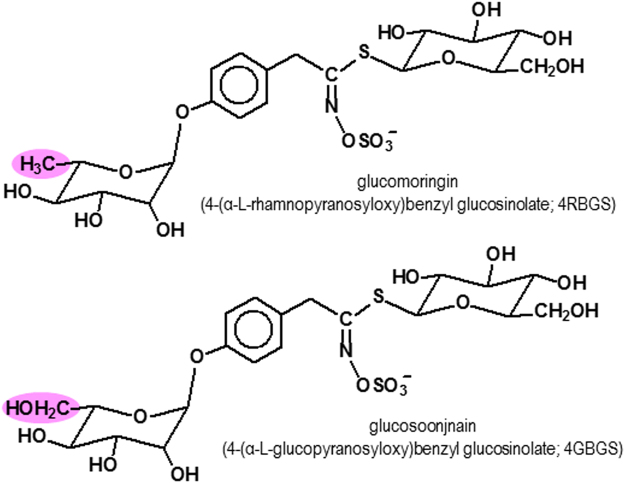
Taste drives consumption of foods. The tropical tree Moringa oleifera is grown worldwide as a protein-rich leafy vegetable and for the medicinal value of its phytochemicals, in particular its glucosinolates, which can lead to a pronounced harsh taste. All studies to date have examined only cultivated, domestic variants, meaning that potentially useful variation in wild type plants has been overlooked. We examine whether domesticated and wild type M. oleifera differ in myrosinase or glucosinolate levels, and whether these different levels impact taste in ways that could affect consumption. We assessed taste and measured levels of protein, glucosinolate, myrosinase content, and direct antioxidant activity of the leaves of 36 M. oleifera accessions grown in a common garden. Taste tests readily highlighted differences between wild type and domesticated M. oleifera. There were differences in direct antioxidant potential, but not in myrosinase activity or protein quantity. However, these two populations were readily separated based solely upon their proportions of the two predominant glucosinolates (glucomoringin and glucosoonjnain). This study demonstrates substantial variation in glucosinolate composition within M. oleifera. The domestication of M. oleifera appears to have involved increases in levels of glucomoringin and substantial reduction of glucosoonjnain, with marked changes in taste.
Conflict of interest statement
The authors declare no competing interests, with the exception that JWF is a member of the scientific advisory board of Kuli Kuli, (a social benefit corporation that produces and sells Moringa products).
Figures
References
-
- Gepts P. Plant genetic resources conservation and utilization. Crop Science. 2006;46(5):2278–92. doi: 10.2135/cropsci2006.03.0169gas. - DOI
-
- Keating JDH, Ebert AW, Hughes Jd’A, Yang RY, Curaba J. Seeking to attain the UN’s Sustainable DevelopmentGoal 2 worldwide: the important role of Moringa oleifera. Acta Hortic. 2017;1158:1–10. doi: 10.17660/ActaHortic.2017.1158.1. - DOI
-
- Olson, M. E. Moringaceae: Drumstick Family. Pp. 167–169 in Flora of North America Editorial Committee, eds 1993+. Flora of North America North of Mexico. 15+ vols. New York and Oxford. Vol. 7 (2010).
Publication types
MeSH terms
Substances
LinkOut - more resources
Full Text Sources
Other Literature Sources
Medical
