


Guidelines for the treatment of severe acute malnutrition: a systematic review of the evidence for antimicrobial therapy
- PMID: 29790840
- PMCID: PMC5972636
- DOI: 10.1080/20469047.2017.1409453
Guidelines for the treatment of severe acute malnutrition: a systematic review of the evidence for antimicrobial therapy
Abstract
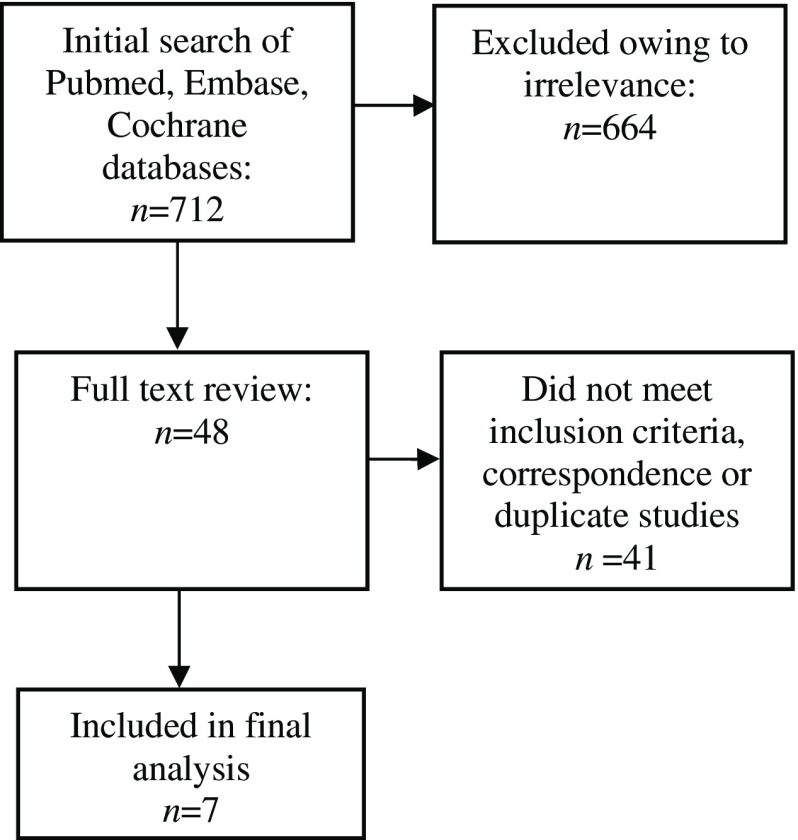
Background Severe acute malnutrition (SAM) affects nearly 20 million children worldwide and is responsible for up to 1 million deaths per year in children under the age of 5 years. Current WHO guidelines recommend oral amoxicillin for children with uncomplicated malnutrition and parenteral benzylpenicillin and gentamicin for those with complicated malnutrition. Because of cost pressures and increasing antimicrobial resistance, the administration of empirical antibiotics for children with SAM has recently been debated. Methods A systematic review of the current published literature was undertaken to assess the efficacy, safety, cost-effectiveness and pharmacokinetics of antimicrobial treatment of children with SAM in accordance with the Preferred Reporting Items for Systematic Reviews and Meta-Analyses. Results The initial search found 712 papers, eight of which met the inclusion criteria. Quality assessment of the studies was performed as per the Grading of Recommendations Assessment, Development and Evaluation guidelines. International guidelines and clinical data registries were also reviewed which identified inconsistencies in current first- and second-line therapies and dosing regimens. Conclusion Current evidence supports the continued use of broad-spectrum oral amoxicillin for treating children with uncomplicated SAM as outpatients. There is no strong evidence to justify changing the current parenteral therapy guidelines for children admitted with complicated SAM, although they should be clarified to harmonise the dosage regimen of amoxicillin for the treatment of SAM to 40 mg/kg twice daily, and to continue parenteral antimicrobials beyond 2 days if indicated by the clinical condition.
Keywords: Severe acute malnutrition; antibiotic resistance; antibiotics; antimicrobials; empirical therapy.
References
-
- Community-based management of severe acute malnutrition: a joint statement. Geneva: WHO, World Food Programme, United Nations System Standing Committee on Nutrition and United Nations Children’s Fund; 2007.
-
- World Health Organization Updates on the management of severe acute malnutrition in infants and children. Geneva: WHO; 2013. - PubMed
-
- World Health Organization Pocket book of hospital care for children. 2nd ed Geneva: WHO; 2013. - PubMed
Publication types
MeSH terms
Substances
Grants and funding
LinkOut - more resources
Full Text Sources
Other Literature Sources
Medical
Miscellaneous
