


Distinct correlations between lipogenic gene expression and fatty acid composition of subcutaneous fat among cattle breeds
- PMID: 29792205
- PMCID: PMC5966917
- DOI: 10.1186/s12917-018-1481-5
Distinct correlations between lipogenic gene expression and fatty acid composition of subcutaneous fat among cattle breeds
Abstract
Background: The fatty acid (FA) composition of adipose tissue influences the nutritional quality of meat products. The unsaturation level of FAs is determined by fatty acid desaturases such as stearoyl-CoA desaturases (SCDs), which are under control of the transcription factor sterol regulatory element-binding protein (SREBP). Differences in SCD genotype may thus confer variations in lipid metabolism and FA content among cattle breeds. This study investigated correlations between FA composition and lipogenic gene expression levels in the subcutaneous adipose tissue of beef cattle breeds of different gender from the Basque region of northern Spain. Pirenaica is the most important beef cattle breed in northern Spain, while Salers cattle and Holstein-Friesian cull cows are also an integral part of the regional beef supply.
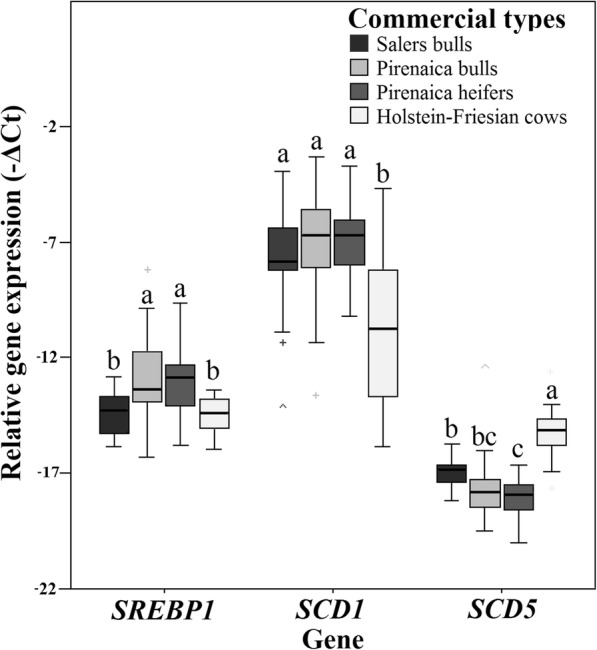
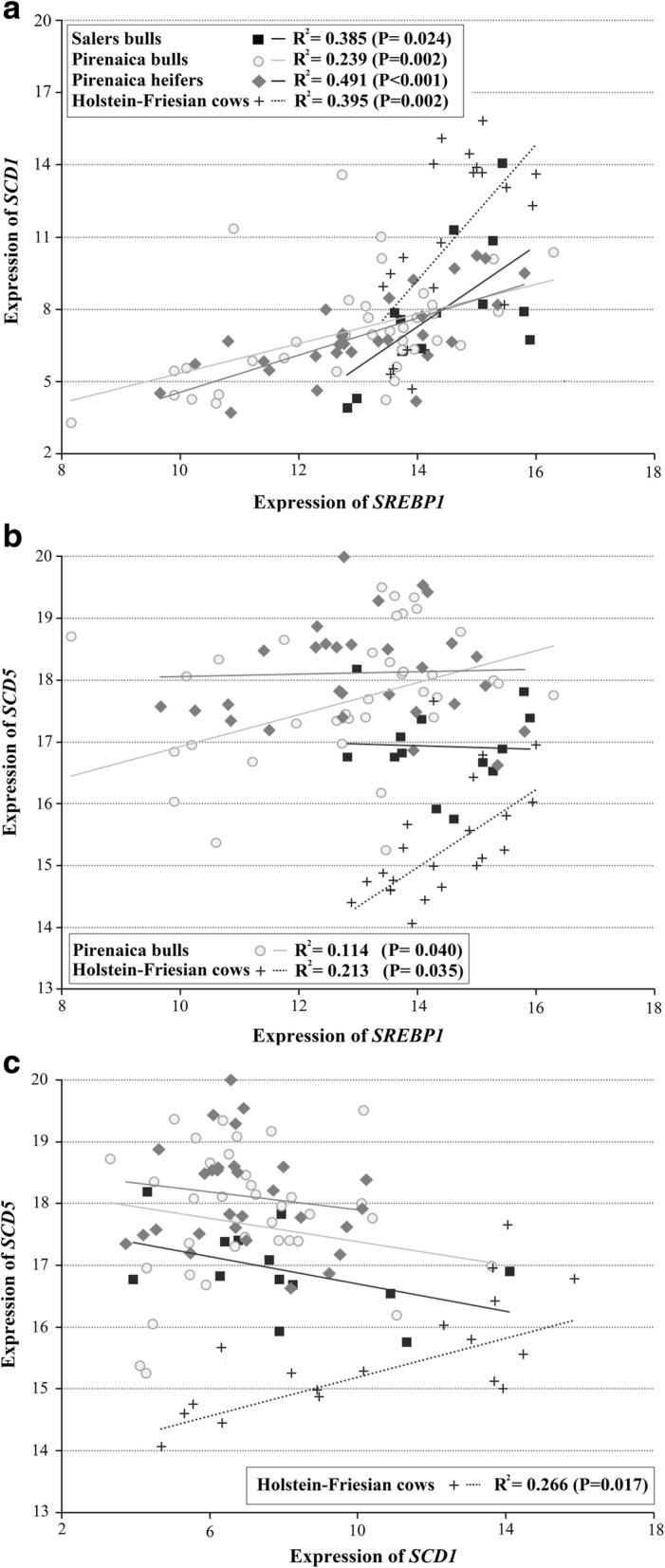
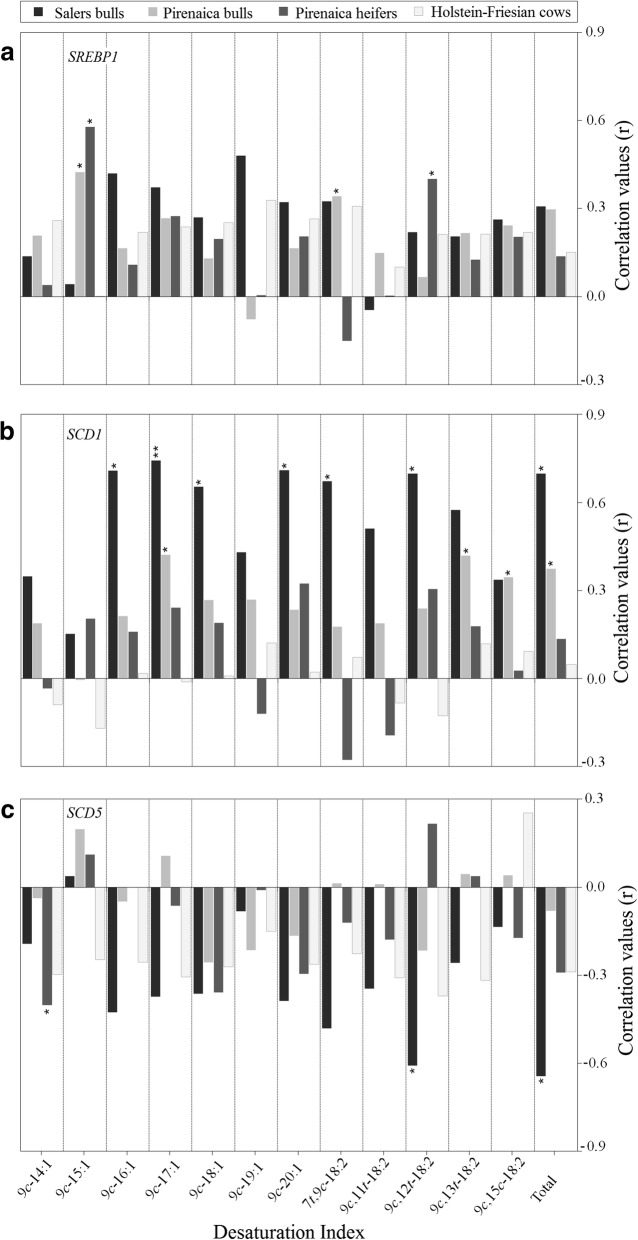
Results: Pirenaica heifers showed higher monounsaturated FA (MUFA) and conjugated linoleic acid (CLA) contents in subcutaneous adipose tissue than other breeds (P < 0.001). Alternatively, Salers bulls produced the highest oleic acid content, followed by Pirenaica heifers (P < 0.001). There was substantial variability in SCD gene expression among breeds, consistent with these differences in MUFA and CLA content. Correlations between SCD1 expression and most FA desaturation indexes (DIs) were positive in Salers (P < 0.05) and Pirenaica bulls, while, in general, SCD5 expression showed few significant correlations with DIs. There was a significant linear correlation between SCD1 and SRBEP1 in all breeds, suggesting strong regulation of SCD1 expression by SRBEP1. Pirenaica heifers showed a stronger correlation between SCD1 and SREBP1 than Pirenaica bulls. We also observed a opposite relationship between SCD1 and SCD5 expression levels and opposite associations of isoform expression levels with the ∆9 desaturation indexes.
Conclusions: These results suggest that the relationships between FA composition and lipogenic gene expression are influenced by breed and sex. The opposite relationship between SCD isoforms suggests a compensatory regulation of total SCD activity, while opposite relationships between SCD isoforms and desaturation indexes, specially 9c-14:1 DI, previously reported as an indicator of SCD activity, may reflect distinct activities of SCD1 and SCD5 in regulation of FA content. These findings may be useful for beef/dairy breeding and feeding programs to supply nutritionally favorable products.
Keywords: Cattle; Desaturation index; Fatty acid composition; Gene expression; Lipid metabolism; SCD; SREBP; Subcutaneous adipose tissue; ∆9-desaturase.
Conflict of interest statement
Authors’ information
Masaaki Taniguchi: Molecular genetics analyses on meat quality of beef and pork using high throughput technologies such as single nucleotide polymorphisms (SNP) array and gene expression microarray.
Noelia Aldai: Lipids in animal science: factors influencing the composition, strategies to improve the nutritional quality of meat, and comprehensive analytical methods that demonstrate their value.
Ethics approval
All animals were handled at slaughterhouse following the European Council Regulation (EC) N° 1099/2009. All material was sampled after slaughter and therefore do not require any ethical consideration or approval.
Competing interests
The authors declare that they have no competing interests.
Publisher’s Note
Springer Nature remains neutral with regard to jurisdictional claims in published maps and institutional affiliations.
Figures
References
-
- World Health Organization . Diet, nutrition and the prevention of chronic diseases: report of a joint WHO/FAO expert consultation. Geneva: WHO Technical Report Series; 2003. p. 916. - PubMed
MeSH terms
Substances
Grants and funding
LinkOut - more resources
Full Text Sources
Other Literature Sources
Research Materials
Miscellaneous
