


The anion study: effect of different crystalloid solutions on acid base balance, physiology, and survival in a rodent model of acute isovolaemic haemodilution
- PMID: 29793606
- PMCID: PMC6200115
- DOI: 10.1016/j.bja.2018.01.026
The anion study: effect of different crystalloid solutions on acid base balance, physiology, and survival in a rodent model of acute isovolaemic haemodilution
Abstract
Background: Commercially available crystalloid solutions used for volume replacement do not exactly match the balance of electrolytes found in plasma. Large volume administration may lead to electrolyte imbalance and potential harm. We hypothesised that haemodilution using solutions containing different anions would result in diverse biochemical effects, particularly on acid-base status, and different outcomes.
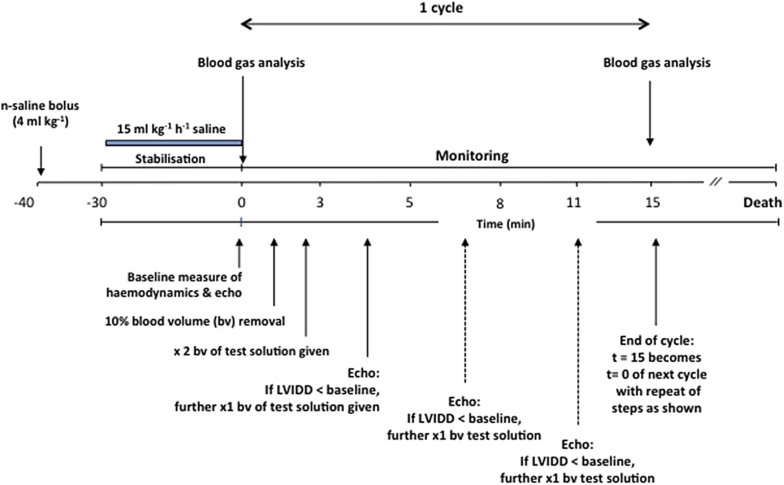
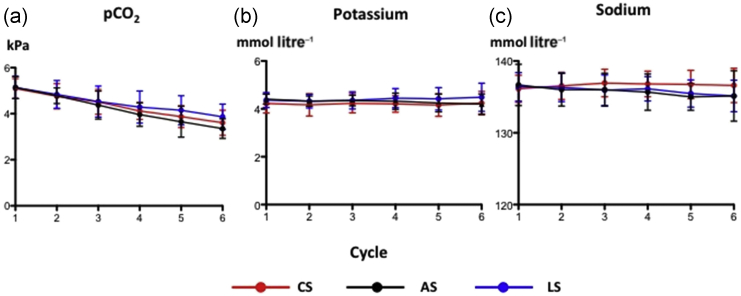
Methods: Anaesthetised, fluid-resuscitated, male Wistar rats underwent isovolaemic haemodilution by removal of 10% blood volume every 15 min, followed by replacement with one of three crystalloid solutions based on acetate, lactate, or chloride. Fluids were administered in a protocolised manner to achieve euvolaemia based on echocardiography-derived left ventrical volumetric measures. Removed blood was sampled for plasma ions, acid-base status, haemoglobin, and glucose. This cycle was repeated at 15-min intervals until death. The primary endpoint was change in plasma bicarbonate within each fluid group. Secondary endpoints included time to death and cardiac function.
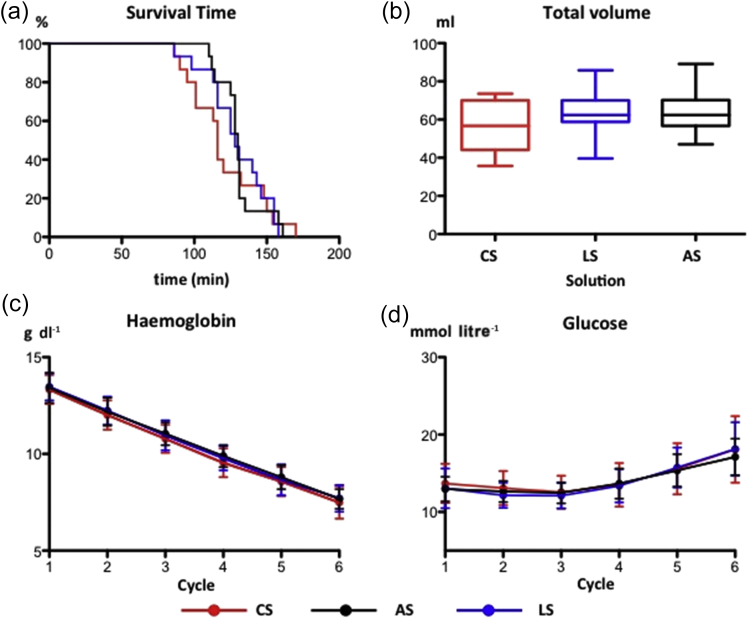
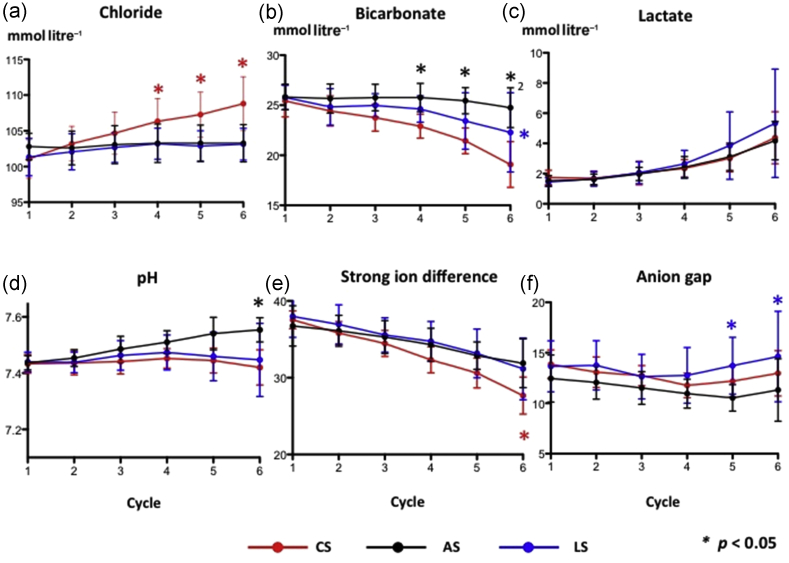
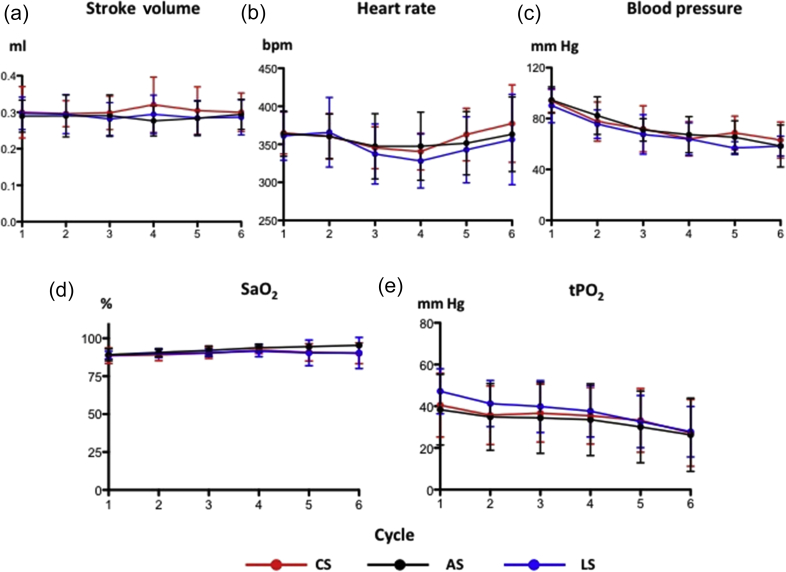
Results: During haemodilution, chloride-treated rats showed significantly greater decreases in plasma bicarbonate and strong ion difference levels compared with acetate- and lactate-treated rats. Time to death, total volume of fluid administered: chloride group 56 (3) ml, lactate group 62 (3) ml, and acetate group 65 (3) ml; haemodynamic and tissue oxygenation changes were, however, similar between groups.
Conclusions: With progressive haemodilution, resuscitation with a chloride-based solution induced more acidosis compared with lactate- and acetate-based solutions, but outcomes were similar. No short-term impact was seen from hyperchloraemia in this model.
Keywords: acid-base imbalance; bicarbonate; isotonic solutions.
Copyright © 2018 The Author(s). Published by Elsevier Ltd.. All rights reserved.
Figures
References
-
- Scheingraber S., Rehm M., Sehmisch C., Finsterer U. Rapid saline infusion produces hyperchloremic acidosis in patients undergoing gynecologic surgery. Anesthesiology. 1999;90:1265–1270. - PubMed
-
- Prough D.S., Bidani A. Hyperchloremic metabolic acidosis is a predictable consequence of intraoperative infusion of 0.9% saline. Anesthesiology. 1999;90:1247–1249. - PubMed
-
- Williams E.L., Hildebrand K.L., McCormick S.A., Bedel M.J. The effect of intravenous lactated Ringer's solution versus 0.9% sodium chloride solution on serum osmolality in human volunteers. Anesth Analg. 1999;88:999–1003. - PubMed
Publication types
MeSH terms
Substances
LinkOut - more resources
Full Text Sources
Other Literature Sources
