Brain Correlates of Mental Stress-Induced Myocardial Ischemia
- PMID: 29794945
- PMCID: PMC6023737
- DOI: 10.1097/PSY.0000000000000597
Brain Correlates of Mental Stress-Induced Myocardial Ischemia
Abstract
Objective: Coronary artery disease (CAD) is a major cause of morbidity and mortality, and despite important advances in our understanding of this disorder, the underlying mechanisms remain under investigation. Recently, increased attention has been placed on the role of behavioral factors such as emotional stress on CAD risk. Brain areas involved in memory and the stress response, including medial prefrontal cortex, insula, and parietal cortex, also have outputs to the peripheral cardiovascular system. The purpose of this study was to assess the effects of mental stress on brain and cardiac function in patients with CAD.
Methods: CAD patients (N = 170) underwent cardiac imaging with [Tc-99m] sestamibi single-photon emission tomography at rest and during a public speaking mental stress task. On another day, they underwent imaging of the brain with [O-15] water positron emission tomography (PET) during mental stress (arithmetic and public speaking) and control conditions.
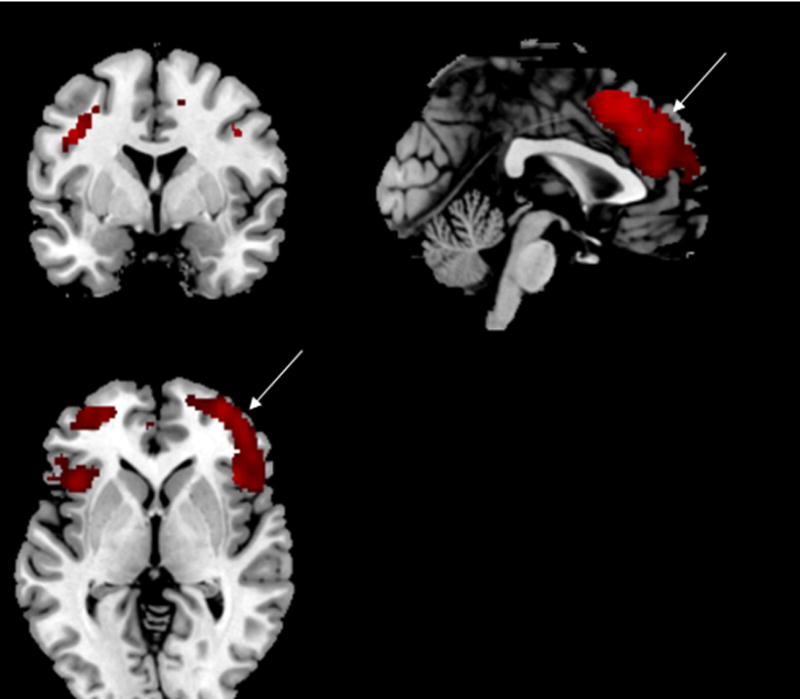
Results: Patients with mental stress-induced myocardial ischemia showed increased activation with stress in anterior cingulate, inferior frontal gyrus, and parietal cortex (p < .005). This was seen with both arithmetic stress and public speaking stress. Arithmetic stress was additionally associated with left insula activation, and public speaking with right pre/postcentral gyrus and middle temporal gyrus activation (p < .005).
Conclusions: These findings suggest that mental stress-induced myocardial ischemia is associated with activation in brain areas involved in the stress response and autonomic regulation of the cardiovascular system. Altered brain reactivity to stress could possibly represent a mechanism through which stress leads to increased risk of CAD-related morbidity and mortality.
Conflict of interest statement
The authors have no conflicts of interest to declare in reference to this research.
Figures


References
-
- World Health Organization. Cardiovascular diseases (CVDs) http://www.who.int/mediacentre/factsheets/fs317/en/2016 [cited 2016 March 16]
-
- Strike PC, Steptoe A. Behavioral and emotional triggers of acute coronary syndromes: a systematic review and critique. Psychosom Med. 2005;67:179–86. - PubMed
-
- Vaccarino V, Bremner JD. Psychiatric and behavioral aspects of cardiovascular disease. In: Bonow RO, Mann DL, Zipes OP, Libby P, editors. Braunwald’s Heart Disease: A Textbook of Cardiovascular Medicine. 9th. Philadelphia, PA: Saunders; 2014.
-
- Zatzick DF, Marmar CR, Weiss DS, Browner WS, Metzler TJ, Golding JM, Stewart A, Schlenger WE, Wells KB. Posttraumatic stress disorder and functioning and quality of life outcomes in a nationally representative sample of male Vietnam veterans. Am J Psychiatry. 1997;154:1690–5. - PubMed
Publication types
MeSH terms
Substances
Grants and funding
LinkOut - more resources
Full Text Sources
Other Literature Sources
Medical
Miscellaneous