


A method for age-matched OCT angiography deviation mapping in the assessment of disease- related changes to the radial peripapillary capillaries
- PMID: 29795576
- PMCID: PMC5993123
- DOI: 10.1371/journal.pone.0197062
A method for age-matched OCT angiography deviation mapping in the assessment of disease- related changes to the radial peripapillary capillaries
Abstract
Purpose: To present a method for age-matched deviation mapping in the assessment of disease-related changes to the radial peripapillary capillaries (RPCs).
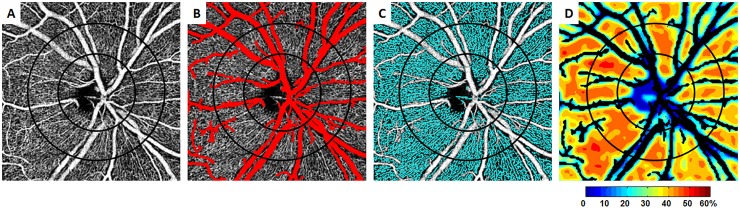
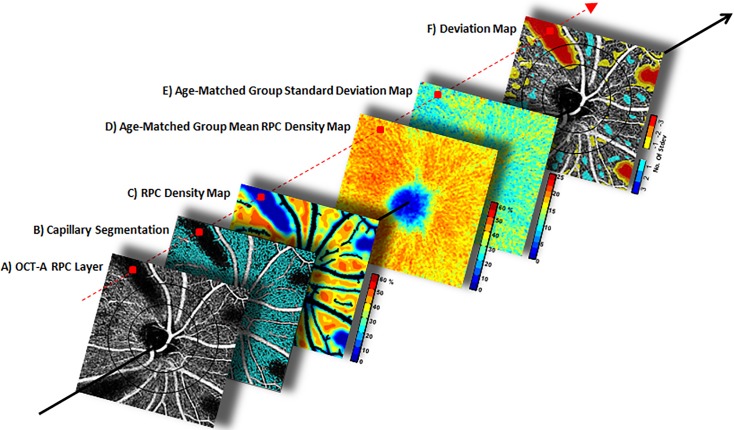
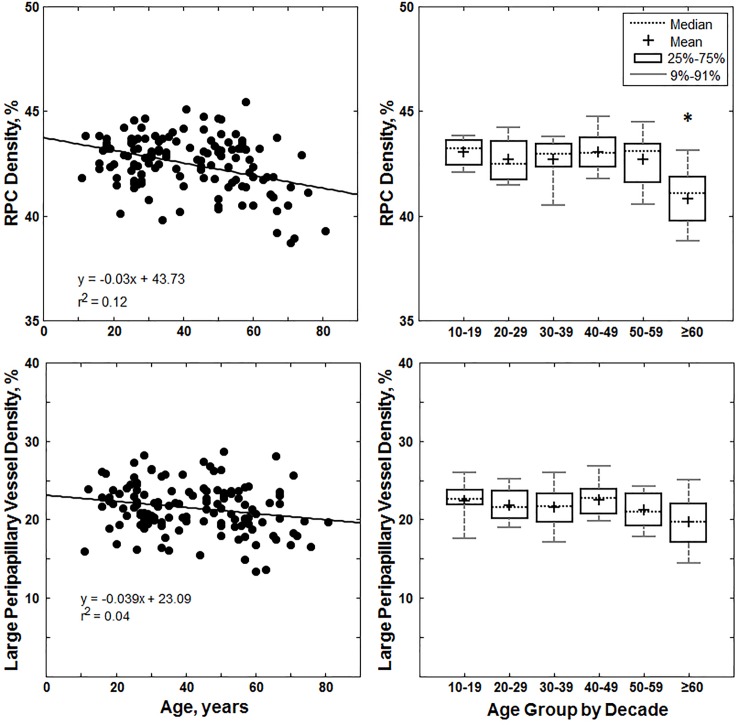
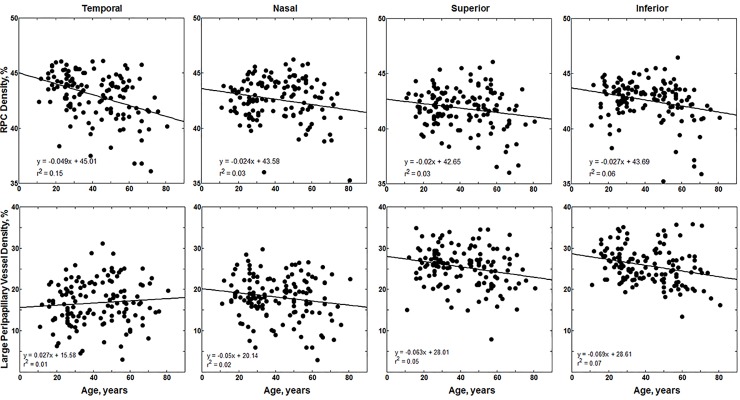
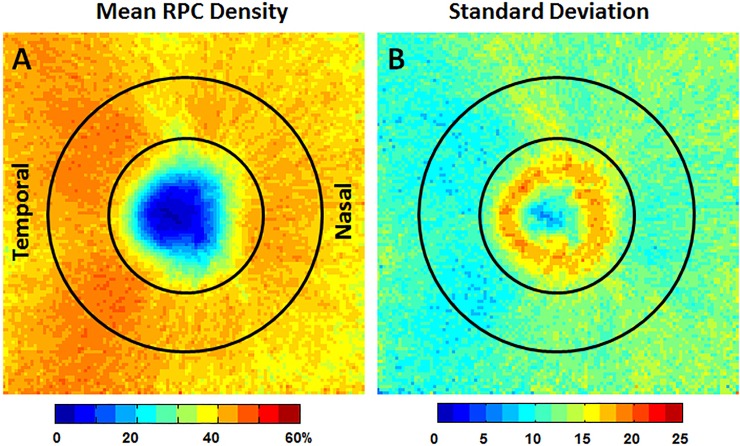
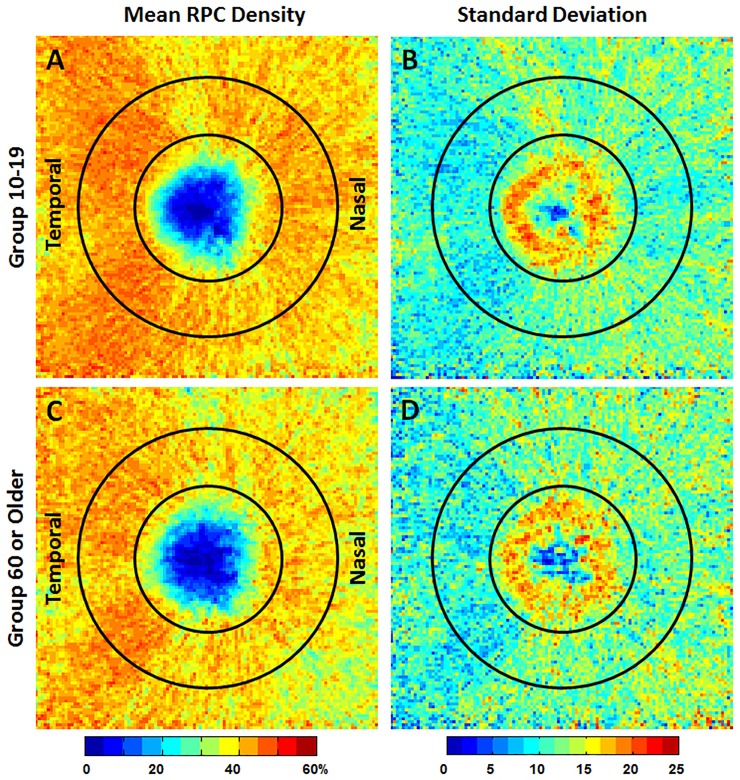
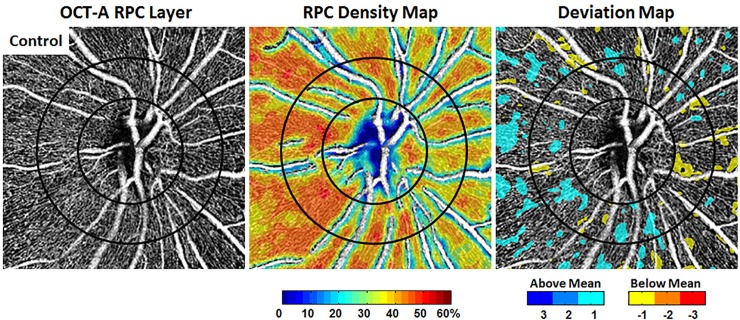
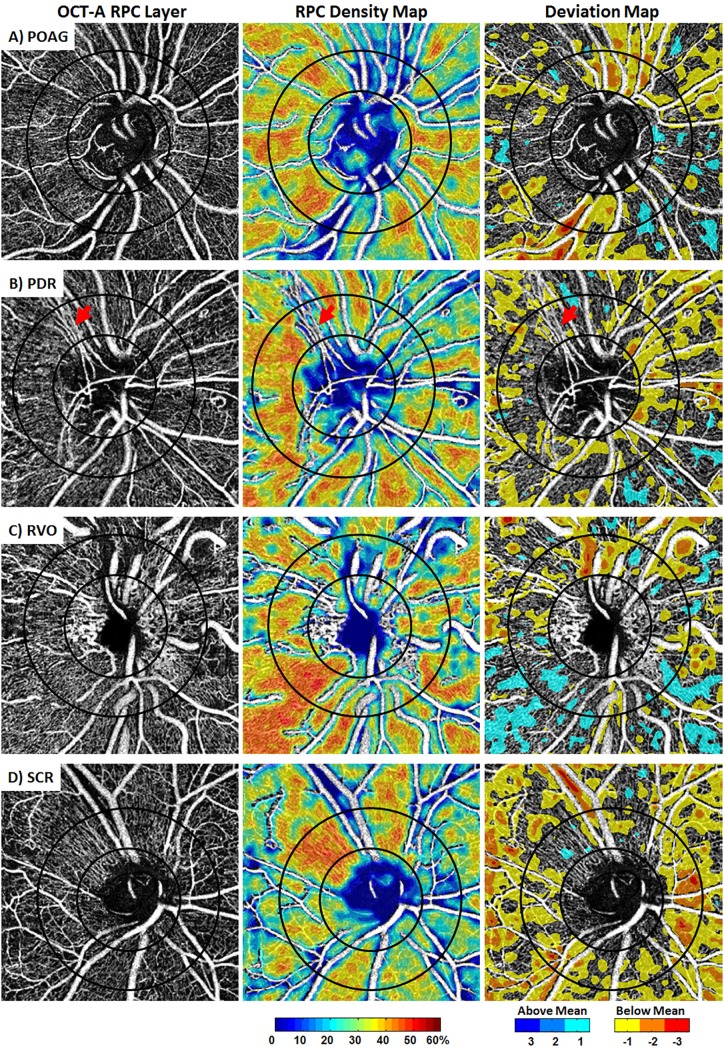
Methods: We reviewed 4.5x4.5mm en face peripapillary OCT-A scans of 133 healthy control eyes (133 subjects, mean 41.5 yrs, range 11-82 yrs) and 4 eyes with distinct retinal pathologies, obtained using spectral-domain optical coherence tomography angiography. Statistical analysis was performed to evaluate the impact of age on RPC perfusion densities. RPC density group mean and standard deviation maps were generated for each decade of life. Deviation maps were created for the diseased eyes based on these maps. Large peripapillary vessel (LPV; noncapillary vessel) perfusion density was also studied for impact of age.
Results: Average healthy RPC density was 42.5±1.47%. ANOVA and pairwise Tukey-Kramer tests showed that RPC density in the ≥60yr group was significantly lower compared to RPC density in all younger decades of life (p<0.01). Average healthy LPV density was 21.5±3.07%. Linear regression models indicated that LPV density decreased with age, however ANOVA and pairwise Tukey-Kramer tests did not reach statistical significance. Deviation mapping enabled us to quantitatively and visually elucidate the significance of RPC density changes in disease.
Conclusions: It is important to consider changes that occur with aging when analyzing RPC and LPV density changes in disease. RPC density, coupled with age-matched deviation mapping techniques, represents a potentially clinically useful method in detecting changes to peripapillary perfusion in disease.
Conflict of interest statement
Dr. Carroll receives financial support from Optovue. Dr. Rosen is a paid consultant for Optovue, Advanced Cellular Technologies, Carl Zeiss Meditech, Clarity, NanoRetina, OD-OS, and Regeneron. Dr. Rosen has personal financial interest in Opticology. These funders have no role in this study’s design, including the collection, analysis, and interpretation of data, writing of the paper, or decision to submit for publication. To the best of our knowledge, these funders have not served and currently do not serve on the editorial board of your journal. These funders have not acted as an expert witness in relevant legal proceedings. This does not alter our adherence to PLOS ONE policies on sharing data and materials.
Figures
References
-
- Michaelson I. Retinal circulation in man and animals. Thomas; Springfield, III; 1954.
-
- Henkind P. Symposium on glaucoma: joint meeting with the National Society for the Prevention of Blindness. New observations on the radial peripapillary capillaries. Invest Ophthalmol. 1967;6(2):103–8. - PubMed
-
- Kornzweig AL, Eliasoph I, Feldstein M. Selective atrophy of the radial peripapillary capillaries in chronic glaucoma. Arch Ophthalmol. 1968;80(6):696–702. - PubMed
Publication types
MeSH terms
Grants and funding
LinkOut - more resources
Full Text Sources
Other Literature Sources
Medical
Research Materials
