


Uncovering production of specialized metabolites by Streptomyces argillaceus: Activation of cryptic biosynthesis gene clusters using nutritional and genetic approaches
- PMID: 29795673
- PMCID: PMC5993118
- DOI: 10.1371/journal.pone.0198145
Uncovering production of specialized metabolites by Streptomyces argillaceus: Activation of cryptic biosynthesis gene clusters using nutritional and genetic approaches
Abstract
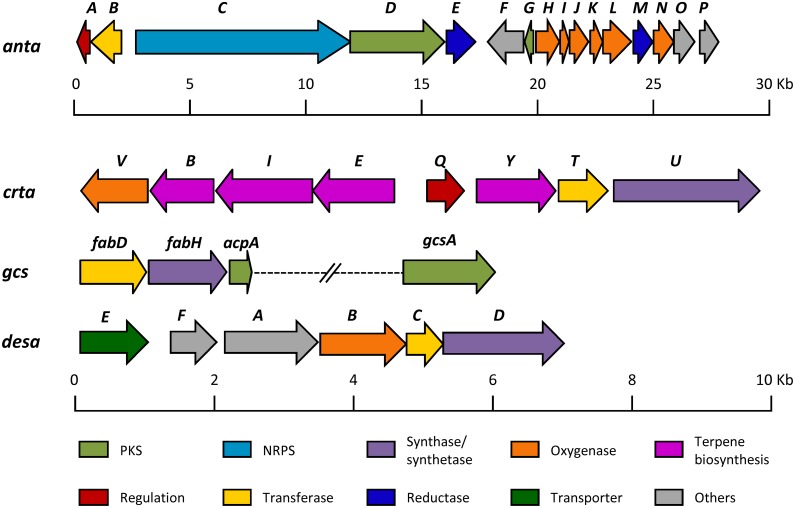
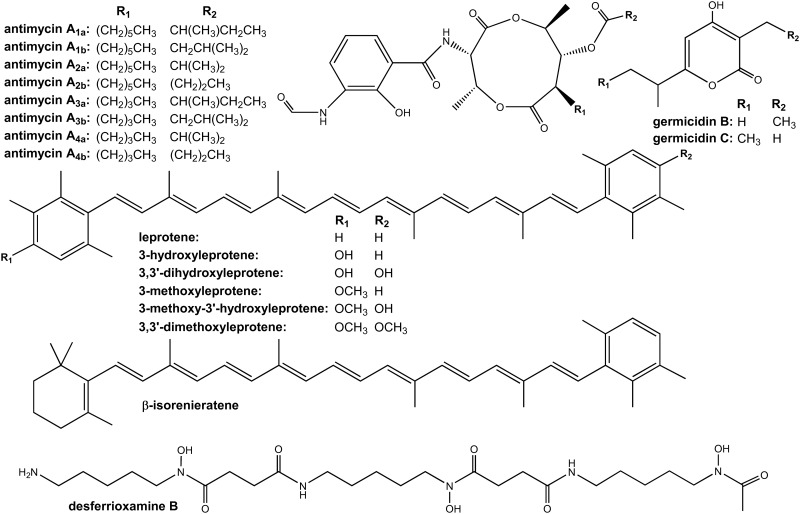
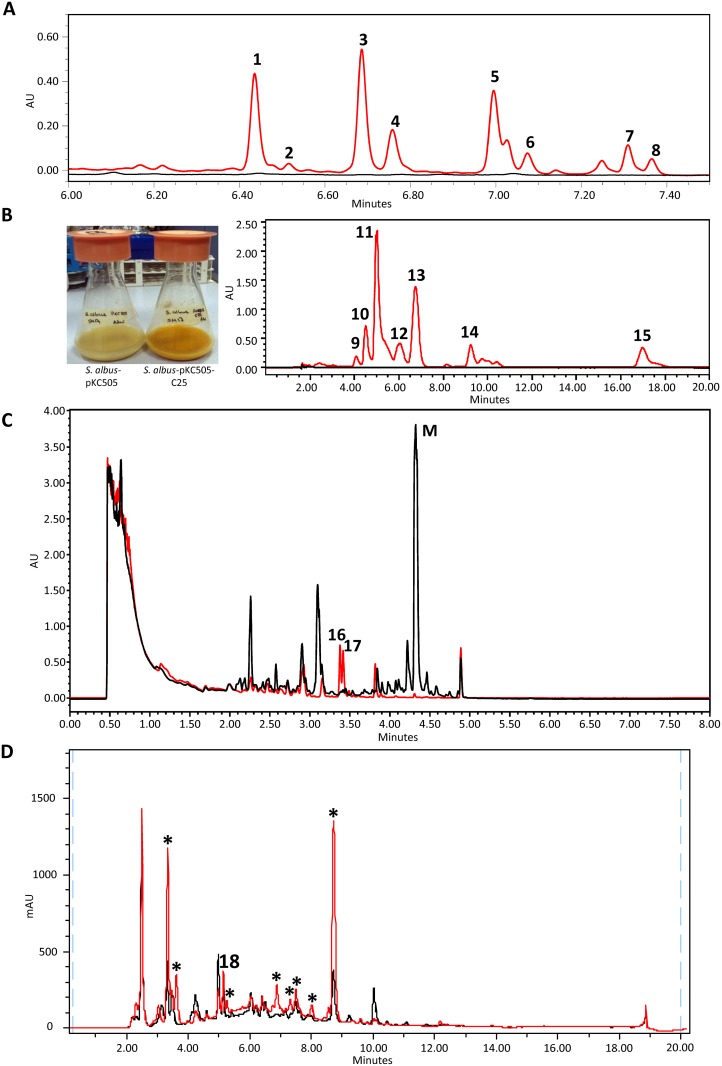
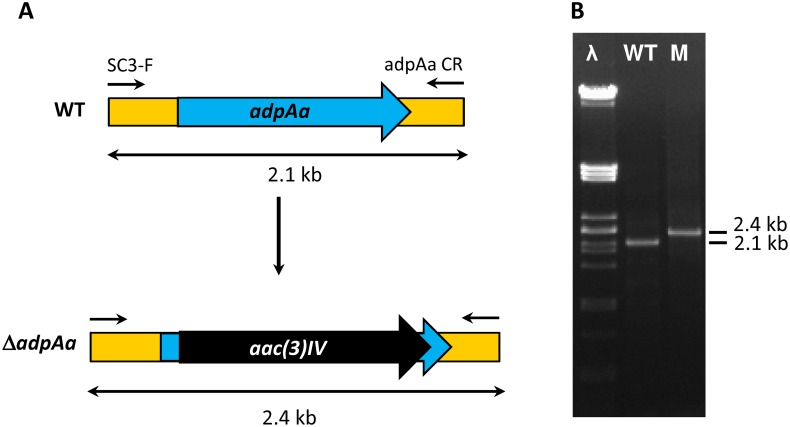
Sequencing of Streptomyces genomes has revealed they harbor a high number of biosynthesis gene cluster (BGC), which uncovered their enormous potentiality to encode specialized metabolites. However, these metabolites are not usually produced under standard laboratory conditions. In this manuscript we report the activation of BGCs for antimycins, carotenoids, germicidins and desferrioxamine compounds in Streptomyces argillaceus, and the identification of the encoded compounds. This was achieved by following different strategies, including changing the growth conditions, heterologous expression of the cluster and inactivating the adpAa or overexpressing the abrC3 global regulatory genes. In addition, three new carotenoid compounds have been identified.
Conflict of interest statement
The authors have declared that no competing interests exist.
Figures
References
-
- van Keulen G, Dyson PJ. Production of specialized metabolites by Streptomyces coelicolor A3(2). Adv Appl Microbiol 2014; 89:217–266. doi: 10.1016/B978-0-12-800259-9.00006-8 - DOI - PubMed
-
- Barka EA, Vatsa P, Sanchez L, Gaveau-Vaillant N, Jacquard C, Klenk HP, et al. Taxonomy, physiology, and natural products of Actinobacteria. Microbiol Mol Biol Rev 2016; 80:1–4. doi: 10.1128/MMBR.00019-15 - DOI - PMC - PubMed
-
- Bérdy J. Thoughts and facts about antibiotics: Where we are now and where we are heading. J Antibiot (Tokyo) 2012; 65: 385–395. - PubMed
-
- Nett M, Ikeda H, Moore BS. Genomic basis for natural product biosynthetic diversity in the actinomycetes. Nat Prod Rep 2009; 26:1362–1384. doi: 10.1039/b817069j - DOI - PMC - PubMed
-
- Weber T, Blin K, Duddela S, Krug D, Kim HU, Bruccoleri R, et al. AntiSMASH 3.0-a comprehensive resource for the genome mining of biosynthetic gene clusters. Nucleic Acids Res 2015; 43:W237–W243. doi: 10.1093/nar/gkv437 - DOI - PMC - PubMed
Publication types
MeSH terms
Substances
LinkOut - more resources
Full Text Sources
Other Literature Sources
Molecular Biology Databases
