


Integrative analysis of indirect calorimetry and metabolomics profiling reveals alterations in energy metabolism between fed and fasted pigs
- PMID: 29796254
- PMCID: PMC5956531
- DOI: 10.1186/s40104-018-0257-x
Integrative analysis of indirect calorimetry and metabolomics profiling reveals alterations in energy metabolism between fed and fasted pigs
Abstract
Background: Fasting is a simple metabolic strategy that is used to estimate the maintenance energy requirement where the energy supply for basic physiological functions is provided by the mobilization of body reserves. However, the underlying metabolic components of maintenance energy expenditure are not clear. This study investigated the differences in heat production (HP), respiratory quotient (RQ) and plasma metabolites in pigs in the fed and fasted state, using the techniques of indirect calorimetry and metabolomics.
Methods: Nine barrows (45.2 ± 1.7 kg BW) were fed corn-soybean based meal diets and were kept in metabolism crates for a period of 14 d. After 7 d adaptation, pigs were transferred to respiratory chambers to determine HP and RQ based on indirect calorimetry. Pigs were fed the diet at 2,400 kJ ME/(kg BW0.6·d) during d 8 to 12. The last 2 d were divided into 24 h fasting and 48 h fasting treatment, respectively. Plasma samples of each pig were collected from the anterior vena cava during the last 3 d (1 d while pigs were fed and 2 d during which they were fasted). The metabolites of plasma were determined by high-resolution mass spectrometry using a metabolomics approach.
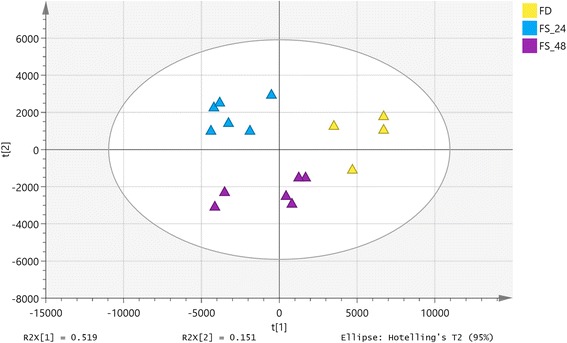
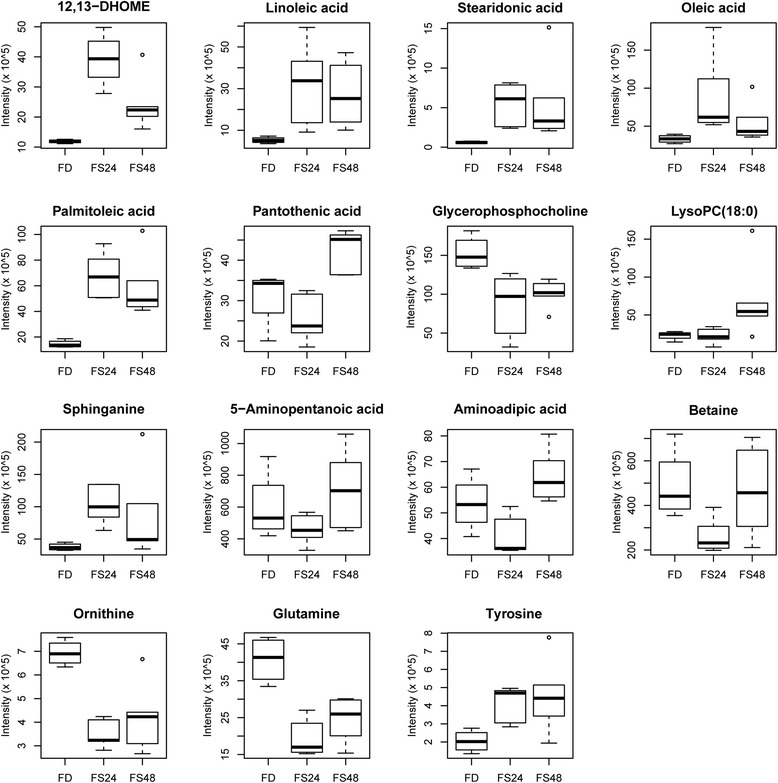
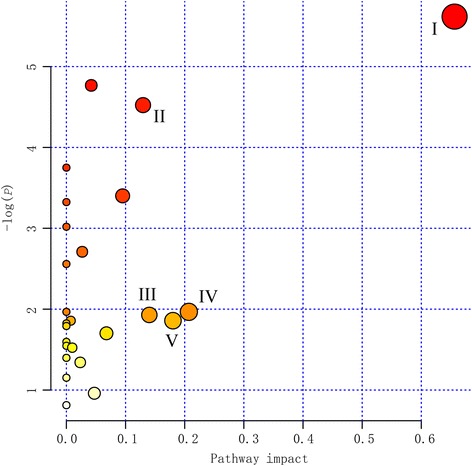
Results: Indirect calorimetry analysis revealed that HP and RQ were no significant difference between 24 h fasting and 48 h fasting, which were lower than those of fed state (P < 0.01). The nitrogen concentration of urine tended to decrease with fasting (P = 0.054). Metabolomics analysis between the fed and fasted state revealed differences in 15 compounds, most of which were not significantly different between 24 h fasting and 48 h fasting. Identified compounds were enriched in metabolic pathways related to linoleic acid metabolism, amino acid metabolism, sphingolipid metabolism, and pantothenate and CoA biosynthesis.
Conclusion: These results suggest that the decreases in HP and RQ of growing pigs under fasting conditions were associated with the alterations of linoleic acid metabolism and amino acid metabolism. The integrative analysis also revealed that growing pigs under a 24-h fasting were more appropriate than a 48-h fasting to investigate the metabolic components of maintenance energy expenditure.
Keywords: Fasting; Growing pig; Indirect calorimetry; Metabolomics; Plasma.
Conflict of interest statement
All procedures used in this study were performed according to the guidelines for the ethical treatment of animal by the Institutional Animal Care and Use Committee of China Agricultural University (Beijing, China).The authors declare that they have no competing interests.
Figures
References
-
- Noblet J, Labussière E, Dubois S, de Lange C, Barea R, Lasnier J, et al. Fasting heat production and metabolic body size in non-ruminant growing farm animals. Netherlands: Wageningen Academic Publisgers; 2013. pp. 313–314.
LinkOut - more resources
Full Text Sources
Other Literature Sources
Research Materials
Miscellaneous
