Review
. 2018 Jul 17;47(14):5266-5311.
doi: 10.1039/c8cs00097b.

Chirality in rotaxanes and catenanes

Affiliations
Review

Chirality in rotaxanes and catenanes

E M G Jamieson et al. Chem Soc Rev. .

Abstract

Although chiral mechanically interlocked molecules (MIMs) have been synthesised and studied, enantiopure examples are relatively under-represented in the pantheon of reported catenanes and rotaxanes and the underlying chirality of the system is often even overlooked. This is changing with the advent of new applications of MIMs in catalysis, sensing and materials and the appearance of new methods to access unusual stereogenic units unique to the mechanical bond. Here we discuss the different stereogenic units that have been investigated in catenanes and rotaxanes, examples of their application, methods for assigning absolute stereochemistry and provide a perspective on future developments.


Figures
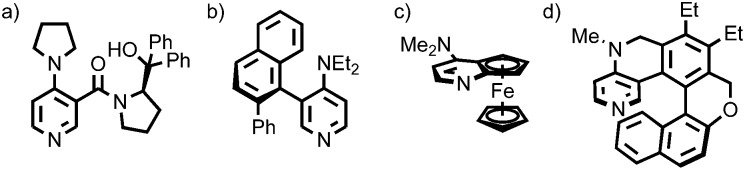
Fig. 1
Fig. 1. Examples of functional molecules containing chiral covalent (a) point, (b) axial, (c) planar and (d) helical stereogenic elements.
Fig. 2
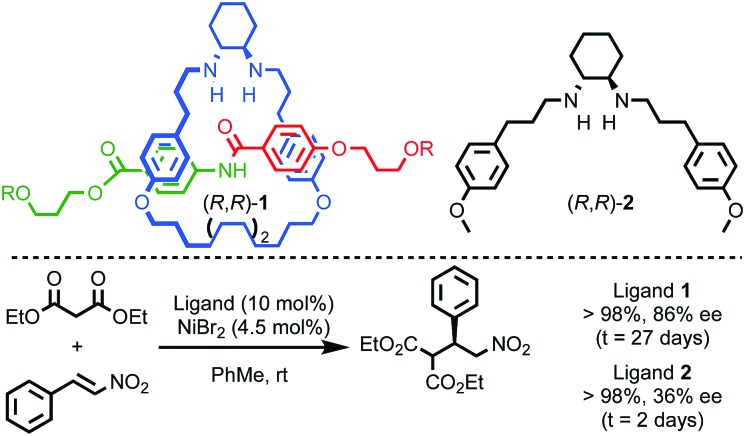
Fig. 2. Leigh's chiral rotaxane ligand (R,R)-1 in the NiII-catalysed Michael addition. R = 4-(C6H4)-C(4-(C6H4)-tBu)3.
Fig. 3
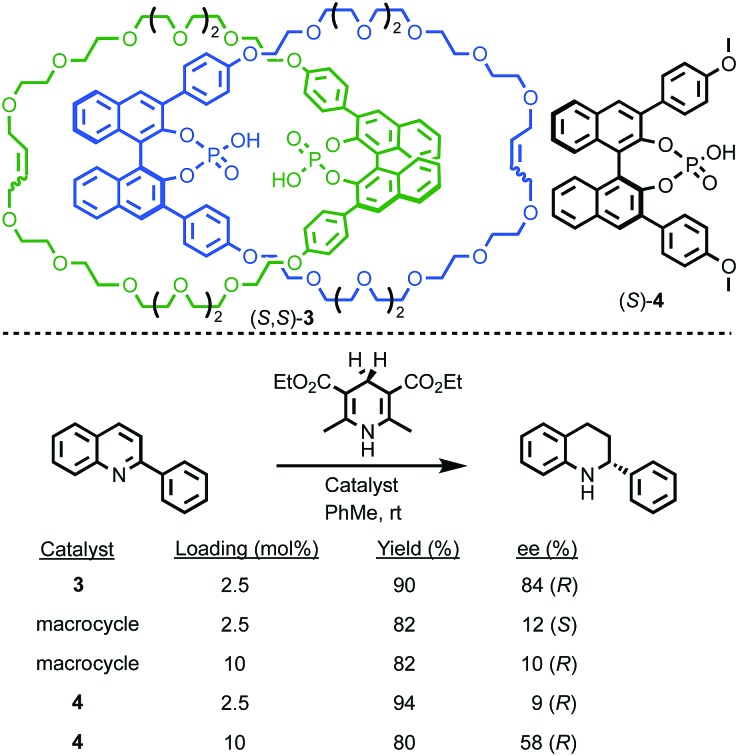
Fig. 3. Niemeyer's chiral catenane phosphoric acid (S,S)-3 in the transfer hydrogenation of quinolines.
Fig. 4
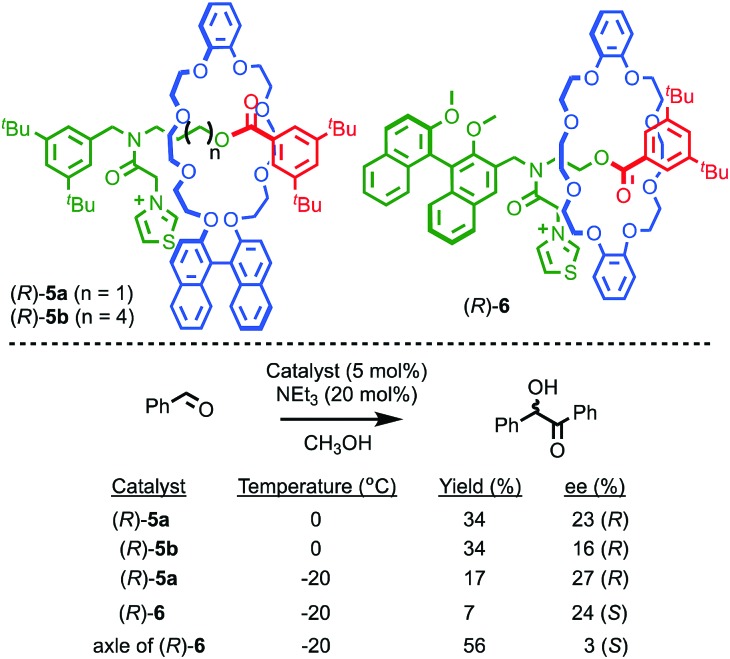
Fig. 4. Takata's thiazolium rotaxane catalysts (R)-5 and (R)-6. Counter ions omitted for clarity.
Fig. 5
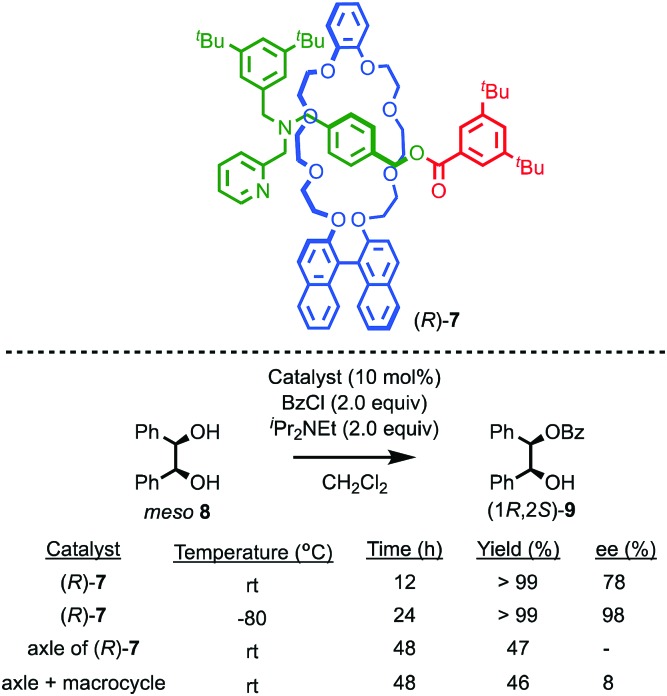
Fig. 5. Takata's pyridine-rotaxane (R)-7 for enantioselective acyl transfer catalysis.
Fig. 6
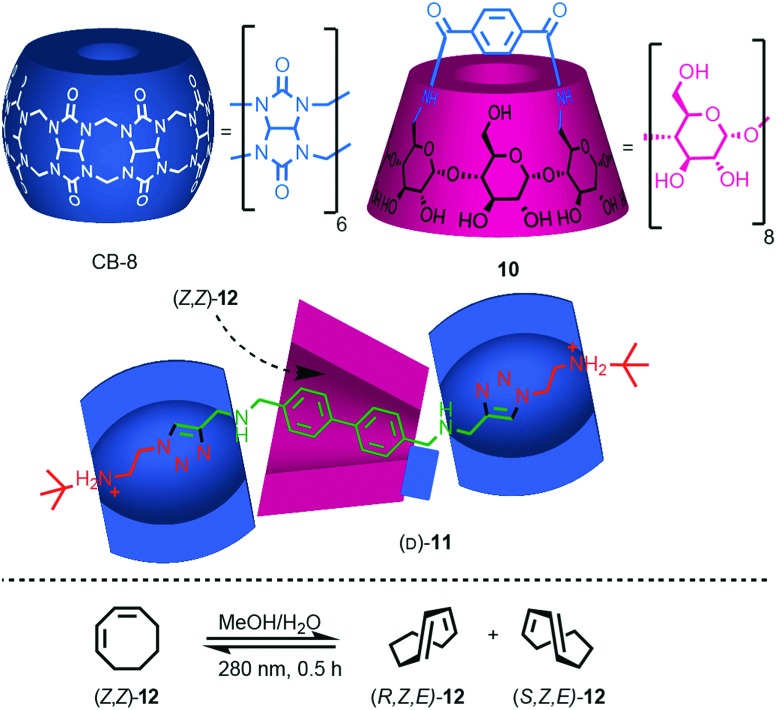
Fig. 6. Photochirogenesis with chiral rotaxane (d)-10. Counter ions omitted for clarity.
Fig. 7
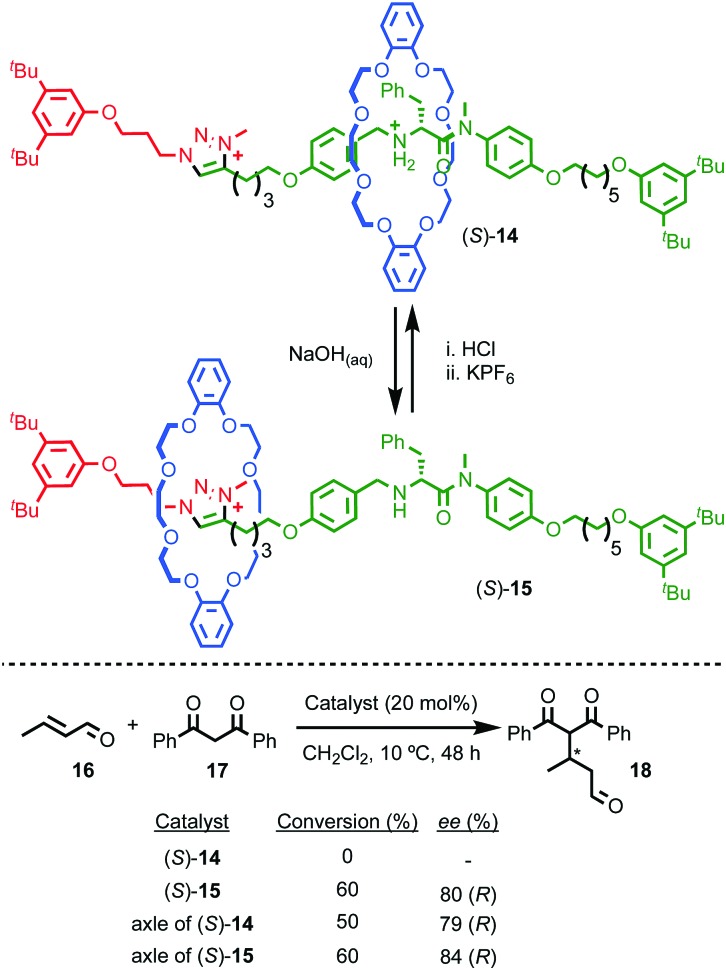
Fig. 7. Leigh's switchable chiral rotaxane catalyst. Counter ions omitted for clarity.
Fig. 8
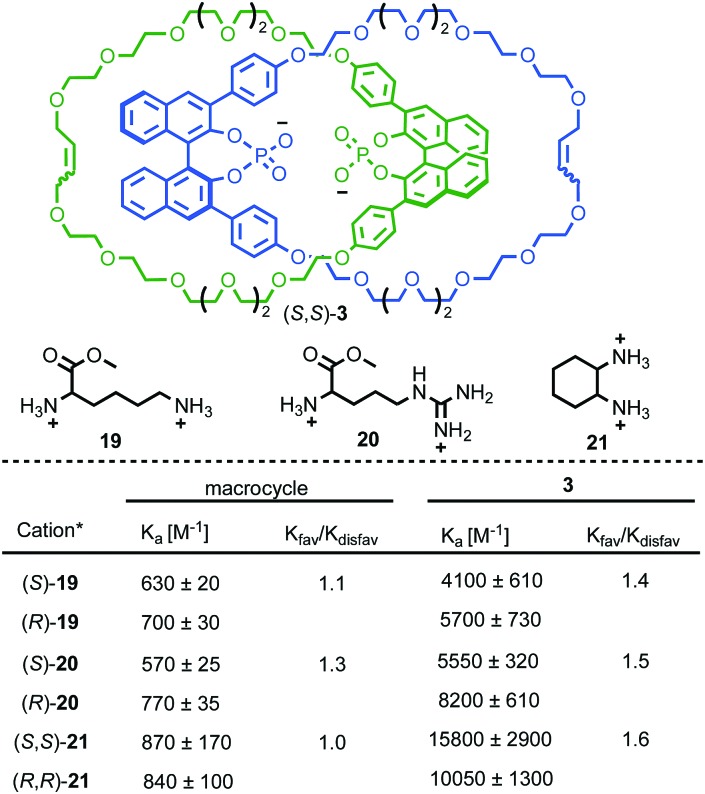
Fig. 8. Niemeyer's chiral phosphate catenane for selective chiral cation binding. All cations were employed as their bis-HCl salt. Counter ions omitted for clarity.
Fig. 9
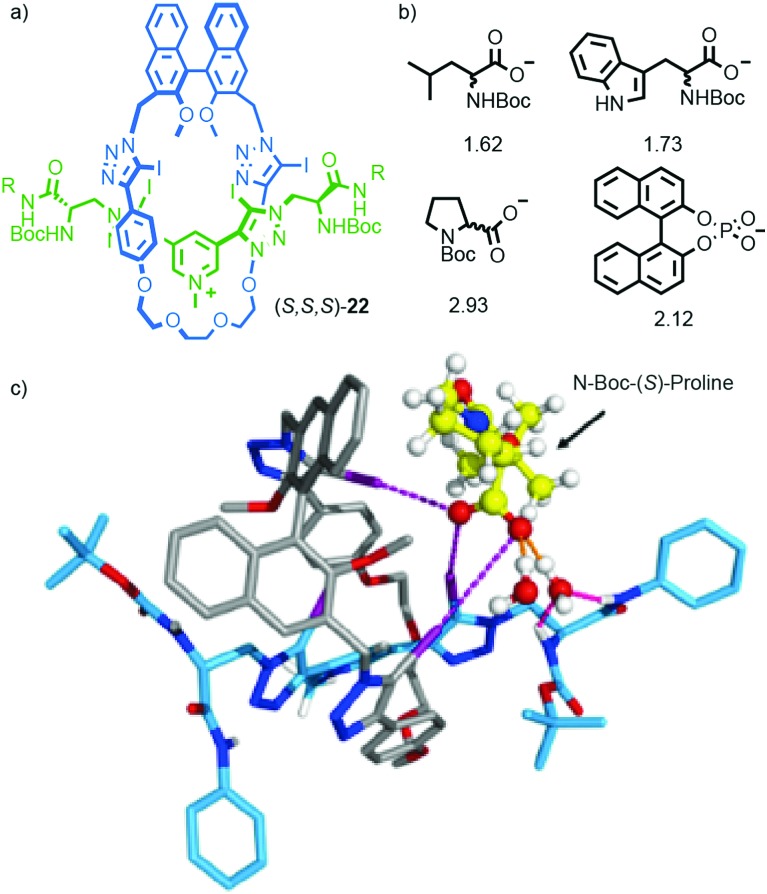
Fig. 9. (a) Beer's chiral rotaxane (S)-22 for selective chiral anion binding. (b) Representative anionic guests (used as TBA salts) and the selectivity observed for the preferred enantiomer in each case. (c) Modelled structure of (S)-22 with N-Boc-(S)-proline. R = 4-(C6H4)-C(4-(C6H4)-tBu)3 Reprinted with permission from ref. 31. Copyright 2017 American Chemical Society. Counter ions omitted for clarity.
Fig. 10
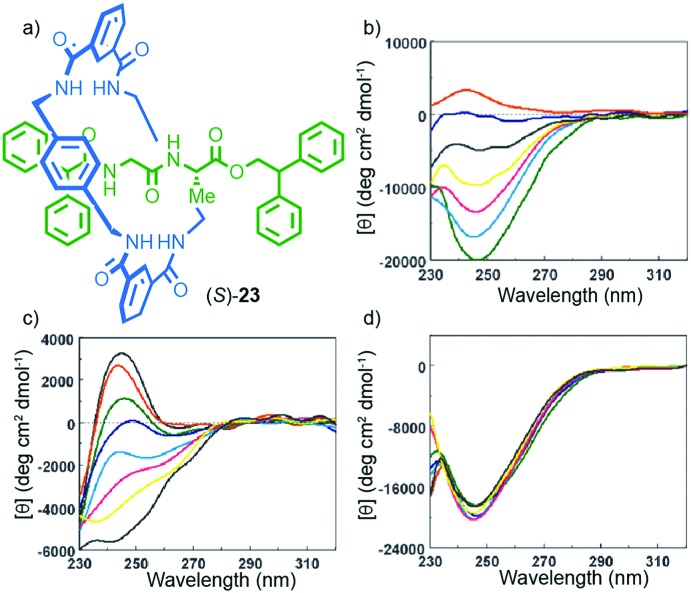
Fig. 10. (a) Structure of Leigh's peptidic rotaxane (S)-23. (b) Solvent-dependent CD spectra (0.1 mM) of rotaxane 23 in CHCl3 (green), 1 : 1 CHCl3/MeOH (cyan), 2 : 3 CHCl3/MeOH (yellow), 1 : 5 CHCl3/MeOH (black), 1 : 10 CHCl3/MeOH (blue) and 100% MeOH (red). Temperature-dependent CD spectra (0.1 mM) of rotaxane (S)-23 in (c) MeOH and (d) CHCl3 :  263 K (black), 273 K (red), 283 K (green), 293 K (blue), 303 K (cyan), 313 K (magenta), 323 K (yellow) and 333 K (black) Reprinted with permission from ref. 39. Copyright 2002 American Chemical Society.
Fig. 11
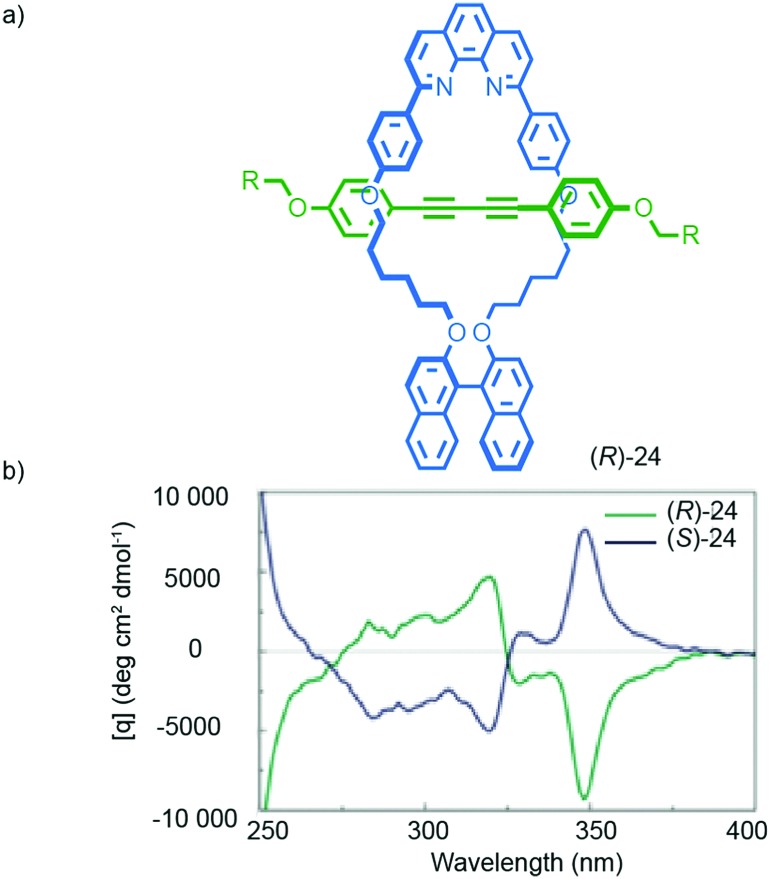
Fig. 11. Transfer of chiral information between the macrocycle and axle in Saito's axially chiral rotaxane (R)-24. R = C(4-(C6H4)-(4-(C6H4)-cyclohexyl))3. Reprinted with permission from ref. 40. Copyright 2015 The Chemical Society of Japan.
Fig. 12
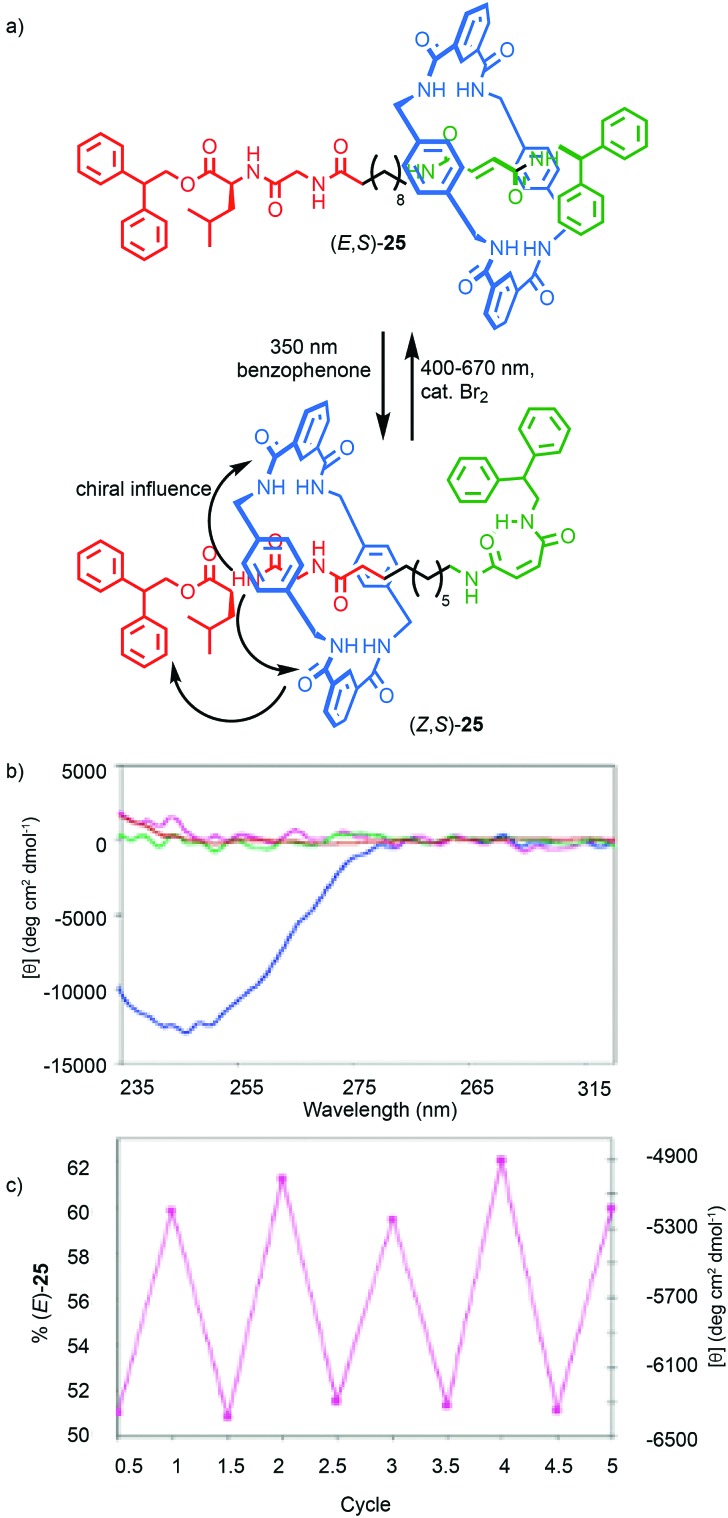
Fig. 12. (a) Leigh's peptidic rotaxane (Z/E,S)-25. (b) CD spectra (0.1 mM in CHCl3) at 298 K of (Z,S)-25 (blue), (E,S)-25 (purple), and the corresponding axles (red and green respectively). (c) Variation in CD response with irradiation after alternating radiation at 254 nm (half integers) and at 312 (integers) for five complete cycles (percentage of (E,S)-25 at the photostationary state on left-hand Y axis, right-hand Y axis shows the CD absorption at 246 nm). Reprinted with permission from ref. 42. Copyright 2003 American Chemical Society.
Fig. 13
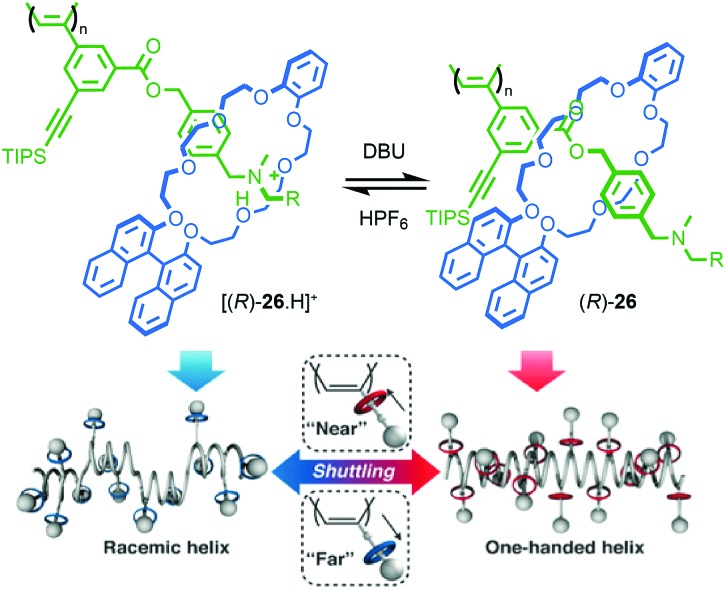
Fig. 13. Takata's helical polymer switch rotaxane (R)-26 (R = 3,5-tBu-C6H3). Counter ions omitted for clarity. Reproduced from ref. 43 with permission from The Royal Society for Chemistry.
Fig. 14
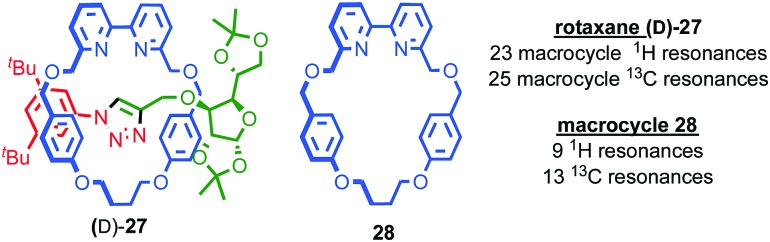
Fig. 14. Goldup's chiral, crowded sugar-based rotaxane (d)-27 and a comparison of the number of resonances attributable to its macrocycle component and those of macrocycle 28 alone.
Fig. 15
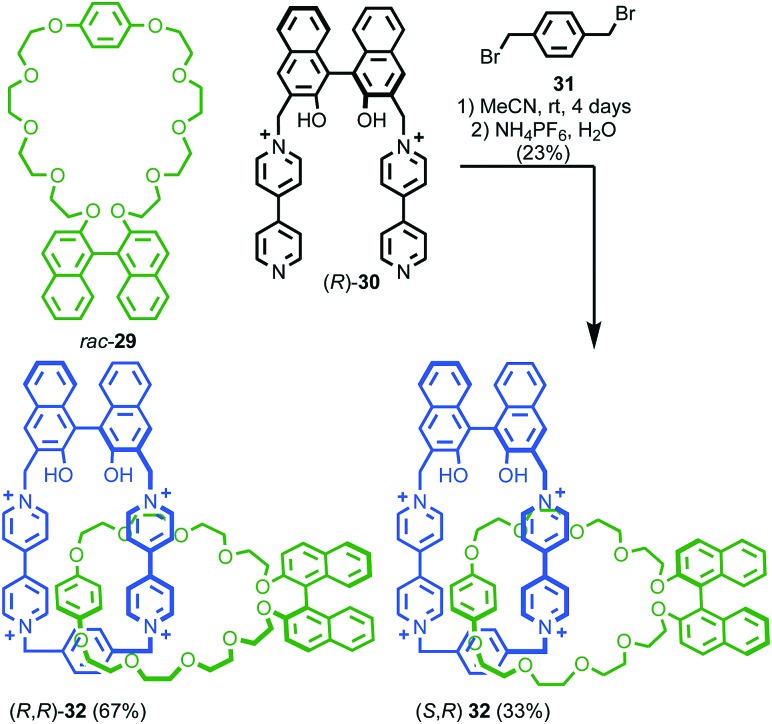
Fig. 15. Stoddart's diastereoselective synthesis of catenane 32 under kinetic control. Counter ions omitted for clarity.
Fig. 16
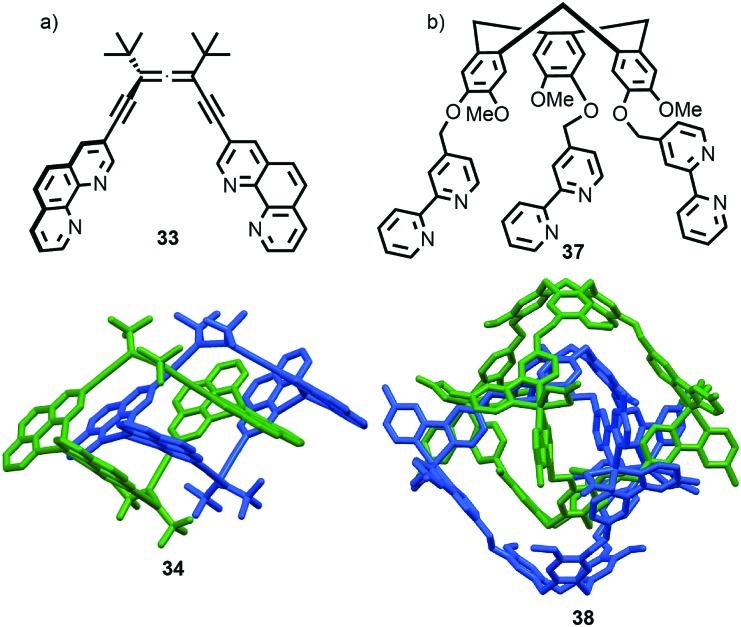
Fig. 16. (a) Diederich's self-sorting synthesis of Ag-coordinated catenanes 34 from racemic 33; (b) Hardie's triply interlocked catenane 38 synthesised with control over all six metal stereocentres. Counter ions omitted for clarity.
Fig. 17
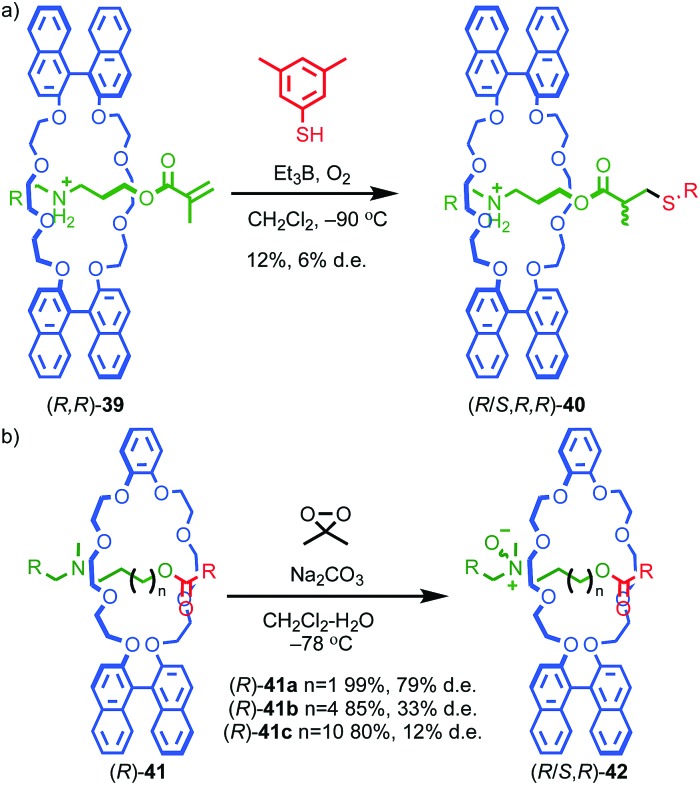
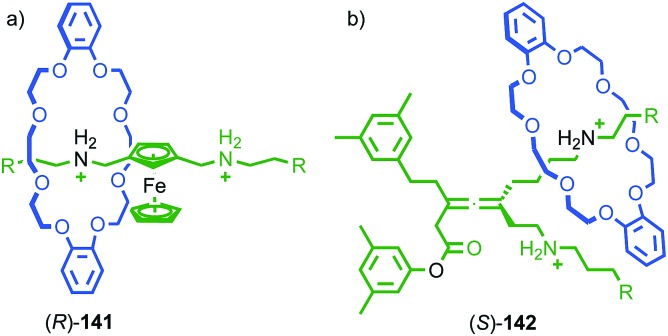
Fig. 17. Takata's diastereoselective functionalisation of (a) rotaxane (R)-39 (counter ion omitted for clarity) and (b) rotaxane (R)-41. (R = 3,5-tBu-C6H3).
Fig. 18
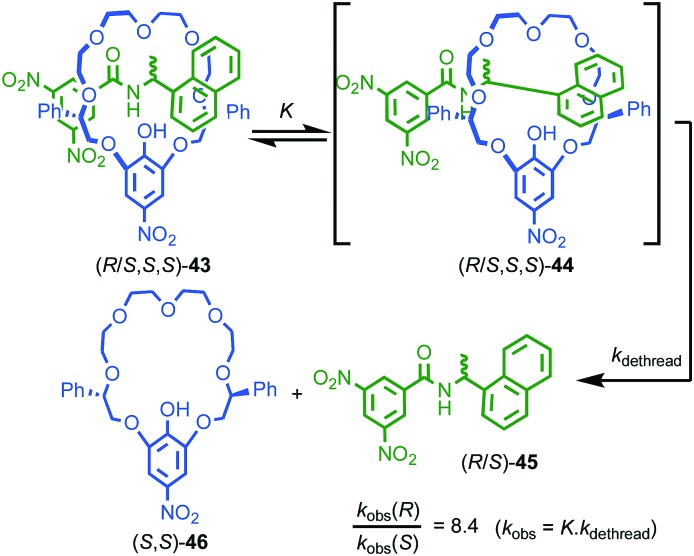
Fig. 18. Hirose's observation of the kinetic effect of diastereoisomerism on dethreading rates of pseudorotaxane (R/S,S,S)-43.
Fig. 19
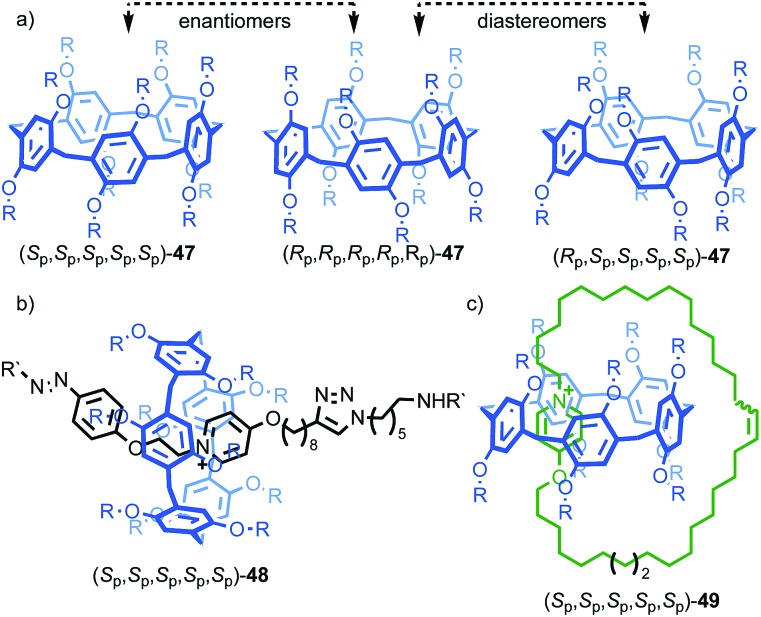
Fig. 19. (a) Conformational stereoisomers of pillar[5]arene 47. (b) Rotaxane 48 and (c) catenane 49 synthesised from pillar[5]arene 47 as single diastereomers (all-Sp stereoisomer shown for illustrative purposes). R = CH2CH3; R′ = 3,5-tBu-C6H3. Counter ions omitted for clarity.
Fig. 20
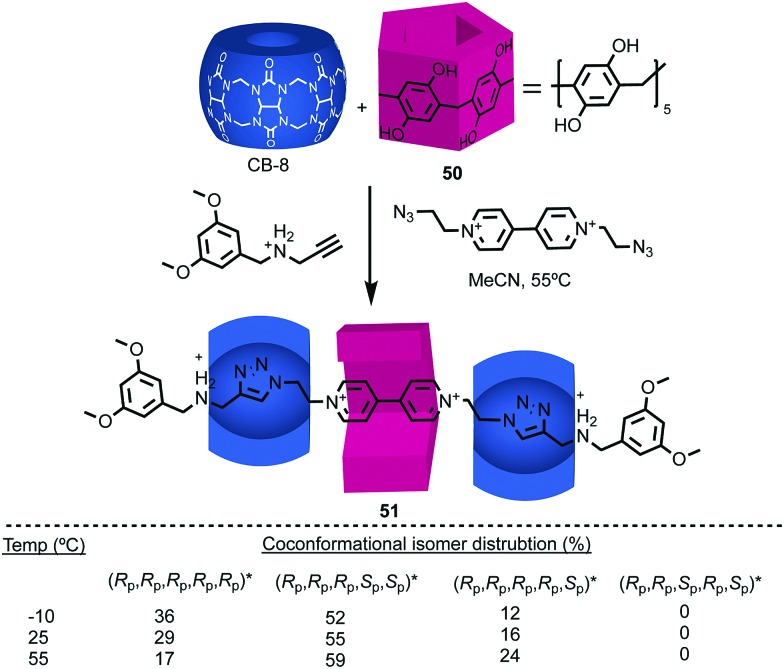
Fig. 20. [4]Rotaxane 51 synthesised as a mixture of diastereomers using Stoddart's cooperative capture approach. Counter ions omitted for clarity.
Fig. 21
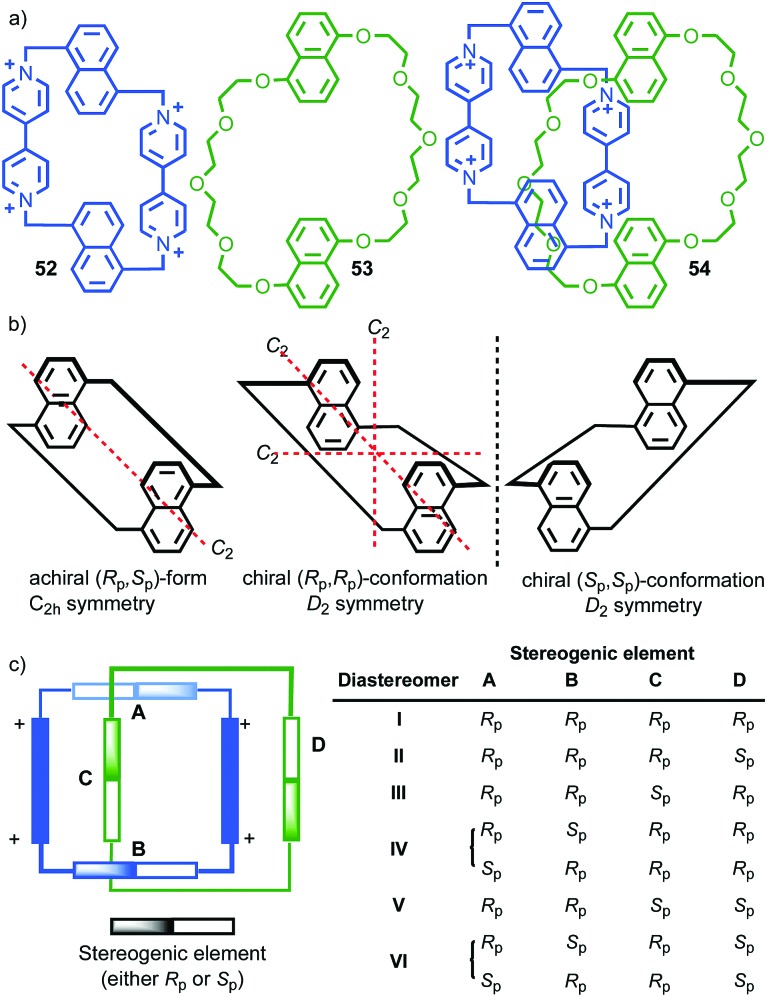
Fig. 21. Stoddart's stereochemical Rubik's cube 54 that exists as a complex mixture of diastereomers in slow exchange as a result of the mechanical bond. (a) Structures of parent macrocycles 52, 53 and catenane 54. (b) Conformational stereoisomers of macrocycles 52 and 53. (c) Stereoisomerism in catenane 54 (enantiomers of each diastereomer not shown). Counter ions omitted for clarity.
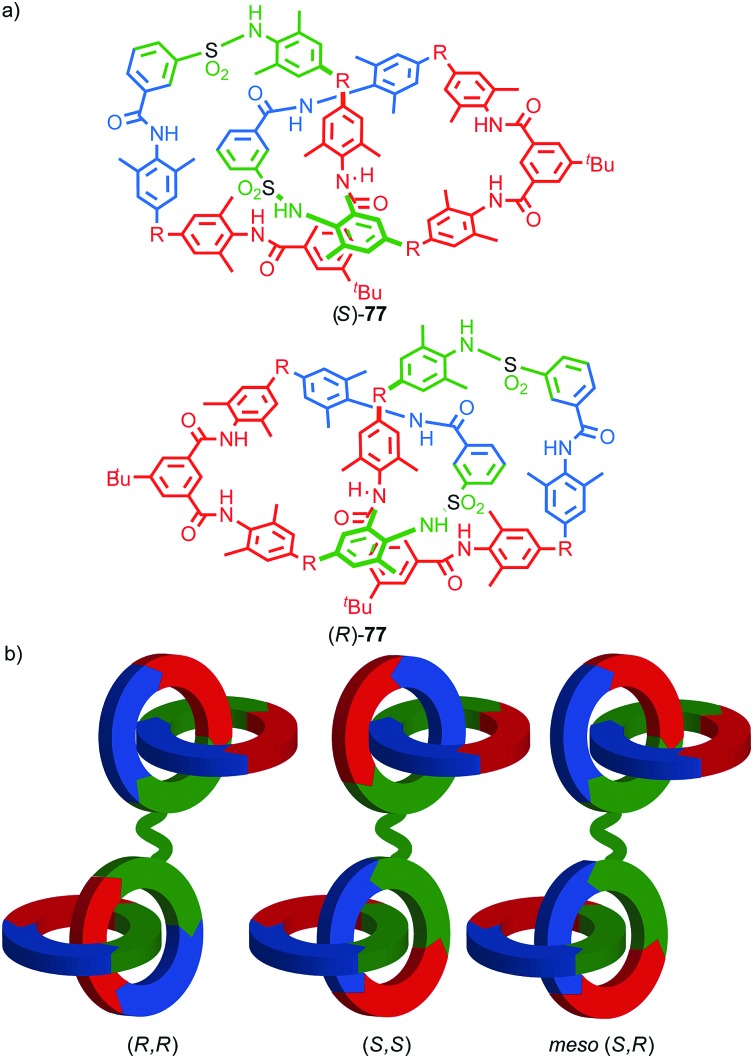
Fig. 22
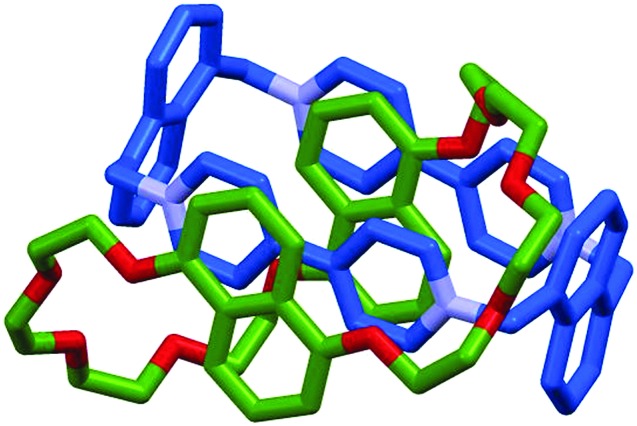
Fig. 22. Solid state structure of (SpSpSpSp)-54. Counter ions omitted for clarity.
Fig. 23
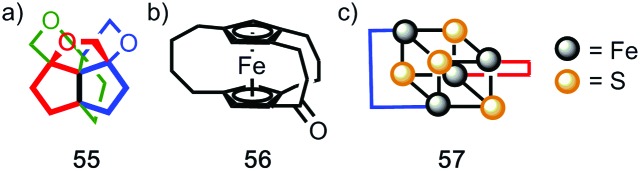
Fig. 23. Covalent structures that display topological chirality. (a) Propeller-shaped organic molecule 55. (b) Topologically chiral ferrocene 56. (c) A schematic representation (57) of the iron–sulfur cluster of the Chromutium high potential iron protein.
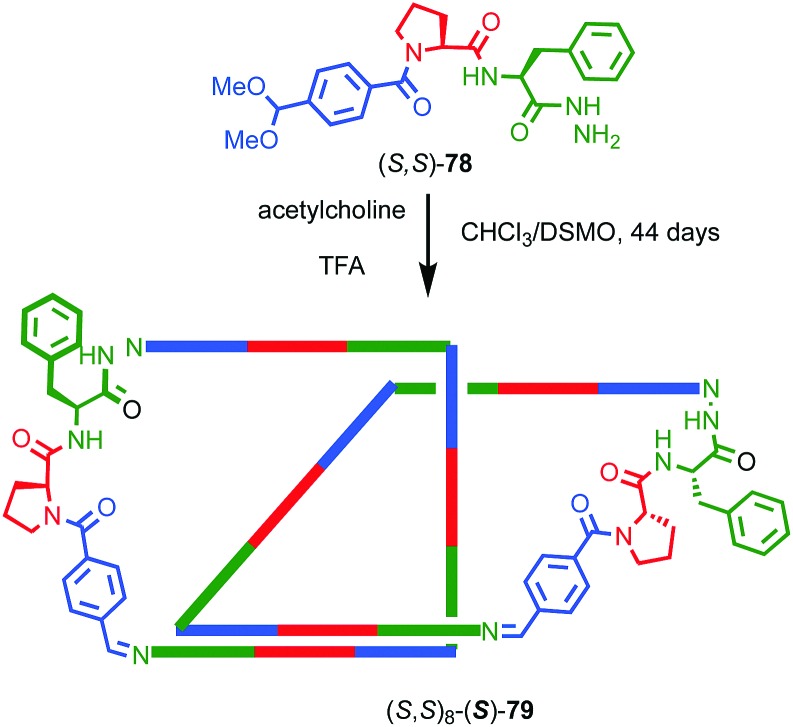
Fig. 24
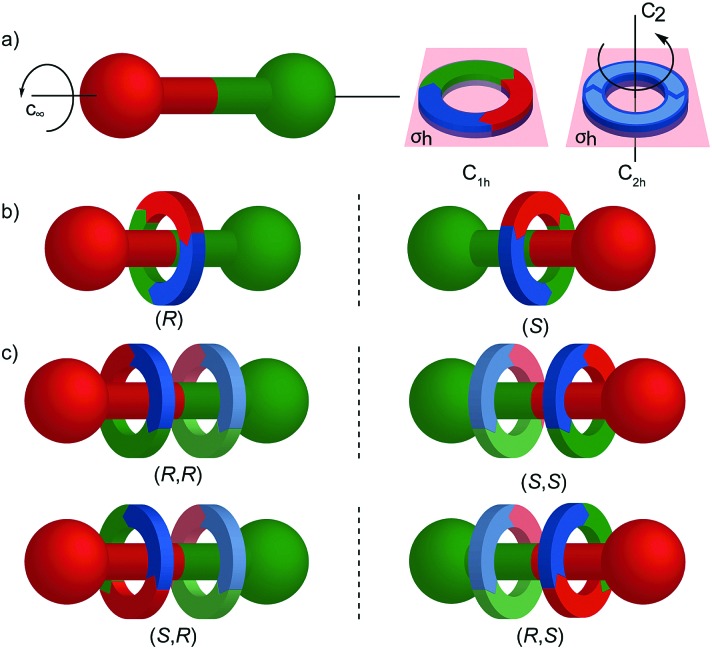
Fig. 24. Cartoon representation of mechanically planar chiral rotaxanes and their components. (a) Axle (C∞v) and macrocycle (C1h, C2h) components suitable for inclusion in mechanically planar chiral rotaxanes. (b) A mechanically planar chiral [2]rotaxane. (c) A mechanically planar chiral [3]rotaxane and the stereoisomers possible for a given order of macrocycles on the axle.
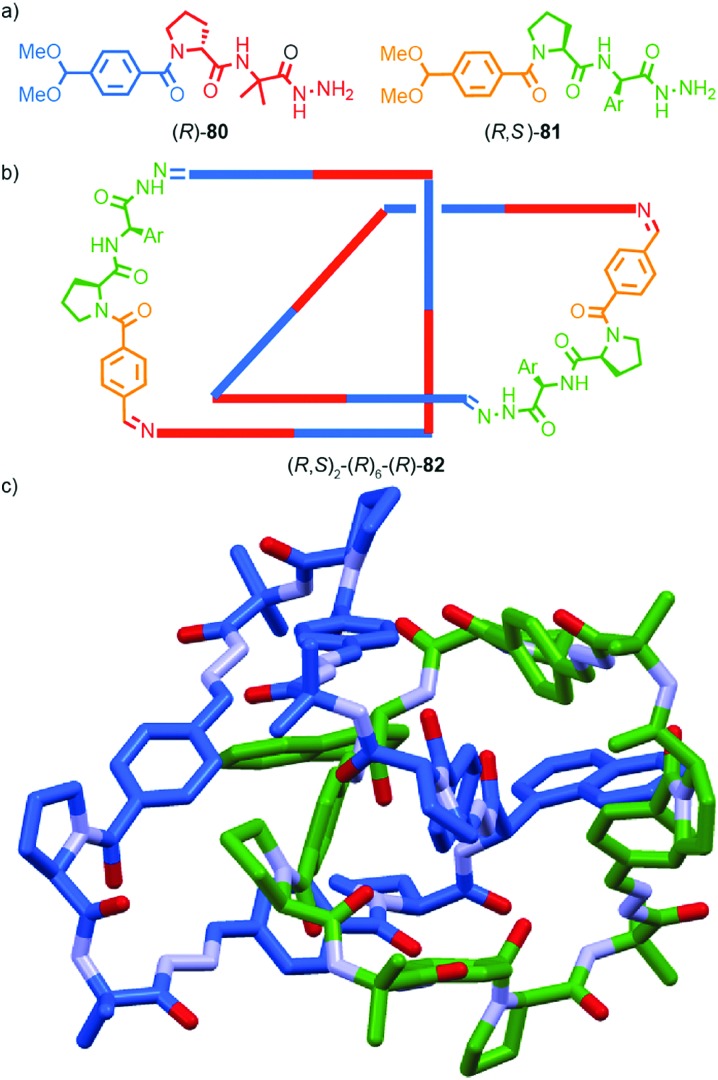
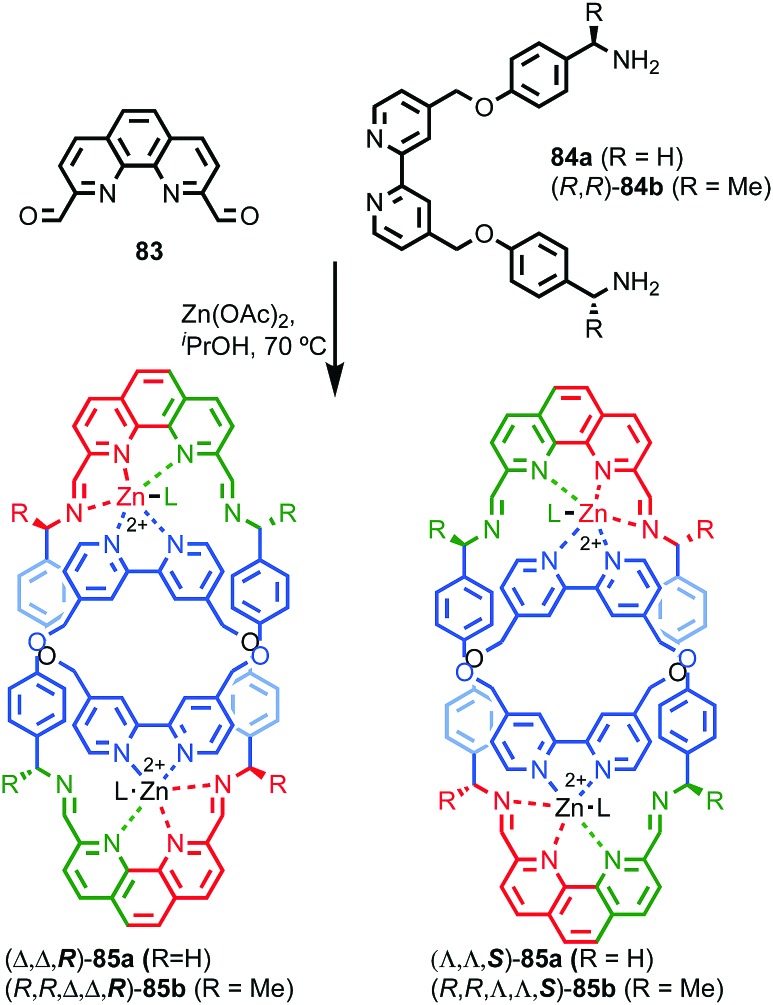
Fig. 25
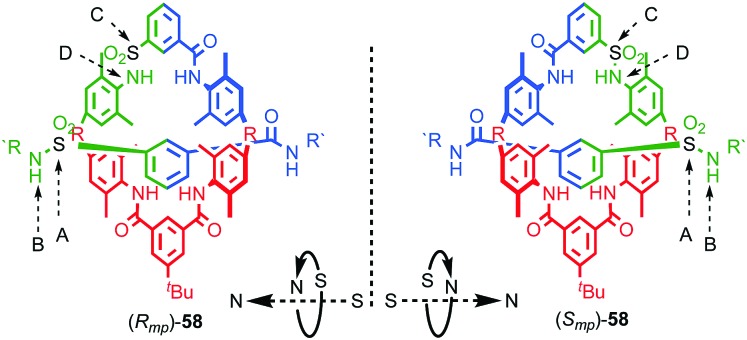
Fig. 25. Vögtle's mechanically planar chiral rotaxane 58. R = 1,1-cyclohexyl, R′ = –C6H4–Tr. Highest priority atoms in each component are highlighted in black.
Fig. 26
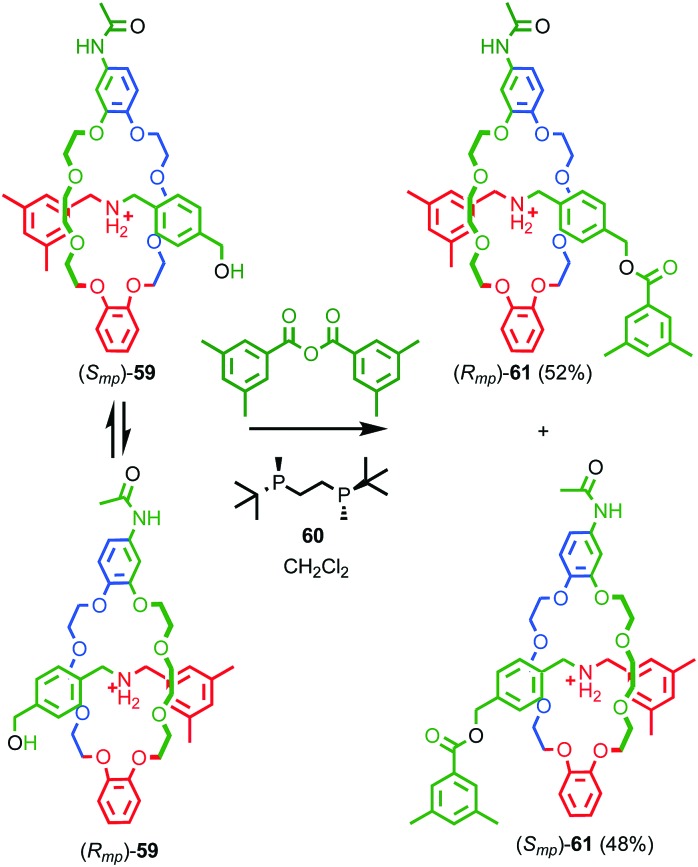
Fig. 26. Takata's enantioselective dynamic kinetic resolution of pseudorotaxanes 59 to produce mechanically planar chiral rotaxane 61. Counter ions omitted for clarity. Highest priority atoms in each component are highlighted in black.
Fig. 27
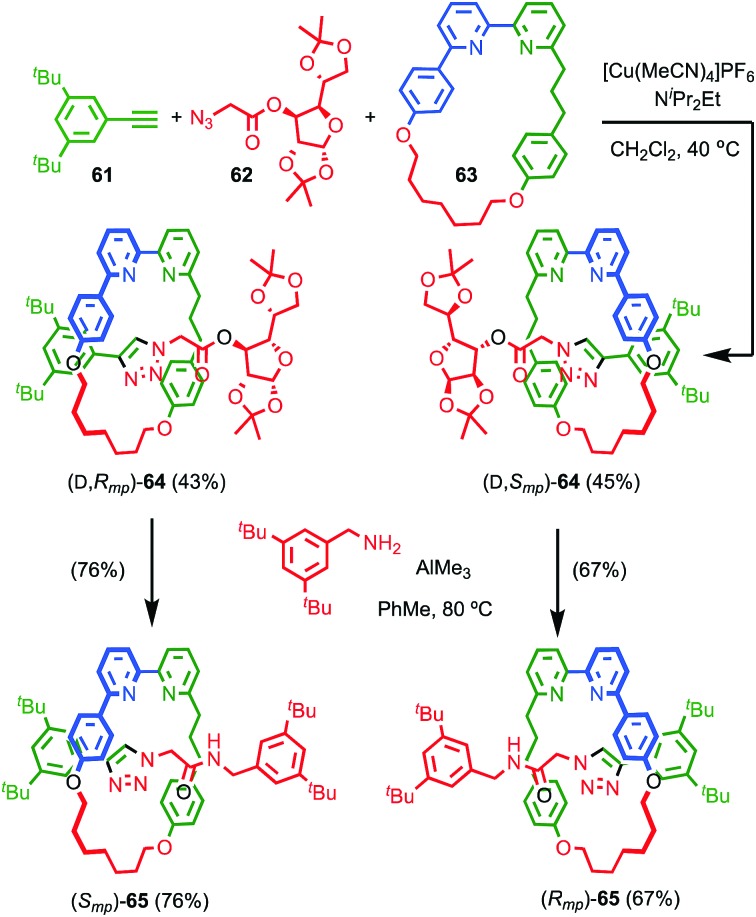
Fig. 27. Goldup's chiral derivatisation approach to mechanically planar chiral rotaxanes 65. Highest priority atoms in each component are highlighted in black.
Fig. 28
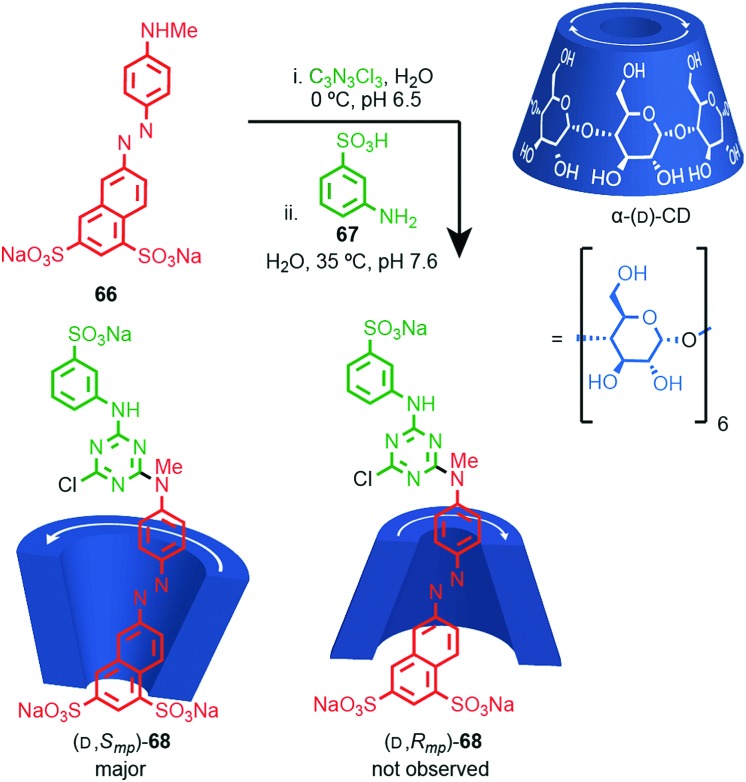
Fig. 28. Anderson's selective synthesis of one epimer of rotaxane (d,Smp)-68 and the structure of alternative mechanical epimer (d,Smp)-68 (not observed). Highest priority atoms in each component are highlighted in black.
Fig. 29
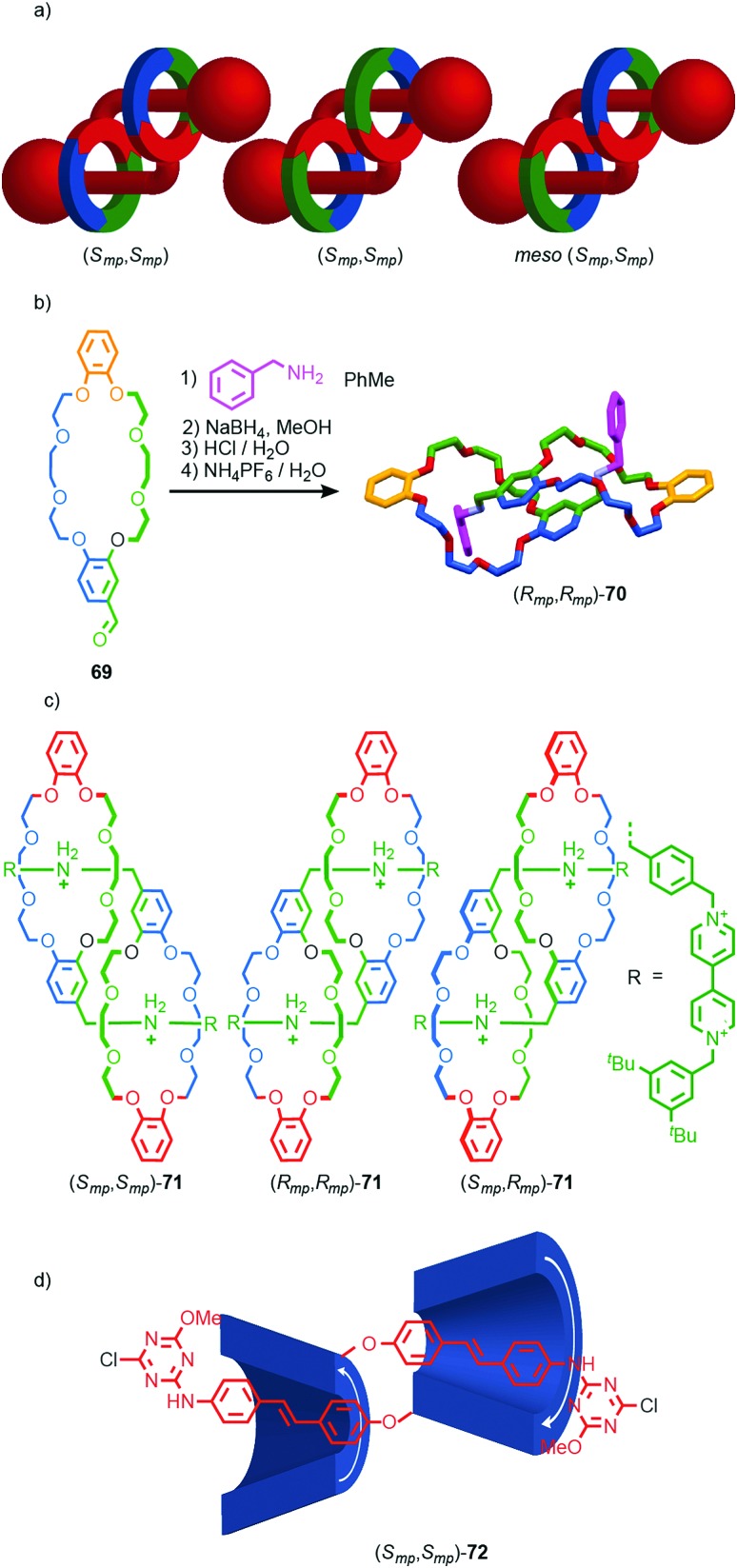
Fig. 29. (a) Cartoon representations of the stereoisomers of homo-dimeric [c2]daisy chain rotaxanes (arbitrary stereodescriptors included). (b) Solid-state structure of pseudo[c2]daisy rotaxane 70. (c) Mixture of [c2]daisy diastereomers 71 reported by Stoddart and co-workers. (d) Easton's [c2]daisy 72 which is formed as a single stereoisomer. Highest priority atoms in each component are highlighted in black. In the case of 70, the ether oxygen that is highest priority in the daisy chain is indicated in macrocycle 69.
Fig. 30
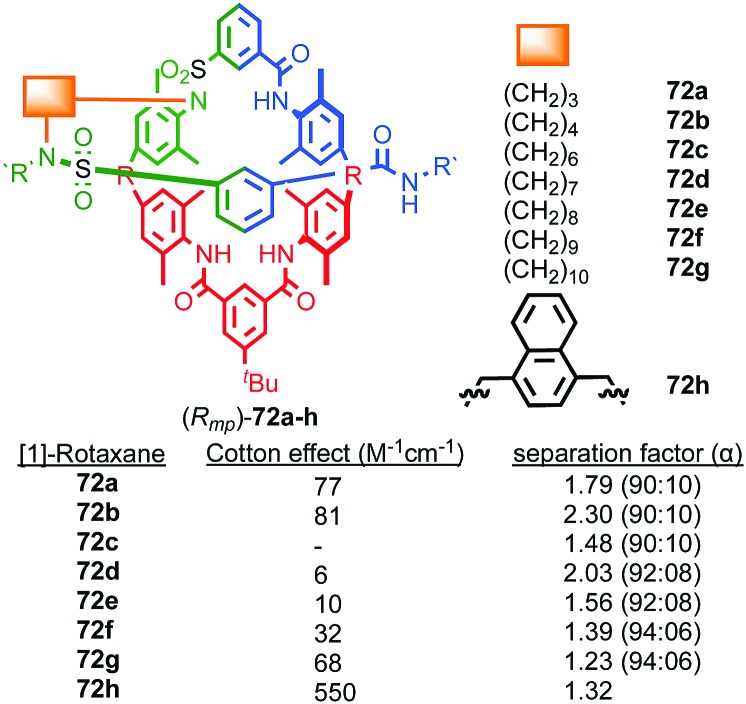
Fig. 30. The effect of structure on the Cotton effect of rotaxanes 72 (Rmp stereoisomer shown for illustrative purposes). R = 1,1-cyclohexyl, R′ = –C6H4–Tr. Highest priority atoms in each component are highlighted in black.
Fig. 31
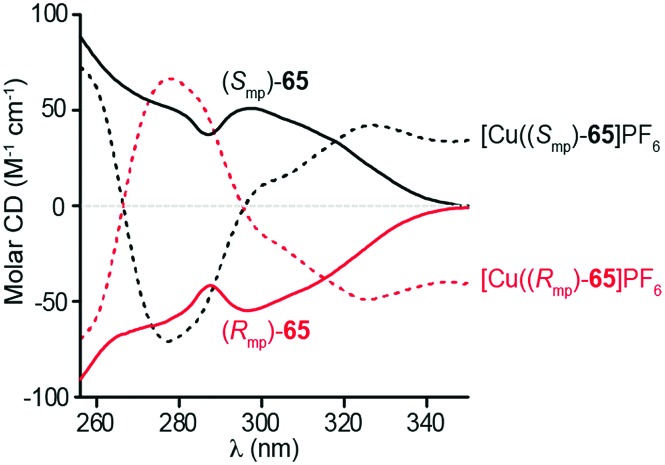
Fig. 31. Chiroptical switching through metal binding in Goldup's mechanical planar chiral rotaxane 65. Reproduced with permission from ref. 77. Copyright 2014 American Chemical Society.
Fig. 32
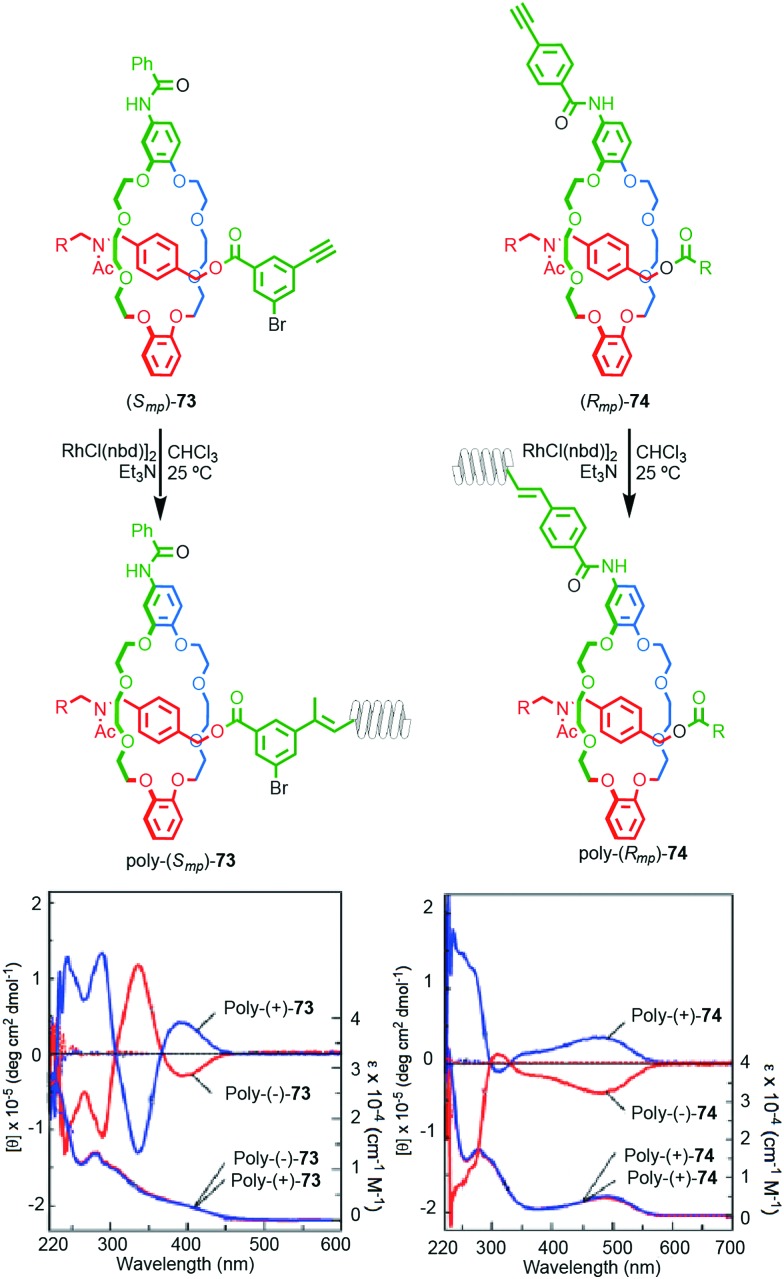
Fig. 32. Takata's mechanically planar chiral helical polymers poly-73 and poly-74. Stereoisomers shown and assigned for illustrative purposes. R = 3,5-Me2-C6H3. Highest priority atoms in each component are highlighted in black. Reproduced with permission from ref. 90. Copyright 2017 John Wiley and Sons.
Fig. 33
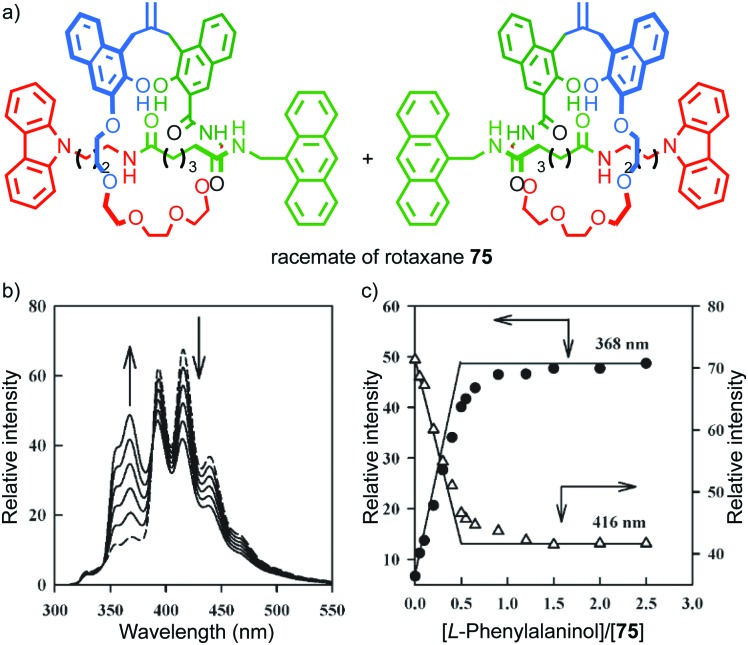
Fig. 33. (a) Kameta and Hiratni's chiral host 75. Highest priority atoms in each component are highlighted in black. (b) The effect of (l)-phenylalalinol on the fluorescence of 75. (c) A plot of the emission intensity of rotaxane 75 with respect to equivalents of (l)-phenylalalinol. Reproduced from ref. 91 with permission from The Royal Society for Chemistry.
Fig. 34
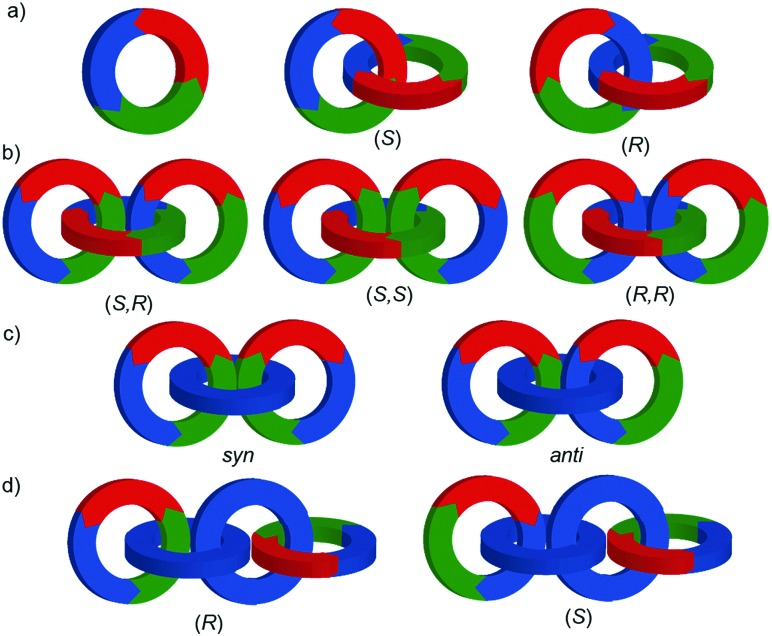
Fig. 34. Schematic representations with arbitrary stereodescriptors of (a) topologically chiral homo [2]catenane and the constituent macrocycle, (b) the stereoisomers of a topologically chiral homo[3]catenane, (c) the topological diastereomers of an achiral linear [3]catenane in which only the terminal rings are oriented, (d) the enantiomers of a chiral linear [4]catenane in which only the terminal rings are oriented.
Fig. 35
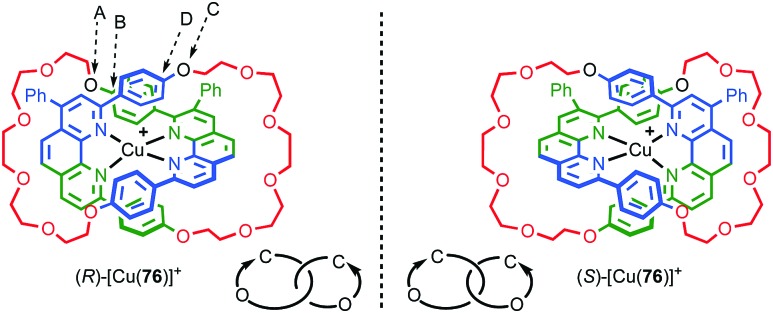
Fig. 35. Schematic representation of topologically chiral catenane complex [Cu(76)]. Counter ions omitted for clarity., Highest priority atoms in each component are highlighted in black.
Fig. 36
Fig. 36. (a) Vögtle and co-workers neutral topologically chiral catenane 77. (b) Schematic representation of the stereoisomers of cross-linked analogues of catenane 77., R = 1,1-cyclohexyl. Highest priority atoms in each component are highlighted in black.
Fig. 37
Fig. 37. Sanders acetylcholine-host catenane (S,S)8-(S)-79 assembled by hydrazone formation under dynamic conditions in the presence of the guest. Single diastereomer shown is for illustrative purposes; the absolute configuration of the product was not determined. (S,S) stereodescriptors refer to all covalent stereocentres in macrocycle framework. Emboldened S descriptor refers to the topological stereogenic unit. Highest priority atoms in each component are highlighted in black.
Fig. 38
Fig. 38. Gagne and co-workers diastereoselective assembly of catenane (R,S)-(R)3-(R)-82. (a) Building blocks (R)-80 and (R,S)-81. (b) Schematic representation of (R,S)2-(R)6-(R)-82 (R and R, S refer to stereochemistry of repeating covalent fragments derived from (R)-80 and (R,S)-81 respectively; (R) refers to the topological stereogenic unit). (c) Solid state structure of catenane (R,S)2-(R)6-(R)-82 demonstrating the formation of a single diastereomer. Ar = naphthyl. Highest priority atoms in each component are highlighted in black.
Fig. 39
Fig. 39. Trabolsi's dynamically chiral catenanes 85. Counter ions omitted for clarity. (R and Λ/Δ) stereodescriptors refer to covalent and at-metal stereochemistry respectively. Emboldened stereodescriptor refers to the topological stereogenic unit. Highest priority atoms in each component are highlighted in black.
Fig. 40
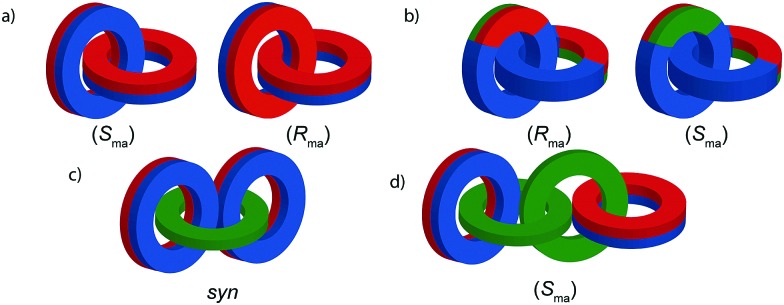
Fig. 40. Schematic representation of the enantiomers of [2]catenanes based on (a) two equivalent C∞v rings, (b) two equivalent C1v rings, (c) the syn diastereomer of an achiral [3]catenane with terminal C∞v rings, (d) one enantiomer of a linear [4]catenane with terminal C∞v rings.
Fig. 41
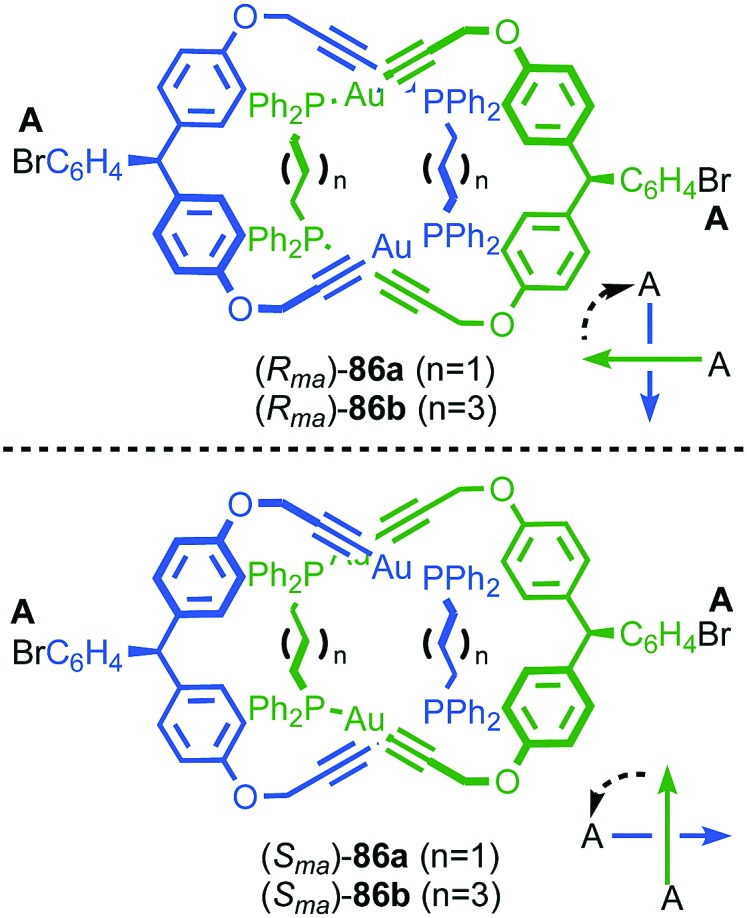
Fig. 41. Puddephat's mechanically axially chiral catenane 86. Highest priority off-ring plane atoms in each component are highlighted in black.
Fig. 42
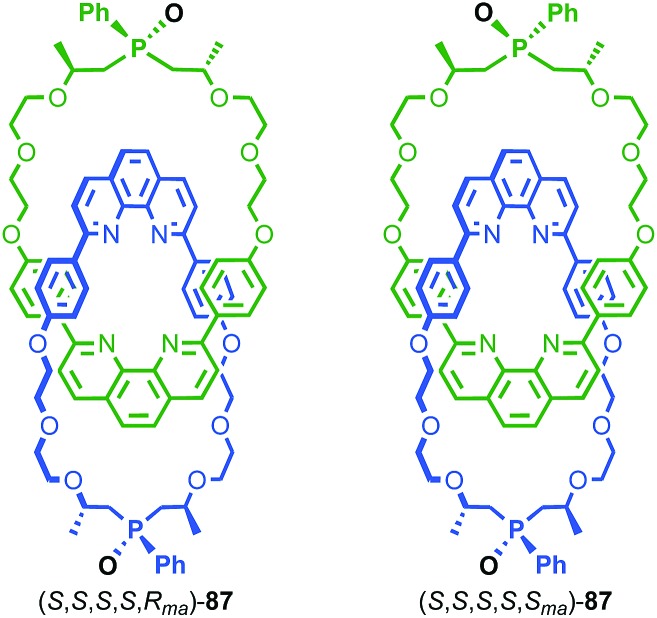
Fig. 42. Marinetti's mechanically axial chiral catenanes 87. (S) stereodescriptor refers to all covalent stereocentres in macrocycle framework. Highest priority off-ring plane atoms in each component are highlighted in black.
Fig. 43
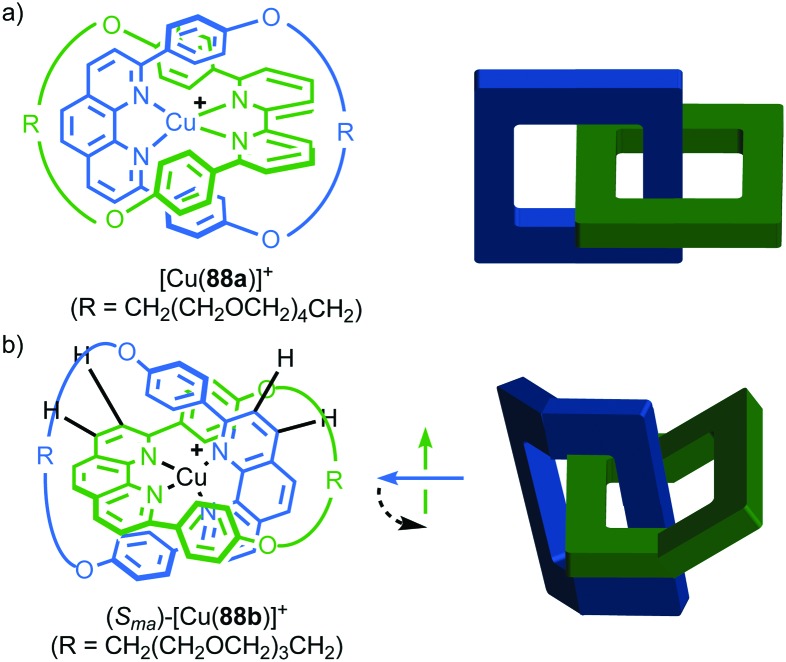
Fig. 43. (a) Sauvage's achiral catenane 88a and (b) conformationally mechanically axially chiral catenane 88b with schematic representations highlighting their symmetry properties. Counter ions omitted for clarity.
Fig. 44
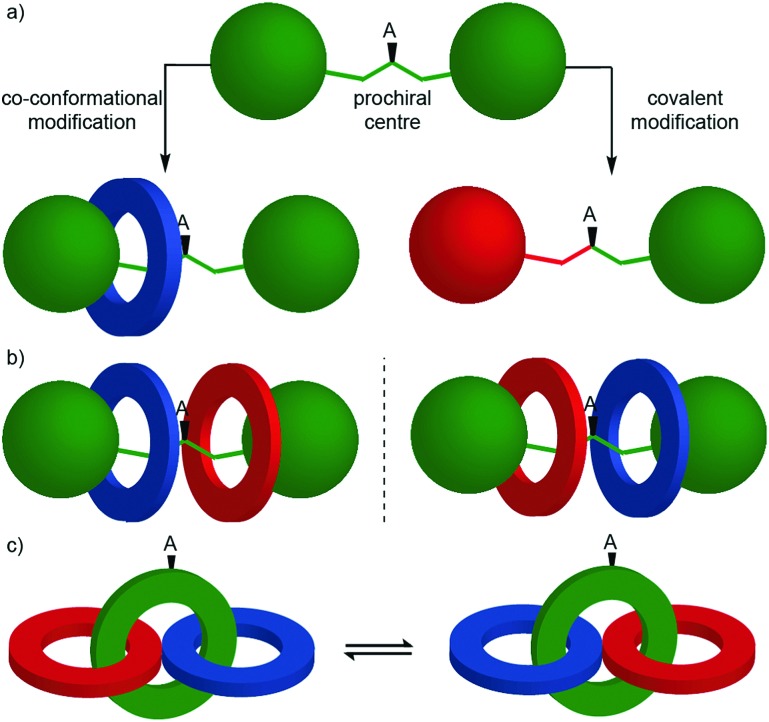
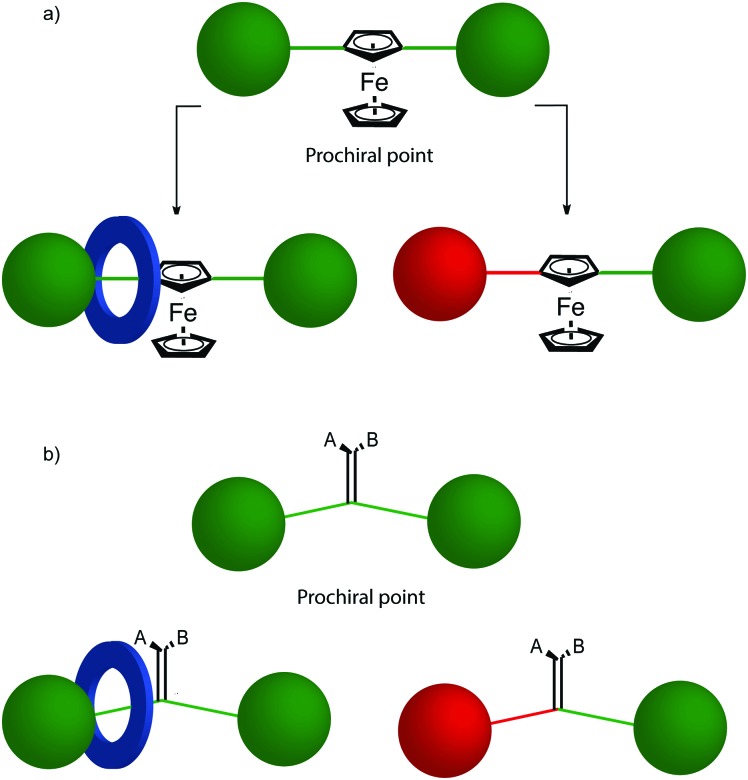
Fig. 44. Co-conformational covalent point chiral molecules. (a) Relationship between a prochiral centre co-conformational covalent point chirality and desymmetrisation by covalent modification. (b) Co-conformational covalent point chiral [3]rotaxane. (c) Co-conformational covalent point chiral [3]catenane whose enantiomers are exchanged by pirouetting.
Fig. 45
Fig. 45. Leigh's co-conformationally covalent point chiral information ratchet.
Fig. 46
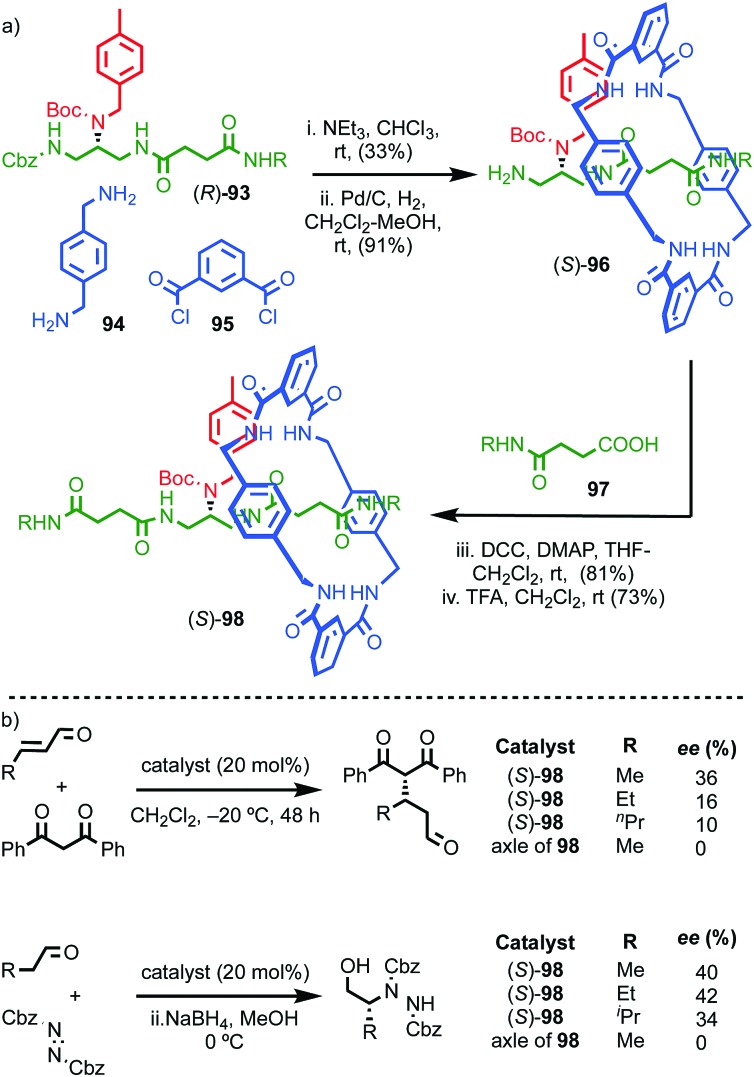
Fig. 46. (a) Synthesis of Leigh's co-conformationally point chiral catalyst (S)-98 (R = CH2CH(Ph)2). (b) Enantioselective reactions mediated by (S)-98.
Fig. 47
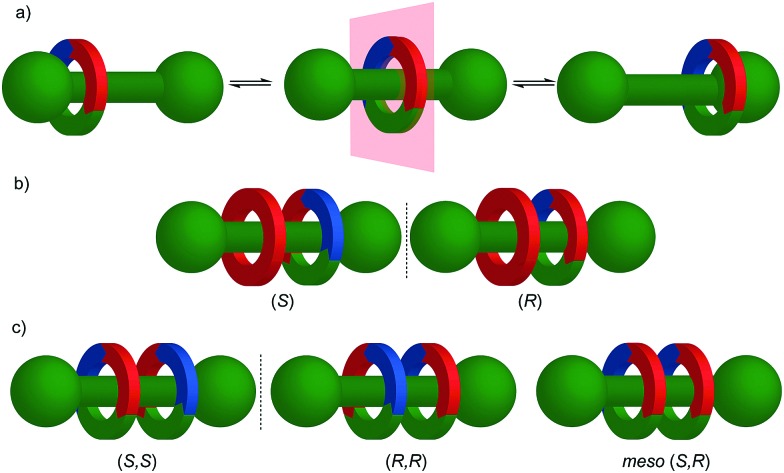
Fig. 47. Schematic representation of (a) an achiral [2]rotaxane and its co-conformational mechanical planar chiral enantiomers, (b) the enantiomers of a co-conformational mechanical planar chiral [3]rotaxane composed of one oriented and one un-oriented ring; (c) the stereoisomers of a co-conformational mechanical planar chiral [3]rotaxane composed of two oriented rings. Arbitrary stereodescriptors shown.
Fig. 48
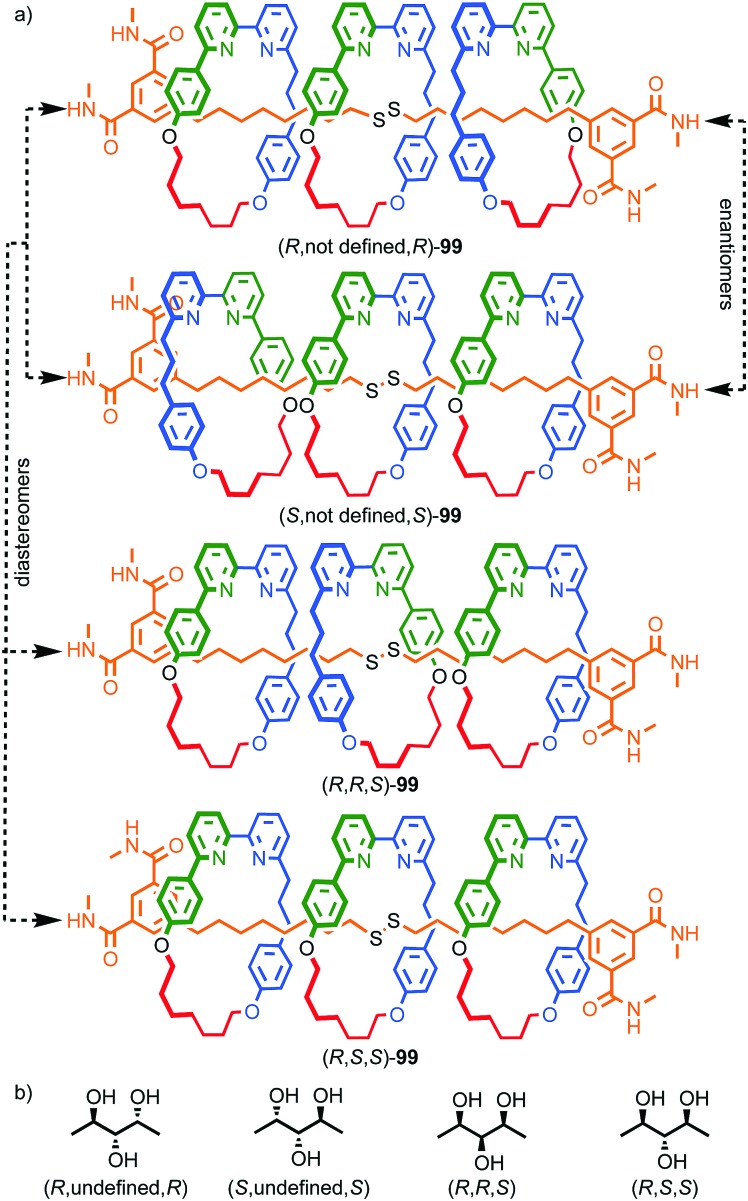
Fig. 48. (a) Stereochemical assignment of hypothetical co-conformational mechanical planar chiral [4]rotaxane 99. In all cases the highest priority atom of the macrocycle is the emboldened “O” in black. For meso diastereomers (R,R,S)-99 and (R,S,S)-99 the stereochemistry of the central macrocycle is determined by assigning the R configured macrocycle on the left the highest CIP priority. (b) Stereoisomers of 2,3,5-trihydroxypentane demonstrating similar stereochemical properties to [4]rotaxane 99. Highest priority atoms in each component are highlighted in black.
Fig. 49
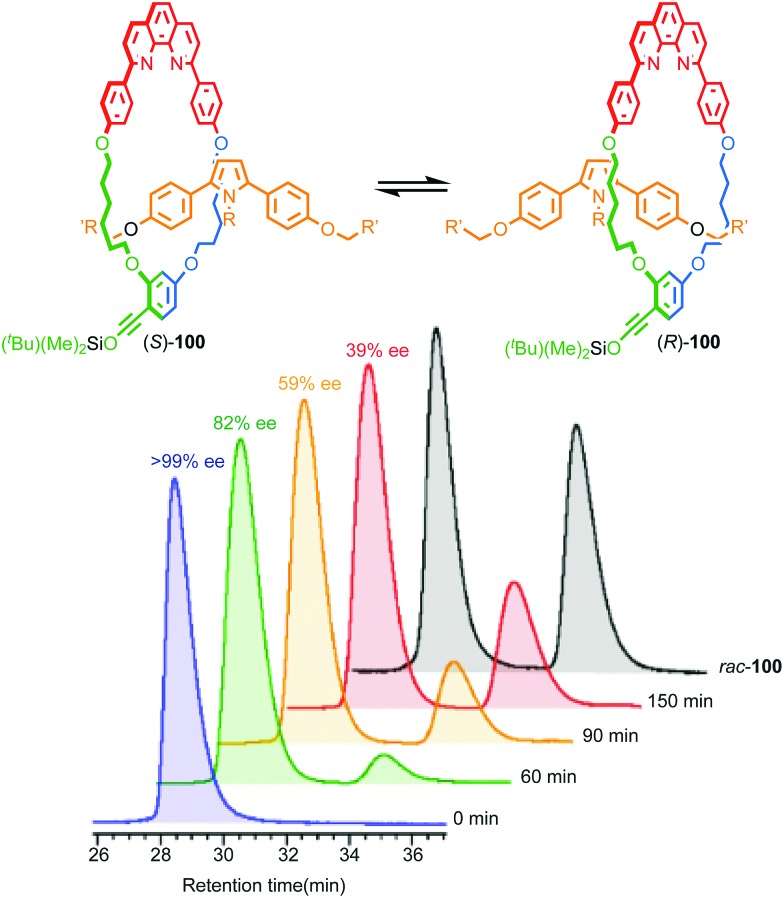
Fig. 49. Saito and co-workers co-conformationally mechanically planar chiral rotaxane 100 as a stereodynamic probe for ring shuttling. CSP-HPLC analysis of the racemisation of enantiopure 100 in (CHCl2)2 at 413 K. R = 4-C6H4(cyclohexyl). R′ = (CH2)5C(4-C6H4(4-C6H4(cyclohexyl)))3. Highest priority atoms in each component are highlighted in black. Reprinted from ref. 116. Copyright 2016 American Chemical Society.
Fig. 50
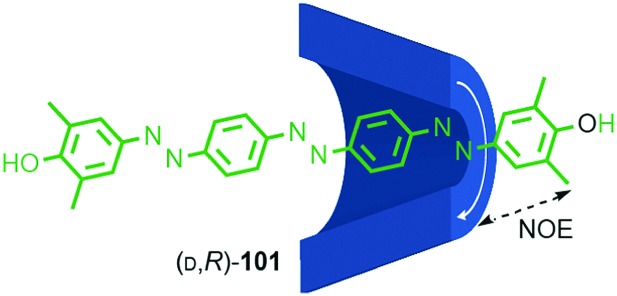
Fig. 50. Preferred co-conformation of Anderson's α-cyclodextrin [2]rotaxane (d,R)-101. Highest priority atoms in the axle component are highlighted in black. The orientation of the macrocycle is indicated by a white arrow.
Fig. 51
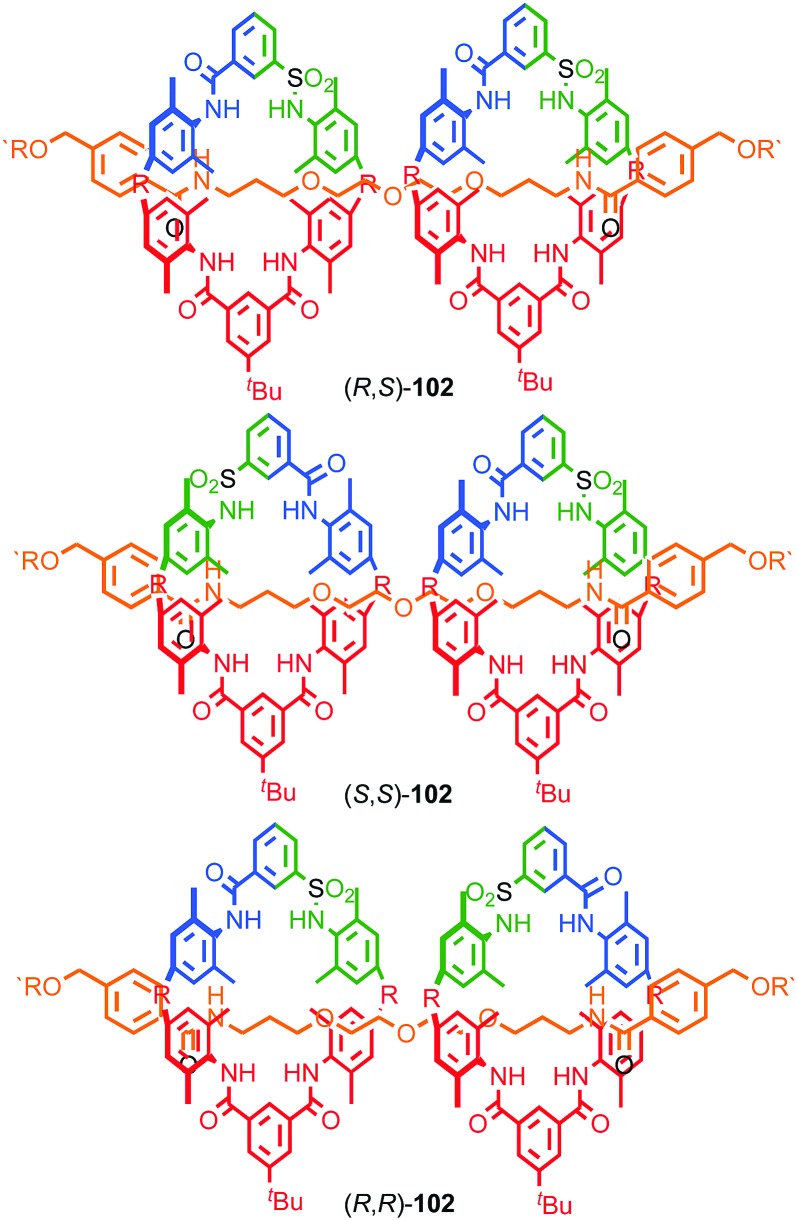
Fig. 51. Stereoisomers of Vögtle's co-conformationally mechanically planar chiral [3]rotaxane 102. R = 1,1-cyclohexyl, R′ = –C6H4–Tr. Highest priority atoms in each component are highlighted in black.
Fig. 52
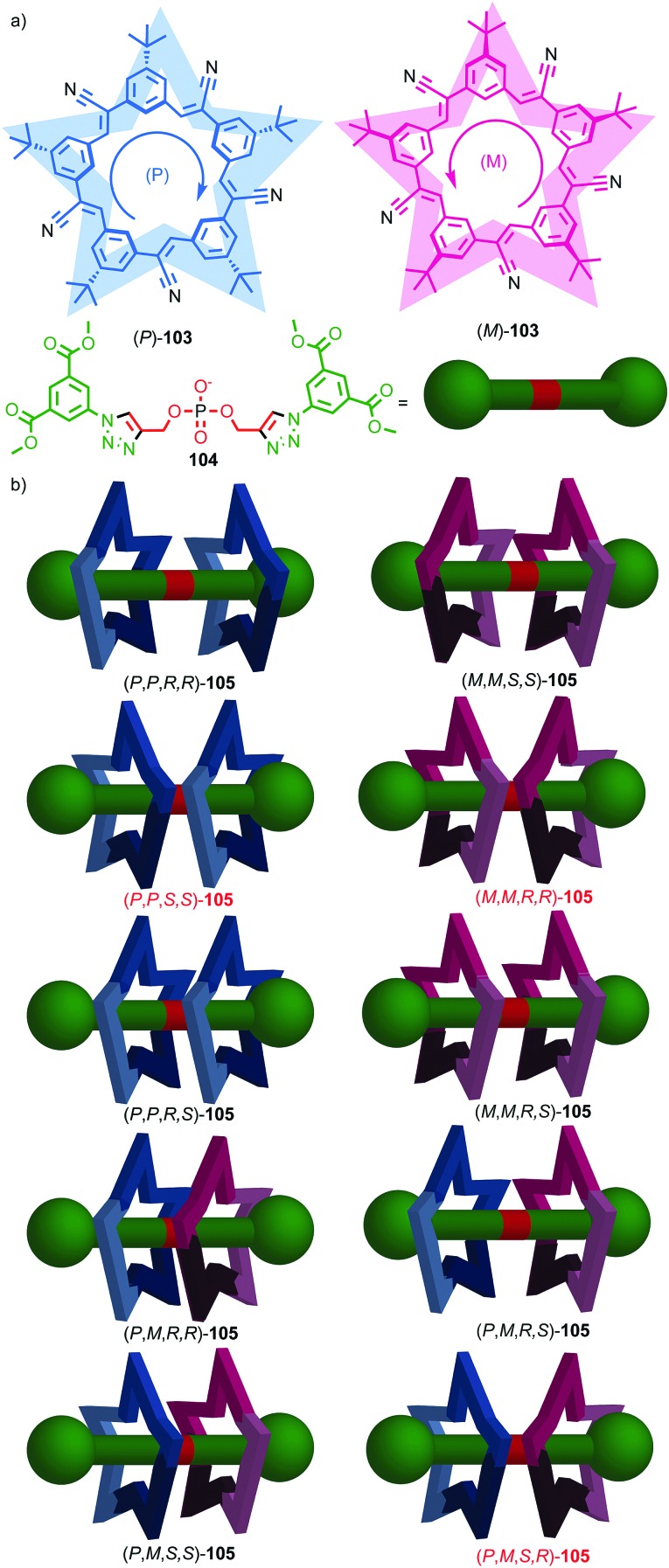
Fig. 52. (a) Flood's cyanostar macrocycle 103 and its enantiomeric P and M bowl conformations. (b) Schematic representation of the possible stereoisomers of [3]rotaxane 105 formed when 103 encircles phosphate axle 104. The observed (P,P,S,S), (M,M,R,R) and (P,M,S,R) stereoisomers are highlighted in red. Counter ions omitted for clarity.
Fig. 53
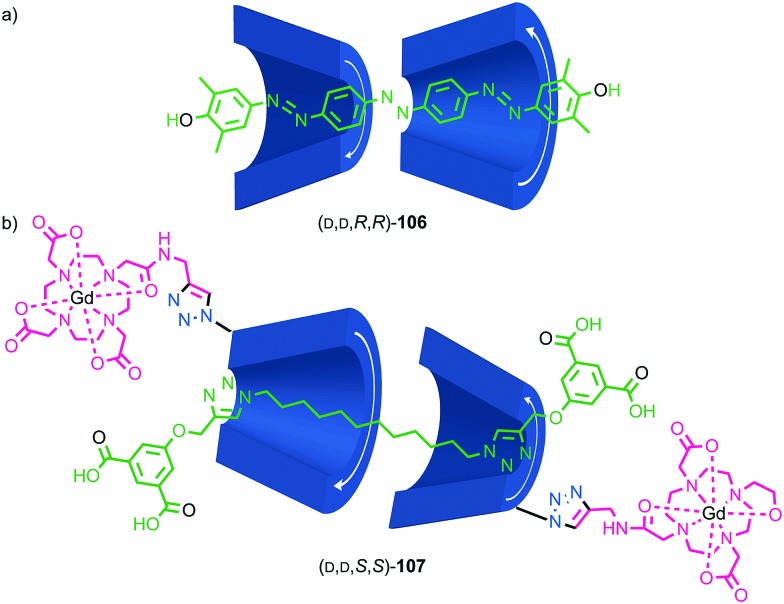
Fig. 53. (a) Anderson's cyclodextrin [3]rotaxane 106 that forms as the head to head (d,d,R,R) isomer (d refers to stereochemistry of all glucose units in each macrocycle). (b) Hasenknopf and Vives cyclodextrin [3]rotaxane 107 for MRI imaging that forms as the tail to tail (d,d,S,S) diastereomer (stereochemistry shown is for Gd as the highest priority atom in the macrocycle; d refers to stereochemistry of all glucose units in each macrocycle). Counter ions omitted for clarity. Highest priority atoms in the axle components are highlighted in black. The orientations of the cyclodextrin rings (in the case of 107, taking into account that Gd is the highest priority atom) are shown by a white arrow.
Fig. 54
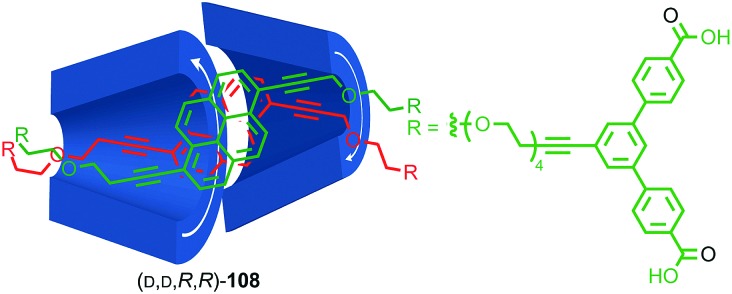
Fig. 54. Inouyes CPL active rotaxane (d,d,R,R)-108 (d refers to stereochemistry of all glucose units in each macrocycle). Highest priority atoms in the axle components are highlighted in black. Orientation of the cyclodextrin rings shown by a white arrow.
Fig. 55
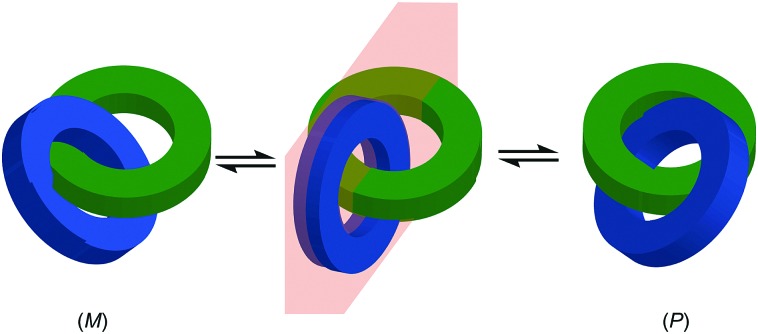
Fig. 55. Schematic representation of rocking in a [2]catenane, leading to enantiomeric helical co-conformations.
Fig. 56
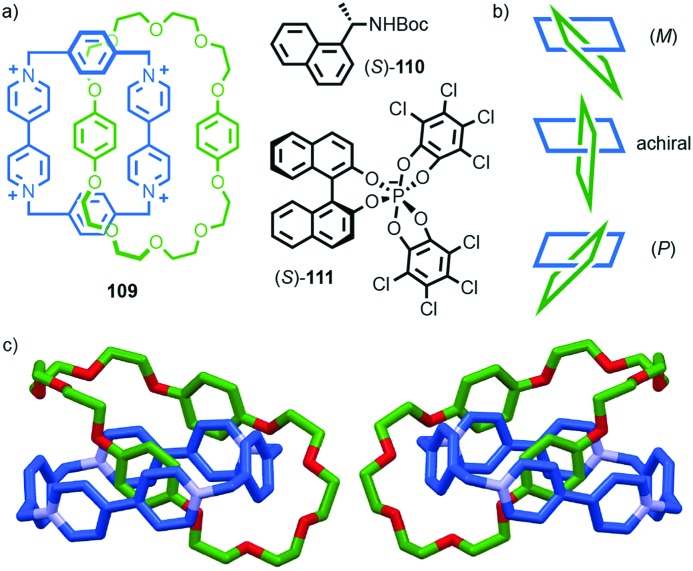
Fig. 56. Co-conformational mechanical helical chirality in catenane 109. Counter ions omitted for clarity.
Fig. 57
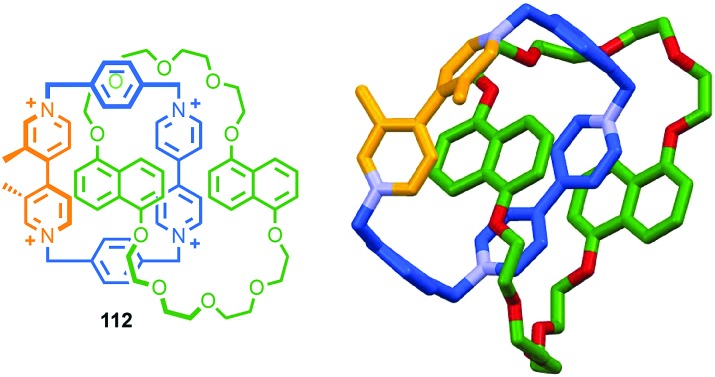
Fig. 57. The interplay between conformational and co-conformational stereogenic elements in catenane 112. Counter ions omitted for clarity.
Fig. 58
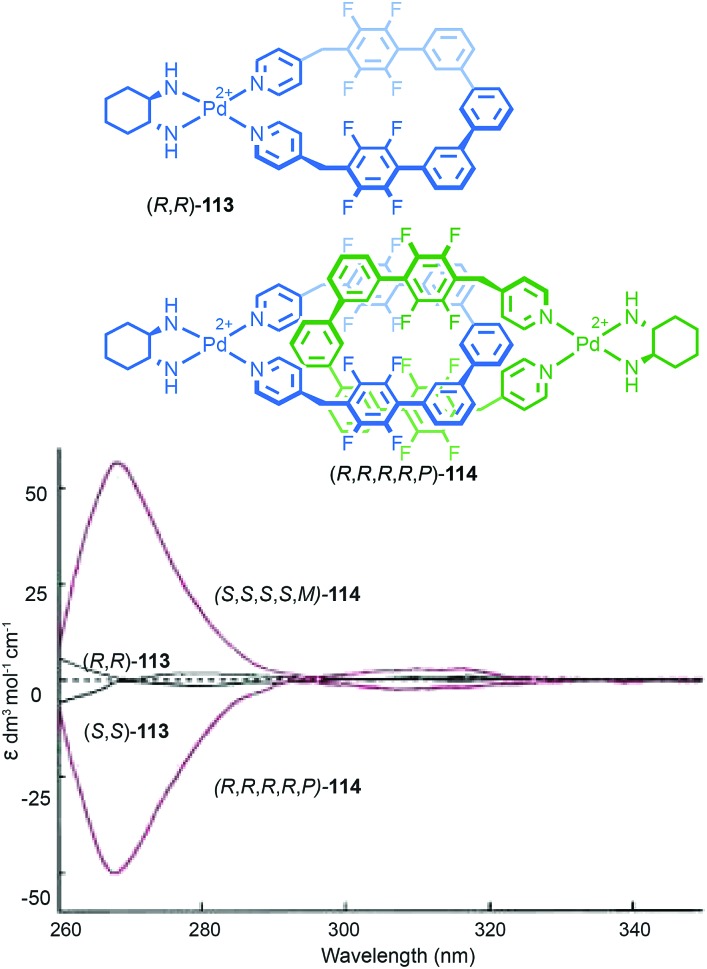
Fig. 58. Fujita's chiral catenane 114 and a comparison of the CD spectra of macrocycle 113 and catenane 114. Counter ions omitted for clarity. Reproduced with permission from ref. 129a. Copyright 2002 John Wiley and Sons.
Fig. 59
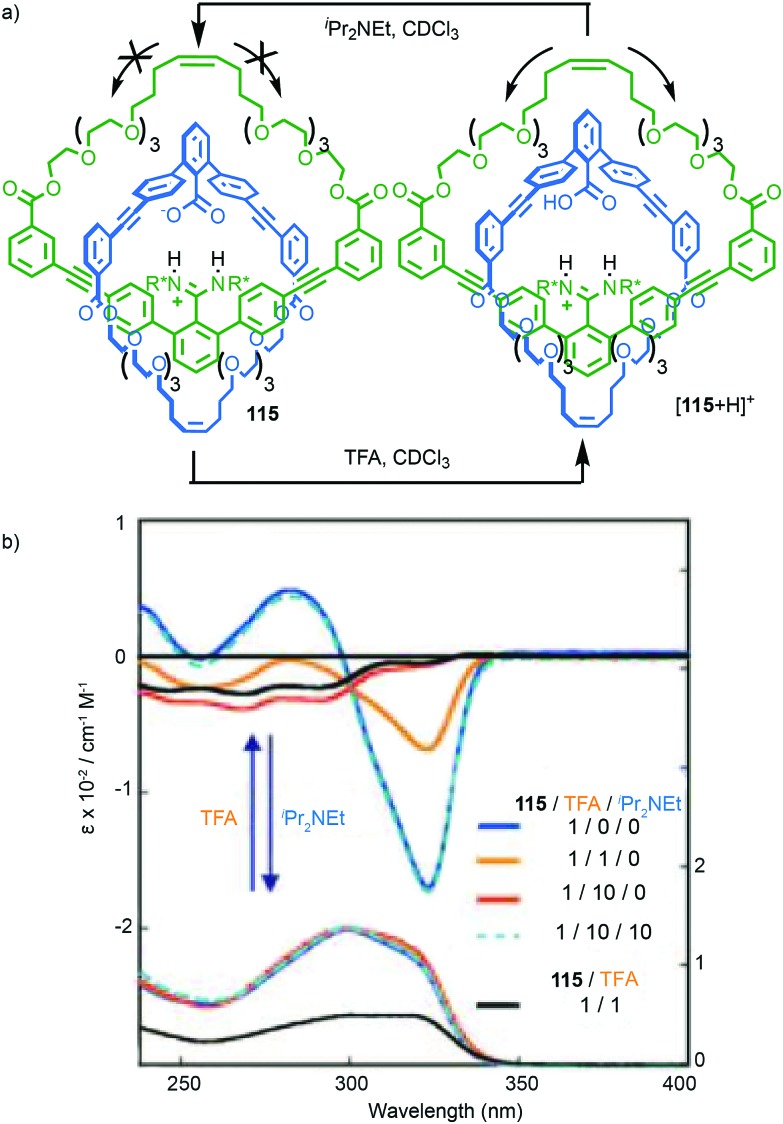
Fig. 59. (a) Furusho and Yashima's acid and ZnII responsive catenane. (b) CD and absorption spectra (CDCl3, 0.1 mm, ca. 20 °C) of the [2]catenane 115 before (blue) and after the addition of TFA 1 equiv. (orange), 10 equiv. (red), and further neutralization with 10 equiv. of iPr2NEt (dashed light blue). CD and absorption spectra of the TFA salt of 115 are also shown (black). Counter ions omitted for clarity. R* = (R)-CH(CH3)Ph. Reproduced with permission from ref. 130. Copyright 2010 John Wiley and Sons.
Fig. 60
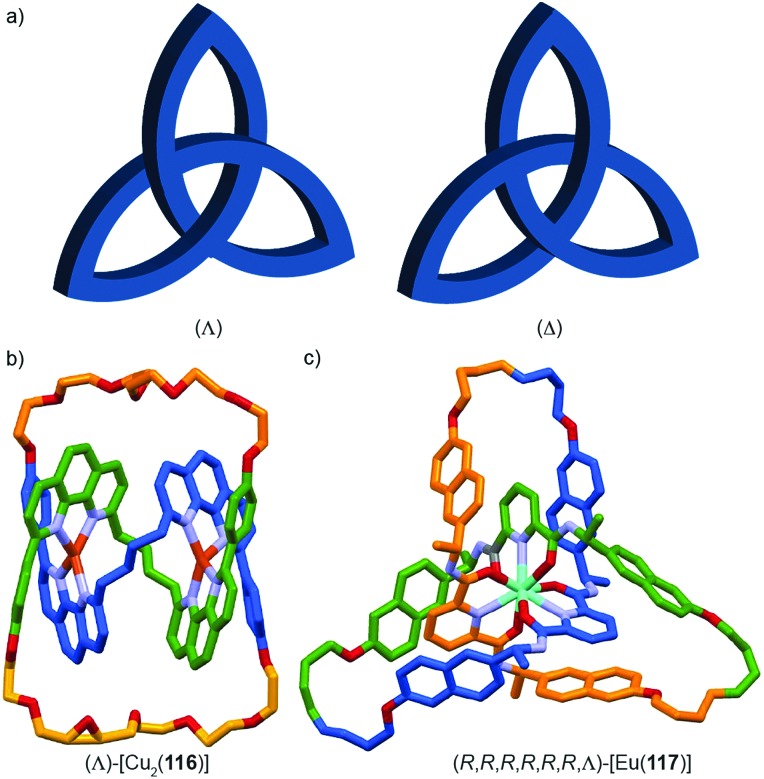
Fig. 60. (a) Schematic representation of both enantiomers of a trefoil knot; (b) Sauvage's molecular trefoil knot 116 synthesised as a racemate using a CuI-phenanthroline template; (c) Leigh's enantiopure trefoil knot 117 synthesised using a lanthanide templated approach. Counter ions omitted for clarity.
Fig. 61
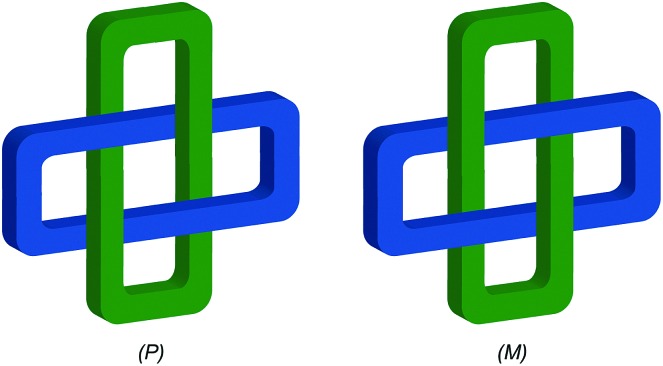
Fig. 61. Schematic representation of both enantiomers of a Solomon link and the assignment of the molecular asymmetry.
Fig. 62
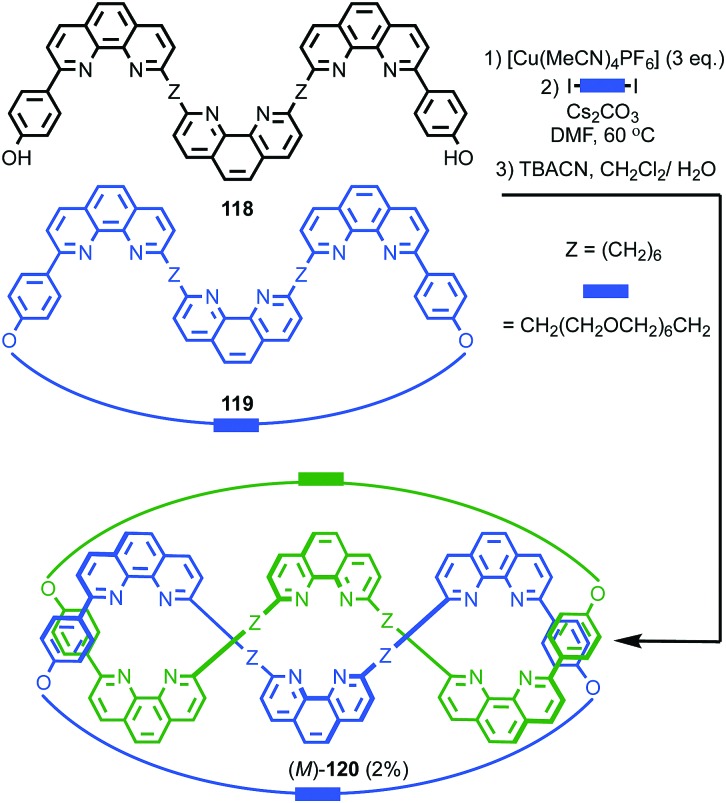
Fig. 62. Sauvage's synthesis of molecular Solomon link 120.
Fig. 63
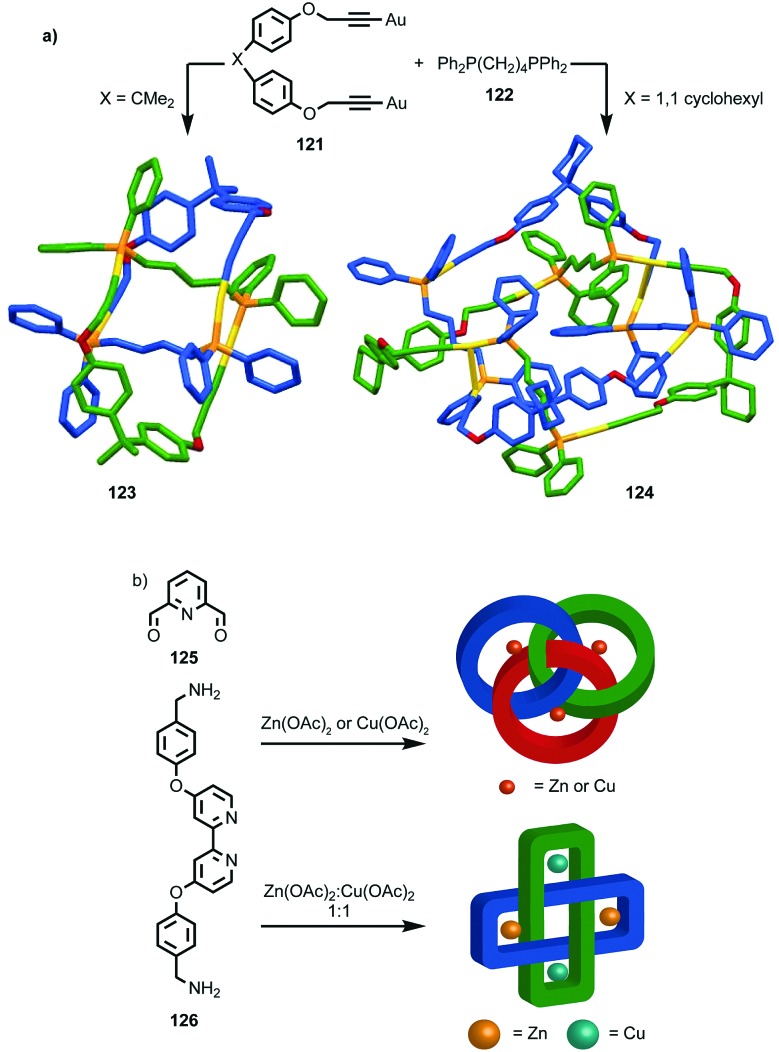
Fig. 63. (a) Variation in the outcome of the self-assembly process with small changes in the structure of ligands 121. (b) Stoddart's Solomon link synthesis in which choice of metal ions employed leads to formation of a Solomon or Borromean link from the same ligands. Counter ions omitted for clarity.
Fig. 64
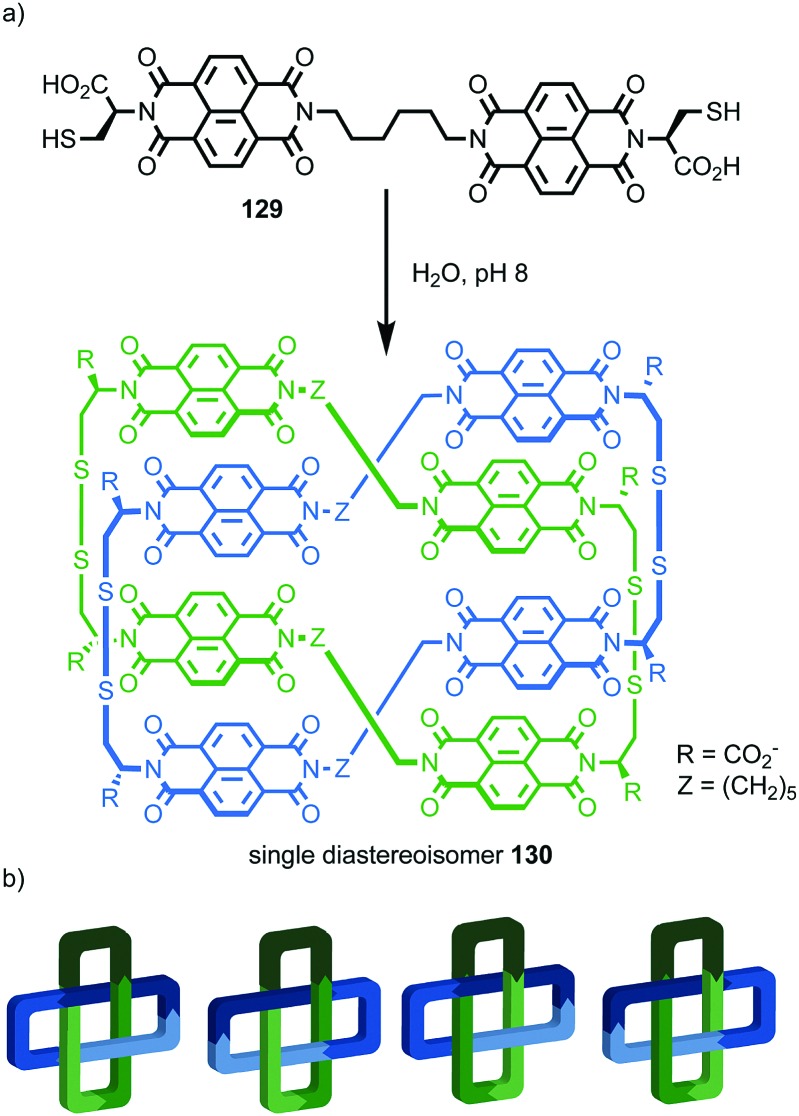
Fig. 64. (a) Sanders synthesis of an enantiopure Solomon link 130 using dynamic combinatorial chemistry. (b) Schematic representation of the conditional topological stereoisomers of one of the enantiomers of 130. Counter ions omitted for clarity.
Fig. 65
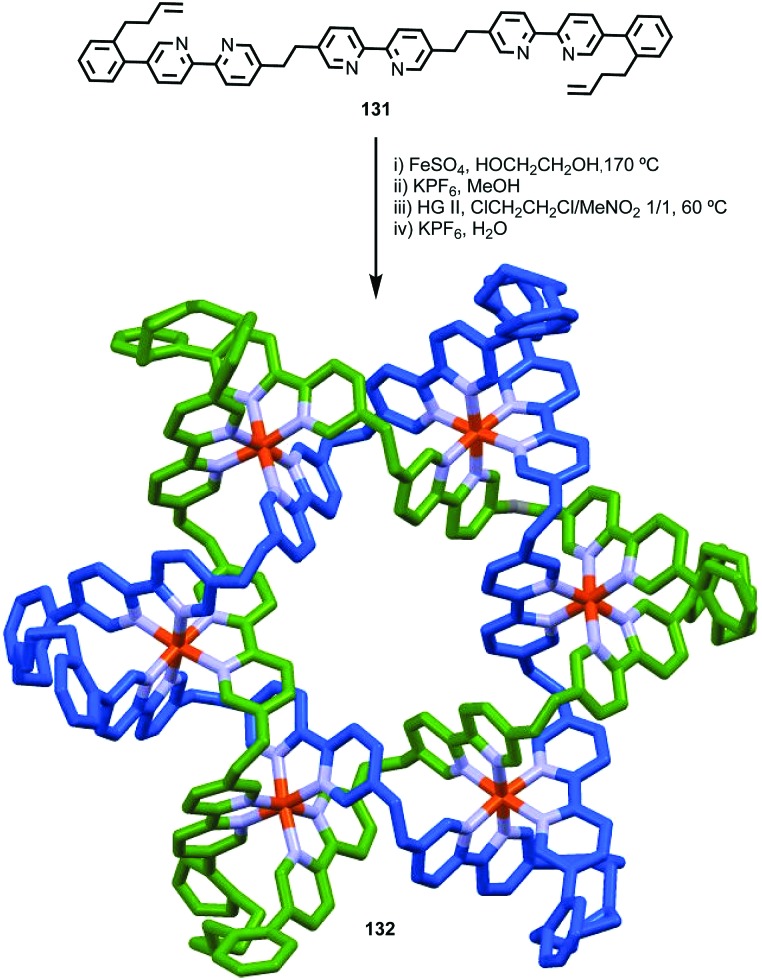
Fig. 65. Leigh's synthesis of racemic Star of David catenane 132 from building block 131 by assembly of a circular helicate and ring closing alkene metathesis. Counter ions omitted for clarity.
Fig. 66
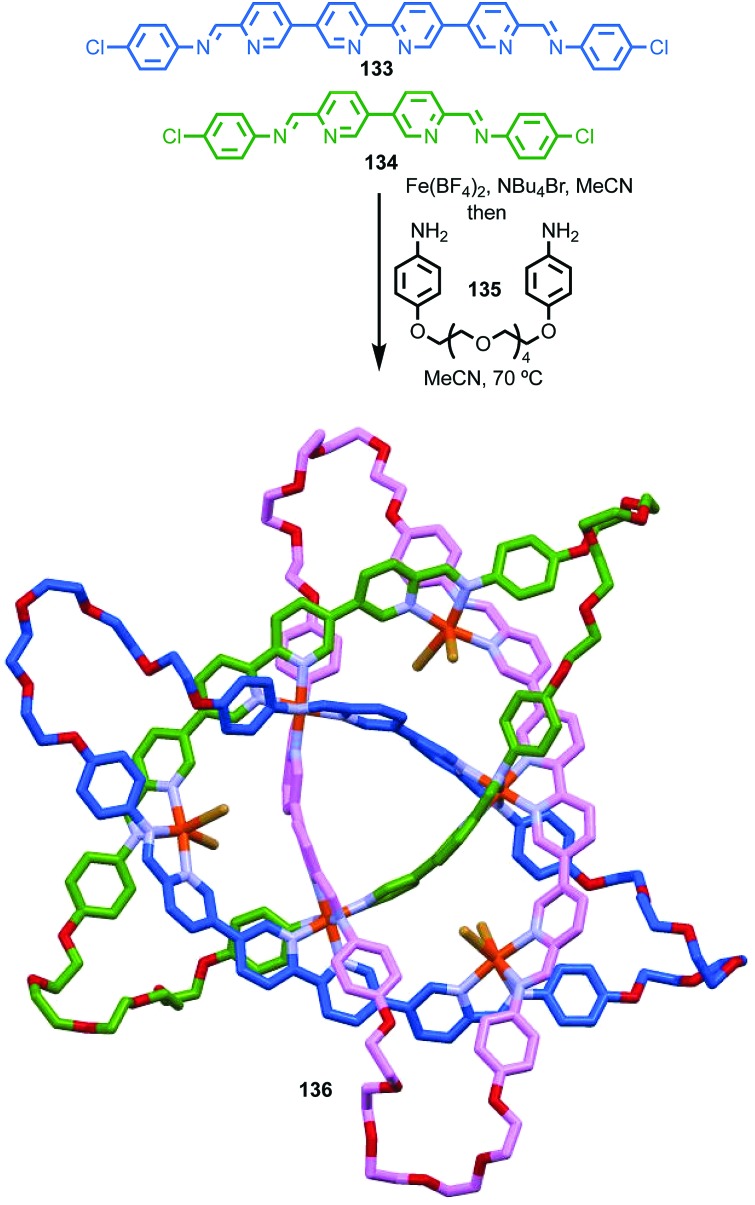
Fig. 66. Nitschke's stepwise approach to a triply interlocked [3]catenane 136 displaying unconditional topological chirality.
Fig. 67
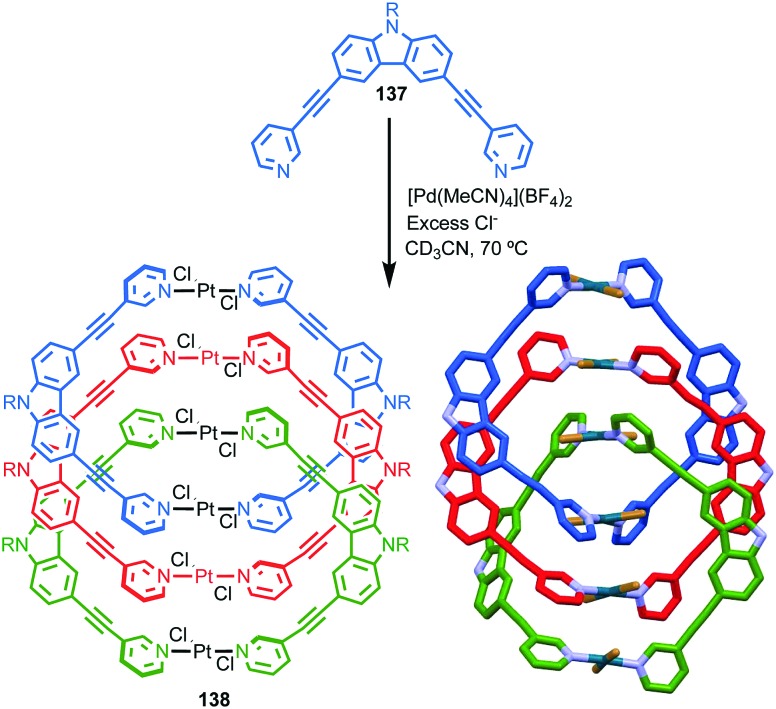
Fig. 67. Clever's synthesis of a triply interlocked [3]catenane 138. R = 1-hexyl. Hexyl group omitted for clarity.
Fig. 68
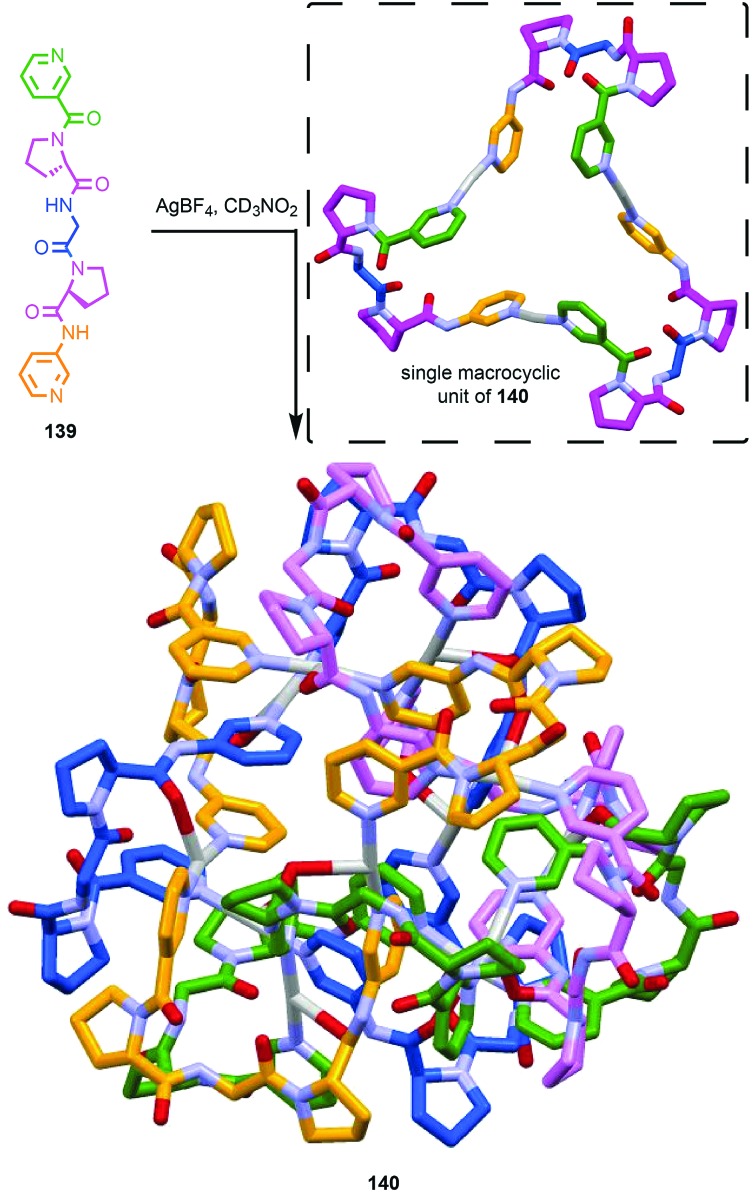
Fig. 68. Fujita's stereoselective synthesis of quadruply interlocked [4]catenane 140 from chiral building block 139. Counter ions omitted for clarity.
Fig. 69
Fig. 69. Examples of co-conformational covalent (a) planar chiral and (b) axially chiral stereogenic elements.
Fig. 70
Fig. 70. Examples of co-conformationally covalently (a) planar chiral and (b) axially chiral stereogenic elements. Counter ions omitted for clarity.
Fig. 71
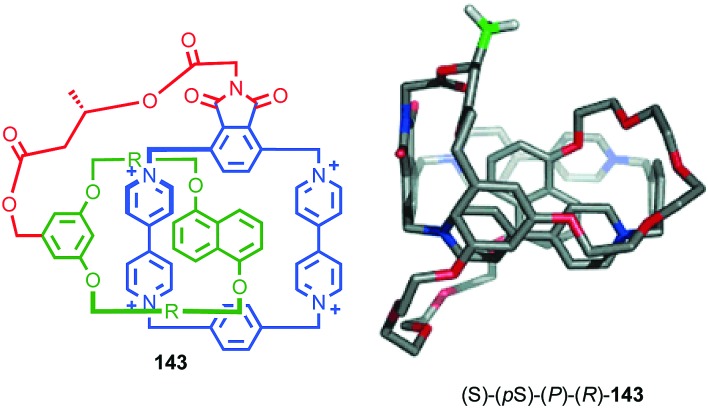
Fig. 71. Stoddart's pretzelane 143 that displays bias between enantiomeric (co)conformations due to a single fixed covalent stereocentre and its modelled structure, showing the predicted preferred (co)conformation. The assigned stereochemistry is listed in the order covalent point, conformational planar, co-conformational covalent planar, co-conformational mechanical helical. R = (CH2OCH2)3. Reproduced from ref. 154 from The Royal Society of Chemistry.
Fig. 72
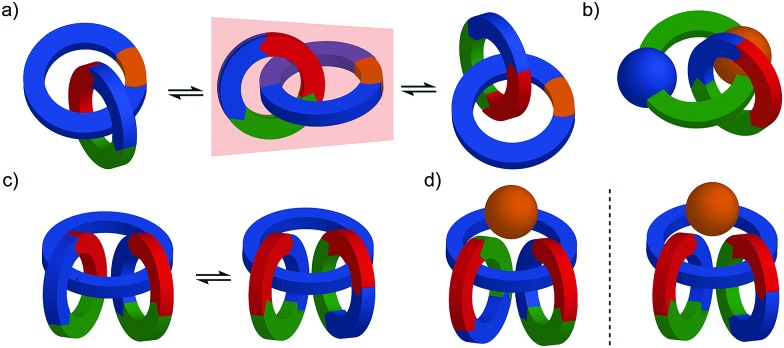
Fig. 72. Co-conformational topological chirality. (a) Pirouetting between enantiomers in a [2]catenane. (b) A co-conformationally “topologically” chiral [2]catenane locked in a single enantiomeric co-conformation. (c) Exchange between enantiomers in the anti diastereomer of [3]catenane containing oriented peripheral rings. (d) A co-conformationally “topologically” chiral [3]catenane locked in a single enantiomeric co-conformation.
Fig. 73
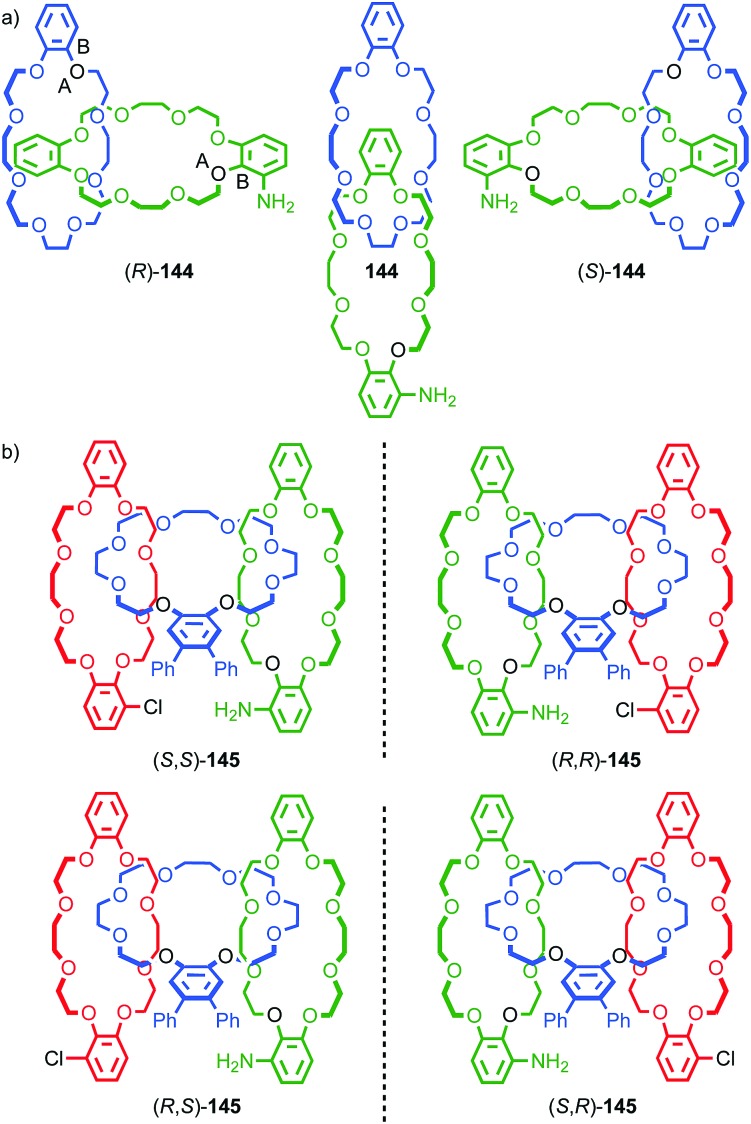
Fig. 73. Hypothetical examples of co-conformationally “topologically” chiral catenanes and their stereoisomers. (a) Dynamic co-conformationally “topologically” chiral catenane 144 and its co-conformations. (b) Locked co-conformationally “topologically” chiral catenane 145 and its enantiomers. The highest priority atom(s) in each component are highlighted in black. The stereochemical labels of 145 are ordered according to the priority of the macrocycles (i.e. the red ring stereodescriptor is first in all cases).
Fig. 74
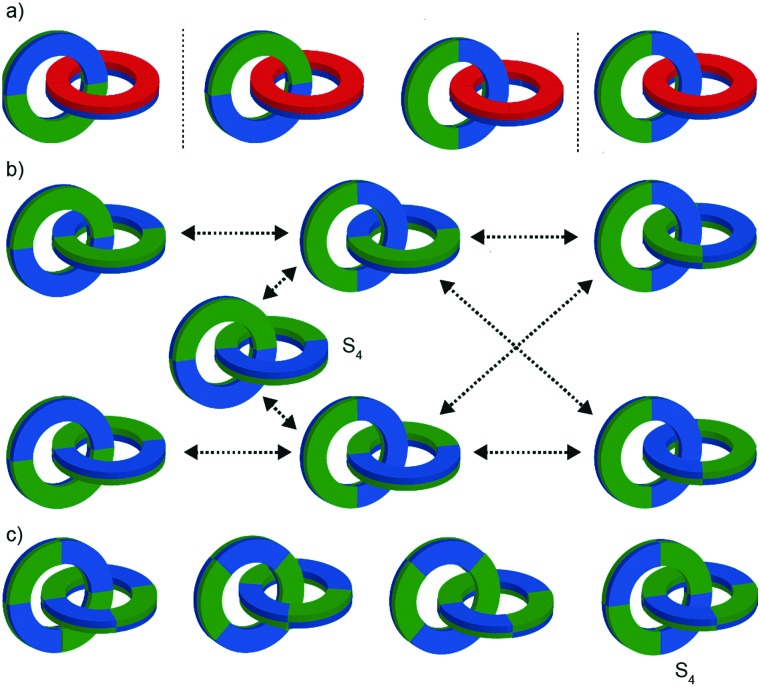
Fig. 74. Schematic representations of co-conformational mechanical axial chirality. (a) Stereoisomers of a [2]catenane composed of one C2h and one C∞v macrocycle. (b) The network of stereoisomers formed by a [2]catenane based on two C2h macrocycles (each arrow corresponds to a 90° rotation of one ring; vertical pairs of structures are related as enantiomers; achiral diastereomer is indicated as S4 symmetry). (c) The four diastereomers of a [2]catenane based on two D2d macrocycles (enantiomers not shown; achiral diastereomer is indicated as S4 symmetry).
Fig. 75
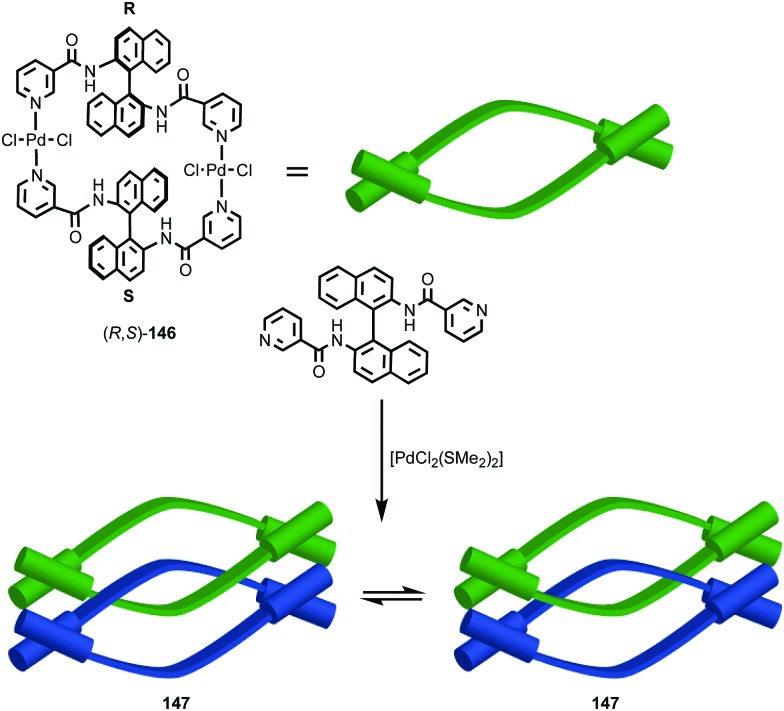
Fig. 75. Puddephat's mechanically axial chiral catenanes 147.
Fig. 76
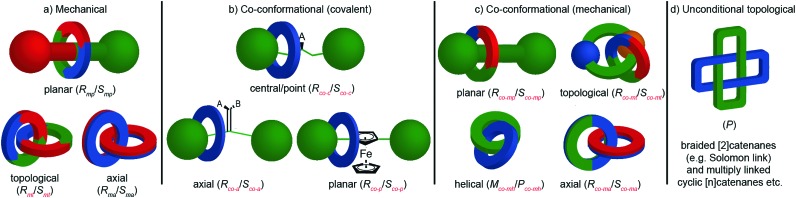
Fig. 76. A summary of stereogenic units that arise from the mechanical bond categorised by (a) conditional, (b) co-conformational covalent, (c) co-conformational mechanical and (d) unconditional stereochemistry. Stereodescriptors and suffixes used in stereochemical labels are shown (proposed stereochemical suffixes in red).
Fig. 77
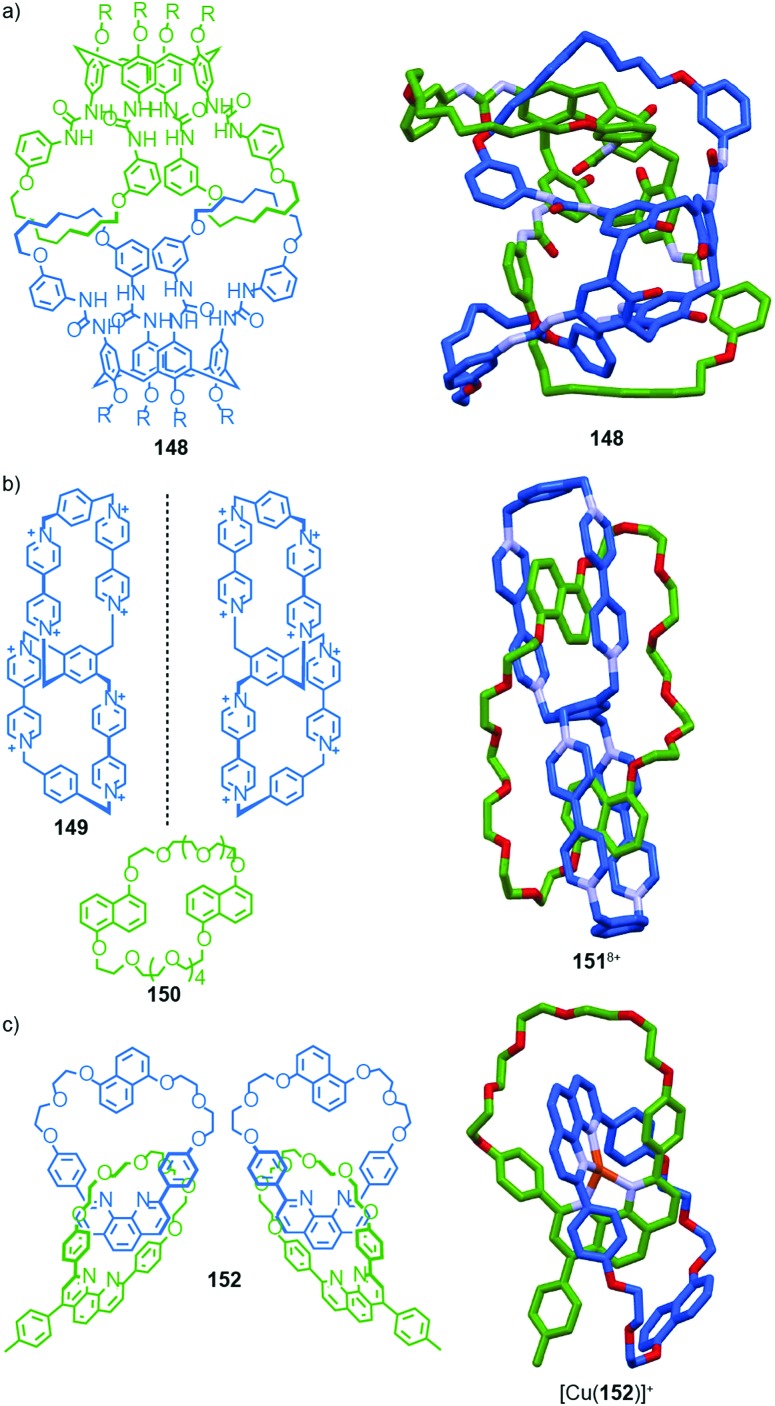
Fig. 77. (a) Böhmer's chiral doubly interlocked [2]catenane 148 (R = Et) and its solid state structure (Et omitted for clarity). (b) Topological stereoisomers of Stoddart's chiral handcuff catenane 150. (c) Sauvage's topological rubber glove catenane 151.
None
Steve (middle), Ellen (left) and Florian (right)

References

    1. A Scopus search for all articles published in J. Am. Chem. Soc., Angew. Chem., Int. Ed., Chem. Sci., Chem. Commun. or Chem. – Eur. J. in 2016 returns 11 638 hits. The same search with “*chiral* OR enantio*” in the title, abstract or keywords returns 1113 hts.
    1. Pasteur L. Ann. Chim. Phys. Sér. 3. 1848;24:442.
    2. Gal J. Nat. Chem. 2017;9:604. - PubMed
    1. Van‘t Hoff J. H. Arch. Neérl. Sci. Exactes. Nat. 1874;9:1.
    2. Le Bel J. A. Bull. Soc. Chim. Fr. 1874;22:337.
    1. Eliel E., Wilen S. and Mander L., Stereochemistry of Organic Compounds, John Wiley and Sons, Inc., New York, 1994.
    1. Cahn R. S., Ingold C., Prelog V. Angew. Chem., Int. Ed. Engl. 1966;5:385.

LinkOut - more resources