


Antitumor-specific T-cell responses induced by oncolytic adenovirus ONCOS-102 (AdV5/3-D24-GM-CSF) in peritoneal mesothelioma mouse model
- PMID: 29797583
- PMCID: PMC6120454
- DOI: 10.1002/jmv.25229
Antitumor-specific T-cell responses induced by oncolytic adenovirus ONCOS-102 (AdV5/3-D24-GM-CSF) in peritoneal mesothelioma mouse model
Abstract
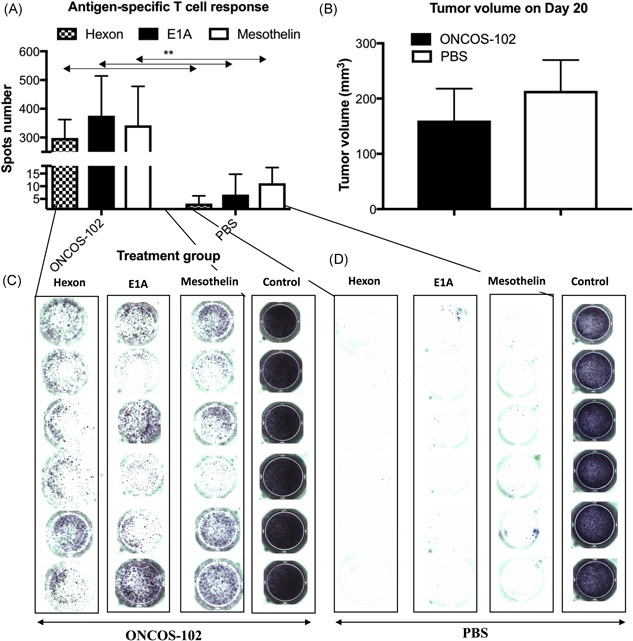
Oncolytic adenoviral immunotherapy activates the innate immune system with subsequent induction of adaptive tumor-specific immune responses to fight cancer. Hence, oncolytic viruses do not only eradicate cancer cells by direct lysis, but also generate antitumor immune response, allowing for long-lasting cancer control and tumor reduction. Their therapeutic effect can be further enhanced by arming the oncolytic adenovirus with costimulatory transgenes and/or coadministration with other antitumor therapies. ONCOS-102 has already been found to be well tolerated and efficacious against some types of treatment-refractory tumors, including mesothelin-positive ovarian cancer (NCT01598129). It induced local and systemic CD8+ T-cell immunity and upregulated programmed death ligand 1. These results strongly advocate the use of ONCOS-102 in combination with other therapeutic strategies in advanced and refractory tumors, especially those expressing the mesothelin antigen. The in vivo work presented herein describes the ability of the oncolytic adenovirus ONCOS-102 to induce mesothelin-specific T-cells after the administration of the virus in bagg albino (BALB/c) mice with mesothelin-positive tumors. We also demonstrate the effectiveness of the interferon-γ the enzyme-linked immunospot (ELISPOT) assay to detect the induction of T-cells recognizing mesothelin, hexon, and E1A antigens in ONCOS-102-treated mesothelioma-bearing BALB/c mice. Thus, the ELISPOT assay could be useful to monitor the progress of therapy with ONCOS-102.
Keywords: ONCOS-102; granulocyte-macrophage colony-stimulating factor (GM-CSF); mesothelin; mesothelioma; oncolytic adenovirus.
© 2018 The Authors. Journal of Medical Virology Published by Wiley Periodicals, Inc.
Figures
References
Publication types
MeSH terms
Substances
Grants and funding
LinkOut - more resources
Full Text Sources
Other Literature Sources
Medical
Research Materials
