


What does the fox say? Monitoring antimicrobial resistance in the environment using wild red foxes as an indicator
- PMID: 29799852
- PMCID: PMC5969755
- DOI: 10.1371/journal.pone.0198019
What does the fox say? Monitoring antimicrobial resistance in the environment using wild red foxes as an indicator
Abstract
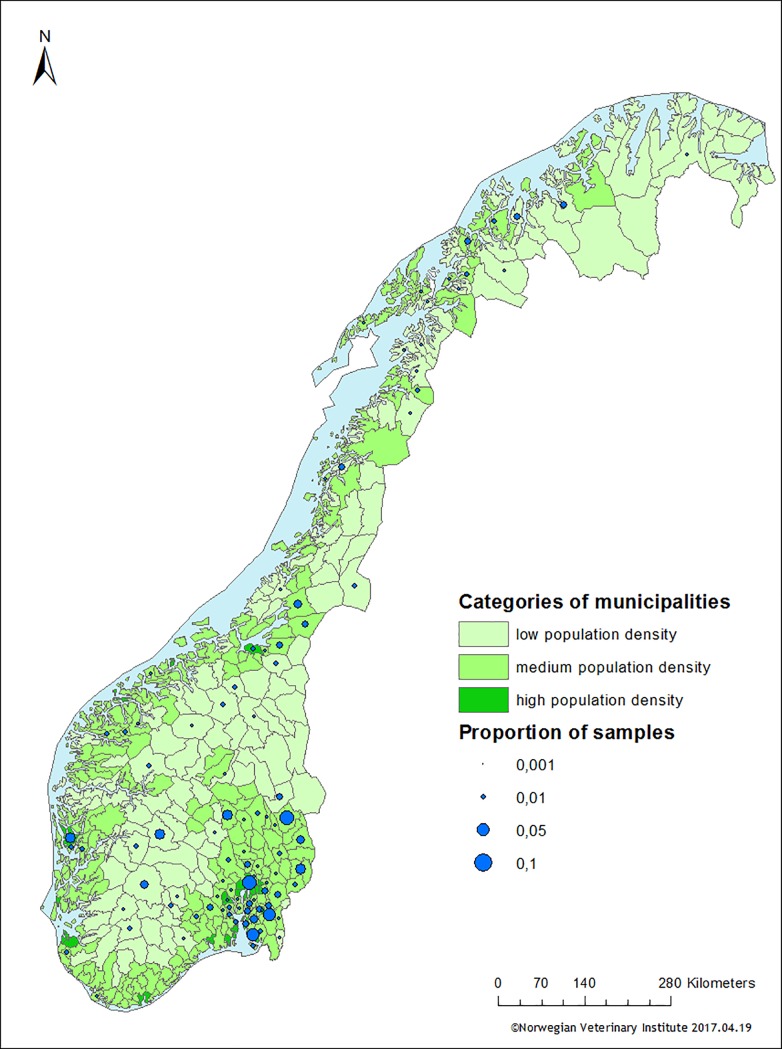
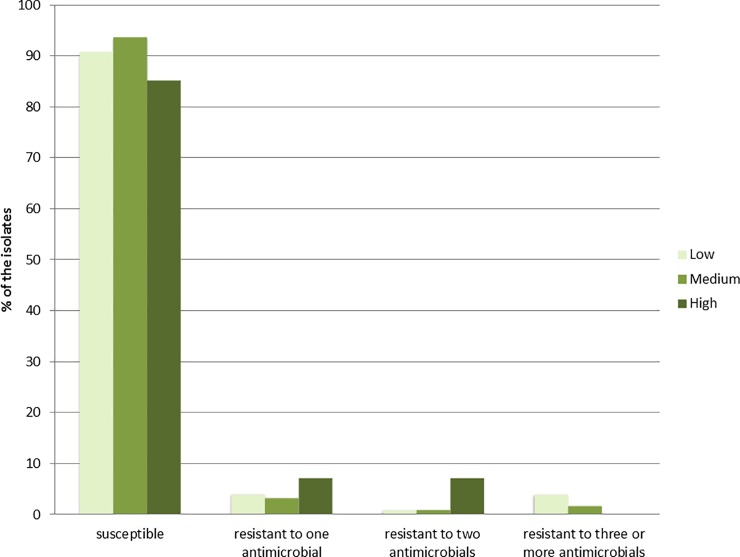
The objective of this study was to estimate and compare the occurrence of AMR in wild red foxes in relation to human population densities. Samples from wild red foxes (n = 528) included in the Norwegian monitoring programme on antimicrobial resistance in bacteria from food, feed and animals were included. All samples were divided into three different groups based on population density in the municipality where the foxes were hunted. Of the 528 samples included, 108 (20.5%), 328 (62.1%) and 92 (17.4%) originated from areas with low, medium and high population density, respectively. A single faecal swab was collected from each fox. All samples were plated out on a selective medium for Enterobacteriaceae for culturing followed by inclusion and susceptibility testing of one randomly selected Escherichia coli to assess the overall occurrence of AMR in the Gram-negative bacterial population. Furthermore, the samples were subjected to selective screening for detection of E. coli displaying resistance towards extended-spectrum cephalosporins and fluoroquinolones. In addition, a subset of samples (n = 387) were subjected to selective culturing to detect E. coli resistant to carbapenems and colistin, and enterococci resistant to vancomycin. Of these, 98 (25.3%), 200 (51.7%) and 89 (23.0%) originated from areas with low, medium and high population density, respectively. Overall, the occurrence of AMR in indicator E. coli from wild red foxes originating from areas with different human population densities in Norway was low to moderate (8.8%). The total occurrence of AMR was significantly higher; χ2 (1,N = 336) = 6.53, p = 0.01 in areas with high population density compared to areas with medium population density. Similarly, the occurrence of fluoroquinolone resistant E. coli isolated using selective detection methods was low in areas with low population density and more common in areas with medium or high population density. In conclusion, we found indications that occurrence of AMR in wild red foxes in Norway is associated with human population density. Foxes living in urban areas are more likely to be exposed to AMR bacteria and resistance drivers from food waste, garbage, sewage, waste water and consumption of contaminated prey compared to foxes living in remote areas. The homerange of red fox has been shown to be limited thereby the red fox constitutes a good sentinel for monitoring antimicrobial resistance in the environment. Continuous monitoring on the occurrence of AMR in different wild species, ecological niches and geographical areas can facilitate an increased understanding of the environmental burden of AMR in the environment. Such information is needed to further assess the impact for humans, and enables implementation of possible control measures for AMR in humans, animals and the environment in a true "One Health" approach.
Conflict of interest statement
The authors have declared that no competing interests exist.
Figures
References
-
- Dziekan G, Jauregui IL, Mathai E (2012) The way forward: political commitment to enable options for action In: WHO, editor. The evolving threat of antimicrobial resistance: Options for action. Geneva, Switzerland: World Health Organization; pp. 91–94. Available from: http://whqlibdoc.who.int/publications/2012/9789241503181_eng.pdf.
-
- Guardabassi L, Kruse H (2008) Principles of prudent and rational use of antimicrobials in animals In: Guardabassi L, Jensen LB, Kruse H, editors. Guide to antimicrobial use in animals. Oxford: Blackwell Publishing; Ltd. pp. 1–12.
-
- Schwarz S, Kehrenberg C, Walsh TR. Use of antimicrobial agents in veterinary medicine and food animal production. Int J Antimicrob Agents. 2001;17:431–437. - PubMed
-
- Prescott JF. The resistance tsunami, antimicrobial stewardship, and the golden age of microbiology. Vet Microbiol. 2014;171:273–278. doi: 10.1016/j.vetmic.2014.02.035 - DOI - PubMed
-
- Robinson TP, Bu DP, Carrique-Mas J, Fevre EM, Gilbert M, Grace D, et al. Antibiotic resistance is the quintessential One Health issue. Trans R Soc Trop Med Hyg. 2016;110:377–380. doi: 10.1093/trstmh/trw048 - DOI - PMC - PubMed
Publication types
MeSH terms
Substances
LinkOut - more resources
Full Text Sources
Other Literature Sources
Medical
