


Norovirus Transmission Dynamics in a Pediatric Hospital Using Full Genome Sequences
- PMID: 29800111
- PMCID: PMC6321856
- DOI: 10.1093/cid/ciy438
Norovirus Transmission Dynamics in a Pediatric Hospital Using Full Genome Sequences
Abstract
Background: Norovirus is a leading cause of worldwide and nosocomial gastroenteritis. The study aim was to assess the utility of molecular epidemiology using full genome sequences compared to routine infection prevention and control (IPC) investigations.
Methods: Norovirus genomes were generated from new episodes of norovirus at a pediatric tertiary referral hospital over a 19-month period (n = 182). Phylogeny identified clusters of related sequences that were verified using epidemiological and clinical data.
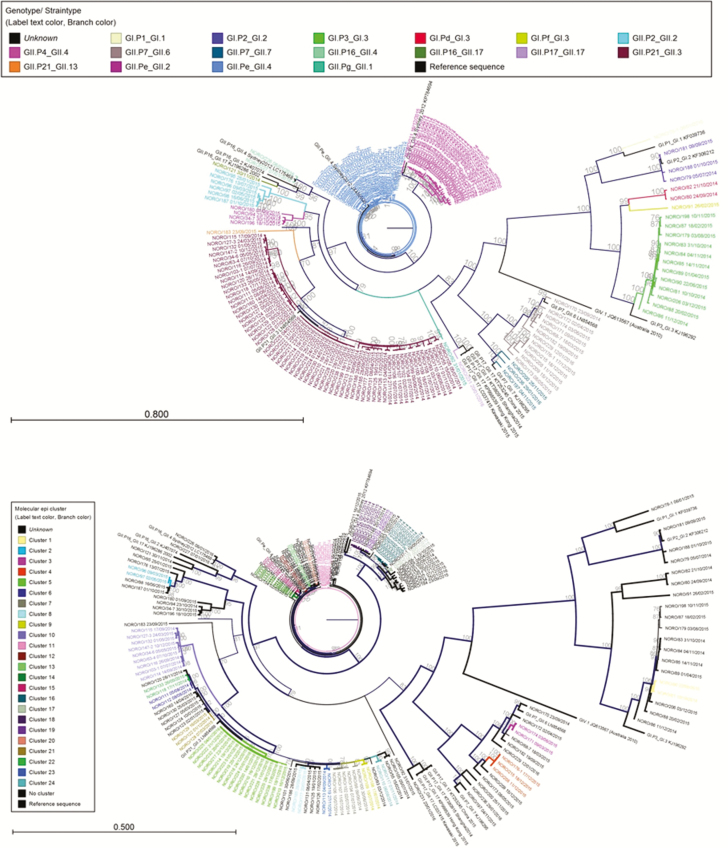
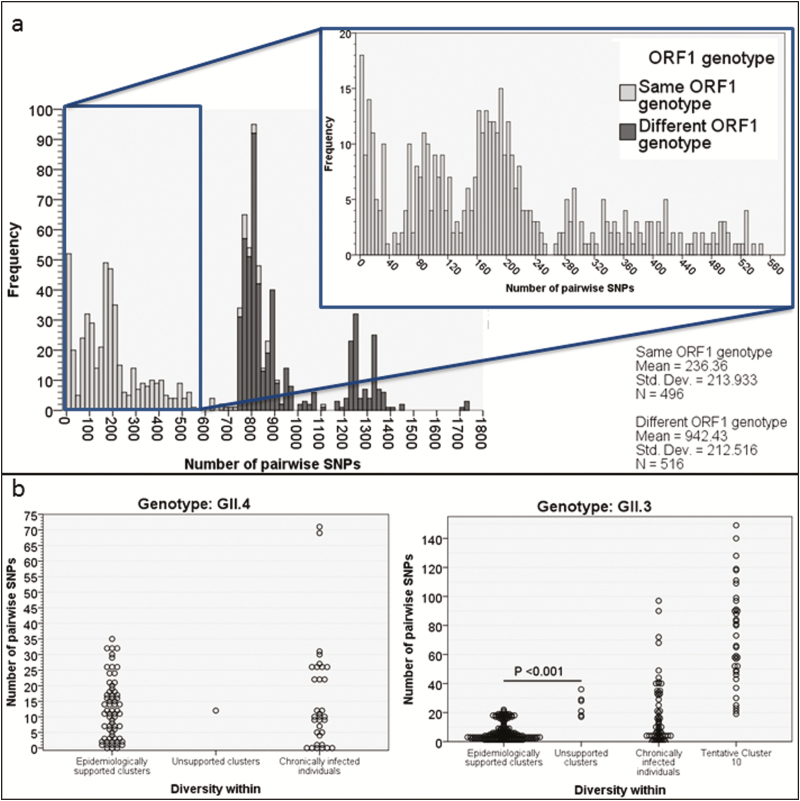
Results: Twenty-four clusters of related norovirus sequences ("sequence clusters") were observed, including 8 previously identified by IPC investigations ("IPC outbreaks"). Seventeen sequence clusters (involving 77/182 patients) were corroborated by epidemiological data ("epidemiologically supported clusters"), suggesting transmission between patients. Linked infections were identified among 44 patients who were missed by IPC investigations. Thirty-three percent of norovirus sequences were linked, suggesting nosocomial transmission; 24% of patients had nosocomial infections from an unknown source; and 43% were norovirus positive on admission.
Conclusions: We show there are frequent introductions of multiple norovirus strains with extensive onward nosocomial transmission of norovirus in a pediatric hospital with a high proportion of immunosuppressed patients nursed in isolation. Phylogenetic analysis using full genome sequences is more sensitive than classic IPC investigations for identifying linked cases and should be considered when investigating norovirus nosocomial transmission. Sampling of staff, visitors, and the environment may be required for complete understanding of infection sources and transmission routes in patients with nosocomial infections not linked to other patients and among patients with phylogenetically linked cases but no evidence of direct contact.
Figures
References
Publication types
MeSH terms
Grants and funding
LinkOut - more resources
Full Text Sources
Other Literature Sources
Medical
