


Time-lapse systems for embryo incubation and assessment in assisted reproduction
- PMID: 29800485
- PMCID: PMC6494546
- DOI: 10.1002/14651858.CD011320.pub3
Time-lapse systems for embryo incubation and assessment in assisted reproduction
Update in
-
Time-lapse systems for embryo incubation and assessment in assisted reproduction.Cochrane Database Syst Rev. 2019 May 29;5(5):CD011320. doi: 10.1002/14651858.CD011320.pub4. Cochrane Database Syst Rev. 2019. PMID: 31140578 Free PMC article.
Abstract
Background: Embryo incubation and assessment is a vital step in assisted reproductive technology (ART). Traditionally, embryo assessment has been achieved by removing embryos from a conventional incubator daily for quality assessment by an embryologist, under a light microscope. Over recent years time-lapse systems have been developed which can take digital images of embryos at frequent time intervals. This allows embryologists, with or without the assistance of embryo selection software, to assess the quality of the embryos without physically removing them from the incubator.The potential advantages of a time-lapse system (TLS) include the ability to maintain a stable culture environment, therefore limiting the exposure of embryos to changes in gas composition, temperature and movement. A TLS has the potential advantage of improving embryo selection for ART treatment by utilising additional information gained through continuously monitoring embryo development. Use of a TLS often adds significant extra cost onto an in vitro fertilisation (IVF) cycle.
Objectives: To determine the effect of a TLS compared to conventional embryo incubation and assessment on clinical outcomes in couples undergoing ART.
Search methods: We used standard methodology recommended by Cochrane. We searched the Cochrane Gynaecology and Fertility (CGF) Group trials register, CENTRAL, MEDLINE, Embase, CINAHL and two trials registers on 2 August 2017.
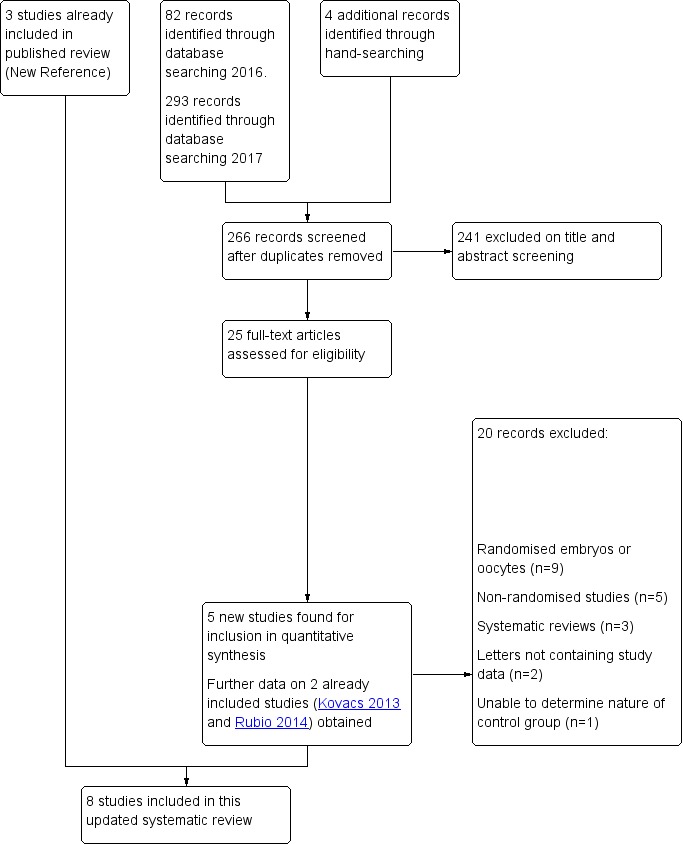
Selection criteria: We included randomised controlled trials (RCTs) in the following comparisons: comparing a TLS, with or without embryo selection software, versus conventional incubation with morphological assessment; and TLS with embryo selection software versus TLS without embryo selection software among couples undergoing ART.
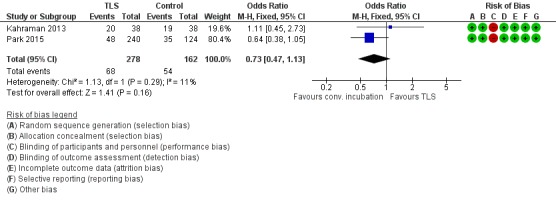
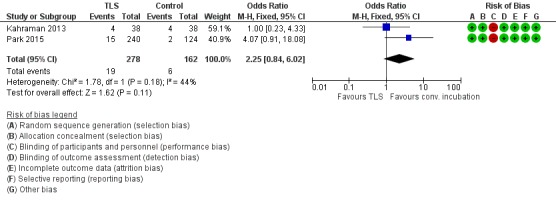
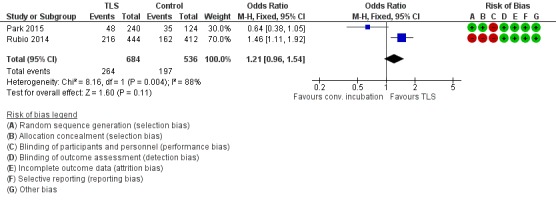
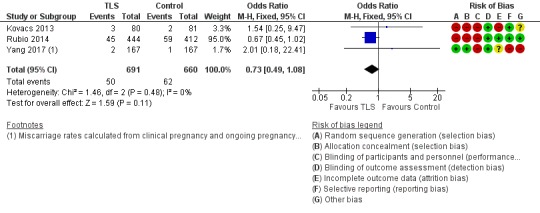
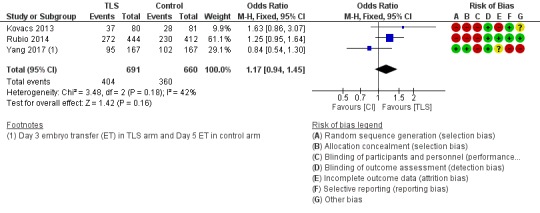
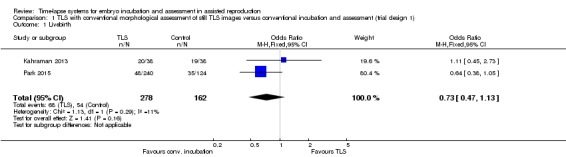
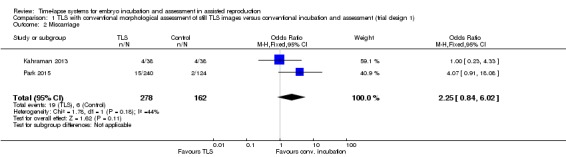
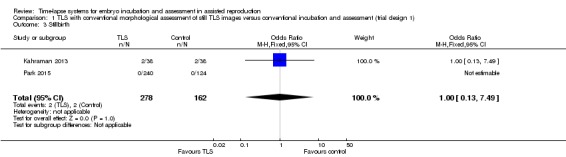
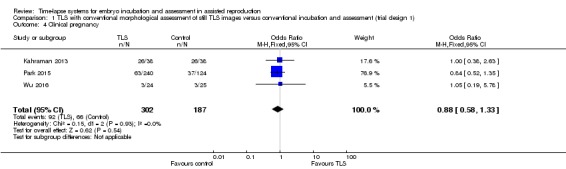
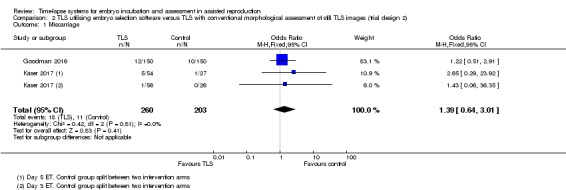
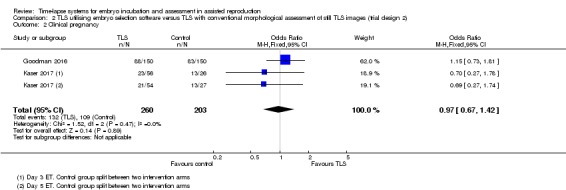
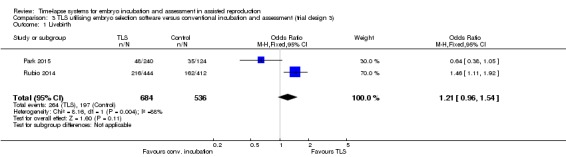
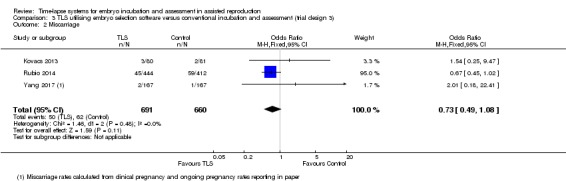
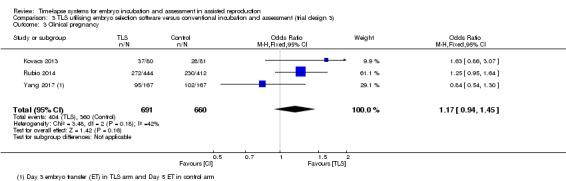
Data collection and analysis: We used standard methodological procedures recommended by Cochrane. The primary review outcomes were live birth, miscarriage and stillbirth. Secondary outcomes were clinical pregnancy and cumulative clinical pregnancy. We reported quality of the evidence for important outcomes using GRADE methodology. We made the following comparisons.TLS with conventional morphological assessment of still TLS images versus conventional incubation and assessmentTLS utilising embryo selection software versus TLS with conventional morphological assessment of still TLS images TLS utilising embryo selection software versus conventional incubation and assessment MAIN RESULTS: We included eight RCTs (N = 2303 women). The quality of the evidence ranged from very low to moderate. The main limitations were imprecision and risk of bias associated with lack of blinding of participants and researchers, and indirectness secondary to significant heterogeneity between interventions in some studies. There were no data on cumulative clinical pregnancy.TLS with conventional morphological assessment of still TLS images versus conventional incubation and assessmentThere is no evidence of a difference between the interventions in terms of live birth rates (odds ratio (OR) 0.73, 95% CI 0.47 to 1.13, 2 RCTs, N = 440, I2 = 11% , moderate-quality evidence) and may also be no evidence of difference in miscarriage rates (OR 2.25, 95% CI 0.84 to 6.02, 2 RCTs, N = 440, I2 = 44%, low-quality evidence). The evidence suggests that if the live birth rate associated with conventional incubation and assessment is 33%, the rate with use of TLS with conventional morphological assessment of still TLS images is between 19% and 36%; and that if the miscarriage rate with conventional incubation is 3%, the rate associated with conventional morphological assessment of still TLS images would be between 3% and 18%. There is no evidence of a difference between the interventions in the stillbirth rate (OR 1.00, 95% CI 0.13 to 7.49, 1 RCT, N = 76, low-quality evidence). There is no evidence of a difference between the interventions in clinical pregnancy rates (OR 0.88, 95% CI 0.58 to 1.33, 3 RCTs, N = 489, I2 = 0%, moderate-quality evidence).TLS utilising embryo selection software versus TLS with conventional morphological assessment of still TLS imagesNo data were available on live birth or stillbirth. We are uncertain whether TLS utilising embryo selection software influences miscarriage rates (OR 1.39, 95% CI 0.64 to 3.01, 2 RCTs, N = 463, I2 = 0%, very low-quality evidence) and there may be no difference in clinical pregnancy rates (OR 0.97, 95% CI 0.67 to 1.42, 2 RCTs, N = 463, I2 = 0%, low-quality evidence). The evidence suggests that if the miscarriage rate associated with assessment of still TLS images is 5%, the rate with embryo selection software would be between 3% and 14%.TLS utilising embryo selection software versus conventional incubation and assessmentThere is no evidence of a difference between TLS utilising embryo selection software and conventional incubation improving live birth rates (OR 1.21, 95% CI 0.96 to 1.54, 2 RCTs, N = 1017, I2 = 0%, very low-quality evidence). We are uncertain whether TLS influences miscarriage rates (OR 0.73, 95% CI 0.49 to 1.08, 3 RCTs, N = 1351, I2 = 0%, very low-quality evidence). The evidence suggests that if the live birth rate associated with no TLS is 38%, the rate with use of conventional incubation would be between 36% and 58%, and that if miscarriage rate with conventional incubation is 9%, the rate associated with TLS would be between 4% and 10%. No data on stillbirths were available. It was uncertain whether the intervention influenced clinical pregnancy rates (OR 1.17, 95% CI 0.94 to 1.45, 3 RCTs, N = 1351, I2 = 42%, very low-quality evidence).
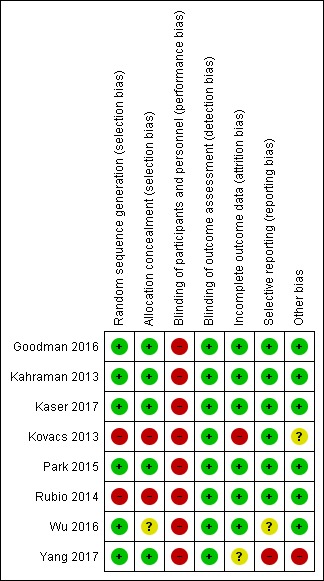
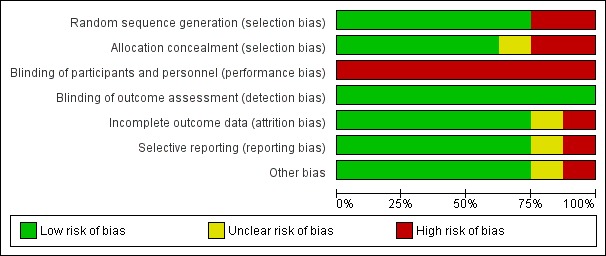
Authors' conclusions: There is insufficient evidence of differences in live birth, miscarriage, stillbirth or clinical pregnancy to choose between TLS, with or without embryo selection software, and conventional incubation. The studies were at high risk of bias for randomisation and allocation concealment, the result should be interpreted with extreme caution.
Conflict of interest statement
Dr Priya Bhide is a co‐investigator for the TILT trial, an RCT of TLS versus undisturbed culture versus conventional incubation and assessment, which has recently obtained ethics approval. TILT is funded by the Barts Charity. Dr Sarah Armstrong is hoping to recruit for the trial.
There are no other conflicts of interest for any of the authors.
Figures
Update of
-
Time-lapse systems for embryo incubation and assessment in assisted reproduction.Cochrane Database Syst Rev. 2015 Feb 27;(2):CD011320. doi: 10.1002/14651858.CD011320.pub2. Cochrane Database Syst Rev. 2015. Update in: Cochrane Database Syst Rev. 2018 May 25;5:CD011320. doi: 10.1002/14651858.CD011320.pub3. PMID: 25721906 Updated.
References
References to studies included in this review
-
- Goodman LR, Goldberg J, Falcone T, Austin C, Desai N. Does the addition of time‐lapse morphokinetics in the selection of embryos for transfer improve pregnancy rates? A randomized controlled trial. Fertility and Sterility 2016;105(2):275‐85. - PubMed
- Goodman LR, Goldberg JM, Falcone T, Austin C, Desai N. Does use of time‐lapse microscopy in the selection of embryos for transfer improve pregnancy rates? A randomized controlled trial. Fertility and Sterility 2015;104(3):e96. - PubMed
-
- Kahraman S, Cetinkaya M, Pirkevi C, Yelke H, Kumtepe Y. Comparison of blastocyst development and cycle outcome in patients with eSET using either conventional or time lapse incubators. A prospective study of good prognosis patients. Journal of Reproductive and Stem Cell Biotechnology 2013;3(2):55‐61.
-
- Kaser DJ, Bormann CL, Missmer SA, Farland LV, Ginsburg ES, Racowsky C. A pilot randomized controlled trial of Day 3 single embryo transfer with adjunctive time‐lapse selection versus Day 5 single embryo transfer with or without adjunctive time‐lapse selection. Human Reproduction 2017;32(8):1598‐1603. - PubMed
- Kaser DJ, Bormann CL, Missmer SA, Farland LV, Ginsburg ES, Racowsky C. EEVA pregnancy pilot study: A randomized controlled trial of single embryo transfer (SET) on day 3 or day 5 with or without time‐lapse imaging (TLI) selection. Fertility and Sterility 2016;106(3):e312.
-
- Kovacs P, Matyas S, Forgacs V, Sajgo A, Rarosi F, Pribenszky C. Time‐lapse embryo selection for single blastocyst transfer ‐ results of a multicentre, prospective, randomized clinical trial. Fertility and Sterility 2013;100(3):S90.
- Kovacs P, Matyas SZ, Forgacs V, Reichart A, Rarosi F, Bernard A, et al. Can a composite score based on time lapse observation aid embryo selection for single embryo transfer; an interim report. Human Reproduction 2013;28(Suppl 1):169.
- Matyas SZ, Kovacs P, Forgacs V, Sajgo A, Pribenszky CS. Selection of single blastocyst for transfer using time‐lapse monitoring during in vitro fertilization in good prognosis patients: A randomized controlled trial. Human Reproduction 2015;30(Suppl 1):i119.
-
- Park H, Bergh C, Selleskog U, Thurin‐Kjellberg A, Lundin K. No benefit of culturing embryos in a closed system compared with a conventional incubator in terms of number of good quality embryos: results from an RCT. Human Reproduction 2015;30(2):268‐75. - PubMed
- Selleskog U, Park H, Bergh C, Lundin K. A prospective randomised controlled trial of the efficacy of using a closed time‐lapse system for embryo culture. Human Reproduction 2014;29(Suppl 1):i61.
References to studies excluded from this review
-
- Adamson GD, Abusief ME, Palao L, Witmer J, Palao LM, Gvakharia M. Improved implantation rates of day 3 embryo transfers with the use of an automated time‐lapse‐enabled test to aid in embryo selection. Fertility and Sterility 2016;105(2):369‐75. - PubMed
-
- Arnesen RE, McEvoy K, Critchlow D, Hunter HR, Lloyd AE, Wilson Y, et al. Comparison of clinical pregnancy rates following day 3 embryo transfer using a time‐lapse incubator compared to a flatbed incubator. Human Fertility 2014;17(4):299.
-
- Belles M, Costa‐Borges N, MolinaJ.M, Ballesteros A, Pellicer A, Florensa M, et al. Embryo quality and clinical outcomes using EmbryoscopeTM, MincTM and HeracellTM 150i incubators: preliminary results from a randomized study with donor oocytes. Human Reproduction 2014;29(Suppl 1):i160.
-
- Freour T, Basile N, Barriere P, Meseguer M. Systematic review on clinical outcomes following selection of human preimplantation embryos with time‐lapse monitoring. Human Reproduction Update 2015;21(1):153‐4. - PubMed
References to ongoing studies
-
- Khan K. [personal communication]. Conversation with Professor Khalid Khan k.s.khan@qmul.ac.ukMarch 2018.
-
- NTR5423. Time‐lapse monitoring in IVF and ICSI patients [Embryo SELECtion using TIme‐lapse MOnitoring in IVF and ICSI patients]. http://www.trialregister.nl/trialreg/admin/rctview.asp?TC=5423 First registered 8 September 2015.
Additional references
-
- ACART. Advisory Committee on Assisted Reproductive Technology: Guiding Principles. www.acart.health.govt.nz/about‐us accessed 30 June 2014.
-
- Alpha Scientists in Reproductive Medicine and ESHRE Special Interest Group of Embryology. The Istanbul consensus workshop on embryo assessment: proceedings of an expert meeting. Human Reproduction 2011;26(6):1270‐83. [1472‐6483] - PubMed
-
- Armstrong S, Bhide P, Jordan V, Pacey A, Farquhar C. Time‐lapse systems for ART. Reproductive Biomedicine Online 2018;36(3):288‐9. - PubMed
-
- Chen M, Wei S, Hu J, Yuan J, Liu F. Does time‐lapse imaging have favorable results for embryo incubation and selection compared with conventional methods in clinical in vitro fertilization? A meta‐analysis and systematic review of randomized controlled trials. PLoS ONE 2017;12(6):e0178720. - PMC - PubMed
References to other published versions of this review
-
- Armstrong S, Arroll N, Cree LM, Jordan V, Farquhar C. Time‐lapse systems for embryo incubation and assessment in assisted reproduction. Cochrane Database of Systematic Reviews 2015, Issue 2. [10.1002 / 14651858.CD011320.pub2] - PubMed
Publication types
MeSH terms
LinkOut - more resources
Full Text Sources
Other Literature Sources
Medical
