


Dyskeratosis congenita with a novel genetic variant in the DKC1 gene: a case report
- PMID: 29801475
- PMCID: PMC5970516
- DOI: 10.1186/s12881-018-0584-y
Dyskeratosis congenita with a novel genetic variant in the DKC1 gene: a case report
Abstract
Background: Dyskeratosis congenita (DC) is a rare genetic disorder of bone marrow failure inherited in an X-linked, autosomal dominant or autosomal recessive pattern. It has a wide array of clinical features and patients may be cared for by many medical sub specialties. The typical clinical features consist of lacy reticular skin pigmentation, nail dystrophy and oral leukoplakia. As the disease advances, patients may develop progressive bone marrow failure, pulmonary fibrosis, oesophageal stenosis, urethral stenosis, liver cirrhosis as well as haematological and solid malignancies. Several genes have been implicated in the pathogenesis of dyskeratosis congenita, with the dyskerin pseudouridine synthase 1 (DKC1) gene mutations being the X-linked recessive gene.
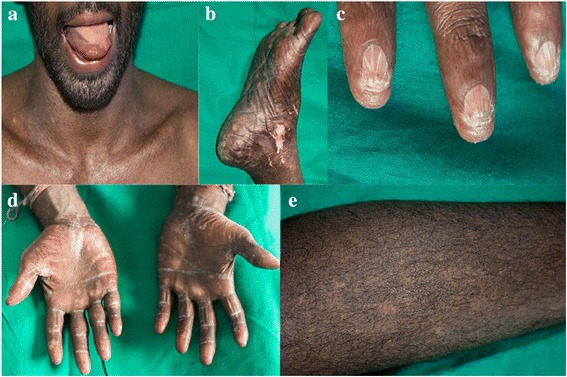
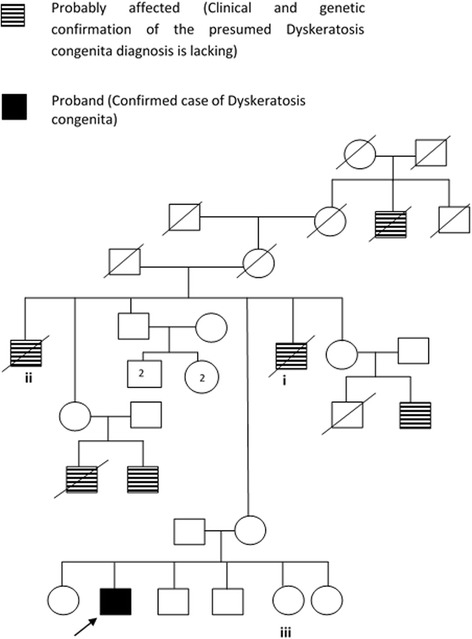
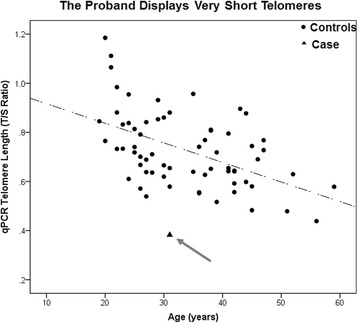
Case presentation: Herein, we report a 31-year-old male with history of recurrent febrile episodes who was found to have reticulate skin pigmentation interspersed with hypopigmented macules involving the face, neck and extremities, hyperkeratosis of palms and soles, nail dystrophy, leukoplakia of the tongue, premature graying of hair, watery eyes and dental caries. Several of his male relatives, including two maternal uncles and three maternal cousins were affected with a similar type of disease condition. Pedigree analysis suggested a possible X-linked pattern of inheritance. Genetic testing in the proband showed a novel hemizygous, non-synonymous likely pathogenic variant [NM_001363.4: c.1054A > G: p.Thr352Ala] in the PUA domain of the DKC1 gene. Quantitative polymerase chain reaction for relative telomere length measurements performed in the proband showed that he had very short telomeres [0.38, compared to a control median of 0.71 (range 0.44-1.19)], which is consistent with the DC diagnosis. Co-segregation analysis of the novel mutation and telomere length measurements in the extended family members could not be performed as they were unwilling to provide consent for testing.
Conclusions: The novel variant detected in the DKC1 gene adds further to the existing scientific literature on the genotype-phenotype correlation of DC, and has important implications for the clinical and molecular characterization of the disease.
Keywords: DKC1; Dyskeratosis congenita; Nail dystrophy; Oral leukoplakia; Pancytopenia; Skin pigmentation.
Conflict of interest statement
Authors’ information
RV: MBBS, Registrar in medicine, University Medical Unit, Teaching Hospital Jaffna, SriLanka. NS: MBBS (Jaffna), MD (Colombo), MRCP (UK), MRCP (Ireland), MRCPS (Glasg), MRCP (London), M.Sc (Medical Toxicology) (Col) Head and Senior Lecturer, Department of Medicine, Faculty of Medicine, University of Jaffna, Consultant Physician, Teaching Hospital Jaffna, Sri Lanka. TK: MBBS, MD, FRCP (Edin), FACP, Consultant Physician and Senior Lecturer in Medicine, University Medical Unit, Teaching Hospital Jaffna, Sri Lanka. NDS: M.B.B.S., MSc (Clinical Genetics), CTHE SEDA (UK), Clinical Geneticist & Senior Lecturer, Human Genetics Unit, Faculty of Medicine, University of Colombo, Sri Lanka. NMG: PhD, Clinical Scientist, Centogene AG, Schillingallee 68, 18,057 Rostock, Germany. OB: PhD, MD, Director Medical Reporting, Centogene AG, Schillingallee 68, 18,057 Rostock, Germany. CLD: Associate Scientist, Cancer Genomics Research Laboratory, Division of Cancer Epidemiology and Genetics, National Cancer Institute, USA. LJM: MD, PhD, Clinical Fellow, Clinical Genetics Branch, Division of Cancer Epidemiology and Genetics, National Cancer Institute, USA. SAS: MD, Branch Chief, Clinical Genetics Branch, Division of Cancer Epidemiology and Genetics, National Cancer Institute, USA. VHDW: MBBS, PhD, FNASSL, Medical Geneticist, Chair & Professor of Anatomy, Director, Human Genetics Unit, Faculty of Medicine, University of Colombo, Sri Lanka.
Ethics approval and consent to participate
Written informed consent was obtained from the patient for genetic testing as part of standard care. A copy of the written consent is available for review by the Editor of this journal.
Consent for publication
Written informed consent was obtained from the proband’s mother for the publication of all personal information contained in this case report and accompanying images. A copy of the written consent is available for review by the Editor of this journal.
Competing interests
The authors declare that they have no competing interests.
Publisher’s Note
Springer Nature remains neutral with regard to jurisdictional claims in published maps and institutional affiliations.
Figures
References
-
- Savage SA. Dyskeratosis Congenita. Seattle: University of Washington; 1993. - PubMed
Publication types
MeSH terms
Substances
LinkOut - more resources
Full Text Sources
Other Literature Sources
Research Materials
