


Immune Checkpoint Inhibitor-Associated Myocarditis
- PMID: 29802219
- PMCID: PMC6156176
- DOI: 10.1634/theoncologist.2018-0130
Immune Checkpoint Inhibitor-Associated Myocarditis
Abstract
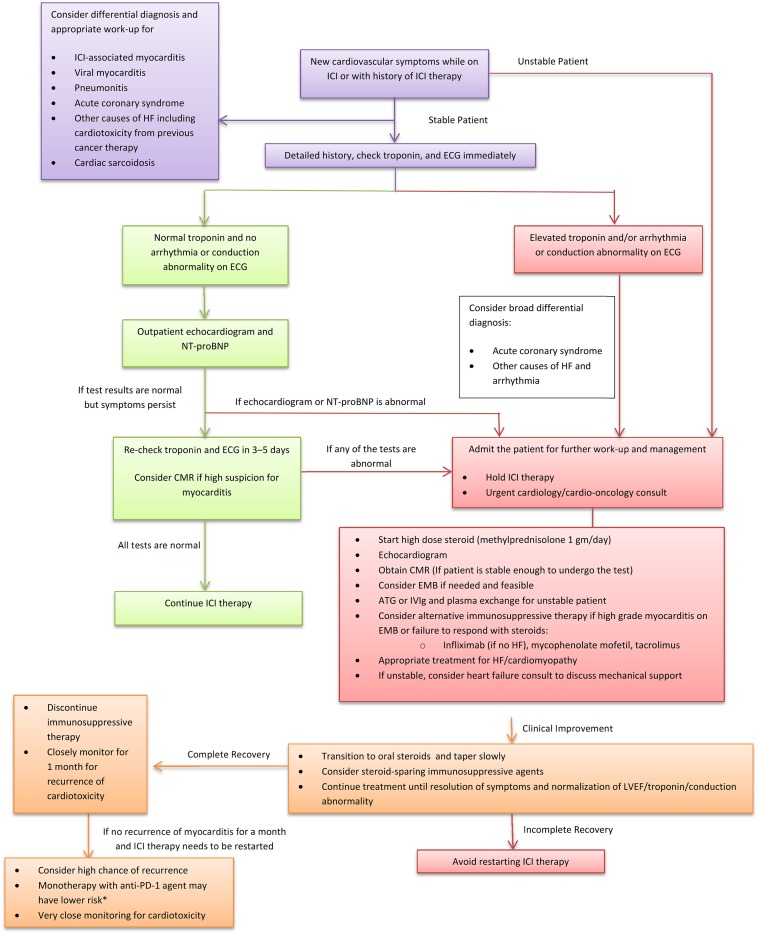
Immune checkpoint inhibitors (ICIs) are approved for a wide range of malignancies. They work by priming the immune system response to cancer and have changed the landscape of available cancer treatments. As anticipated, modulation of the regulatory controls in the immune system with ICIs results in diverse immune-related adverse events, targeting any organ or gland. These toxicities are rarely fatal and generally regress after treatment discontinuation and/or prescription of corticosteroids. Recently, several cases of ICI-related cardiotoxicity have been reported with complications ranging from cardiogenic shock to sudden death. The true incidence of ICI-associated myocarditis is likely underestimated, due to a combination of factors including the lack of specificity in the clinical presentation, the potential of overlap with other cardiovascular and general medical illnesses, the challenges in the diagnosis, and a general lack of awareness of this condition. Currently, there are no clear guidelines for surveillance, diagnosis, or management of this entity. There are multiple unresolved issues including, but not limited to, identifying those at risk of this uncommon toxicity, elucidating the pathophysiology, determining if and what type of surveillance is appropriate, optimal work-up of suspected patients, and methods for resolution of myocarditis. Here we describe a clinical vignette and discuss the salient features and management strategies of ICI-associated myocarditis.
Key points: The incidence of immune checkpoint inhibitor (ICI)-associated myocarditis is unclear and has been reported to range from 0.06% to 1% of patients prescribed an ICI.Myocarditis may be difficult to diagnose.The risk factors for ICI-associated myocarditis are not well understood but may include underlying autoimmune disease and diabetes mellitus.The prevalence of myocarditis has been reported to be higher with combination immune therapies.Myocarditis with ICI's typically occurs early, with an elevated troponin, may present with an normal left ventricular ejection fraction and may have a fulminant course.The optimal management of myocarditis associated with ICI's is unclear but most cases are treated with high-dose steroids.
© AlphaMed Press 2018.
Conflict of interest statement
Disclosures of potential conflicts of interest may be found at the end of this article.
Figures

References
-
- Robert C, Thomas L, Bondarenko I et al. Ipilimumab plus dacarbazine for previously untreated metastatic melanoma. N Engl J Med 2011;364:2517–2526. - PubMed
-
- Postow MA, Sidlow R, Hellmann MD. Immune‐related adverse events associated with immune checkpoint blockade. N Engl J Med 2018;378:158–168. - PubMed
-
- Spain L, Diem S, Larkin J. Management of toxicities of immune checkpoint inhibitors. Cancer Treat Rev 2016;44:51–60. - PubMed
Publication types
MeSH terms
Grants and funding
LinkOut - more resources
Full Text Sources
Other Literature Sources
Research Materials
