


Multiple Reaction Monitoring for quantitative laccase kinetics by LC-MS
- PMID: 29802313
- PMCID: PMC5970232
- DOI: 10.1038/s41598-018-26523-0
Multiple Reaction Monitoring for quantitative laccase kinetics by LC-MS
Abstract
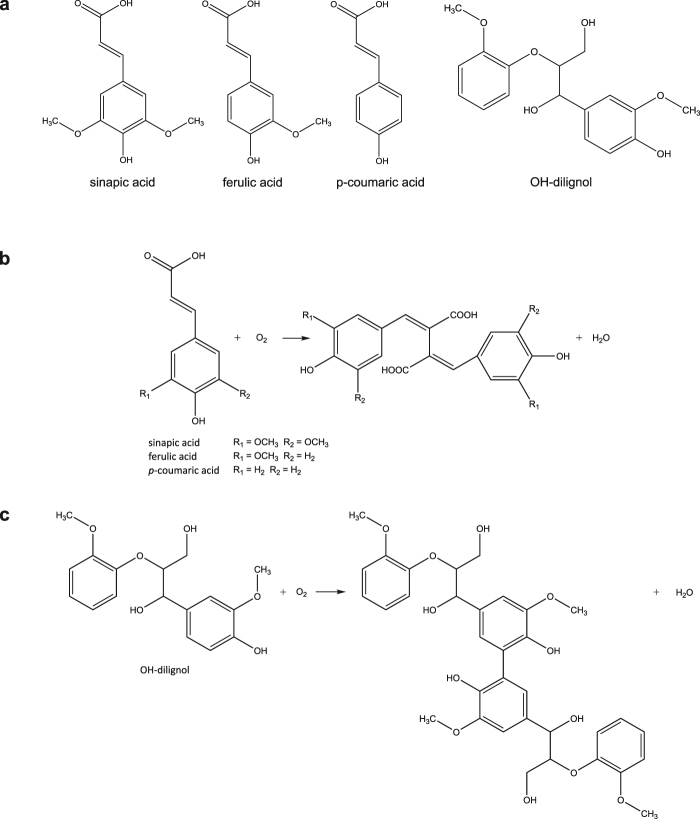
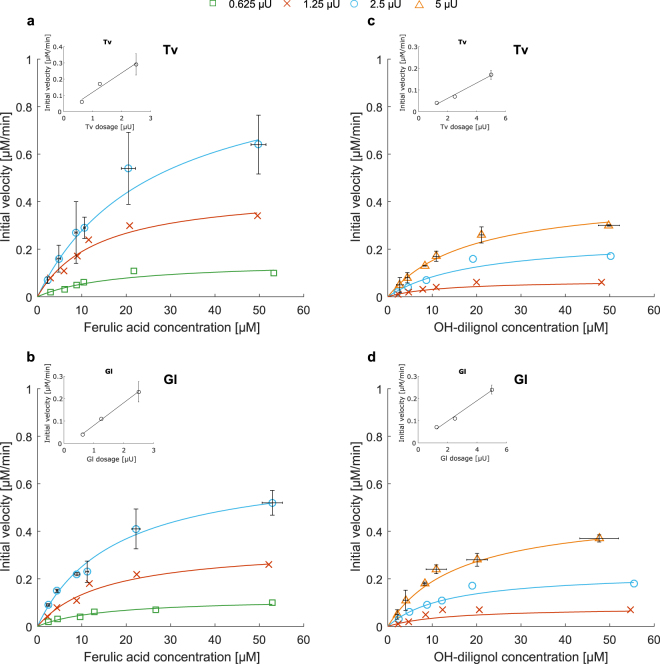
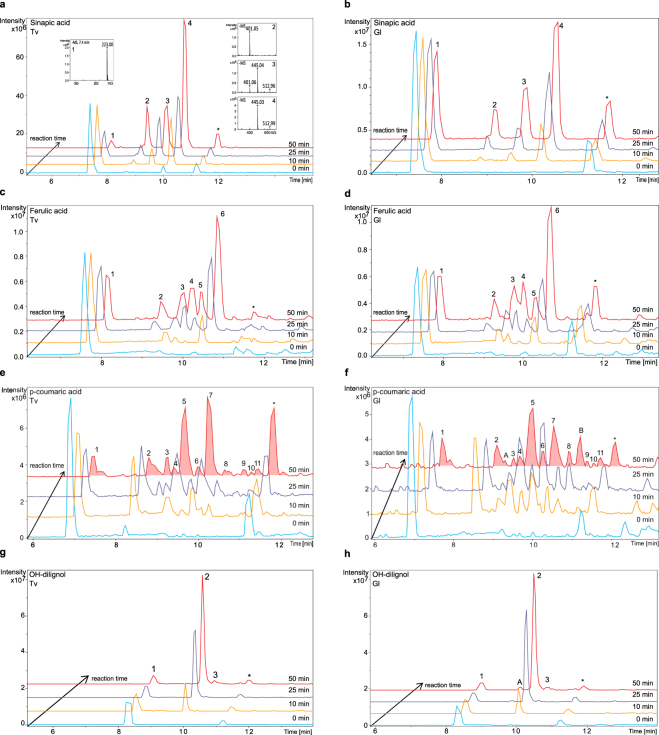
Laccases (EC 1.10.3.2) are enzymes known for their ability to catalyse the oxidation of phenolic compounds using molecular oxygen as the final electron acceptor. Lignin is a natural phenylpropanoids biopolymer whose degradation in nature is thought to be aided by enzymatic oxidation by laccases. Laccase activity is often measured spectrophotometrically on compounds such as syringaldazine and ABTS which poorly relate to lignin. We employed natural phenolic hydroxycinnamates having different degree of methoxylations, p-coumaric, ferulic and sinapic acid, and a lignin model OH-dilignol compound as substrates to assess enzyme kinetics by HPLC-MS on two fungal laccases Trametes versicolor laccase, Tv and Ganoderma lucidum laccase, Gl. The method allowed accurate kinetic measurements and detailed insight into the product profiles of both laccases. Both Tv and Gl laccase are active on the hydroxycinnammates and show a preference for substrate with methoxylations. Product profiles were dominated by the presence of dimeric and trimeric species already after 10 minutes of reaction and similar profiles were obtained with the two laccases. This new HPLC-MS method is highly suitable and accurate as a new method for assaying laccase activity on genuine phenolic substrates, as well as a tool for examining laccase oxidation product profiles.
Conflict of interest statement
The authors declare no competing interests.
Figures
References
-
- Gellerstedt, G. & Henriksson, G. Chapter 9 - lignins: Major sources, structure and properties. In Belgacem, M. N. & Gandini, A. (eds.) Monomers, Polymers and Composites from Renewable Resources, 201–224 (Elsevier, Amsterdam 2008).
-
- Ragauskas, A. J. et al. Lignin valorization: Improving lignin processing in the biorefinery. Sci. 344 (2014). - PubMed
Publication types
MeSH terms
Substances
LinkOut - more resources
Full Text Sources
Other Literature Sources
Molecular Biology Databases
